
The Project Gutenberg eBook of The Odyssey, by Homer
The magnetic construction sets for 14 year oldsOdyssey
by Homer
DONE INTO ENGLISH PROSE
by
S. H. BUTCHER, M.A.
Fellow and Protector of University College, Oxford
Late Fellow of Trinity College, Cambridge
AND
A. LANG, M.A.
Late Fellow of Merton College, Oxford
Contents
| PREFACE. |
| PREFACE TO THE THIRD EDITION. |
| INTRODUCTION. |
| The Odyssey |
| BOOK I. |
| BOOK II. |
| BOOK III. |
| BOOK IV. |
| BOOK V. |
| BOOK VI. |
| BOOK VII. |
| BOOK VIII. |
| BOOK IX. |
| BOOK X. |
| BOOK XI. |
| BOOK XII. |
| BOOK XIII. |
| BOOK XIV. |
| BOOK XV. |
| BOOK XVI. |
| BOOK XVII. |
| BOOK XVIII. |
| BOOK XIX. |
| BOOK XX. |
| BOOK XXI. |
| BOOK XXII. |
| BOOK XXIII. |
| BOOK XXIV. |
As one that for a weary space has lain
Lulled by the song of Circe and her wine
In gardens near the pale of Proserpine,
Where that Ææan isle forgets the main,
And only the low lutes of love complain,
And only shadows of wan lovers pine,
As such an one were glad to know the brine
Salt on his lips, and the large air again,
So gladly, from the songs of modern speech
Men turn, and see the stars, and feel the free
Shrill wind beyond the close of heavy flowers,
And through the music of the languid hours
They hear like Ocean on a western beach
The surge and thunder of the Odyssey.
A. L.
PREFACE.
There would have been less controversy about the proper method of Homerictranslation, if critics had recognised that the question is a purely relativeone, that of Homer there can be no final translation. The taste and theliterary habits of each age demand different qualities in poetry, and thereforea different sort of rendering of Homer. To the men of the time of Elizabeth,Homer would have appeared bald, it seems, and lacking in ingenuity, if he hadbeen presented in his antique simplicity. For the Elizabethan age, Chapmansupplied what was then necessary, and the mannerisms that were then deemed ofthe essence of poetry, namely, daring and luxurious conceits. Thus inChapman’s verse Troy must “shed her towers for tears ofoverthrow,” and when the winds toss Odysseus about, their sport must becalled “the horrid tennis.”
In the age of Anne, “dignity” and “correctness” had tobe given to Homer, and Pope gave them by aid of his dazzling rhetoric, hisantitheses, his netteté, his command of every conventional and favouriteartifice. Without Chapman’s conceits, Homer’s poems would hardlyhave been what the Elizabethans took for poetry; without Pope’ssmoothness, and Pope’s points, the Iliad and Odyssey would have seemedrude, and harsh in the age of Anne. These great translations must always liveas English poems. As transcripts of Homer they are like pictures drawn from alost point of view. Chaque siècle depuis le xviea eu de ce côtéson belvéder différent. Again, when Europe woke to a sense, an almostexaggerated and certainly uncritical sense, of the value of her songs of thepeople, of all the ballads that Herder, Scott, Lonnrot, and the rest collected,it was commonly said that Homer was a ballad-minstrel, that the translator mustimitate the simplicity, and even adopt the formulae of the ballad. Hence camethe renderings of Maginn, the experiments of Mr. Gladstone, and others. Therewas some excuse for the error of critics who asked for a Homer in ballad rhyme.The Epic poet, the poet of gods and heroes, did indeed inherit some of theformulae of the earlier Volks-lied. Homer, like the author of TheSong of Roland, like the singers of the Kalevala, uses constantlyrecurring epithets, and repeats, word for word, certain emphatic passages,messages, and so on. That custom is essential in the ballad, it is an accidentnot the essence of the epic. The epic is a poem of complete and elaborate art,but it still bears some birthmarks, some signs of the early popular chant, outof which it sprung, as the garden-rose springs from the wild stock, When thisis recognised the demand for ballad-like simplicity and“ballad-slang” ceases to exist, and then all Homeric translationsin the ballad manner cease to represent our conception of Homer. After thebelief in the ballad manner follows the recognition of the romantic vein inHomer, and, as a result, came Mr. Worsley’s admirable Odyssey. Thismasterly translation does all that can be done for the Odyssey in the romanticstyle. The smoothness of the verse, the wonderful closeness to the original,reproduce all of Homer, in music and in meaning, that can be rendered inEnglish verse. There still, however, seems an aspect Homeric poems, and ademand in connection with Homer to be recognised, and to be satisfied.
Sainte-Beuve says, with reference probably to M. Leconte de Lisle’s proseversion of the epics, that some people treat the epics too much as if they weresagas. Now the Homeric epics are sagas, but then they are the sagas of thedivine heroic age of Greece, and thus are told with an art which is not the artof the Northern poets. The epics are stories about the adventures of men livingin most respects like the men of our own race who dwelt in Iceland, Norway,Denmark, and Sweden. The epics are, in a way, and as far as manners andinstitutions are concerned, historical documents. Whoever regards them in thisway, must wish to read them exactly as they have reached us, without modernornament, with nothing added or omitted. He must recognise, with Mr. MatthewArnold, that what he now wants, namely, the simple truth about the matter ofthe poem, can only be given in prose, “for in a verse translation nooriginal work is any longer recognisable.” It is for this reason that wehave attempted to tell once more, in simple prose, the story of Odysseus. Wehave tried to transfer, not all the truth about the poem, but the historicaltruth, into English. In this process Homer must lose at least half his charm,his bright and equable speed, the musical current of that narrative, which,like the river of Egypt, flows from an indiscoverable source, and mirrors thetemples and the palaces of unforgotten gods and kings. Without this music ofverse, only a half truth about Homer can be told, but then it is that half ofthe truth which, at this moment, it seems most necessary to tell. This is thehalf of the truth that the translators who use verse cannot easily tell. Theymustbe adding to Homer, talking with Pope about “tracing the mazylev’ret o’er the lawn,” or with Mr. Worsley about the islandsthat are “stars of the blue Aegaean,” or with Dr. Hawtrey about“the earth’s soft arms,” when Homer says nothing at all aboutthe “mazy lev’ret,” or the “stars of the blueAegaean,” or the “soft arms” of earth. It would beimpertinent indeed to blame any of these translations in their place. They givethat which the romantic reader of poetry, or the student of the age of Anne,looks for in verse; and without tags of this sort, a translation of Homer inverse cannot well be made to hold together.
There can be then, it appears, no final English translation of Homer. In eachthere must be, in addition to what is Greek and eternal, the element of what ismodern, personal, and fleeting. Thus we trust that there may be room for“the pale and far-off shadow of a prose translation,” of which theaim is limited and humble. A prose translation cannot give the movement and thefire of a successful translation in verse; it only gathers, as it were, thecrumbs which fall from the richer table, only tells the story, without thesong. Yet to a prose translation is permitted, perhaps, that close adherence tothe archaisms of the epic, which in verse become mere oddities. The doubleepithets, the recurring epithets of Homer, if rendered into verse, delay andpuzzle the reader, as the Greek does not delay or puzzle him. In prose he mayendure them, or even care to study them as the survivals of a stage of taste,which is to be found in its prime in the sagas. These double and recurringepithets of Homer are a softer form of the quaint Northern periphrases, whichmake the sea the “swan’s bath,” gold, the“dragon’s hoard,” men, the “ring-givers,” and soon. We do not know whether it is necessary to defend our choice of a somewhatantiquated prose. Homer has no ideas which cannot be expressed in words thatare “old and plain,” and to words that are old and plain, and, as arule, to such terms as, being used by the Translators of the Bible, are stillnot unfamiliar, we have tried to restrict ourselves. It may be objected, thatthe employment of language which does not come spontaneously to the lips, is anaffectation out of place in a version of the Odyssey. To this we may answerthat the Greek Epic dialect, like the English of our Bible, was a thing of slowgrowth and composite nature, that it was never a spoken language, nor, exceptfor certain poetical purposes, a written language. Thus the Biblical Englishseems as nearly analogous to the Epic Greek, as anything that our tongue has tooffer.
The few foot-notes in this book are chiefly intended to make clear somepassages where there is a choice of reading. The notes at the end, which wewould like to have written in the form of essays, and in company with morecomplete philological and archaeological studies, are chiefly meant toelucidate the life of Homer’s men.
We have received much help from many friends, and especially from Mr. R. W.Raper, Fellow of Trinity College, Oxford and Mr. Gerald Balfour, Fellow ofTrinity College, Cambridge, who have aided us with many suggestions while thebook was passing through the press.
In the interpretation of B. i. 411, ii. 191, v. 90, and 471, we have departedfrom the received view, and followed Mr. Raper, who, however, has not been ableto read through the proof-sheets further than Book xii.
We have adopted La Roche’s text (Homeri Odyssea, J. La Roche, Leipzig,1867), except in a few cases where we mention our reading in a foot-note.
The Arguments prefixed to the Books are taken, with very slight alterations,from Hobbes’ Translation of the Odyssey.
It is hoped that the Introduction added to the second edition may illustratethe growth of those national legends on which Homer worked, and may elucidatethe plot of the Odyssey.
PREFACE TO THE THIRD EDITION.
We owe our thanks to the Rev. E. Warre, of Eton College, for certaincorrections on nautical points. In particular, he has convinced us that theraft of Odysseus in B. v. is a raft strictly so called, and that it is not,under the poet’s description, elaborated into a ship, as has beencommonly supposed. The translation of the passage (B. v. 246-261) isaccordingly altered.
INTRODUCTION.
COMPOSITION AND PLOT OF THE ODYSSEY.
The Odysseyis generally supposed to be somewhat the later in date ofthe two most ancient Greek poems which are concerned with the events andconsequences of the Trojan war. As to the actual history of that war, it may besaid that nothing is known. We may conjecture that some contest between peoplesof more or less kindred stocks, who occupied the isles and the eastern andwestern shores of the Aegean, left a strong impression on the popular fancy.Round the memories of this contest would gather many older legends, myths, andstories, not peculiarly Greek or even “Aryan,” which previouslyfloated unattached, or were connected with heroes whose fame was swallowed upby that of a newer generation. It would be the work of minstrels, priests, andpoets, as the national spirit grew conscious of itself, to shape all thesematerials into a definite body of tradition. This is the rule ofdevelopment—first scattered stories, then the union of these into anationallegend. The growth of later national legends, which we are ableto trace, historically, has generally come about in this fashion. To take thebest known example, we are able to compare the real history of Charlemagne withthe old epic poems on his life and exploits. In these poems we find that factsare strangely exaggerated, and distorted; that purely fanciful additions aremade to the true records, that the more striking events of earlier history arecrowded into the legend of Charles, that mere fairy tales, current amongAfrican as well as European peoples, are transmuted into false history, andthat the anonymous characters of fairy tales are converted into historicalpersonages. We can also watch the process by which feigned genealogies wereconstructed, which connected the princely houses of France with the imaginaryheroes of the epics. The conclusion is that the poetical history of Charlemagnehas only the faintest relations to the true history. And we are justified insupposing that, quite as little of the real history of events can be extractedfrom the tale of Troy, as from the Chansons de Geste.
By the time the Odysseywas composed, it is certain that a poet hadbefore him a well-arranged mass of legends and traditions from which he mightselect his materials. The author of the Iliadhas an extremely full andcuriously consistent knowledge of the local traditions of Greece, the memorieswhich were cherished by Thebans, Pylians, people of Mycenae, of Argos, and soon. The Iliadand the Odysseyassume this knowledge in thehearers of the poems, and take for granted some acquaintance with otherlegends, as with the story of the Argonautic Expedition. Now that story itselfis a tissue of popular tales,—still current in many distantlands,—but all woven by the Greek genius into the history of Iason.
The history of the return of Odysseus as told in the Odyssey, is in thesame way, a tissue of old märchen. These must have existed for anunknown length of time before they gravitated into the cycle of the tale ofTroy.
The extraordinary artistic skill with which legends and myths, originallyunconnected with each other, are woven into the plot of the Odyssey, sothat the marvels of savage and barbaric fancy become indispensable parts of anartistic whole, is one of the chief proofs of the unity of authorship of thatpoem. We now go on to sketch the plot, which is a marvel of construction.
Odysseus was the King of Ithaca, a small and rugged island on the western coastof Greece. When he was but lately married to Penelope, and while his only sonTelemachus was still an infant, the Trojan war began. It is scarcely necessaryto say that the object of this war, as conceived of by the poets, was to winback Helen, the wife of Menelaus, from Paris, the son of Priam, King of Troy.As Menelaus was the brother of Agamemnon, the Emperor, so to speak, orrecognised chief of the petty kingdoms of Greece, the whole force of thesekingdoms was at his disposal. No prince came to the leaguer of Troy from a homemore remote than that of Odysseus. When Troy was taken, in the tenth year ofthe war, his homeward voyage was the longest and most perilous.
The action of the Odysseyoccupies but the last six weeks of the tenyears during which Odysseus was wandering. Two nights in these six weeks aretaken up, however, by his own narrative of his adventures (to the Phaeacians,p. xx) in the previous ten years. With this explanatory narrative we mustbegin, before coming to the regular action of the poem.
After the fall of Troy, Odysseus touched at Ismarus, the city of a Thracianpeople, whom he attacked and plundered, but by whom he was at last repulsed.The north wind then carried his ships to Malea, the extreme southern point ofGreece. Had he doubled Malea safely, he would probably have reached Ithaca in afew days, would have found Penelope unvexed by wooers, and Telemachus a boy often years old. But this was not to be.
The “ruinous winds” drove Odysseus and his ships for ten days, andon the tenth they touched the land of the Lotus-Eaters, whose flowery foodcauses sweet forgetfulness. Lotus-land was possibly in Western Libya, but it ismore probable that ten days’ voyage from the southern point of Greece,brought Odysseus into an unexplored region of fairy-land. Egypt, of which Homerhad some knowledge, was but five days’ sail from Crete.
Lotus-land, therefore, being ten days’ sail from Malea, was well over thelimit of the discovered world. From this country Odysseus went on till hereached the land of the lawless Cyclôpes, a pastoral people of giants. LaterGreece feigned that the Cyclôpes dwelt near Mount Etna, in Sicily. Homer leavestheir place of abode in the vague. Among the Cyclôpes, Odysseus had theadventure on which his whole fortunes hinged. He destroyed the eye of thecannibal giant, Polyphemus, a son of Poseidon, the God of the Sea. To avengethis act, Poseidon drove Odysseus wandering for ten long years, and onlysuffered him to land in Ithaca, “alone, in evil case, to find troubles inhis house.” This is a very remarkable point in the plot. The story of thecrafty adventurer and the blinding of the giant, with the punning device bywhich the hero escaped, exists in the shape of a detached märchenorfairy-tale among races who never heard of Homer. And when we find the storyamong Oghuzians, Esthonians, Basques, and Celts, it seems natural to supposethat these people did not break a fragment out of the Odyssey, but thatthe author of the Odysseytook possession of a legend out of the greattraditional store of fiction. From the wide distribution of the tale, there isreason to suppose that it is older than Homer, and that it was not originallytold of Odysseus, but was attached to his legend, as floating jests of unknownauthorship are attributed to eminent wits. It has been remarked with truth thatin this episode Odysseus acts out of character, that he is foolhardy as well ascunning. Yet the author of the Odyssey, so far from merely dove-tailingthis story at random into his narrative, has made his whole plot turn on theinjury to the Cyclops. Had he not foolishly exposed himself and his companions,by his visit to the Cyclops, Odysseus would never have been driven wanderingfor ten weary years. The prayers of the blinded Cyclops were heard andfulfilled by Poseidon.
From the land of the Cyclops, Odysseus and his company sailed to the Isle ofAeolus, the king of the winds. This place too is undefined; we only learn that,even with the most favourable gale, it was ten days’ sail from Ithaca. Inthe Isle of Aeolus Odysseus abode for a month, and then received from the kinga bag in which all the winds were bound, except that which was to waft the heroto his home. This sort of bag was probably not unfamiliar to superstitiousGreek sailors who had dealings with witches, like the modern wise women of theLapps. The companions of the hero opened the bag when Ithaca was in sight, thewinds rushed out, the ships were borne back to the Aeolian Isle, and thence thehero was roughly dismissed by Aeolus. Seven days’ sail brought him toLamos, a city of the cannibal Laestrygonians. Their country, too, is inNo-man’s-land, and nothing can be inferred from the fact that theirfountain was called Artacia, and that there was an Artacia in Cyzicus. In Lamosa very important adventure befel Odysseus. The cannibals destroyed all hisfleet, save one ship, with which he made his escape to the Isle of Circé. Herethe enchantress turned part of the crew into swine, but Odysseus, by aid of thegod Hermes, redeemed them, and became the lover of Circé. This adventure, likethe story of the Cyclops, is a fairy tale of great antiquity. Dr. Gerland, inhis Alt Griechische Märchen in der Odyssee, has shown that the storymakes part of the collection of Somadeva, a store of Indian tales, of which1200 A.D. is the approximate date. Circé appears as a Yackshini, and isconquered when an adventurer seizes her flute whose magic music turns men intobeasts. The Indian Circé had the habit of eating the animals into which shetransformed men.
We must suppose that the affairs with the Cicones, the Lotus-eaters, theCyclops, Aeolus, and the Laestrygonians, occupied most of the first year afterthe fall of Troy. A year was then spent in the Isle of Circé, after which thesailors were eager to make for home. Circé commanded them to go down to Hades,to learn the homeward way from the ghost of the Theban prophet Teiresias. Thedescent into hell, for some similar purpose, is common in the epics of otherraces, such as the Finns, and the South-Sea Islanders. The narrative ofOdysseus’s visit to the dead (book xi) is one of the most moving passagesin the whole poem.
From Teiresias Odysseus learned that, if he would bring his companions home, hemust avoid injuring the sacred cattle of the Sun, which pastured in the Isle ofThrinacia. If these were harmed, he would arrive in Ithaca alone, or in thewords of the Cyclops’s prayer, “in evil plight, with loss of allhis company, on board the ship of strangers, to find sorrow in hishouse.” On returning to the Isle Aeaean, Odysseus was warned by Circé ofthe dangers he would encounter. He and his friends set forth, escaped theSirens (a sort of mermaidens), evaded the Clashing Rocks, which close on ships(a fable known to the Aztecs), passed Scylla (the pieuvreof antiquity)with loss of some of the company, and reached Thrinacia, the Isle of the Sun.Here the company of Odysseus, constrained by hunger, devoured the sacred kineof the Sun, for which offence they were punished by a shipwreck, when all werelost save Odysseus. He floated ten days on a raft, and then reached the isle ofthe goddess Calypso, who kept him as her lover for eight years.
The first two years after the fall of Troy are now accounted for. They wereoccupied, as we have seen, by adventures with the Cicones, the Lotus-eaters,the Cyclops, Aeolus, the Laestrygonians, by a year’s residence withCircé, by the descent into Hades, the encounters with the Sirens, and Scylla,and the fatal sojourn in the isle of Thrinacia. We leave Odysseus alone, foreight years, consuming his own heart, in the island paradise of Calypso.
In Ithaca, the hero’s home, things seem to have passed smoothly tillabout the sixth year after the fall of Troy. Then the men of the youngergeneration, the island chiefs, began to woo Penelope, and to vex her sonTelemachus. Laertes, the father of Odysseus, was too old to help, and Penelopeonly gained time by her famous device of weaving and unweaving the web. Thewooers began to put compulsion on the Queen, quartering themselves upon her,devouring her substance, and insulting her by their relations with herhandmaids. Thus Penelope pined at home, amidst her wasting possessions.Telemachus fretted in vain, and Odysseus was devoured by grief andhome-sickness in the isle of Calypso. When he had lain there for nigh eightyears, the action of the Odysseybegins, and occupies about six weeks.
DAY 1 (Book i).
The ordainedtime has now arrived, when by the counsels of the Gods,Odysseus is to be brought home to free his house, to avenge himself on thewooers, and recover his kingdom. The chief agent in his restoration is PallasAthene; the first book opens with her prayer to Zeus that Odysseus may bedelivered. For this purpose Hermes is to be sent to Calypso to bid her releaseOdysseus, while Pallas Athene in the shape of Mentor, a friend of Odysseus,visits Telemachus in Ithaca. She bids him call an assembly of the people,dismiss the wooers to their homes, and his mother to her father’s house,and go in quest of his own father, in Pylos, the city of Nestor, and Sparta,the home of Menelaus. Telemachus recognises the Goddess, and the first daycloses.
DAY 2 (Book ii).
Telemachus assembles the people, but he has not the heart to carry outAthene’s advice. He cannot send the wooers away, nor turn his mother outof her house. He rather weakly appeals to the wooers’ consciences, andannounces his intention of going to seek his father. They answer with scorn,but are warned of their fate, which is even at the doors, by Halitherses. Hisprophecy (first made when Odysseus set out for Troy) tallies with the prophecyof Teiresias, and the prayer of the Cyclops. The reader will observe a seriesof portents, prophecies, and omens, which grow more numerous and admonishing astheir doom draws nearer to the wooers. Their hearts, however, are hardened, andthey mock at Telemachus, who, after an interview with Athene, borrows a shipand secretly sets out for Pylos. Athene accompanies him, and his friends manhis galley.
DAY 3 (Book iii).
They reach Pylos, and are kindly received by the aged Nestor, who has no newsabout Odysseus. After sacrifice, Athene disappears.
DAY 4 (Book iii).
The fourth day is occupied with sacrifice, and the talk of Nestor. In theevening Telemachus (leaving his ship and friends at Pylos) drives his chariotinto Pherae, half way to Sparta; Peisistratus, the son of Nestor, accompanieshim.
DAY 5 (Book iv).
Telemachus and Peisistratus arrive at Sparta, where Menelaus and Helen receivethem kindly.
DAY 6 (Book iv).
Menelaus tells how he himself came home in the eighth year after the fall ofTroy. He had heard from Proteus, the Old Man of the Sea, that Odysseus wasalive, and a captive on an island of the deep. Menelaus invites Telemachus tostay with him for eleven days or twelve, which Telemachus declines to do. Itwill later appear that he made an even longer stay at Sparta, though whether hechanged his mind, or whether we have here an inadvertence of the poet’sit is hard to determine. This blemish has been used as an argument against theunity of authorship, but writers of all ages have made graver mistakes.
On this same day (the sixth) the wooers in Ithaca learned that Telemachus hadreally set out to “cruise after his father.” They sent some oftheir number to lie in ambush for him, in a certain strait which he was likelyto pass on his return to Ithaca. Penelope also heard of her son’sdeparture, but was consoled by a dream.
DAY 7 (Book v).
The seventh day finds us again in Olympus. Athene again urges the release ofOdysseus; and Hermes is sent to bid Calypso let the hero go. Zeus propheciesthat after twenty days sailing, Odysseus will reach Scheria, and the hospitablePhaeacians, a people akin to the Gods, who will convey him to Ithaca. Hermesaccomplishes the message to Calypso.
DAYS 8-12-32 (Book v).
These days are occupied by Odysseus in making and launching a raft; on thetwelfth day from the beginning of the action he leaves Calypso’s isle. Hesails for eighteen days, and on the eighteenth day of his voyage (thetwenty-ninth from the beginning of the action), he sees Scheria. Poseidonraises a storm against him, and it is not till the thirty-second day from thatin which Athene visited Telemachus, that he lands in Scheria, the country ofthe Phaeacians. Here he is again in fairy land. A rough, but perfectlyrecognisable form of the Phaeacian myth, is found in an Indian collection ofmärchen(already referred to) of the twelfth century A.D. Here thePhaeacians are the Vidyâdhâris, and their old enemies the Cyclôpes, are theRakshashas, a sort of giants. The Indian Odysseus, who seeks the city of gold,passes by the home of an Indian Aeolus, Satyavrata. His later adventures areconfused, and the Greek version retains only the more graceful fancies of themärchen.
DAY 33 (Book vi).
Odysseus meets Nausicaa, daughter of Alcinous, the Phaeacian King, and by heraid, and that of Athene, is favourably received at the palace, and tells how hecame from Calypso’s island. His name is still unknown to his hosts.
DAY 34 (Books vii, viii, ix, x, xi, xii).
The Phaeacians and Odysseus display their skill in sports. Nausicaa bidsOdysseus farewell. Odysseus recounts to Alcinous, and Arete, the Queen, thoseadventures in the two years between the fall of Troy and his captivity in theisland of Calypso, which we have already described (pp. xiii-xvii).
DAY 35 (Book xiii).
Odysseus is conveyed to Ithaca, in the evening, on one of the magical barquesof the Phaeacians.
DAY 36 (Books xiii, xiv, xv).
He wakens in Ithaca, which he does not at first recognise He learns fromAthene, for the first time, that the wooers beset his house. She disguises himas an old man, and bids him go to the hut of the swineherd Eumaeus, who isloyal to his absent lord. Athene then goes to Lacedaemon, to bring backTelemachus, who has now resided there for a month. Odysseus won the heart ofEumaeus, who of course did not recognise him, and slept in theswineherd’s hut, while Athene was waking Telemachus, in Lacedaemon, andbidding him “be mindful of his return.”
DAY 37 (Book xv).
Is spent by Odysseus in the swineherd’s hut. Telemachus reachesPherae, half-way to Pylos.
DAY 38 (Book xv).
Telemachus reaches Pylos, but does not visit Nestor. To save time he goes atonce on board ship, taking with him an unfortunate outlaw, Theoclymenus, asecond-sighted man, or the family of Melampus, in which the gift of prophecywas hereditary. The ship passed the Elian coast at night, and evaded the ambushof the wooers. Meanwhile Odysseus was sitting up almost till dawn, listening tothe history of Eumaeus, the swineherd.
DAY 39 (Books xv, xvi).
Telemachus reaches the Isle of Ithaca, sends his ship to the city, but himself,by advice of Athene, makes for the hut of Eumaeus, where he meets, butnaturally does not recognise, his disguised father. He sends Eumaeus toPenelope with news of his arrival, and then Athene reveals Odysseus toTelemachus. The two plot the death of the wooers. Odysseus bids Telemachusremove, on a favourable opportunity, the arms which were disposed as trophieson the walls of the hall at home. (There is a slight discrepancy between thewords of this advice and the manner in which it is afterwards executed.) Duringthis interview, the ship of Telemachus, the wooers who had been in ambush, andEumaeus, all reached the town of Ithaca. In the evening Eumaeus returned to hishut, where Athene had again disguised Odysseus.
DAY 40 (Books xvii, xviii, xix, xx).
The story is now hastening to its close, and many events are crowded into thefortieth day. Telemachus goes from the swineherd’s hut to the city, andcalls his guest, Theoclymenus, to the palace. The second-sighted man prophesiesof the near revenge of Odysseus. In the afternoon, Odysseus (still disguised)and Eumaeus reach the city, the dog Argos recognises the hero, and dies.Odysseus goes begging through his own hall, and is struck by Antinous, theproudest of the wooers. Late in the day Eumaeus goes home, and Odysseus fightswith the braggart beggar Irus. Still later, Penelope appears among the wooers,and receives presents from them. When the wooers have withdrawn, Odysseus andTelemachus remove the weapons from the hall to the armoury. Afterwards Odysseushas an interview with Penelope (who does not recognise him), but he isrecognised by his old nurse Eurycleia. Penelope mentions her purpose to wed theman who on the following day, the feast of the Archer-god Apollo, shall drawthe bow of Odysseus, and send an arrow through the holes in twelve axe-blades,set up in a row. Thus the poet shows that Odysseus has arrived in Ithaca not aday too soon. Odysseus is comforted by a vision of Athene, and
DAY 41 (Books xx, xxi, xxii, xxiii).
by the ominous prayer uttered by a weary woman grinding at the mill. Theswineherd and the disloyal Melanthius arrive at the palace. The wooers deferthe plot to kill Telemachus, as the day is holy to Apollo. Odysseus is led upfrom his seat near the door to a place beside Telemachus at the chief’stable. The wooers mock Telemachus, and the second-sighted Theoclymenus sees theominous shroud of death covering their bodies, and the walls dripping withblood. He leaves the doomed company. In the trial of the bow, none of thewooers can draw it; meanwhile Odysseus has declared himself to the neatherd andthe swineherd. The former bars and fastens the outer gates of the court, thelatter bids Eurycleia bar the doors of the womens’ chambers which leadout of the hall. Odysseus now gets the bow into his hands, strings it, sendsthe arrow through the axe-blades, and then leaping on the threshold of stone,deals his shafts among the wooers. Telemachus, the neatherd, and Eumaeus,aiding him, he slaughters all the crew, despite the treachery of Melanthius.The paramours of the wooers are hanged, and Odysseus, after some delay, isrecognised by Penelope.
DAY 42 (Books xxiii, xxiv).
This day is occupied with the recognition of Odysseus by his aged fatherLaertes, and with the futile attempt of the kinsfolk of the wooers to avengethem on Odysseus. Athene reconciles the feud, and the toils of Odysseus areaccomplished.
The reader has now before him a chronologically arranged sketch of the actionof the Odyssey. It is, perhaps, apparent, even from this bare outline,that the composition is elaborate and artistic, that the threads of the plotare skilfully separated and combined. The germ of the whole epic is probablythe popular tale, known all over the world, of the warrior who, on his returnfrom a long expedition, has great difficulty in making his prudent wiferecognise him. The incident occurs as a detached story in China, and in mostEuropean countries it is told of a crusader. “We may suppose it to beolder than the legend of Troy, and to have gravitated into the cycle of thatlegend. The years of the hero’s absence are then filled up withadventures (the Cyclops, Circé, the Phaeacians, the Sirens, the descent intohell) which exist as scattered tales, or are woven into the more elaborateepics of Gaels, Aztecs, Hindoos, Tartars, South-Sea Islanders, Finns, Russians,Scandinavians, and Eskimo. The whole is surrounded with the atmosphere of thekingly age of Greece, and the result is the Odyssey, with that unity of plotand variety of character which must have been given by one masterlyconstructive genius. The date at which the poet of the Odyssey lived may beapproximately determined by his consistent descriptions of a peculiar anddefinite condition of society, which had ceased to exist in the ninth centuryB.C., and of a stage of art in which Phoenician and Assyrian influencespredominated. (Die Kunst bei Homer.Brunn.) As to the mode ofcomposition, it would not be difficult to show that at least the aprioriWolfian arguments against the early use of writing for literarypurposes have no longer the cogency which they were once thought to possess.But this is matter for a separate investigation.
The Odyssey
BOOK I.
In a Council of the Gods, Poseidon absent, Pallas procureth an order for therestitution of Odysseus; and appearing to his son Telemachus, in human shape,adviseth him to complain of the Wooers before the Council of the people, andthen go to Pylos and Sparta to inquire about his father.
Tell me, Muse, of that man, so ready at need, who wandered far and wide, afterhe had sacked the sacred citadel of Troy, and many were the men whose towns hesaw and whose mind he learnt, yea, and many the woes he suffered in his heartupon the deep, striving to win his own life and the return of his company. Nay,but even so he saved not his company, though he desired it sore. For throughthe blindness of their own hearts they perished, fools, who devoured the oxenof Helios Hyperion: but the god took from them their day of returning. Of thesethings, goddess, daughter of Zeus, whencesoever thou hast heard thereof,declare thou even unto us.
Now all the rest, as many as fled from sheer destruction, were at home, and hadescaped both war and sea, but Odysseus only, craving for his wife and for hishomeward path, the lady nymph Calypso held, that fair goddess, in her hollowcaves, longing to have him for her lord. But when now the year had come in thecourses of the seasons, wherein the gods had ordained that he should returnhome to Ithaca, not even there was he quit of labours, not even among his own;but all the gods had pity on him save Poseidon, who raged continually againstgodlike Odysseus, till he came to his own country. Howbeit Poseidon had nowdeparted for the distant Ethiopians, the Ethiopians that are sundered in twain,the uttermost of men, abiding some where Hyperion sinks and some where herises. There he looked to receive his hecatomb of bulls and rams, there he mademerry sitting at the feast, but the other gods were gathered in the halls ofOlympian Zeus. Then among them the father of gods and men began to speak, forhe bethought him in his heart of noble Aegisthus, whom the son of Agamemnon,far-famed Orestes, slew. Thinking upon him he spake out among the Immortals:
“Lo you now, how vainly mortal men do blame the gods! For of us they saycomes evil, whereas they even of themselves, through the blindness of their ownhearts, have sorrows beyond that which is ordained. Even as of late Aegisthus,beyond that which was ordained, took to him the wedded wife of the son ofAtreus, and killed her lord on his return, and that with sheer doom before hiseyes, since we had warned him by the embassy of Hermes the keen-sighted, theslayer of Argos, that he should neither kill the man, nor woo his wife. For theson of Atreus shall be avenged at the hand of Orestes, so soon as he shall cometo man’s estate and long for his own country. So spake Hermes, yet heprevailed not on the heart of Aegisthus, for all his good will; but now hath hepaid one price for all.”
And the goddess, grey-eyed Athene, answered him, saying: “O father, ourfather Cronides, throned in the highest; that man assuredly lies in a deaththat is his due; so perish likewise all who work such deeds! But my heart isrent for wise Odysseus, that hapless one, who far from his friends this longwhile suffereth affliction in a seagirt isle, where is the navel of the sea, awoodland isle, and therein a goddess hath her habitation, the daughter of thewizard Atlas, who knows the depths of every sea, and himself upholds the tallpillars which keep earth and sky asunder. His daughter it is that holds thehapless man in sorrow: and ever with soft and guileful tales she is wooing himto forgetfulness of Ithaca. But Odysseus yearning to see if it were but thesmoke leap upwards from his own land, hath a desire to die. As for thee, thineheart regardeth it not at all, Olympian! What! did not Odysseus by the ships ofthe Argives make thee free offering of sacrifice in the wide Trojan land?Wherefore wast thou then so wroth with him, O Zeus?”
And Zeus the cloud-gatherer answered her, and said, “My child, what wordhath escaped the door of thy lips? Yea, how should I forget divine Odysseus,who in understanding is beyond mortals and beyond all men hath done sacrificeto the deathless gods, who keep the wide heaven? Nay, but it is Poseidon, thegirdler of the earth, that hath been wroth continually with quenchless angerfor the Cyclops’ sake whom he blinded of his eye, even godlike Polyphemuswhose power is mightiest amongst all the Cyclôpes. His mother was the nymphThoösa, daughter of Phorcys, lord of the unharvested sea, and in the hollowcaves she lay with Poseidon. From that day forth Poseidon the earth-shaker dothnot indeed slay Odysseus, but driveth him wandering from his own country. Butcome, let us here one and all take good counsel as touching his returning, thathe may be got home; so shall Poseidon let go his displeasure, for he will in nowise be able to strive alone against all, in despite of all the deathlessgods.”
Then the goddess, grey-eyed Athene, answered him, and said: “O father,our father Cronides, throned in the highest, if indeed this thing is now wellpleasing to the blessed gods, that wise Odysseus should return to his own home,let us then speed Hermes the Messenger, the slayer of Argos, to the island ofOgygia. There with all speed let him declare to the lady of the braided tressesour unerring counsel, even the return of the patient Odysseus, that so he maycome to his home. But as for me I will go to Ithaca that I may rouse his sonyet the more, planting might in his heart, to call an assembly of thelong-haired Achaeans and speak out to all the wooers who slaughter continuallythe sheep of his thronging flocks, and his kine with trailing feet andshambling gait. And I will guide him to Sparta and to sandy Pylos to seektidings of his dear father’s return, if peradventure he may hear thereofand that so he may be had in good report among men.”
She spake and bound beneath her feet her lovely golden sandals that wax notold, and bare her alike over the wet sea and over the limitless land, swift asthe breath of the wind. And she seized her doughty spear, shod with sharpbronze, weighty and huge and strong, wherewith she quells the ranks of heroeswith whomsoever she is wroth, the daughter of the mighty sire. Then from theheights of Olympus she came glancing down, and she stood in the land of Ithaca,at the entry of the gate of Odysseus, on the threshold of the courtyard,holding in her hand the spear of bronze, in the semblance of a stranger, Mentesthe captain of the Taphians. And there she found the lordly wooers: now theywere taking their pleasure at draughts in front of the doors, sitting on hidesof oxen, which themselves had slain. And of the henchmen and the ready squires,some were mixing for them wine and water in bowls, and some again were washingthe tables with porous sponges and were setting them forth, and others werecarving flesh in plenty.
And godlike Telemachus was far the first to descry her, for he was sitting witha heavy heart among the wooers dreaming on his good father, if haply he mightcome somewhence, and make a scattering of the wooers there throughout thepalace, and himself get honour and bear rule among his own possessions.Thinking thereupon, as he sat among wooers, he saw Athene—and he wentstraight to the outer porch, for he thought it blame in his heart that astranger should stand long at the gates: and halting nigh her he clasped herright hand and took from her the spear of bronze, and uttered his voice andspake unto her winged words:
“Hail, stranger, with us thou shalt be kindly entreated, and thereafter,when thou hast tasted meat, thou shalt tell us that whereof thou hastneed.”
Therewith he led the way, and Pallas Athene followed. And when they were nowwithin the lofty house, he set her spear that he bore against a tall pillar,within the polished spear-stand, where stood many spears besides, even those ofOdysseus of the hardy heart; and he led the goddess and seated her on a goodlycarven chair, and spread a linen cloth thereunder, and beneath was a footstoolfor the feet. For himself he placed an inlaid seat hard by, apart from thecompany of the wooers, lest the stranger should be disquieted by the noise andshould have a loathing for the meal, being come among overweening men, and alsothat he might ask him about his father that was gone from his home.
Then a handmaid bare water for the washing of hands in a goodly golden ewer,and poured it forth over a silver basin to wash withal, and drew to their sidea polished table. And a grave dame bare wheaten bread and set it by them, andlaid on the board many dainties, giving freely of such things as she had byher. And a carver lifted and placed by them platters of divers kinds of flesh,and nigh them he set golden bowls, and a henchman walked to and fro pouring outto them the wine.
Then in came the lordly wooers; and they sat them down in rows on chairs, andon high seats, and henchmen poured water on their hands, and maidservants piledwheaten bread by them in baskets, and pages crowned the bowls with drink; andthey stretched forth their hands upon the good cheer spread before them. Nowwhen the wooers had put from them the desire of meat and drink, they mindedthem of other things, even of the song and dance: for these are the crown ofthe feast. And a henchman placed a beauteous lyre in the hands of Phemius, whowas minstrel to the wooers despite his will. Yea and as he touched the lyre helifted up his voice in sweet songs.[1]
[1] Or,according to the ordinary interpretation ofἀνεβάλλετο: So he touchedthe chords in prelude to his sweet singing.
But Telemachus spake unto grey-eyed Athene, holding his head close to her thatthose others might not hear: “Dear stranger, wilt thou of a truth bewroth at the word that I shall say? Yonder men verily care for such things asthese, the lyre and song, lightly, as they that devour the livelihood ofanother without atonement, of that man whose white bones, it may be, liewasting in the rain upon the mainland, or the billow rolls them in the brine.Were but these men to see him returned to Ithaca, they all would pray ratherfor greater speed of foot than for gain of gold and raiment. But now he hathperished, even so, an evil doom, and for us is no comfort, no, not though anyof earthly men should say that he will come again. Gone is the day of hisreturning! But come declare me this, and tell me all plainly: Who art thou ofthe sons of men, and whence? Where is thy city, where are they that begat thee?Say, on what manner of ship didst thou come, and how did sailors bring thee toIthaca, and who did they avow themselves to be, for in nowise do I deem thatthou camest hither by land. And herein tell me true, that I may know for asurety whether thou art a newcomer, or whether thou art a guest of the house,seeing that many were the strangers that came to our home, for that hetoo had voyaged much among men.”
Then the goddess, grey-eyed Athene, answered him: “Yea now, Iwill plainly tell thee all. I avow me to be Mentes, son of wiseAnchialus, and I bear rule among the Taphians, lovers of the oar. Andnow am I come to shore, as thou seest, with ship and crew, sailing overthe wine-dark sea, unto men of strange speech, even to Temesa,[2] inquest of copper, and my cargo is shining iron. And there my ship islying toward the upland, away from the city, in the harbour ofRheithron beneath wooded Neïon: and we declare ourselves to be friendsone of the other, and of houses friendly, from of old. Nay, if thouwouldest be assured, go ask the old man, the hero Laertes, who they sayno more comes to the city, but far away toward the upland suffersaffliction, with an ancient woman for his handmaid, who sets by himmeat and drink, whensoever weariness takes hold of his limbs, as hecreeps along the knoll of his vineyard plot. And now am I come; forverily they said that he, thy father, was among his people; butlo, the gods withhold him from his way. For goodly Odysseus hath notyet perished on the earth; but still, methinks, he lives and is kept onthe wide deep in a seagirt isle, and hard men constrain him, wild folkthat hold him, it may be, sore against his will. But now of a truthwill I utter my word of prophecy, as the Immortals bring it into myheart and as I deem it will be accomplished, though no soothsayer am I,nor skilled in the signs of birds. Henceforth indeed for no long whileshall he be far from his own dear country, not though bonds of ironbind him; he will advise him of a way to return, for he is a man ofmany devices. But come, declare me this, and tell me all plainly,whether indeed, so tall as thou art, thou art sprung from the loins ofOdysseus. Thy head surely and they beauteous eyes are wondrous like tohis, since full many a time have we held converse together ere heembarked for Troy, whither the others, aye the bravest of the Argives,went in hollow ships. From that day forth neither have I seen Odysseus,nor he me.”
[2]Tamasia, in the mountainous centre of Cyprus.
Then wise Telemachus answered her, and said: “Yea, sir, now will Iplainly tell thee all. My mother verily saith that I am his; for myself I knownot, for never man yet knew of himself his own descent. O that I had been theson of some blessed man, whom old age overtook among his own possessions! Butnow of him that is the most hapless of mortal men, his son they say that I am,since thou dost question me hereof.”
Then the goddess, grey-eyed Athene, spake unto him, and said: “Surely nonameless lineage have the gods ordained for thee in days to come, sincePenelope bore thee so goodly a man. But come, declare me this, and tell it allplainly. What feast, nay, what rout is this? What hast thou to do therewith? Isit a clan drinking, or a wedding feast, for here we have no banquet where eachman brings his share? In such wise, flown with insolence, do they seem to me torevel wantonly through the house: and well might any man be wroth to see somany deeds of shame, whatso wise man came among them.”
Then wise Telemachus answered her, and said: “Sir, forasmuch as thouquestionest me of these things and inquirest thereof, our house was once liketo have been rich and honourable, while yet that man was among his people. Butnow the gods willed it otherwise, in evil purpose, who have made him passutterly out of sight as no man ever before. Truly I would not even for hisdeath make so great sorrow, had he fallen among his fellows in the land of theTrojans, or in the arms of his friends when he had wound up the clew of war.Then would the whole Achaean host have builded him a barrow, and even for hisson would he have won great glory in the after days. But now the spirits of thestorm have swept him away inglorious. He is gone, lost to sight and hearsay,but for me hath he left anguish and lamentation; nor henceforth is it for himalone that I mourn and weep, since the gods have wrought for me other soredistress. For all the noblest that are princes in the isles, in Dulichium andSame and wooded Zacynthus, and as many as lord it in rocky Ithaca, all thesewoo my mother and waste my house. But as for her she neither refuseth the hatedbridal, nor hath the heart to make an end: so they devour and minish my house,and ere long will they make havoc likewise of myself.”
Then in heavy displeasure spake unto him Pallas Athene: “God help thee!thou art surely sore in need of Odysseus that is afar, to stretch forth hishands upon the shameless wooers. If he could but come now and stand at theentering in of the gate, with helmet and shield and lances twain, as mighty aman as when first I marked him in our house drinking and making merry what timehe came up out of Ephyra from Ilus son of Mermerus! For even thither hadOdysseus gone on his swift ship to seek a deadly drug, that he might havewherewithal to smear his bronze-shod arrows: but Ilus would in nowise give itto him, for he had in awe the everliving gods. But my father gave it him, forhe bare him wondrous love. O that Odysseus might in such strength consort withthe wooers: so should they all have swift fate and bitter wedlock! Howbeitthese things surely lie on the knees of the gods, whether he shall return ornot, and take vengeance in his halls. But I charge thee to take counsel howthou mayest thrust forth the wooers from the hall. Come now, mark and take heedunto my words. On the morrow call the Achaean lords to the assembly, anddeclare thy saying to all, and take the gods to witness. As for the wooers bidthem scatter them each one to his own, and for thy mother, if her heart ismoved to marriage, let her go back to the hall of that mighty man her father,and her kinsfolk will furnish a wedding feast, and array the gifts of wooingexceeding many, all that should go back with a daughter dearly beloved. And tothyself I will give a word of wise counsel, if perchance thou wilt hearken. Fitout a ship, the best thou hast, with twenty oarsmen, and go to inquireconcerning thy father that is long afar, if perchance any man shall tell theeaught, or if thou mayest hear the voice from Zeus, which chiefly brings tidingsto men. Get thee first to Pylos and inquire of goodly Nestor, and from thenceto Sparta to Menelaus of the fair hair, for he came home the last of themail-coated Achaeans. If thou shalt hear news of the life and the returning ofthy father, then verily thou mayest endure the wasting for yet a year. But ifthou shalt hear that he is dead and gone, return then to thine own dear countryand pile his mound, and over it pay burial rites, full many as is due, and givethy mother to a husband. But when thou hast done this and made an end,thereafter take counsel in thy mind and heart, how thou mayest slay the wooersin thy halls, whether by guile or openly; for thou shouldest not carry childishthoughts, being no longer of years thereto. Or hast thou not heard what renownthe goodly Orestes gat him among all men in that he slew the slayer of hisfather, guileful Aegisthus, who killed his famous sire? And thou, too, myfriend, for I see that thou art very comely and tall, be valiant, that even menunborn may praise thee. But I will now go down to the swift ship and to my men,who methinks chafe much at tarrying for me; and do thou thyself take heed andgive ear unto my words.”
Then wise Telemachus answered her, saying: “Sir, verily thou speakestthese things out of a friendly heart, as a father to his son, and never will Iforget them. But now I pray thee abide here, though eager to be gone, to theend that after thou hast bathed and had all thy heart’s desire, thoumayest wend to the ship joyful in spirit, with a costly gift and very goodly,to be an heirloom of my giving, such as dear friends give to friends.”
Then the goddess, grey-eyed Athene, answered him: “Hold me now no longer,that am eager for the way. But whatsoever gift thine heart shall bid thee giveme, when I am on my way back let it be mine to carry home: bear from thy storesa gift right goodly, and it shall bring thee the worth thereof inreturn.”
So spake she and departed, the grey-eyed Athene, and like an eagle of the seashe flew away, but in his spirit she planted might and courage, and put him inmind of his father yet more than heretofore. And he marked the thing and wasamazed, for he deemed that it was a god; and anon he went among the wooers, agodlike man.
Now the renowned minstrel was singing to the wooers, and they sat listening insilence; and his song was of the pitiful return of the Achaeans, that PallasAthene laid on them as they came forth from Troy. And from her upper chamberthe daughter of Icarius, wise Penelope, caught the glorious strain, and shewent down the high stairs from her chamber, not alone, for two of her handmaidsbare her company. Now when the fair lady had come unto the wooers, she stood bythe pillar of the well-builded roof holding up her glistening tire before herface; and a faithful maiden stood on either side her. Then she fell a weeping,and spake unto the divine minstrel:
“Phemius, since thou knowest many other charms for mortals, deeds of menand gods, which bards rehearse, some one of these do thou sing as thou sittestby them, and let them drink their wine in silence; but cease from this pitifulstrain, that ever wastes my heart within my breast, since to me above all womenhath come a sorrow comfortless. So dear a head do I long for in constantmemory, namely, that man whose fame is noised abroad from Hellas to midArgos.”
Then wise Telemachus answered her, and said: “O my mother, why then dostthou grudge the sweet minstrel to gladden us as his spirit moves him? It is notminstrels who are in fault, but Zeus, methinks, is in fault, who gives to men,that live by bread, to each one as he will. As for him it is no blame if hesings the ill-faring of the Danaans; for men always prize that song the most,which rings newest in their ears. But let thy heart and mind endure to listen,for not Odysseus only lost in Troy the day of his returning, but many anotherlikewise perished. Howbeit go to thy chamber and mind thine own housewiferies,the loom and distaff, and bid thy handmaids ply their tasks. But speech shallbe for men, for all, but for me in chief; for mine is the lordship in thehouse.”
Then in amaze she went back to her chamber, for she laid up the wise saying ofher son in her heart. She ascended to her upper chamber with the women herhandmaids, and then was bewailing Odysseus, her dear lord, till grey-eyedAthene cast sweet sleep upon her eyelids.
Now the wooers clamoured throughout the shadowy halls, and each one uttered aprayer to be her bedfellow. And wise Telemachus first spake among them:
“Wooers of my mother, men despiteful out of measure, let us feast now andmake merry and let there be no brawling; for, lo, it is a good thing to list toa minstrel such as him, like to the gods in voice. But in the morning let usall go to the assembly and sit us down, that I may declare my saying outright,to wit that ye leave these halls: and busy yourselves with other feasts, eatingyour own substance, going in turn from house to house. But if ye deem this alikelier and a better thing, that one man’s goods should perish withoutatonement, then waste ye as ye will; and I will call upon the everlasting gods,if haply Zeus may grant that acts of recompense be made: so should ye hereafterperish within the halls without atonement.”
So spake he, and all that heard him bit their lips and marvelled at Telemachus,in that he spake boldly.
Then Antinous, son of Eupeithes, answered him: “Telemachus, in very truththe gods themselves instruct thee to be proud of speech and boldly to harangue.Never may Cronion make thee king in seagirt Ithaca, which thing is ofinheritance thy right!”
Then wise Telemachus answered him, and said: “Antinous, wilt thou indeedbe wroth at the word that I shall say? Yea, at the hand of Zeus would I be fainto take even this thing upon me. Sayest thou that this is the worst hap thatcan befal a man? Nay, verily, it is no ill thing to be a king: the house ofsuch an one quickly waxeth rich and himself is held in greater honour.Howsoever there are many other kings of the Achaeans in seagirt Ithaca, kingsyoung and old; someone of them shall surely have this kingship since goodlyOdysseus is dead. But as for me, I will be lord of our own house and thralls,that goodly Odysseus gat me with his spear.”
Then Eurymachus, son of Polybus, answered him, saying: “Telemachus, on theknees of the gods it surely lies, what man is to be king over the Achaeans inseagirt Ithaca. But mayest thou keep thine own possessions and be lord in thineown house! Never may that man come, who shall wrest from thee thy substanceviolently in thine own despite while Ithaca yet stands. But I would ask thee,friend, concerning the stranger—whence he is, and of what land he avows him tobe? Where are his kin and his native fields? Doth he bear some tidings of thyfather on his road, or cometh he thus to speed some matter of his own? In suchwise did he start up, and lo, he was gone, nor tarried he that we should knowhim;—and yet he seemed no mean man to look upon.”[3]
[3] Theγὰρ explains the expression of surprise at the sudden departureof the stranger.
Then wise Telemachus answered him, and said: “Eurymachus, surely the dayof my father’s returning hath gone by. Therefore no more do I put faithin tidings, whencesoever they may come, neither have I regard unto anydivination, whereof my mother may inquire at the lips of a diviner, when shehath bidden him to the hall. But as for that man, he is a friend of my housefrom Taphos, and he avows him to be Mentes, son of wise Anchialus, and he hathlordship among the Taphians, lovers of the oar.”
So spake Telemachus, but in his heart he knew the deathless goddess. Now thewooers turned them to the dance and the delightsome song, and made merry, andwaited till evening should come on. And as they made merry, dusk evening cameupon them. Then they went each one to his own house to lie down to rest.
But Telemachus, where his chamber was builded high up in the fair court, in aplace with wide prospect, thither betook him to his bed, pondering manythoughts in his mind; and with him went trusty Eurycleia, and bare for himtorches burning. She was the daughter of Ops, son of Peisenor, and Laertesbought her on a time with his wealth, while as yet she was in her first youth,and gave for her the worth of twenty oxen. And he honoured her even as hehonoured his dear wife in the halls, but he never lay with her, for he shunnedthe wrath of his lady. She went with Telemachus and bare for him the burningtorches: and of all the women of the household she loved him most, and she hadnursed him when a little one. Then he opened the doors of the well-buildedchamber and sat him on the bed and took off his soft doublet, and put it in thewise old woman’s hands. So she folded the doublet and smoothed it, andhung it on a pin by the jointed bedstead, and went forth on her way from theroom, and pulled to the door with the silver handle, and drew home the bar withthe thong. There, all night through, wrapped in a fleece of wool, he meditatedin his heart upon the journey that Athene had showed him.
BOOK II.
Telemachus complains in vain, and borrowing a ship, goes secretly to Pylos bynight. And how he was there received.
Now so soon as early Dawn shone forth, the rosy-fingered, the dear son ofOdysseus gat him up from his bed, and put on his raiment and cast his sharpsword about his shoulder, and beneath his smooth feet he bound his goodlysandals, and stept forth from his chamber in presence like a god. Andstraightway he bade the clear-voiced heralds to call the long-haired Achaeansto the assembly. And the heralds called the gathering, and the Achaeans wereassembled quickly. Now when they were gathered and come together, he went onhis way to the assembly holding in his hand a spear of bronze,—not alonehe went, for two swift hounds bare him company. Then Athene shed on him awondrous grace, and all the people marvelled at him as he came. And he sat himin his father’s seat and the elders gave place to him.
Then the lord Aegyptus spake among them first; bowed was he with age, andskilled in things past number. Now for this reason he spake that his dear son,the warrior Antiphus, had gone in the hollow ships to Ilios of the goodlysteeds; but the savage Cyclops slew him in his hollow cave, and made of himthen his latest meal. Three other sons Aegyptus had, and one consorted with thewooers, namely Eurynomus, but two continued in their father’s fields; yeteven so forgat he not that son, still mourning and sorrowing. So weeping forhis sake he made harangue and spake among them:
“Hearken now to me, ye men of Ithaca, to the word that I shall say. Neverhath our assembly or session been since the day that goodly Odysseus departedin the hollow ships. And now who was minded thus to assemble us? On what manhath such sore need come, of the young men or of the elder born? Hath he heardsome tidings of the host now returning, which he might plainly declare to us,for that he first learned thereof, or doth he show forth and tell some othermatter of the common weal? Methinks he is a true man—good luck be withhim! Zeus vouchsafe him some good thing in his turn, even all his heart’sdesire!”
So spake he, and the dear son of Odysseus was glad at the omen of the word; norsat he now much longer, but he burned to speak, and he stood in mid assembly;and the herald Peisenor, skilled in sage counsels, placed the staff in hishands. Then he spake, accosting the old man first:
“Old man, he is not far off, and soon shalt thou know it for thyself, hewho called the folk together, even I: for sorrow hath come to me in chief.Neither have I heard any tidings of the host now returning, which I may plainlydeclare to you, for that I first learned thereof; neither do I show forth ortell any other matter of the common weal, but mine own need, for that evil hathbefallen my house, a double woe. First, I have lost my noble sire, who sometimewas king among you here, and was gentle as a father; and now is there an evilyet greater far, which surely shall soon make grievous havoc of my whole houseand ruin all my livelihood. My mother did certain wooers beset sore against herwill, even the sons of those men that here are the noblest. They are too cravento go to the house of her father Icarius, that he may himself set thebride-price for his daughter, and bestow her on whom he will, even on him whofinds favour in his sight. But they resorting to our house day by day sacrificeoxen and sheep and fat goats, and keep revel, and drink the dark winerecklessly, and lo, our great wealth is wasted, for there is no man now alivesuch as Odysseus was, to keep ruin from the house. As for me I am nowise stronglike him to ward mine own; verily to the end of my days[4] shall I be a weakling and allunskilled in prowess. Truly I would defend me if but strength were mine; fordeeds past sufferance have now been wrought, and now my house is wasted utterlybeyond pretence of right. Resent it in your own hearts, and have regard to yourneighbours who dwell around, and tremble ye at the anger of the gods, lesthaply they turn upon you in wrath at your evil deeds.[5] I pray you by Olympian Zeusand by Themis, who looseth and gathereth the meetings of men, let be, myfriends, and leave me alone to waste in bitter grief;—unless it so bethat my father, the good Odysseus, out of evil heart wrought harm to thegoodly-greaved Achaeans, in quittance whereof ye now work me harm out of evilhearts, and spur on these men. Better for me that ye yourselves should eat upmy treasures and my flocks. Were yeso to devour them, ere long wouldsome recompense be made, for we would urge our plea throughout the town,begging back our substance, until all should be restored. But now withoutremedy are the pains that ye lay up in my heart.”
[4] Cf.B. xxi. 131. For the use of the 1st pers. pl. like our royalplural, cf.B. xvi. 44, Il. vii. 190.
[5] Or,lest they bring your evil deeds in wrath on your own heads.
So spake he in wrath, and dashed the staff to the ground, and brake forth intears; and pity fell on all the people. Then all the others held their peace,and none had the heart to answer Telemachus with hard words, but Antinous alonemade answer, saying:
“Telemachus, proud of speech and unrestrained in fury, what is this thouhast said to put us to shame, and wouldest fasten on us reproach? Behold thefault is not in the Achaean wooers, but in thine own mother, for she is thecraftiest of women. For it is now the third year, and the fourth is fast goingby, since she began to deceive the minds of the Achaeans in their breasts. Shegives hope to all, and makes promises to every man, and sends them messages,but her mind is set on other things. And she hath devised in her heart thiswile besides; she set up in her halls a mighty web, fine of woof and very wide,whereat she would weave, and anon she spake among us:
“‘Ye princely youths, my wooers, now that the goodly Odysseus isdead, do ye abide patiently, how eager soever to speed on this marriage ofmine, till I finish the robe. I would not that the threads perish to no avail,even this shroud for the hero Laertes, against the day when the ruinous doomshall bring him low, of death that lays men at their length. So shall none ofthe Achaean women in the land count it blame in me, as well might be, were heto lie without a winding-sheet, a man that had gotten great possessions.’
“So spake she, and our high hearts consented thereto. So then in the daytime she would weave the mighty web, and in the night unravel the same, whenshe had let place the torches by her. Thus for the space of three years she hidthe thing by craft and beguiled the minds of the Achaeans; but when the fourthyear arrived and the seasons came round, then at the last one of her women whoknew all declared it, and we found her unravelling the splendid web. Thus shefinished it perforce and sore against her will. But as for thee, the wooersmake thee answer thus, that thou mayest know it in thine own heart, thou andall the Achaeans! Send away thy mother, and bid her be married to whomsoeverher father commands, and whoso is well pleasing unto her. But if she willcontinue for long to vex the sons of the Achaeans, pondering in her heart thosethings that Athene hath given her beyond women, knowledge of all fairhandiwork, yea, and cunning wit, and wiles—so be it! Such wiles as herswe have never yet heard that any even of the women of old did know, of thosethat aforetime were fair-tressed Achaean ladies, Tyro, and Alcmene, and Mycenewith the bright crown. Not one of these in the imaginations of their hearts waslike unto Penelope, yet herein at least her imagining was not good. For indespite of her the wooers will devour thy living and thy substance, so long asshe is steadfast in such purpose as the gods now put within her breast: greatrenown for herself she winneth, but for thee regret for thy much livelihood.But we will neither go to our own lands, nor otherwhere, till she marry thatman whom she will of the Achaeans.”
Then wise Telemachus answered him, saying: “Antinous, I may in no wisethrust forth from the house, against her will, the woman that bare me, thatreared me: while as for my father he is abroad on the earth, whether he bealive or dead. Moreover it is hard for me to make heavy restitution to Icarius,as needs I must, if of mine own will I send my mother away. For I shall haveevil at his hand, at the hand of her father, and some god will give me morebesides, for my mother will call down the dire Avengers as she departs from thehouse, and I shall have blame of men; surely then I will never speak this word.Nay, if your own heart, even yours, is indignant, quit ye my halls, and busyyourselves with other feasts, eating your own substance, and going in turn fromhouse to house. But if ye deem this a likelier and a better thing, that oneman’s goods should perish without atonement, then waste ye as ye will:and I will call upon the everlasting gods, if haply Zeus may grant that acts ofrecompense be made: so should ye hereafter perish in the halls withoutatonement.”
So spake Telemachus, and in answer to his prayer did Zeus, of the far bornevoice, send forth two eagles in flight, from on high, from the mountain-crest.Awhile they flew as fleet as the blasts of the wind, side by side, withstraining of their pinions. But when they had now reached the mid assembly, theplace of many voices, there they wheeled about and flapped their strong wings,and looked down upon the heads of all, and destruction was in their gaze. Thentore they with their talons each the other’s cheeks and neck on everyside, and so sped to the right across the dwellings and the city of the people.And the men marvelled at the birds when they had sight of them, and pondered intheir hearts the things that should come to pass. Yea and the old man, the lordHalitherses son of Mastor spake among them, for he excelled his peers inknowledge of birds, and in uttering words of fate. With good will he madeharangue and spake among them:
“Hearken to me now, ye men of Ithaca, to the word that I shall say: andmainly to the wooers do I show forth and tell these things, seeing that amighty woe is rolling upon them. For Odysseus shall not long be away from hisfriends, nay, even now, it may be, he is near, and sowing the seeds of deathand fate for these men, every one; and he will be a bane to many anotherlikewise of us who dwell in clear-seen Ithaca. But long ere that falls out letus advise us how we may make an end of their mischief; yea, let them of theirown selves make an end, for this is the better way for them, as will soon beseen. For I prophesy not as one unproved, but with sure knowledge; verily, Isay, that for him all things now are come to pass, even as I told him, whattime the Argives embarked for Ilios, and with them went the wise Odysseus. Isaid that after sore affliction, with the loss of all his company, unknown toall, in the twentieth year he should come home. And behold, all these thingsnow have an end.”
And Eurymachus, son of Polybus, answered him, saying: “Go now, old man,get thee home and prophesy to thine own children, lest haply they suffer harmhereafter: but herein am I a far better prophet than thou. Howbeit there bemany birds that fly to and fro under the sun’s rays, but all are notbirds of fate. Now as for Odysseus, he hath perished far away, as would thatthou too with him hadst been cut off: so wouldst thou not have babbled thusmuch prophecy, nor wouldst thou hound on Telemachus that is already angered,expecting a gift for thy house, if perchance he may vouchsafe thee aught. Butnow will I speak out, and my word shall surely be accomplished. If thou thatknowest much lore from of old, shalt beguile with words a younger man, androuse him to indignation, first it shall be a great grief to him:—and yethe can count on no aid from these who hear him;—while upon thee, old man,we will lay a fine, that thou mayest pay it and chafe at heart, and sore painshall be thine. And I myself will give a word of counsel to Telemachus inpresence of you all. Let him command his mother to return to her father’shouse; and her kinsfolk will furnish a wedding feast, and array the gifts ofwooing, exceeding many, all that should go back with a daughter dearly beloved.For ere that, I trow, we sons of the Achaeans will not cease from our roughwooing, since, come what may, we fear not any man, no, not Telemachus, full ofwords though he be, nor soothsaying do we heed, whereof thou, old man, pratestidly, and art hated yet the more. His substance too shall be woefully devoured,nor shall recompense ever be made, so long as she shall put off the Achaeans inthe matter of her marriage; while we in expectation, from day to day, vie onewith another for the prize of her perfection, nor go we after other women whomit were meet that we should each one wed.”
Then wise Telemachus answered him saying: “Eurymachus, and ye others,that are lordly wooers, I entreat you no more concerning this nor speakthereof, for the gods have knowledge of it now and all the Achaeans. But come,give me a swift ship and twenty men, who shall accomplish for me my voyage toand fro. For I will go to Sparta and to sandy Pylos to inquire concerning thereturn of my father that is long afar, if perchance any man shall tell meaught, or if I may hear the voice from Zeus, that chiefly brings tidings tomen. If I shall hear news of the life and the returning of my father, thenverily I may endure the wasting for yet a year; but if I shall hear that he isdead and gone, let me then return to my own dear country, and pile his mound,and over it pay burial rites full many as is due, and I will give my mother toa husband.”
So with that word he sat him down; then in the midst uprose Mentor, thecompanion of noble Odysseus. He it was to whom Odysseus, as he departed in thefleet, had given the charge over all his house, that it should obey the oldman, and that he should keep all things safe. With good will he now madeharangue and spake among them:
“Hearken to me now, ye men of Ithaca, to the word that I shall say.Henceforth let not any sceptred king be kind and gentle with all his heart, norminded to do righteously, but let him alway be a hard man and workunrighteousness: for behold, there is none that remembereth divine Odysseus ofthe people whose lord he was, and was gentle as a father. Howsoever, it is notthat I grudge the lordly wooers their deeds of violence in the evil devices oftheir heart. For at the hazard of their own heads they violently devour thehousehold of Odysseus, and say of him that he will come no more again. But I amindeed wroth with the rest of the people, to see how ye all sit thusspeechless, and do not cry shame upon the wooers, and put them down, ye thatare so many and they so few.”
And Leocritus, son of Euenor, answered him, saying: “Mentor infatuate,with thy wandering wits, what word hast thou spoken, that callest upon them toput us down? Nay, it is a hard thing to fight about a feast, and that with menwho are even more in number than you. Though Odysseus of Ithaca himself shouldcome and were eager of heart to drive forth from the hall the lordly wooersthat feast throughout his house, yet should his wife have no joy of his coming,though she yearns for him;—but even there should he meet foul doom, if hefought with those that outnumbered him; so thou hast not spoken aright. But asfor the people, come now, scatter yourselves each one to his own lands, butMentor and Halitherses will speed this man’s voyage, for they are friendsof his house from of old. Yet after all, methinks, that long time he will abideand seek tidings in Ithaca, and never accomplish this voyage.”
Thus he spake, and in haste they broke up the assembly. So they were scatteredeach one to his own dwelling, while the wooers departed to the house of divineOdysseus.
Then Telemachus, going far apart to the shore of the sea, laved his hands inthe grey sea water, and prayed unto Athene, saying: “Hear me, thou whoyesterday didst come in thy godhead to our house, and badest me go in a shipacross the misty seas, to seek tidings of the return of my father that is longgone: but all this my purpose do the Achaeans delay, and mainly the wooers inthe naughtiness of their pride.”
So spake he in prayer, and Athene drew nigh him in the likeness of Mentor, infashion and in voice, and she spake and hailed him in winged words:
“Telemachus, even hereafter thou shalt not be craven or witless, ifindeed thou hast a drop of thy father’s blood and a portion of hisspirit; such an one was he to fulfil both word and work. Nor, if this be so,shall thy voyage be vain or unfulfilled. But if thou art not the very seed ofhim and of Penelope, then have I no hope that thou wilt accomplish thy desire.For few children, truly, are like their father; lo, the more part are worse,yet a few are better than the sire. But since thou shalt not even hereafter becraven or witless, nor hath the wisdom of Odysseus failed thee quite, so isthere good hope of thine accomplishing this work. Wherefore now take no heed ofthe counsel or the purpose of the senseless wooers, for they are in no way wiseor just: neither know they aught of death and of black fate, which already isclose upon them, that they are all to perish in one day. But the voyage onwhich thy heart is set shall not long be lacking to thee—so faithful afriend of thy father am I, who will furnish thee a swift ship and myself be thycompanion. But go thou to the house, and consort with the wooers, and makeready corn, and bestow all in vessels, the wine in jars and barley-flour, themarrow of men, in well-sewn skins; and I will lightly gather in the township acrew that offer themselves willingly. There are many ships, new and old, inseagirt Ithaca; of these I will choose out the best for thee, and we willquickly rig her and launch her on the broad deep.”
So spake Athene, daughter of Zeus, and Telemachus made no long tarrying, whenhe had heard the voice of the goddess. He went on his way towards the house,heavy at heart, and there he found the noble wooers in the halls, flaying goatsand singeing swine in the court. And Antinous laughed out and went straight toTelemachus, and clasped his hand and spake and hailed him:
“Telemachus, proud of speech and unrestrained in fury, let no evil wordany more be in thy heart, nor evil work, but let me see thee eat and drink asof old. And the Achaeans will make thee ready all things without fail, a shipand chosen oarsmen, that thou mayest come the quicker to fair Pylos, to seektidings of thy noble father.”
Then wise Telemachus answered him, saying, “Antinous, in no wise in yourproud company can I sup in peace, and make merry with a quiet mind. Is it alittle thing, ye wooers, that in time past ye wasted many good things of mygetting, while as yet I was a child? But now that I am a man grown, and learnthe story from the lips of others, and my spirit waxeth within me, I will seekto let loose upon you evil fates, as I may, going either to Pylos for help, orabiding here in this township. Yea, I will go, nor vain shall the voyage bewhereof I speak; a passenger on another’s ship go I, for I am not to havea ship nor oarsmen of mine own; so in your wisdom ye have thought it for thebetter.”
He spake and snatched his hand from out the hand of Antinous, lightly, and allthe while the wooers were busy feasting through the house; and they mocked himand sharply taunted him, and thus would some proud youth speak:
“In very truth Telemachus planneth our destruction. He will bring arescue either from sandy Pylos, or even it may be from Sparta, so terribly ishe set on slaying us. Or else he will go to Ephyra, a fruitful land, to fetch apoisonous drug that he may cast it into the bowl and make an end of all ofus.”
And again another proud youth would say: “Who knows but that he himselfif he goes hence on the hollow ship, may perish wandering far from his friends,even as Odysseus? So should we have yet more ado, for then must we divide amongus all his substance, and moreover give the house to his mother to possess it,and to him whosoever should wed her.”
So spake they; but he stepped down into the vaulted treasure-chamber of hisfather, a spacious room, where gold and bronze lay piled, and raiment incoffers, and fragrant olive oil in plenty. And there stood casks of sweet wineand old, full of the unmixed drink divine, all orderly ranged by the wall,ready if ever Odysseus should come home, albeit after travail and much pain.And the close-fitted doors, the folding doors, were shut, and night and daythere abode within a dame in charge, who guarded all in the fulness of herwisdom, Eurycleia, daughter of Ops son of Peisenor. Telemachus now called herinto the chamber and spake unto her, saying:
“Mother, come draw off for me sweet wine in jars, the choicest next tothat thou keepest mindful ever of that ill-fated one, Odysseus, of the seed ofZeus, if perchance he may come I know not whence, having avoided death and thefates. So fill twelve jars, and close each with his lid, and pour mebarley-meal into well-sewn skins, and let there be twenty measures of the grainof bruised barley-meal. Let none know this but thyself! As for these things letthem all be got together; for in the evening I will take them with me, at thetime that my mother hath gone to her upper chamber and turned her thoughts tosleep. Lo, to Sparta I go and to sandy Pylos to seek tidings of my dearfather’s return, if haply I may hear thereof.”
So spake he, and the good nurse Eurycleia wailed aloud, and making lament spaketo him winged words: “Ah, wherefore, dear child, hath such a thoughtarisen in thine heart? How shouldst thou fare over wide lands, thou that art anonly child and well-beloved? As for him he hath perished, Odysseus of the seedof Zeus, far from his own country in the land of strangers. And yonder men, sosoon as thou art gone, will devise mischief against thee thereafter, that thoumayest perish by guile, and they will share among them all this wealth ofthine. Nay, abide here, settled on thine own lands: thou hast no need upon thedeep unharvested to suffer evil and go wandering.”
Then wise Telemachus answered her, saying: “Take heart, nurse, for lo,this my purpose came not but of a god. But swear to tell no word thereof to mydear mother, till at least it shall be the eleventh or twelfth day from hence,or till she miss me of herself, and hear of my departure, that so she may notmar her fair face with her tears.”
Thus he spake, and the old woman sware a great oath by the gods not to revealit. But when she had sworn and done that oath, straightway she drew off thewine for him in jars, and poured barley-meal into well-sewn skins, andTelemachus departed to the house and consorted with the wooers.
Then the goddess, grey-eyed Athene, turned to other thoughts. In the likenessof Telemachus she went all through the city, and stood by each one of the menand spake her saying, and bade them gather at even by the swift ship.Furthermore, she craved a swift ship of Noëmon, famous son of Phronius, andright gladly he promised it.
Now the sun sank and all the ways were darkened. Then at length she let dragthe swift ship to the sea and stored within it all such tackling as deckedships carry. And she moored it at the far end of the harbour and the goodcompany was gathered together, and the goddess cheered on all.
Then the goddess, grey-eyed Athene, turned to other thoughts. She went on herway to the house of divine Odysseus; and there she shed sweet sleep upon thewooers and made them distraught in their drinking, and cast the cups from theirhands. And they arose up to go to rest throughout the city, nor sat they yet along while, for slumber was falling on their eyelids. Now grey-eyed Athenespake unto Telemachus, and called him from out the fair-lying halls, taking thelikeness of Mentor, both in fashion and in voice:
“Telemachus, thy goodly-greaved companions are sitting already at theiroars, it is thy despatch they are awaiting. Nay then, let us go, that we delaythem not long from the way.”
Therewith Pallas Athene led the way quickly, and he followed hard in the stepsof the goddess. Now when they had come down to the ship and to the sea, theyfound the long-haired youths of the company on the shore; and the mighty princeTelemachus spake among them:
“Come hither, friends, let us carry the corn on board, for all is nowtogether in the room, and my mother knows nought thereof, nor any of themaidens of the house: one woman only heard my saying.”
Thus he spake and led the way, and they went with him. So they brought all andstowed it in the decked ship, according to the word of the dear son ofOdysseus. Then Telemachus climbed the ship, and Athene went before him, andbehold, she sat her down in the stern, and near her sat Telemachus. And the menloosed the hawsers and climbed on board themselves and sat down upon thebenches. And grey-eyed Athene sent them a favourable gale, a fresh West Wind,singing over the wine-dark sea.
And Telemachus called unto his company and bade them lay hands on the tackling,and they hearkened to his call. So they raised the mast of pine tree and set itin the hole of the cross plank, and made it fast with forestays, and hauled upthe white sails with twisted ropes of oxhide. And the wind filled the belly ofthe sail, and the dark wave seethed loudly round the stem of the running ship,and she fleeted over the wave, accomplishing her path. Then they made all fastin the swift black ship, and set mixing bowls brimmed with wine, and poureddrink offering to the deathless gods that are from everlasting, and in chief tothe grey-eyed daughter of Zeus. So all night long and through the dawn the shipcleft her way.
BOOK III.
Nestor entertains Telemachus at Pylos and tells him how the Greeks departedfrom Troy; and sends him for further information to Sparta.
Now the sun arose and left the lovely mere, speeding to the brazen heaven, togive light to the immortals and to mortal men on the earth, the graingiver, andthey reached Pylos, the stablished castle of Neleus. There the people weredoing sacrifice on the sea shore, slaying black bulls without spot to thedark-haired god, the shaker of the earth. Nine companies there were, and fivehundred men sat in each, and in every company they held nine bulls ready tohand. Just as they had tasted the inner parts, and were burning the slices ofthe thighs on the altar to the god, the others were bearing straight to land,and brailed up the sails of the gallant ship, and moored her, and themselvescame forth. And Telemachus too stept forth from the ship, and Athene led theway. And the goddess, grey-eyed Athene, spake first to him, saying:
“Telemachus, thou needst not now be abashed, no, not one whit. For tothis very end didst thou sail over the deep, that thou mightest hear tidings ofthy father, even where the earth closed over him, and what manner of death hemet. But come now, go straight to Nestor, tamer of horses: let us learn whatcounsel he hath in the secret of his heart. And beseech him thyself that he maygive unerring answer; and he will not lie to thee, for he is very wise.”
The wise Telemachus answered, saying: “Mentor, and how shall I go, howshall I greet him, I, who am untried in words of wisdom? Moreover a young manmay well be abashed to question an elder.”
Then the goddess, grey-eyed Athene, spake to him again: “Telemachus, thoushalt bethink thee of somewhat in thine own breast, and somewhat the god willgive thee to say. For thou, methinks, of all men wert not born and bred withoutthe will of the gods.”
So spake Pallas Athene and led the way quickly; and he followed hard in thesteps of the goddess. And they came to the gathering and the session of the menof Pylos. There was Nestor seated with his sons, and round him his companymaking ready the feast, and roasting some of the flesh and spitting other. Nowwhen they saw the strangers, they went all together, and clasped their hands inwelcome, and would have them sit down. First Peisistratus, son of Nestor, drewnigh, and took the hands of each, and made them to sit down at the feast onsoft fleeces upon the sea sand, beside his brother Thrasymedes and his father.And he gave them messes of the inner meat, and poured wine into a golden cup,and pledging her, he spake unto Pallas Athene, daughter of Zeus, lord of theaegis:
“Pray now, my guest, to the lord Poseidon, even as it is his feastwhereon ye have chanced in coming hither. And when thou hast made drinkoffering and prayed, as is due, give thy friend also the cup of honeyed wine tomake offering thereof, inasmuch as he too, methinks, prayeth to the deathlessgods, for all men stand in need of the gods. Howbeit he is younger and mine ownequal in years, therefore to thee first will I give the golden chalice.”
Therewith he placed in her hand the cup of sweet wine. And Athene rejoiced inthe wisdom and judgment of the man, in that he had given to her first thechalice of gold. And straightway she prayed, and that instantly, to the lordPoseidon:
“Hear me, Poseidon, girdler of the earth, and grudge not the fulfilmentof this labour in answer to our prayer. To Nestor first and to his sonsvouchsafe renown, and thereafter grant to all the people of Pylos a graciousrecompense for this splendid hecatomb. Grant moreover that Telemachus and I mayreturn, when we have accomplished that for which we came hither with our swiftblack ship.”
Now as she prayed on this wise, herself the while was fulfilling the prayer.And she gave Telemachus the fair two-handled cup; and in like manner prayed thedear son of Odysseus. Then, when the others had roasted the outer parts anddrawn them off the spits, they divided the messes and shared the gloriousfeast. But when they had put from them the desire of meat and drink, Nestor ofGerenia, lord of chariots, first spake among them:
“Now is the better time to enquire and ask of the strangers who they are,now that they have had their delight of food. Strangers, who are ye? Whencesail ye over the wet ways? On some trading enterprise, or at adventure do yerove, even as sea-robbers, over the brine, for they wander at hazard of theirown lives bringing bale to alien men?”
Then wise Telemachus answered him and spake with courage, for Athene herselfhad put boldness in his heart, that he might ask about his father who was afar,and that he might be had in good report among men:
“Nestor, son of Neleus, great glory of the Achaeans, thou askest whencewe are, and I will surely tell thee all. We have come forth out of Ithaca thatis below Neïon; and this our quest whereof I speak is a matter of mine own, andnot of the common weal. I follow after the far-spread rumour of my father, ifhaply I may hear thereof, even of the goodly steadfast Odysseus, who upon atime, men say, fought by thy side and sacked the city of the Trojans. For ofall the others, as many as warred with the Trojans, we hear tidings, and whereeach one fell by a pitiful death; but even the death of this man Cronion hathleft untold. For none can surely declare the place where he hath perished,whether he was smitten by foemen on the mainland, or lost upon the deep amongthe waves of Amphitrite. So now am I come hither to thy knees, if perchancethou art willing to tell me of his pitiful death, as one that saw it with thineown eyes, or heard the story from some other wanderer,—for his motherbare him to exceeding sorrow. And speak me no soft words in ruth or pity, buttell me plainly what sight thou didst get of him. Ah! I pray thee, if ever atall my father, noble Odysseus, made promise to thee of word or work, andfulfilled the same in the land of the Trojans, where ye Achaeans sufferedaffliction; these things, I pray thee, now remember and tell me truth.”
Then Nestor of Gerenia, lord of chariots, answered him: “My friend, sincethou hast brought sorrow back to mind, behold, this is the story of the woewhich we endured in that land, we sons of the Achaeans, unrestrained in fury,and of all that we bore in wanderings after spoil, sailing with our ships overthe misty deep, wheresoever Achilles led; and of all our war round the mightyburg of king Priam. Yea and there the best of us were slain. There lies valiantAias, and there Achilles, and there Patroclus, the peer of the gods in counsel,and there my own dear son, strong and noble, Antilochus, that excelled in speedof foot and in the fight. And many other ills we suffered beside these; who ofmortal men could tell the tale? Nay none, though thou wert to abide here forfive years, ay and for six, and ask of all the ills which the goodly Achaeansthen endured. Ere all was told thou wouldst be weary and turn to thine owncountry. For nine whole years we were busy about them, devising their ruin withall manner of craft; and scarce did Cronion bring it to pass. There never a mandurst match with him in wisdom, for goodly Odysseus very far outdid the rest inall manner of craft, Odysseus thy father, if indeed thou art hisson,—amazement comes upon me as I look at thee; for verily thy speech islike unto his; none would say that a younger man would speak so like an elder.Now look you, all the while that myself and goodly Odysseus were there, wenever spake diversely either in the assembly or in the council, but always wereof one mind, and advised the Argives with understanding and sound counsel, howall might be for the very best. But after we had sacked the steep city ofPriam, and had departed in our ships, and a god had scattered the Achaeans,even then did Zeus devise in his heart a pitiful returning for the Argives, forin no wise were they all discreet or just. Wherefore many of them met with anill faring by reason of the deadly wrath of the grey-eyed goddess, the daughterof the mighty sire, who set debate between the two sons of Atreus. And theytwain called to the gathering of the host all the Achaeans, recklessly and outof order, against the going down of the sun; and lo, the sons of the Achaeanscame heavy with wine. And the Atreidae spake out and told the reason whereforethey had assembled the host. Then verily Menelaus charged all the Achaeans tobethink them of returning over the broad back of the sea, but in no sort did heplease Agamemnon, whose desire was to keep back the host and to offer holyhecatombs, that so he might appease that dread wrath of Athene. Fool! for heknew not this, that she was never to be won; for the mind of the everlastinggods is not lightly turned to repentance. So these twain stood bandying hardwords; but the goodly-greaved Achaeans sprang up with a wondrous din, andtwofold counsels found favour among them. So that one night we rested, thinkinghard things against each other, for Zeus was fashioning for us a ruinous doom.But in the morning, we of the one part drew our ships to the fair salt sea, andput aboard our wealth, and the low-girdled Trojan women. Now one half thepeople abode steadfastly there with Agamemnon, son of Atreus, shepherd of thehost; and half of us embarked and drave to sea and swiftly the ships sailed,for a god made smooth the sea with the depths thereof. And when we came toTenedos, we did sacrifice to the gods, being eager for the homeward way; butZeus did not yet purpose our returning, nay, hard was he, that roused once morean evil strife among us. Then some turned back their curved ships, and wenttheir way, even the company of Odysseus, the wise and manifold in counsel, onceagain showing a favour to Agamemnon, son of Atreus. But I fled on with thesquadron that followed me, for I knew how now the god imagined mischief. Andthe warlike son of Tydeus fled and roused his men thereto. And late in ourtrack came Menelaus of the fair hair, who found us in Lesbos, considering aboutthe long voyage, whether we should go sea-ward of craggy Chios, by the isle ofPsyria, keeping the isle upon our left, or inside Chios past windy Mimas. So weasked the god to show us a sign, and a sign he declared to us, and bade uscleave a path across the middle sea to Euboea, that we might flee the swiftestway from sorrow. And a shrill wind arose and blew, and the ships ran mostfleetly over the teeming ways, and in the night they touched at Geraestus. Sothere we sacrificed many thighs of bulls to Poseidon, for joy that we hadmeasured out so great a stretch of sea. It was the fourth day when the companyof Diomede son of Tydeus, tamer of horses, moored their gallant ships at Argos;but I held on for Pylos, and the breeze was never quenched from the hour thatthe god sent it forth to blow. Even so I came, dear child, without tidings, norknow I aught of those others, which of the Achaeans were saved and which werelost. But all that I hear tell of as I sit in our halls, thou shalt learn as itis meet, and I will hide nothing from thee. Safely, they say, came theMyrmidons the wild spearsmen, whom the famous son of high-souled Achilles led;and safely Philoctetes, the glorious son of Poias. And Idomeneus brought allhis company to Crete, all that escaped the war, and from him the sea gat none.And of the son of Atreus even yourselves have heard, far apart though ye dwell,how he came, and how Aegisthus devised his evil end; but verily he himself paida terrible reckoning. So good a thing it is that a son of the dead should stillbe left, even as that son also took vengeance on the slayer of his father,guileful Aegisthus, who slew his famous sire. And thou too, my friend, for Isee thee very comely and tall, be valiant, that even men unborn may praisethee.”
And wise Telemachus answered him, and said: “Nestor, son of Neleus, greatglory of the Achaeans, verily and indeed he avenged himself, and the Achaeansshall noise his fame abroad, that even those may hear who are yet for to be. Ohthat the gods would clothe me with such strength as his, that I might takevengeance on the wooers for their cruel transgression, who wantonly deviseagainst me infatuate deeds! But the gods have woven for me the web of no suchweal, for me or for my sire. But now I must in any wise endure it.”
Then Nestor of Gerenia, lord of chariots, made answer: “Dear friend,seeing thou dost call these things to my remembrance and speak thereof, theytell me that many wooers for thy mother’s hand plan mischief within thehalls in thy despite. Say, dost thou willingly submit thee to oppression, or dothe people through the land hate thee, obedient to the voice of a god? Whoknows but that Odysseus may some day come and requite their violence, eitherhimself alone or all the host of the Achaeans with him? Ah, if but grey-eyedAthene were inclined to love thee, as once she cared exceedingly for therenowned Odysseus in the land of the Trojans, where we Achaeans were soreafflicted, for never yet have I seen the gods show forth such manifest love, asthen did Pallas Athene standing manifest by him,—if she would be pleasedso to love thee and to care for thee, then might certain of them clean forgettheir marriage.”
And wise Telemachus answered him, saying: “Old man, in no wise methinksshall this word be accomplished. This is a hard saying of thine, awe comes overme. Not for my hopes shall this thing come to pass, not even if the gods sowilled it.”
Then the goddess, grey-eyed Athene, spake to him again: “Telemachus, whatword hath escaped the door of thy lips? Lightly might a god, if so he would,bring a man safe home even from afar. Rather myself would I have travail andmuch pain ere I came home and saw the day of my returning, than come back andstraightway perish on my own hearth-stone, even as Agamemnon perished by guileat the hands of his own wife and of Aegisthus. But lo you, death, which iscommon to all, the very gods cannot avert even from the man they love, when theruinous doom shall bring him low of death that lays men at their length.”
And wise Telemachus answered her, saying: “Mentor, no longer let us tellof these things, sorrowful though we be. There is none assurance any more ofhis returning, but already have the deathless gods devised for him death andblack fate. But now I would question Nestor, and ask him of another matter, asone who above all men knows judgments and wisdom: for thrice, men say, he hathbeen king through the generations of men; yea, like an immortal he seems to meto look upon. Nestor, son of Neleus, now tell me true: how died the son ofAtreus, Agamemnon of the wide domain? Where was Menelaus? What death did craftyAegisthus plan for him, in that he killed a man more valiant far than he? Orwas Menelaus not in Argos of Achaia but wandering elsewhere among men, and thatother took heart and slew Agamemnon?”
Then Nestor of Gerenia, lord of chariots, answered him: “Yea now, mychild, I will tell thee the whole truth. Verily thou guessest aright even ofthyself how things would have fallen out, if Menelaus of the fair hair, the sonof Atreus, when he came back from Troy, had found Aegisthus yet alive in thehalls. Then even in his death would they not have heaped the piled earth overhim, but dogs and fowls of the air would have devoured him as he lay on theplain far from the town.[6] Nor would any of the Achaean women have bewailedhim; so dread was the deed he contrived. Now we sat in leaguer there, achievingmany adventures; but he the while in peace in the heart of Argos, thepastureland of horses, spake ofttimes, tempting her, to the wife of Agamemnon.Verily at the first she would none of the foul deed, the fair Clytemnestra, forshe had a good understanding. Moreover there was with her a minstrel, whom theson of Atreus straitly charged as he went to Troy to have a care of his wife.But when at last the doom of the gods bound her to her ruin, then did Aegisthuscarry the minstrel to a lonely isle, and left him there to be the prey andspoil of birds; while as for her, he led her to his house, a willing lover witha willing lady. And he burnt many thigh slices upon the holy altars of thegods, and hung up many offerings, woven-work and gold, seeing that he hadaccomplished a great deed, beyond all hope. Now we, I say, were sailingtogether on our way from Troy, the son of Atreus and I, as loving friends. Butwhen we had reached holy Sunium, the headland of Athens, there Phoebus Apolloslew the pilot of Menelaus with the visitation of his gentle shafts, as he heldbetween his hands the rudder of the running ship, even Phrontis, son of Onetor,who excelled the tribes of men in piloting a ship, whenso the storm-winds werehurrying by. Thus was Menelaus holden there, though eager for the way, till hemight bury his friend and pay the last rites over him. But when he in his turn,faring over the wine-dark sea in hollow ships, reached in swift course thesteep mount of Malea, then it was that Zeus of the far-borne voice devised ahateful path, and shed upon them the breath of the shrill winds, and greatswelling waves arose like unto mountains. There sundered he the fleet in twain,and part thereof he brought nigh to Crete, where the Cydonians dwelt about thestreams of Iardanus. Now there is a certain cliff, smooth and sheer towards thesea, on the border of Gortyn, in the misty deep, where the South-West Winddrives a great wave against the left headland, towards Phaestus, and a littlerock keeps back the mighty water. Thither came one part of the fleet, and themen scarce escaped destruction, but the ships were broken by the waves againstthe rock; while those other five dark-prowed ships the wind and the water bareand brought nigh to Egypt. Thus Menelaus, gathering much livelihood and gold,was wandering there with his ships among men of strange speech, and even thenAegisthus planned that pitiful work at home. And for seven years he ruled overMycenae, rich in gold, after he slew the son of Atreus, and the people weresubdued unto him. But in the eighth year came upon him goodly Orestes back fromAthens to be his bane, and slew the slayer of his father, guileful Aegisthus,who killed his famous sire. Now when he had slain him, he made a funeral feastto the Argives over his hateful mother, and over the craven Aegisthus. And onthe selfsame day there came to him Menelaus of the loud war-cry, bringing muchtreasure, even all the freight of his ships. So thou, my friend, wander notlong far away from home, leaving thy substance behind thee and men in thy houseso wanton, lest they divide and utterly devour all thy wealth, and thou shalthave gone on a vain journey. Rather I bid and command thee to go to Menelaus,for he hath lately come from a strange country, from the land of men whencenone would hope in his heart to return, whom once the storms have drivenwandering into so wide a sea. Thence not even the birds can make their way inthe space of one year, so great a sea it is and terrible. But go now with thyship and with thy company, or if thou hast a mind to fare by land, I have achariot and horses at thy service, yea and my sons to do thy will, who will bethy guides to goodly Lacedaemon, where is Menelaus of the fair hair. Do thouthyself entreat him, that he may give thee unerring answer. He will not lie tothee, for he is very wise.”
[6]Reading ἄστεος. v. 1.Ἄργεος, which must be wrong.
Thus he spake, and the sun went down and darkness came on. Then the goddess,grey-eyed Athene, spake among them, saying: “Yea, old man, thou hast toldall this thy tale aright. But come, cut up the tongues of the victims and mixthe wine, that we may pour forth before Poseidon and the other deathless gods,and so may bethink us of sleep, for it is the hour for sleep. For already hasthe light gone beneath the west, and it is not seemly to sit long at a banquetof the gods, but to be going home.”
So spake the daughter of Zeus, and they hearkened to her voice. And thehenchmen poured water over their hands, and pages crowned the mixing bowls withdrink, and served out the wine to all, after they had first poured for libationinto each cup in turn; and they cast the tongues upon the fire, and stood upand poured the drink-offering thereon. But when they had poured forth and haddrunken to their heart’s content, Athene and godlike Telemachus were bothset on returning to the hollow ship; but Nestor would have stayed them, andaccosted them, saying: “Zeus forfend it, and all the other deathlessgods, that ye should depart from my house to the swift ship, as from thedwelling of one that is utterly without raiment or a needy man, who hath notrugs or blankets many in his house whereon to sleep softly, he or his guests.Nay not so, I have rugs and fair blankets by me. Never, methinks, shall thedear son of this man, even of Odysseus, lay him down upon the ship’sdeck, while as yet I am alive, and my children after me are left in my hall toentertain strangers, whoso may chance to come to my house.”
Then the goddess, grey-eyed Athene, spake to him again: “Yea, herein hastthou spoken aright, dear father: and Telemachus may well obey thee, for beforeall things this is meet. Behold, he shall now depart with thee, that he maysleep in thy halls; as for me I will go to the black ship, that I may cheer mycompany and tell them all. For I avow me to be the one elder among them; thoseothers are but younger men, who follow for love of him, all of them of like agewith the high-souled Telemachus. There will I lay me down by the black hollowship this night; but in the morning I will go to the Cauconians high of heart,where somewhat of mine is owing to me, no small debt nor of yesterday. But dothou send this man upon his way with thy chariot and thy son, since he hathcome to thy house, and give him horses the lightest of foot and chief instrength.”
Therewith grey-eyed Athene departed in the semblance of a sea-eagle; andamazement fell on all that saw it, and the old man he marvelled when his eyesbeheld it. And he took the hand of Telemachus and spake and hailed him:
“My friend, methinks that thou wilt in no sort be a coward and aweakling, if indeed in thy youth the gods thus follow with thee to be thyguides. For truly this is none other of those who keep the mansions of Olympus,save only the daughter of Zeus, the driver of the spoil, the maiden Trito-born,she that honoured thy good father too among the Argives. Nay be gracious,queen, and vouchsafe a goodly fame to me, even to me and to my sons and to mywife revered. And I in turn will sacrifice to thee a yearling heifer, broad ofbrow, unbroken, which man never yet hath led beneath the yoke. Such an one willI offer to thee, and gild her horns with gold.”
Even so he spake in prayer, and Pallas Athene heard him. Then Nestor ofGerenia, lord of chariots, led them, even his sons and the husbands of hisdaughters, to his own fair house. But when they had reached this prince’sfamous halls, they sat down all orderly on seats and high chairs; and when theywere come, the old man mixed well for them a bowl of sweet wine, which now inthe eleventh year from the vintaging the housewife opened, and unloosed thestring that fastened the lid. The old man let mix a bowl thereof, and prayedinstantly to Athene as he poured forth before her, even to the daughter ofZeus, lord of the aegis.
But after they had poured forth and had drunken to their heart’s content,these went each one to his own house to lie down to rest. But Nestor ofGerenia, lord of chariots, would needs have Telemachus, son of divine Odysseus,to sleep there on a jointed bedstead beneath the echoing gallery, and by himPeisistratus of the good ashen spear, leader of men, who alone of his sons wasyet unwed in his halls. As for him he slept within the inmost chamber of thelofty house, and the lady his wife arrayed for him bedstead and bedding.
So soon as early Dawn shone forth, the rosy-fingered, Nestor of Gerenia, lordof chariots, gat him up from his bed, and he went forth and sat him down uponthe smooth stones, which were before his lofty doors, all polished, white andglistening, whereon Neleus sat of old, in counsel the peer of the gods.Howbeit, stricken by fate, he had ere now gone down to the house of Hades, andto-day Nestor of Gerenia in his turn sat thereon, warder of the Achaeans, withhis staff in his hands. And about him his sons were gathered and come together,issuing from their chambers, Echephron and Stratius, and Perseus and Aretus andthe godlike Thrasymedes. And sixth and last came the hero Peisistratus. Andthey led godlike Telemachus and set him by their side, and Nestor of Gerenia,lord of chariots, spake first among them:
“Quickly, my dear children, accomplish my desire, that first of all thegods I may propitiate Athene, who came to me in visible presence to the richfeast of the god. Nay then, let one go to the plain for a heifer, that she maycome as soon as may be, and that the neat-herd may drive her: and let anothergo to the black ship of high-souled Telemachus to bring all his company, andlet him leave two men only. And let one again bid Laerces the goldsmith to comehither that he may gild the horns of the heifer. And ye others, abide ye heretogether and speak to the handmaids within that they make ready a banquetthrough our famous halls, and fetch seats and logs to set about the altar, andbring clear water.”
Thus he spake and lo, they all hastened to the work. The heifer she came fromthe field, and from the swift gallant ship came the company of great-heartedTelemachus; the smith came holding in his hands his tools, the instruments ofhis craft, anvil and hammer and well-made pincers, wherewith he wrought thegold; Athene too came to receive her sacrifice. And the old knight Nestor gavegold, and the other fashioned it skilfully, and gilded therewith the horns ofthe heifer, that the goddess might be glad at the sight of her fair offering.And Stratius and goodly Echephron led the heifer by the horns. And Aretus cameforth from the chamber bearing water for the washing of hands in a basin offlowered work, and in the other hand he held the barley-meal in a basket; andThrasymedes, steadfast in the battle, stood by holding in his hand a sharp axe,ready to smite the heifer. And Perseus held the dish for the blood, and the oldman Nestor, driver of chariots, performed the first rite of the washing ofhands and the sprinkling of the meal, and he prayed instantly to Athene as hebegan the rite, casting into the fire the lock from the head of the victim.
Now when they had prayed and tossed the sprinkled grain, straightway the son ofNestor, gallant Thrasymedes, stood by and struck the blow; and the axe severedthe tendons of the neck and loosened the might of the heifer; and the womenraised their cry, the daughters and the sons’ wives and the wife reveredof Nestor, Eurydice, eldest of the daughters of Clymenus. And now they liftedthe victim’s head from the wide-wayed earth, and held it so, whilePeisistratus, leader of men, cut the throat. And after the black blood hadgushed forth and the life had left the bones, quickly they broke up the body,and anon cut slices from the thighs all duly, and wrapt the same in the fat,folding them double, and laid raw flesh thereon. So that old man burnt them onthe cleft wood, and poured over them the red wine, and by his side the youngmen held in their hands the five-pronged forks. Now after that the thighs werequite consumed and they had tasted the inner parts, they cut the rest up smalland spitted and roasted it, holding the sharp spits in their hands.
Meanwhile she bathed Telemachus, even fair Polycaste, the youngest daughter ofNestor, son of Neleus. And after she had bathed him and anointed him with oliveoil, and cast about him a goodly mantle and a doublet, he came forth from thebath in fashion like the deathless gods. So he went and sat him down by Nestor,shepherd of the people.
Now when they had roasted the outer flesh, and drawn it off the spits, they satdown and fell to feasting, and honourable men waited on them, pouring wine intothe golden cups. But when they had put from them the desire of meat and drink,Nestor of Gerenia, lord of chariots, first spake among them:
“Lo now, my sons, yoke for Telemachus horses with flowing mane and leadthem beneath the car, that he may get forward on his way.”
Even so he spake, and they gave good heed and hearkened; and quickly they yokedthe swift horses beneath the chariot. And the dame that kept the stores placedtherein corn and wine and dainties, such as princes eat, the fosterlings ofZeus. So Telemachus stept up into the goodly car, and with him Peisistratus sonof Nestor, leader of men, likewise climbed the car and grasped the reins in hishands, and he touched the horses with the whip to start them, and nothing loththe pair flew towards the plain, and left the steep citadel of Pylos. So allday long they swayed the yoke they bore upon their necks.
Now the sun sank and all the ways were darkened. And they came to Pherae, tothe house of Diocles, son of Orsilochus, the child begotten of Alpheus. Therethey rested for the night, and by them he set the entertainment of strangers.
Now so soon as early Dawn shone forth, the rosy-fingered, they yoked the horsesand mounted the inlaid car. And forth they drave from the gateway and theechoing gallery, and Peisistratus touched the horses with the whip to startthem, and the pair flew onward nothing loth. So they came to the wheat-bearingplain, and thenceforth they pressed toward the end: in such wise did the swifthorses speed forward. Now the sun sank and all the ways were darkened.
BOOK IV.
Telemachus’ entertainment at Sparta, where Menelaus tells him what befellmany of the Greeks on their return; that Odysseus was with Calypso in the isleOgygia, as he was told by Proteus.
And they came to Lacedaemon lying low among the caverned hills, and drave tothe dwelling of renowned Menelaus. Him they found giving a feast in his houseto many friends of his kin, a feast for the wedding of his noble son anddaughter. His daughter he was sending to the son of Achilles, cleaver of theranks of men, for in Troy he first had promised and covenanted to give her, andnow the gods were bringing about their marriage. So now he was speeding her onher way with chariot and horses, to the famous city of the Myrmidons, amongwhom her lord bare rule. And for his son he was bringing to his home thedaughter of Alector out of Sparta, for his well-beloved son, strongMegapenthes,[7] born of a slave woman, for the gods no more showedpromise of seed to Helen, from the day that she bare a lovely child, Hermione,as fair as golden Aphrodite. So they were feasting through the great vaultedhall, the neighbours and the kinsmen of renowned Menelaus, making merry; andamong them a divine minstrel was singing to the lyre, and as he began the songtwo tumblers in the company whirled through the midst of them.
[7] Ason of sorrow: Tristram.
Meanwhile those twain, the hero Telemachus and the splendid son of Nestor, madehalt at the entry of the gate, they and their horses. And the lord Eteoneuscame forth and saw them, the ready squire of renowned Menelaus; and he wentthrough the palace to bear the tidings to the shepherd of the people, andstanding near spake to him winged words:
“Menelaus, fosterling of Zeus, here are two strangers, whosoever they be,two men like to the lineage of great Zeus. Say, shall we loose their swifthorses from under the yoke, or send them onward to some other host who shallreceive them kindly?”
Then in sore displeasure spake to him Menelaus of the fair hair:“Eteoneus son of Boethous, truly thou wert not a fool aforetime, but nowfor this once, like a child thou talkest folly. Surely ourselves ate muchhospitable cheer of other men, ere we twain came hither, even if in time tocome Zeus haply give us rest from affliction. Nay go, unyoke the horses of thestrangers, and as for the men, lead them forward to the house to feast withus.”
So spake he, and Eteoneus hasted from the hall, and called the other readysquires to follow with him. So they loosed the sweating horses from beneath theyoke, and fastened them at the stalls of the horses, and threw beside themspelt, and therewith mixed white barley, and tilted the chariot against theshining faces of the gateway, and led the men into the hall divine. And theybeheld and marvelled as they gazed throughout the palace of the king, thefosterling of Zeus; for there was a gleam as it were of sun or moon through thelofty palace of renowned Menelaus. But after they had gazed their fill, theywent to the polished baths and bathed them. Now when the maidens had bathedthem and anointed them with olive oil, and cast about them thick cloaks anddoublets, they sat on chairs by Menelaus, son of Atreus. And a handmaid barewater for the hands in a goodly golden ewer, and poured it forth over a silverbasin to wash withal; and to their side she drew a polished table, and a gravedame bare food and set it by them, and laid upon the board many dainties,giving freely of such things as she had by her, and a carver lifted and placedby them platters of divers kinds of flesh, and nigh them he set golden bowls.So Menelaus of the fair hair greeted the twain and spake:
“Taste ye food and be glad, and thereafter when ye have supped, we willask what men ye are; for the blood of your parents is not lost in you, but yeare of the line of men that are sceptred kings, the fosterlings of Zeus; for nochurls could beget sons like you.”
So spake he, and took and set before them the fat ox-chine roasted, which theyhad given him as his own mess by way of honour. And they stretched forth theirhands upon the good cheer set before them. Now when they had put from them thedesire of meat and drink Telemachus spake to the son of Nestor, holding hishead close to him, that those others might not hear:
“Son of Nestor, delight of my heart, mark the flashing of bronze throughthe echoing halls, and the flashing of gold and of amber and of silver and ofivory. Such like, methinks, is the court of Olympian Zeus within, for the worldof things that are here; wonder comes over me as I look thereon.”
And as he spake Menelaus of the fair hair was ware of him, and uttering hisvoice spake to them winged words:
“Children dear, of a truth no one of mortal men may contend with Zeus,for his mansions and his treasures are everlasting: but of men there may be whowill vie with me in treasure, or there may be none. Yea, for after many a woeand wanderings manifold, I brought my wealth home in ships, and in the eighthyear came hither. I roamed over Cyprus and Phoenicia and Egypt, and reached theAethiopians and Sidonians and Erembi and Libya, where lambs are horned from thebirth. For there the ewes yean thrice within the full circle of a year; thereneither lord nor shepherd lacketh aught of cheese or flesh or of sweet milk,but ever the flocks yield store of milk continual. While I was yet roaming inthose lands, gathering much livelihood, meantime another slew my brotherprivily, at unawares, by the guile of his accursed wife. Thus, look you, I haveno joy of my lordship among these my possessions: and ye are like to have heardhereof from your fathers, whosoever they be, for I have suffered much and let ahouse go to ruin that was stablished fair, and had in it much choice substance.I would that I had but a third part of those my riches, and dwelt in my halls,and that those men were yet safe, who perished of old in the wide land of Troy,far from Argos, the pastureland of horses. Howbeit, though I bewail them alland sorrow oftentimes as I sit in our halls,—awhile indeed I satisfy mysoul with lamentation, and then again I cease; for soon hath man enough ofchill lamentation—yet for them all I make no such dole, despite my grief,as for one only, who causes me to loathe both sleep and meat, when I think uponhim. For no one of the Achaeans toiled so greatly as Odysseus toiled andadventured himself: but to him it was to be but labour and trouble, and to megrief ever comfortless for his sake, so long he is afar, nor know we aught,whether he be alive or dead. Yea methinks they lament him, even that oldLaertes and the constant Penelope and Telemachus, whom he left a child new-bornin his house.”
So spake he, and in the heart of Telemachus he stirred a yearning to lament hisfather; and at his father’s name he let a tear fall from his eyelids tothe ground, and held up his purple mantle with both his hands before his eyes.And Menelaus marked him and mused in his mind and his heart whether he shouldleave him to speak of his father, or first question him and prove him in everyword.
While yet he pondered these things in his mind and in his heart, Helen cameforth from her fragrant vaulted chamber, like Artemis of the golden arrows; andwith her came Adraste and set for her the well-wrought chair, and Alcippe barea rug of soft wool, and Phylo bare a silver basket which Alcandre gave her, thewife of Polybus, who dwelt in Thebes of Egypt, where is the chiefest store ofwealth in the houses. He gave two silver baths to Menelaus, and tripods twain,ad ten talents of gold. And besides all this, his wife bestowed on Helen lovelygifts; a golden distaff did she give, and a silver basket with wheels beneath,and the rims thereof were finished with gold. This it was that the handmaidPhylo bare and set beside her, filled with dressed yarn, and across it was laida distaff charged with wool of violet blue. So Helen sat her down in the chair,and beneath was a footstool for the feet. And anon she spake to her lord andquestioned him of each thing:
“Menelaus, fosterling of Zeus, know we now who these men avow themselvesto be that have come under our roof? Shall I dissemble or shall I speak thetruth? Nay, I am minded to tell it. None, I say, have I ever yet seen so likeanother, man or woman—wonder comes over me as I look on him—as thisman is like the son of great-hearted Odysseus, Telemachus, whom he left a newborn child in his house, when for the sake of me, shameless woman that I was,ye Achaeans came up under Troy with bold war in your hearts.”
And Menelaus of the fair hair answered her, saying: “Now I too, lady,mark the likeness even as thou tracest it. For such as these were his feet,such his hands, and the glances of his eyes, and his head, and his hair withal.Yea, and even now I was speaking of Odysseus, as I remembered him, of all hiswoeful travail for my sake; when, lo, he let fall a bitter tear beneath hisbrows, and held his purple cloak up before his eyes.”
And Peisistratus, son of Nestor, answered him, saying: “Menelaus, son ofAtreus, fosterling of Zeus, leader of the host, assuredly this is the son ofthat very man, even as thou sayest. But he is of a sober wit, and thinketh itshame in his heart as on this his first coming to make show of presumptuouswords in the presence of thee, in whose voice we twain delight as in the voiceof a god. Now Nestor of Gerenia, lord of chariots, sent me forth to be hisguide on the way: for he desired to see thee that thou mightest put into hisheart some word or work. For a son hath many griefs in his halls when hisfather is away, if perchance he hath none to stand by him. Even so it is nowwith Telemachus; his father is away, nor hath he others in the township todefend him from distress.”
And Menelaus of the fair hair answered him, and said: “Lo now, in goodtruth there has come unto my house the son of a friend indeed, who for my sakeendured many adventures. And I thought to welcome him on his coming more noblythan all the other Argives, if but Olympian Zeus, of the far-borne voice, hadvouchsafed us a return over the sea in our swift ships,—that such a thingshould be. And in Argos I would have given him a city to dwell in, andstablished for him a house, and brought him forth from Ithaca with hissubstance and his son and all his people, making one city desolate of thosethat lie around, and are in mine own domain. Then ofttimes would we have heldconverse here, and nought would have parted us, the welcoming and thewelcomed,[8]ere the black cloud of death overshadowed us. Howsoever, the god himself,methinks, must have been jealous hereof, who from that hapless man alone cutoff his returning.”
[8] Mr.Evelyn Abbott of Balliol College has suggested to us thatφιλέοντε andτερπομένω are here correlatives,and denote respectively the parts of host and of guest. This is sufficientlyborne out by the usage of the words elsewhere.
So spake he, and in the hearts of all he stirred the desire of lamentation. Shewept, even Argive Helen the daughter of Zeus, and Telemachus wept, and Menelausthe son of Atreus; nay, nor did the son of Nestor keep tearless eyes. For hebethought him in his heart of noble Antilochus, whom the glorious son of thebright Dawn had slain. Thinking upon him he spake winged words:
“Son of Atreus, the ancient Nestor in his own halls was ever wont to saythat thou wert wise beyond man’s wisdom, whensoever we made mention ofthee and asked one another concerning thee. And now, if it be possible, bepersuaded by me, who for one have no pleasure in weeping at suppertime—the new-born day will right soon be upon us.[9] Not indeed that I deem it blameat all to weep for any mortal who hath died and met his fate. Lo, this is nowthe only due we pay to miserable men, to cut the hair and let the tear fallfrom the cheek. For I too have a brother dead, nowise the meanest of theArgives, and thou art like to have known him, for as for me I never encounteredhim, never beheld him. But men say that Antilochus outdid all, being excellentin speed of foot and in the fight.”
[9] Cf. B. xv. 50.
And Menelaus of the fair hair answered him, and said: “My friend, lo, thou hastsaid all that a wise man might say or do, yea, and an elder than thou;—for fromsuch a sire too thou art sprung, wherefore thou dost even speak wisely. Righteasily known is that man’s seed, for whom Cronion weaves the skein of luck atbridal and at birth: even as now hath he granted prosperity to Nestor for everfor all his days, that he himself should grow into a smooth old age in hishalls, and his sons moreover should be wise and the best of spearsmen. But wewill cease now the weeping which was erewhile made, and let us once morebethink us of our supper, and let them pour water over our hands. And again inthe morning there will be tales for Telemachus and me to tell one to the other,even to the end.”
So spake he, and Asphalion poured water over their hands, the ready squire ofrenowned Menelaus. And they put forth their hands upon the good cheer spreadbefore them.
Then Helen, daughter of Zeus, turned to new thoughts. Presently she cast a druginto the wine whereof they drank, a drug to lull all pain and anger, and bringforgetfulness of every sorrow. Whoso should drink a draught thereof, when it ismingled in the bowl, on that day he would let no tear fall down his cheeks, notthough his mother and his father died, not though men slew his brother or dearson with the sword before his face, and his own eyes beheld it. Medicines ofsuch virtue and so helpful had the daughter of Zeus, which Polydamna, the wifeof Thon, had given her, a woman of Egypt, where earth the grain-giver yieldsherbs in greatest plenty, many that are healing in the cup, and many baneful.There each man is a leech skilled beyond all human kind; yea, for they are ofthe race of Paeeon. Now after she had cast in the drug and bidden pour forth ofthe wine, she made answer once again, and spake unto her lord:
“Son of Atreus, Menelaus, fosterling of Zeus, and lo, ye sons of noblemen, forasmuch as now to one and now to another Zeus gives good and evil, forto him all things are possible,—now, verily, sit ye down and feast in thehalls, and take ye joy in the telling of tales, and I will tell you one thatfits the time. Now all of them I could not tell or number, so many as were theadventures of Odysseus of the hardy heart; but, ah, what a deed was this hewrought and dared in his hardiness in the land of the Trojans, where yeAchaeans suffered affliction. He subdued his body with unseemly stripes, and asorry covering he cast about his shoulders, and in the fashion of a servant hewent down into the wide-wayed city of the foemen, and he hid himself in theguise of another, a beggar, though in no wise such an one was he at the shipsof the Achaeans. In this semblance he passed into the city of the Trojans, andthey wist not who he was, and I alone knew him in that guise, and I keptquestioning him, but in his subtlety he avoided me. But when at last I wasabout washing him and anointing him with olive oil, and had put on him raiment,and sworn a great oath not to reveal Odysseus amid the Trojans, ere he reachedthe swift ships and the huts, even then he told me all the purpose of theAchaeans. And after slaying many of the Trojans with the long sword, hereturned to the Argives and brought back word again of all. Then the otherTrojan women wept aloud, but my soul was glad, for already my heart was turnedto go back again even to my home: and now at the last I groaned for theblindness that Aphrodite gave me, when she led me thither away from mine owncountry, forsaking my child and my bridal chamber and my lord, that lacked notaught whether for wisdom or yet for beauty.”
And Menelaus of the fair hair answered her, saying: “Verily all thistale, lady, thou hast duly told. Ere now have I learned the counsel and thethought of many heroes, and travelled over many a land, but never yet have mineeyes beheld any such man of heart as was Odysseus; such another deed as hewrought and dared in his hardiness even in the shapen horse, wherein sat all wechiefs of the Argives, bearing to the Trojans death and doom. Anon thou camestthither, and sure some god must have bidden thee, who wished to bring glory tothe Trojans. Yea and godlike Deiphobus went with thee on thy way. Thrice thoudidst go round about the hollow ambush and handle it, calling aloud on thechiefs of the Argives by name, and making thy voice like the voices of thewives of all the Argives. Now I and the son of Tydeus and goodly Odysseus satin the midst and heard thy call; and verily we twain had a desire to start upand come forth or presently to answer from within; but Odysseus stayed and heldus there, despite our eagerness. Then all the other sons of the Achaeans heldtheir peace, but Anticlus alone was still minded to answer thee. HowbeitOdysseus firmly closed his mouth with strong hands, and so saved all theAchaeans, and held him until such time as Pallas Athene led thee back.”
Then wise Telemachus answered him, and said: “Menelaus, son of Atreus,fosterling of Zeus, leader of the host, all the more grievous it is! for in noway did this courage ward from him pitiful destruction, not though his heartwithin him had been very iron. But come, bid us to bed, that forthwith we maytake our joy of rest beneath the spell of sleep.”
So spake he, and Argive Helen bade her handmaids set out bedsteads beneath thegallery, and fling on them fair purple blankets and spread coverlets above, andthereon lay thick mantles to be a clothing over all. So they went from the hallwith torch in hand, and spread the beds, and the henchman led forth the guests.Thus they slept there in the vestibule of the house, the hero Telemachus andthe splendid son of Nestor. But the son of Atreus slept, as his custom was, inthe inmost chamber of the lofty house, and by him lay long-robed Helen, thatfair lady.
Soon as early Dawn shone forth, the rosy-fingered, Menelaus of the loudwar-shout gat him up from his bed and put on his raiment, and cast his sharpsword about his shoulder, and beneath his smooth feet bound his goodly sandals,and stept forth from his chamber, in presence like a god, and sat byTelemachus, and spake and hailed him:
“To what end hath thy need brought thee hither, hero Telemachus, untofair Lacedaemon, over the broad back of the sea? Is it a matter of the commonweal or of thine own? Herein tell me the plain truth.”
Then wise Telemachus answered him, and said: “Menelaus, son of Atreus,fosterling of Zeus, leader of the host, I have come if perchance thou mayesttell me some tidings of my father. My dwelling is being devoured and my fatlands are ruined, and of unfriendly men my house is full,—who slaughtercontinually my thronging flocks, and my kine with trailing feet and shamblinggait,—none other than the wooers of my mother, despiteful out of measure.So now am I come hither to thy knees, if haply thou art willing to tell me ofhis pitiful death, as one that saw it perchance with thine own eyes, or heardthe story from some other wanderer; for his mother bare him to exceedingsorrow. And speak me no soft words in ruth or pity, but tell me plainly howthou didst get sight of him. Ah, I pray thee, if ever at all my father, goodOdysseus, made promise to thee of word or work and fulfilled the same in theland of the Trojans, where ye Achaeans suffered affliction, these things, Ipray thee, now remember and tell me truth.”
Then in heavy displeasure spake to him Menelaus of the fair hair: “Outupon them, for truly in the bed of a brave-hearted man were they minded to lie,very cravens as they are! Even as when a hind hath couched her newborn fawnsunweaned in a strong lion’s lair, and searcheth out the mountain kneesand grassy hollows, seeking pasture, and afterward the lion cometh back to hisbed, and sendeth forth unsightly death upon that pair, even so shall Odysseussend forth unsightly death upon the wooers. Would to our father Zeus and Atheneand Apollo, would that in such might as when of old in stablished Lesbos herose up and wrestled a match with Philomeleides and threw him mightily, and allthe Achaeans rejoiced; would that in such strength Odysseus might consort withthe wooers: then should they all have swift fate, and bitter wedlock! But forthat whereof thou askest and entreatest me, be sure I will not swerve from thetruth in aught that I say, nor deceive thee; but of all that the ancient one ofthe sea, whose speech is sooth, declared to me, not a word will I hide or keepfrom thee.
“In the river Aegyptus,[10] though eager I was to press onward home, the godsthey stayed me, for that I had not offered them the acceptable sacrifice ofhecatombs, and the gods ever desired that men should be mindful of theircommandments. Now there is an island in the wash of the waves over againstAegyptus, and men call it Pharos, within one day’s voyage of a hollowship, when shrill winds blow fair in her wake. And therein is a good haven,whence men launch the gallant ships into the deep when they have drawn a storeof deep black water. There the gods held me twenty days, nor did the sea-windsever show their breath, they that serve to waft ships over the broad back ofthe sea. And now would all our corn have been spent, and likewise the strengthof the men, except some goddess had taken pity on me and saved me, Eidothee,daughter of mighty Proteus, the ancient one of the sea. For most of all I movedher heart, when she met me wandering alone apart from my company, who were everroaming round the isle, fishing with bent hooks, for hunger was gnawing attheir belly. So she stood by, and spake and uttered her voice saying:
[10]The only name for the Nile in Homer. Cf. Wilkinson, Ancient Egyptians (1878),vol. i., p. 7.
“‘Art thou so very foolish, stranger, and feeble-witted, or artthou wilfully remiss, and hast pleasure in suffering? So long time art thouholden in the isle and canst find no issue therefrom, while the heart of thycompany faileth within them?’
“Even so she spake, and I answered her saying: ‘I will speak forth,what goddess soever thou art, and tell thee that in no wise am I holden here bymine own will, but it needs must be that I have sinned against the deathlessgods, who keep the wide heaven. Howbeit, do thou tell me—for the godsknow all things—which of the immortals it is that binds me here and hathhindered me from my way, and declare as touching my returning how I may go overthe teeming deep.’
“So I spake, and straightway the fair goddess made answer: ‘Yeanow, sir, I will plainly tell thee all. Hither resorteth that ancient one ofthe sea, whose speech is sooth, the deathless Egyptian Proteus, who knows thedepths of every sea, and is the thrall of Poseidon, and who, they say, is myfather that begat me. If thou couldst but lay an ambush and catch him, he willsurely declare to thee the way and the measure of thy path, and will tell theeof thy returning, how thou mayest go over the teeming deep. Yea, and he willshow thee, O fosterling of Zeus, if thou wilt, what good thing and what evilhath been wrought in thy halls, whilst thou has been faring this long andgrievous way.’
“So she spake, but I answered and said unto her: ‘Devise nowthyself the ambush to take this ancient one divine, lest by any chance he seeme first, or know of my coming, and avoid me. For a god is hard for mortal manto quell.’
“So spake I, and straightway the fair goddess made answer: ‘Yeanow, sir, I will plainly tell thee all. So often as the sun in his coursestands high in mid heaven, then forth from the brine comes the ancient one ofthe sea, whose speech is sooth, before the breath of the West Wind he comes,and the sea’s dark ripple covers him. And when he is got forth, he liesdown to sleep in the hollow of the caves. And around him the seals, the broodof the fair daughter of the brine, sleep all in a flock, stolen forth from thegrey sea water, and bitter is the scent they breathe of the deeps of the saltsea. There will I lead thee at the breaking of the day, and couch you allorderly; so do thou choose diligently three of thy company, the best thou hastin thy decked ships. And I will tell thee all the magic arts of that old man.First, he will number the seals and go over them; but when he has told theirtale and beheld them, he will lay him down in the midst, as a shepherd mid thesheep of his flock. So soon as ever ye shall see him couched, even then mindyou of your might and strength, and hold him there, despite his eagerness andstriving to be free. And he will make assay, and take all manner of shapes ofthings that creep upon the earth, of water likewise, and of fierce fireburning. But do ye grasp him steadfastly and press him yet the more, and atlength when he questions thee in his proper shape, as he was when first ye sawhim laid to rest, then, hero, hold thy strong hands, and let the ancient one gofree, and ask him which of the gods is hard upon thee, and as touching thyreturning, how thou mayest go over the teeming deep.’
“Therewith she dived beneath the heaving sea, but I betook me to theships where they stood in the sand, and my heart was darkly troubled as I went.But after I had come down to the ship and to the sea, and we had made ready oursupper and immortal night had come on, then did we lay us to rest upon thesea-beach. So soon as early Dawn shone forth, the rosy fingered, in that hour Iwalked by the shore of the wide-wayed sea, praying instantly to the gods; and Itook with me three of my company, in whom I trusted most for every enterprise.
“Meanwhile, so it was that she had plunged into the broad bosom of thesea, and had brought from the deep the skins of four sea-calves, and all werenewly flayed, for she was minded to lay a snare for her father. She scoopedlairs on the sea-sand, and sat awaiting us, and we drew very nigh her, and shemade us all lie down in order, and cast a skin over each. There would ourambush have been most terrible, for the deadly stench of the sea bred sealsdistressed us sore: nay, who would lay him down by a beast of the sea? Butherself she wrought deliverance, and devised a great comfort. She took ambrosiaof a very sweet savour, and set it beneath each man’s nostril, and didaway with the stench of the beast. So all the morning we waited with steadfastheart, and the seals came forth in troops from the brine, and then they couchedthem all orderly by the sea-beach. And at high day the ancient one came forthfrom out of the brine, and found his fatted seals, yea and he went along theirline and told their tale; and first among the sea-beasts he reckoned us, andguessed not that there was guile, and afterward he too laid him down. Then werushed upon him with a cry, and cast our hands about him, nor did that ancientone forget his cunning. Now behold, at the first he turned into a bearded lion,and thereafter into a snake, and a pard, and a huge boar; then he took theshape of running water, and of a tall and flowering tree. We the while held himclose with steadfast heart. But when now that ancient one of the magic arts wasaweary, then at last he questioned me and spake unto me, saying:
“‘Which of the gods was it, son of Atreus, that aided thee with hiscounsel, that thou mightest waylay and take me perforce? What wouldest thouthereby?’
“Even so he spake, but I answered him saying; ‘Old man, thouknowest all, wherefore dost thou question me thereof with crooked words? Forlo, I am holden long time in this isle, neither can I find any issue therefrom,and my heart faileth within me. Howbeit do thou tell me—for the gods knowall things—which of the immortals it is that bindeth me here, and hathhindered me from my way; and declare as touching my returning, how I may goover the teeming deep.’
“Even so I spake, and he straightway answered me, saying: ‘Nay,surely thou shouldest have done goodly sacrifice to Zeus and the other gods erethine embarking, that with most speed thou mightst reach thy country, sailingover the wine-dark deep. For it is not thy fate to see thy friends, and come tothy stablished house and thine own country, till thou hast passed yet againwithin the waters of Aegyptus, the heaven-fed stream, and offered holyhecatombs to the deathless gods who keep the wide heaven. So shall the godsgrant thee the path which thou desirest.’
“So spake he, but my spirit within me was broken, for that he bade meagain to go to Aegyptus over the misty deep, a long and grievous way.
“Yet even so I answered him saying: ‘Old man, all this will I do,according to thy word. But come, declare me this, and tell it all plainly. Didall those Achaeans return safe with their ships, all whom Nestor and I left aswe went from Troy, or perished any by a shameful death aboard his own ship, orin the arms of his friends, after he had wound up the clew of war?’
“So spake I, and anon he answered me, saying: ‘Son of Atreus, whydost thou straitly question me hereof? Nay, it is not for thy good to know orlearn my thought; for I tell thee thou shalt not long be tearless, when thouhast heard it all aright. For many of these were taken, and many were left; buttwo only of the leaders of the mail-coated Achaeans perished in returning; asfor the battle, thou thyself wast there. And one methinks is yet alive, and isholden on the wide deep. Aias in truth was smitten in the midst of his ships ofthe long oars. Poseidon at first brought him nigh to Gyrae, to the mightyrocks, and delivered him from the sea. And so he would have fled his doom,albeit hated by Athene, had he not let a proud word fall in the fatal darkeningof his heart. He said that in the gods’ despite he had escaped the greatgulf of the sea; and Poseidon heard his loud boasting, and presently caught uphis trident into his strong hands, and smote the rock Gyraean and cleft it intwain. And the one part abode in his place, but the other fell into the sea,the broken piece whereon Aias sat at the first, when his heart was darkened.And the rock bore him down into the vast and heaving deep; so there he perishedwhen he had drunk of the salt sea water. But thy brother verily escaped thefates and avoided them in his hollow ships, for queen Hera saved him. But nowwhen he was like soon to reach the steep mount of Malea, lo, the storm windsnatched him away and bore him over the teeming deep, making great moan, to theborder of the country whereof old Thyestes dwelt, but now Aegisthus abodethere, the son of Thyestes. But when thence too there showed a good prospect ofsafe returning, and the gods changed the wind to a fair gale, and they hadreached home, then verily did Agamemnon set foot with joy upon hiscountry’s soil, and as he touched his own land he kissed it, and manywere the hot tears he let fall, for he saw his land and was glad. And it was sothat the watchman spied him from his tower, the watchman whom crafty Aegisthushad led and posted there, promising him for a reward two talents of gold. Nowhe kept watch for the space of a year, lest Agamemnon should pass by him whenhe looked not, and mind him of his wild prowess. So he went to the house tobear the tidings to the shepherd of the people. And straightway Aegisthuscontrived a cunning treason. He chose out twenty of the best men in thetownship, and set an ambush, and on the further side of the hall he commandedto prepare a feast. Then with chariot and horses he went to bid to the feastAgamemnon, shepherd of the people; but caitiff thoughts were in his heart. Hebrought him up to his house, all unwitting of his doom, and when he had feastedhim slew him, as one slayeth an ox at the stall. And none of the company ofAtreides that were of his following were left, nor any of the men of Aegisthus,but they were all killed in the halls.’
“So spake he, and my spirit within me was broken, and I wept as I satupon the sand, nor was I minded any more to live and see the light of the sun.But when I had taken my fill of weeping and grovelling on the ground, thenspake the ancient one of the sea, whose speech is sooth:
“‘No more, son of Atreus, hold this long weeping without cease, forwe shall find no help therein. Rather with all haste make essay that so thoumayest come to thine own country. For either thou shalt find Aegisthus yetalive, or it may be Orestes was beforehand with thee and slew him; so mayestthou chance upon his funeral feast.’
“So he spake, and my heart and lordly soul again were comforted for allmy sorrow, and I uttered my voice and I spake to him winged words:
“‘Their fate I now know; but tell me of the third; who is it thatis yet living and holden on the wide deep, or perchance is dead? and fain wouldI hear despite my sorrow.’
“So spake I, and straightway he answered, and said: ‘It is the sonof Laertes, whose dwelling is in Ithaca; and I saw him in an island sheddingbig tears in the halls of the nymph Calypso, who holds him there perforce; sohe may not come to his own country, for he has by him no ships with oars, andno companions to send him on his way over the broad back of the sea. But thou,Menelaus, son of Zeus, art not ordained to die and meet thy fate in Argos, thepasture-land of horses, but the deathless gods will convey thee to the Elysianplain and the world’s end, where is Rhadamanthus of the fair hair, wherelife is easiest for men. No snow is there, nor yet great storm, nor any rain;but always ocean sendeth forth the breeze of the shrill West to blow cool onmen; yea, for thou hast Helen to wife, and thereby they deem thee to be son ofZeus.’
“So spake he, and plunged into the heaving sea; but I betook me to theships with my godlike company, and my heart was darkly troubled as I went. Nowafter I had come down to the ship and to the sea, and had made ready oursupper, and immortal night had come on, then did we lay us to rest upon thesea-beach. So soon as early Dawn shone forth, the rosy-fingered, first of allwe drew down our ships to the fair salt sea and placed the masts and the sailsin the gallant ships, and the crew too climbed on board, and sat upon thebenches and smote the grey sea water with their oars. Then back I went to thewaters of Aegyptus, the heaven-fed stream, and there I moored the ships andoffered the acceptable sacrifice of hecatombs. So when I had appeased the angerof the everlasting gods, I piled a barrow to Agamemnon, that his fame mightnever be quenched. So having fulfilled all, I set out for home, and thedeathless gods gave me a fair wind, and brought me swiftly to mine own dearcountry. But lo, now tarry in my halls till it shall be the eleventh day henceor the twelfth. Then will I send thee with all honour on thy way, and give theesplendid gifts, three horses and a polished car; and moreover I will give theea goodly chalice, that thou mayest pour forth before the deathless gods, and bemindful of me all the days of thy life.”
Then wise Telemachus answered him, saying: “Son of Atreus, nay, hold menot long time here. Yea even for a year would I be content to sit by thee, andno desire for home or parents would come upon me; for I take wondrous pleasurein thy tales and talk. But already my company wearieth in fair Pylos, and yetthou art keeping me long time here. And whatsoever gift thou wouldest give me,let it be a thing to treasure; but horses I will take none to Ithaca, but leavethem here to grace thine own house, for thou art lord of a wide plain whereinis lotus great plenty, and therein is spear-reed and wheat and rye, and whiteand spreading barley. In Ithaca there are no wide courses, nor meadow land atall. It is a pasture-land of goats, and more pleasant in my sight than one thatpastureth horses; for of the isles that lie and lean upon the sea, none are fitfor the driving of horses, or rich in meadow land, and least of all isIthaca.”
So spake he, and Menelaus, of the loud war cry, smiled, and caressed him withhis hand, and spake and hailed him:
“Thou art of gentle blood, dear child, so gentle the words thou speakest.Therefore I will make exchange of the presents, as I may. Of the gifts, such asare treasures stored in my house, I will give thee the goodliest and greatestof price. I will give thee a mixing bowl beautifully wrought; it is all ofsilver, and the lips thereof are finished with gold, the work of Hephaestus;and the hero Phaedimus, the king of the Sidonians, gave it me, when his housesheltered me on my coming thither, and to thee now would I give it.”
Even so they spake one to another, while the guests came to the palace of thedivine king. They drave their sheep, and brought wine that maketh glad theheart of man: and their wives with fair tire sent them wheaten bread. Thus werethese men preparing the feast in the halls.
But the wooers meantime were before the palace of Odysseus, taking theirpleasure in casting of weights and spears, on a levelled place, as heretofore,in their insolence. And Antinous and god-like Eurymachus were seated there, thechief men of the wooers, who were far the most excellent of all. And Noëmon,son of Phromius, drew nigh to them and spake unto Antinous and questioned him,saying:
“Antinous, know we at all, or know we not, when Telemachus will returnfrom sandy Pylos? He hath departed with a ship of mine, and I have needthereof, to cross over into spacious Elis, where I have twelve brood mares withhardy mules unbroken at the teat; I would drive off one of these and break himin.”
So spake he, and they were amazed, for they deemed not that Telemachus had goneto Neleian Pylos, but that he was at home somewhere in the fields, whetheramong the flocks, or with the swineherd.
Then Antinous, son of Eupeithes, spake to him in turn: “Tell me the plaintruth; when did he go, and what noble youths went with him? Were they chosenmen of Ithaca or hirelings and thralls of his own? He was in case to bring eventhat about. And tell me this in good sooth, that I may know for a surety: didhe take thy black ship from thee perforce against thy will? or didst thou giveit him of free will at his entreaty?
Then Noëmon, son of Phromius, answered him saying: “I gave it him myselfof free will. What can any man do, when such an one, so bestead with care, begsa favour? it were hard to deny the gift. The youths who next to us are noblestin the land, even these have gone with him; and I marked their leader on boardship, Mentor, or a god who in all things resembled Mentor. But one matter Imarvel at: I saw the goodly Mentor here yesterday toward dawn, though alreadyhe had embarked for Pylos.”
He spake and withal departed to his father’s house. And the proud spiritsof these twain were angered, and they made the wooers sit down together andcease from their games. And among them spake Antinous, son of Eupeithes, indispleasure; and his black heart was wholly filled with rage, and his eyes werelike flaming fire:
“Out on him, a proud deed hath Telemachus accomplished with a high hand,even this journey, and we thought that he would never bring it to pass! Thislad hath clean gone without more ado, in spite of us all; his ship he hath lethaul to the sea, and chosen the noblest in the township. He will begin to beour bane even more than heretofore; but may Zeus destroy his might, not ours,ere he reach the measure of manhood! But come, give me a swift ship and twentymen, that I may lie in watch and wait even for him on his way home, in thestrait between Ithaca and rugged Samos, that so he may have a woeful end of hiscruising in quest of his father.”
So spake he, and they all assented thereto, and bade him to the work. Andthereupon they arose and went to the house of Odysseus.
Now it was no long time before Penelope heard of the counsel that the wooershad devised in the deep of their heart. For the henchman Medon told herthereof, who stood without the court and heard their purposes, while they wereweaving their plot within. So he went on his way through the halls to bring thenews to Penelope; and as he stept down over the threshold, Penelope spake untohim:
“Henchman, wherefore have the noble wooers sent thee forth? Was it totell the handmaids of divine Odysseus to cease from their work, and prepare abanquet for them? Nay, after thus much wooing, never again may they cometogether, but here this day sup for their last and latest time; all ye whoassemble so often, and waste much livelihood, the wealth of wise Telemachus!Long ago when ye were children, ye marked not your fathers’ telling, whatmanner of man was Odysseus among them, one that wrought no iniquity toward anyman, nor spake aught unrighteous in the township, as is the wont of divinekings. One man a king is like to hate, another he might chance to love. Butnever did he do aught at all presumptuously to any man. Nay, it is plain whatspirit ye are of, and your unseemly deeds are manifest to all, nor is there anygratitude left for kindness done.”
Then Medon, wise of heart, answered her: “Would, oh queen, that this werethe crowning evil! But the wooers devise another far greater and more grievous,which I pray the son of Cronos may never fulfil! They are set on slayingTelemachus with the edge of the sword on his homeward way; for he is gone tofair Pylos and goodly Lacedaemon, to seek tidings of his father.”
So spake he, but her knees were loosened where she stood, and her heart meltedwithin her, and long time was she speechless, and lo, her eyes were filled withtears and the voice of her utterance was stayed. And at the last she answeredhim and said:
“Henchman, wherefore I pray thee is my son departed? There is no needthat he should go abroad on swift ships, that serve men for horses on the sea,and that cross the great wet waste. Is it that even his own name may no more beleft upon earth?”
Then Medon, wise of heart, answered her: “I know not whether some god sethim on or whether his own spirit stirred him to go to Pylos to seek tidings ofhis father’s return, or to hear what end he met.”
He spake, and departed through the house of Odysseus, and on her fell a cloudof consuming grief; so that she might no more endure to seat her on a chair,whereof there were many in the house, but there she crouched on the thresholdof her well-builded chamber, wailing piteously, and her handmaids round hermade low moan, as many as were in the house with her, young and old. AndPenelope spake among them pouring forth her lamentation:
“Hear me, my friends, for the Olympian sire hath given me painexceedingly beyond all women who were born and bred in my day. For erewhile Ilost my noble lord of the lion heart, adorned with all perfection among theDanaans, my good lord, whose fame is noised abroad from Hellas to mid Argos.And now again the storm-winds have snatched away my well-beloved son withouttidings from our halls, nor heard I of his departure. Oh, women, hard of heart,that even ye did not each one let the thought come into your minds, to rouse mefrom my couch when he went to the black hollow ship, though ye knew full wellthereof! For had I heard that he was purposing this journey, verily he shouldhave stayed here still, though eager to be gone, or have left me dead in thehalls. Howbeit let some one make haste to call the ancient Dolius, my thrall,whom my father gave me ere yet I had come hither, who keepeth my garden oftrees. So shall he go straightway and sit by Laertes, and tell him all, ifperchance Laertes may weave some counsel in his heart, and go forth and makehis plaint to the people, who are purposed to destroy his seed, and the seed ofgod-like Odysseus.”
Then the good nurse Eurycleia answered her: “Dear lady, aye, slay me ifthou wilt with the pitiless sword or let me yet live on in the house,—yetwill I not hide my saying from thee. I knew all this, and gave him whatsoeverhe commanded, bread and sweet wine. And he took a great oath of me not to tellthee till at least the twelfth day should come, or thou thyself shouldst misshim and hear of his departure, that thou mightest not mar thy fair flesh withthy tears. But now, wash thee in water, and take to thee clean raiment andascend to thy upper chamber with the women thy handmaids, and pray to Athene,daughter of Zeus, lord of the aegis. For so may she save him even from death.And heap not troubles on an old man’s trouble; for the seed of the son ofArceisius, is not, methinks, utterly hated by the blessed gods, but someonewill haply yet remain to possess these lofty halls, and the fat fields faraway.”
So spake she, and lulled her queen’s lamentation, and made her eyes tocease from weeping. So she washed her in water, and took to her clean raiment,and ascended to the upper chamber with the women her handmaids, and placed themeal for sprinkling in a basket, and prayed unto Athene:
“Hear me, child of Zeus, lord of the aegis, unwearied maiden! If everwise Odysseus in his halls burnt for thee fat slices of the thighs of heifer orof sheep, these things, I pray thee, now remember, and save my dear son, andward from him the wooers in the naughtiness of their pride.”
Therewith she raised a cry, and the goddess heard her prayer. But the wooersclamoured through the shadowy halls, and thus would some proud youth say:
“Verily this queen of many wooers prepareth our marriage, nor knoweth atall how that for her son death hath been ordained.”
Thus would certain of them speak, but they knew not how these things wereordained. And Antinous made harangue and spake among them:
“Good sirs, my friends, shun all disdainful words alike, lest someonehear and tell it even in the house. But come let us arise, and in silenceaccomplish that whereof we spake, for the counsel pleased us every one.”
Therewith he chose twenty men that were the best, and they departed to theswift ship and the sea-banks. So first of all they drew the ship down to thedeep water, and placed the mast and sails in the black ship, and fixed the oarsin leathern loops all orderly, and spread forth the white sails. And squires,haughty of heart, bare for them their arms. And they moored her high out in theshore water, and themselves disembarked. There they supped and waited forevening to come on.
But the wise Penelope lay there in her upper chamber, fasting and tastingneither meat nor drink, musing whether her noble son should escape death, oreven fall before the proud wooers. And as a lion broods all in fear among thepress of men, when they draw the crafty ring around him, so deeply was shemusing when deep sleep came over her. And she sank back in sleep and all herjoints were loosened.
Now the goddess, grey-eyed Athene, turned to other thoughts. She made aphantom, and fashioned it after the likeness of a woman, Iphthime, daughter ofgreat-hearted Icarius, whom Eumelus wedded, whose dwelling was in Pherae. Andshe sent it to the house of divine Odysseus to bid Penelope, amid her sorrowand lamenting, to cease from her weeping and tearful lamentation. So thephantom passed into the chamber by the thong of the bolt, and stood above herhead and spake unto her, saying:
“Sleepest thou, Penelope, stricken at heart? Nay, even the gods who liveat ease suffer thee not to wail or be afflicted, seeing that thy son is yet toreturn; for no sinner is he in the eyes of the gods.”
Then wise Penelope made her answer as she slumbered very softly at the gates ofdreams:
“Wherefore, sister, hast thou come hither, that before wert not wont tocome, for thou hast thine habitation very far away? Biddest thou me indeed tocease from the sorrows and pains, so many that disquiet my heart and soul?Erewhile I lost my noble lord of the lion heart, adorned with all perfectionamong the Danaans, my true lord, whose fame is noised abroad from Hellas to midArgos. And now, again, my well-beloved son is departed on his hollow ship, poorchild, not skilled in toils or in the gatherings of men. For him I sorrow yetmore than for my lord, and I tremble and fear for him lest aught befal him,whether, it may be, amid that folk where he is gone, or in the deep. For manyfoemen devise evil against him, and go about to kill him, or ever he come tohis own country.”
And the dim phantom answered her, and said: “Take courage, and be not sosorely afraid. For lo, such a friend goes to guide him, as all men pray tostand by them, for that she hath the power, even Pallas Athene. And she pitieththee in thy sorrow, and now hath sent me forth to speak these words tothee.”
And wise Penelope answered her, saying: “If thou art indeed a god, andhast heard the word of a god, come, I pray thee, and tell me tidings concerningthat ill-fated man, whether perchance he is yet alive and sees the light of thesun, or hath already died, and is a dweller in the house of Hades.”
And the dim phantom answered her and said: “Concerning him I will nottell thee all the tale, whether he be alive or dead; it is ill to speak wordslight as wind.”
Therewith the phantom slipped away by the bolt of the door and passed into thebreath of the wind. And the daughter of Icarius started up from sleep; and herheart was cheered, so clear was the vision that sped toward her in the dead ofthe night.
Meanwhile the wooers had taken ship and were sailing over the wet ways,pondering in their hearts sheer death for Telemachus. Now there is a rocky islein the mid sea, midway between Ithaca and rugged Samos, Asteris, a little isle;and there is a harbour therein with a double entrance, where ships may ride.There the Achaeans abode lying in wait for Telemachus.
BOOK V.
The Gods in council command Calypso by Hermes to send away Odysseus on a raftof trees; and Poseidon, returning from Ethiopia and seeing him on the coast ofPhaeacia, scattered his raft; and how by the help of Ino he was thrown ashore,and slept on a heap of dry leaves till the next day.
Now the Dawn arose from her couch, from the side of the lordly Tithonus, tobear light to the immortals and to mortal men. And lo, the gods were gatheringto session, and among them Zeus, that thunders on high, whose might is aboveall. And Athene told them the tale of the many woes of Odysseus, recalling themto mind; for near her heart was he that then abode in the dwelling of thenymph:
“Father Zeus, and all ye other blessed gods that live for ever,henceforth let not any sceptred king be kind and gentle with all his heart, norminded to do righteously, but let him alway be a hard man and workunrighteousness, for behold, there is none that remembereth divine Odysseus ofthe people whose lord he was, and was gentle as a father. Howbeit, as for himhe lieth in an island suffering strong pains, in the halls of the nymphCalypso, who holdeth him perforce; so he may not reach his own country, for hehath no ships by him with oars, and no companions to send him on his way overthe broad back of the sea. And now, again, they are set on slaying his belovedson on his homeward way, for he is gone to fair Pylos and to goodly Lacedaemon,to seek tidings of his father.”
And Zeus, gatherer of the clouds, answered and spake unto her: “My child,what word hath escaped the door of thy lips? Nay, didst thou not thyself planthis device, that Odysseus may assuredly take vengeance on those men at hiscoming? As for Telemachus, do thou guide him by thine art, as well as thoumayest, that so he may come to his own country all unharmed, and the wooers mayreturn in their ship with their labour all in vain.”
Therewith he spake to Hermes, his dear son: “Hermes, forasmuch as even inall else thou art our herald, tell unto the nymph of the braided tresses myunerring counsel, even the return of the patient Odysseus, how he is to come tohis home, with no furtherance of gods or of mortal men. Nay, he shall sail on awell-bound raft, in sore distress, and on the twentieth day arrive at fertileScheria, even at the land of the Phaeacians, who are near of kin to the gods.And they shall give him all worship heartily as to a god, and send him on hisway in a ship to his own dear country, with gifts of bronze and gold, andraiment in plenty, much store, such as never would Odysseus have won forhimself out of Troy, yea, though he had returned unhurt with the share of thespoil that fell to him. On such wise is he fated to see his friends, and cometo his high-roofed home and his own country.”
So spake he, nor heedless was the messenger, the slayer of Argos. Straightwayhe bound beneath his feet his lovely golden sandals, that wax not old, thatbare him alike over the wet sea and over the limitless land, swift as thebreath of the wind. And he took the wand wherewith he lulls the eyes of whomsohe will, while others again he even wakes from out of sleep. With this rod inhis hand flew the strong slayer of Argos. Above Pieria he passed and leapt fromthe upper air into the deep. Then he sped along the wave like the cormorant,that chaseth the fishes through the perilous gulfs of the unharvested sea, andwetteth his thick plumage in the brine. Such like did Hermes ride upon thepress of the waves. But when he had now reached that far-off isle, he wentforth from the sea of violet blue to get him up into the land, till he came toa great cave, wherein dwelt the nymph of the braided tresses: and he found herwithin. And on the hearth there was a great fire burning, and from afar throughthe isle was smelt the fragrance of cleft cedar blazing, and of sandal wood.And the nymph within was singing with a sweet voice as she fared to and frobefore the loom, and wove with a shuttle of gold. And round about the cavethere was a wood blossoming, alder and poplar and sweet-smelling cypress. Andtherein roosted birds long of wing, owls and falcons and chattering sea-crows,which have their business in the waters. And lo, there about the hollow cavetrailed a gadding garden vine, all rich with clusters. And fountains four setorderly were running with clear water, hard by one another, turned each to hisown course. And all around soft meadows bloomed of violets and parsley, yea,even a deathless god who came thither might wonder at the sight and be glad atheart. There the messenger, the slayer of Argos, stood and wondered. Now whenhe had gazed at all with wonder, anon he went into the wide cave; nor didCalypso, that fair goddess, fail to know him, when she saw him face to face;for the gods use not to be strange one to another, the immortals, not thoughone have his habitation far away. But he found not Odysseus, the greathearted,within the cave, who sat weeping on the shore even as aforetime, straining hissoul with tears and groans and griefs, and as he wept he looked wistfully overthe unharvested deep. And Calypso, that fair goddess, questioned Hermes, whenshe had made him sit on a bright shining seat:
“Wherefore, I pray thee, Hermes, of the golden wand, hast thou comehither, worshipful and welcome, whereas as of old thou wert not wont to visitme? Tell me all thy thought; my heart is set on fulfilling it, if fulfil it Imay, and if it hath been fulfilled in the counsel of fate. But now follow mefurther, that I may set before thee the entertainment of strangers.”
Therewith the goddess spread a table with ambrosia and set it by him, and mixedthe ruddy nectar. So the messenger, the slayer of Argos, did eat and drink. Nowafter he had supped and comforted his soul with food, at the last he answered,and spake to her on this wise:
“Thou makest question of me on my coming, a goddess of a god, and I willtell thee this my saying truly, at thy command. ’Twas Zeus that bade mecome hither, by no will of mine; nay, who of his free will would speed oversuch a wondrous space of brine, whereby is no city of mortals that do sacrificeto the gods, and offer choice hecatombs? But surely it is in no wise possiblefor another god to go beyond or to make void the purpose of Zeus, lord of theaegis. He saith that thou hast with thee a man most wretched beyond hisfellows, beyond those men that round the burg of Priam for nine years fought,and in the tenth year sacked the city and departed homeward. Yet on the waythey sinned against Athene, and she raised upon them an evil blast and longwaves of the sea. Then all the rest of his good company was lost, but it cameto pass that the wind bare and the wave brought him hither. And now Zeusbiddeth thee send him hence with what speed thou mayest, for it is not ordainedthat he die away from his friends, but rather it is his fate to look on themeven yet, and to come to his high-roofed home and his own country.”
So spake he, and Calypso, that fair goddess, shuddered and uttered her voice,and spake unto him winged words: “Hard are ye gods and jealous exceeding,who ever grudge goddesses openly to mate with men, if any make a mortal herdear bed-fellow. Even so when rosy-fingered Dawn took Orion for her lover, yegods that live at ease were jealous thereof, till chaste Artemis, of the goldenthrone, slew him in Ortygia with the visitation of her gentle shafts. So toowhen fair-tressed Demeter yielded to her love, and lay with Iasion in thethrice-ploughed fallow-field, Zeus was not long without tidings thereof, andcast at him with his white bolt and slew him. So again ye gods now grudge thata mortal man should dwell with me. Him I saved as he went all alone bestridingthe keel of a bark, for that Zeus had crushed[11] and cleft his swift shipwith a white bolt in the midst of the wine-dark deep. There all the rest of hisgood company was lost, but it came to pass that the wind bare and the wavebrought him hither. And him have I loved and cherished, and I said that I wouldmake him to know not death and age for ever. Yet forasmuch as it is no wisepossible for another god to go beyond, or make void the purpose of Zeus, lordof the aegis, let him away over the unharvested seas, if the summons and thebidding be of Zeus. But I will give him no despatch, not I, for I have no shipsby me with oars, nor company to bear him on his way over the broad back of thesea. Yet will I be forward to put this in his mind, and will hide nought, thatall unharmed he may come to his own country.”
[11]It seems very doubtful whether ἔλσας can bear thismeaning. The reading ἐλάσας,“smote,” preserved by the Schol. is highly probable.
Then the messenger, the slayer of Argos, answered her: “Yea, speed himnow upon his path and have regard unto the wrath of Zeus, lest haply he beangered and bear hard on thee hereafter.”
Therewith the great slayer of Argos departed, but the lady nymph went on herway to the great-hearted Odysseus, when she had heard the message of Zeus. Andthere she found him sitting on the shore, and his eyes were never dry of tears,and his sweet life was ebbing away as he mourned for his return; for the nymphno more found favour in his sight. Howsoever by night he would sleep by her, asneeds he must, in the hollow caves, unwilling lover by a willing lady. And inthe day-time he would sit on the rocks and on the beach, straining his soulwith tears, and groans, and griefs, and through his tears he would lookwistfully over the unharvested deep. So standing near him that fair goddessspake to him:
“Hapless man, sorrow no more I pray thee in this isle, nor let thy goodlife waste away, for even now will I send thee hence with all my heart. Nay,arise and cut long beams, and fashion a wide raft with the axe, and laydeckings high thereupon, that it may bear thee over the misty deep. And I willplace therein bread and water, and red wine to thy heart’s desire, tokeep hunger far away. And I will put raiment upon thee, and send a fair gale inthy wake, that so thou mayest come all unharmed to thine own country, if indeedit be the good pleasure of the gods who hold wide heaven, who are stronger thanI am both to will and to do.”
So she spake, and the steadfast goodly Odysseus shuddered, and uttering hisvoice spake to her winged words: “Herein, goddess, thou hast plainly someother thought, and in no wise my furtherance, for that thou biddest me to crossin a raft the great gulf of the sea so dread and difficult, which not even theswift gallant ships pass over rejoicing in the breeze of Zeus. Nor would I goaboard a raft to displeasure thee, unless thou wilt deign, O goddess, to sweara great oath not to plan any hidden guile to mine own hurt.”
So spake he, and Calypso, the fair goddess, smiled and caressed him with herhand, and spake and hailed him:
“Knavish thou art, and no weakling[12] in wit, thou that hastconceived and spoken such a word. Let earth be now witness hereto, and the wideheaven above, and that falling water of the Styx, the greatest oath and themost terrible to the blessed gods, that I will not plan any hidden guile tothine own hurt. Nay, but my thoughts are such, and such will be my counsel, asI would devise for myself, if ever so sore a need came over me. For I too havea righteous mind, and my heart within me is not of iron, but pitiful even asthine.”
[12]ἀποφώλιος, from rootφυ, “ill-grown,” i. e. a weakling, in the literal senseas B. xi. 249, xiv. 212, or metaphorical, as here and viii. 177.
Therewith the fair goddess led the way quickly, and he followed hard in thesteps of the goddess. And they reached the hollow cave, the goddess and theman; so he sat him down upon the chair whence Hermes had arisen, and the nymphplaced by him all manner of food to eat and drink, such as is meat for men. Asfor her she sat over against divine Odysseus, and the handmaids placed by herambrosia and nectar. So they put forth their hands upon the good cheer setbefore them. But after they had taken their fill of meat and drink, Calypso,the fair goddess, spake first and said:
“Son of Laertes, of the seed of Zeus, Odysseus of many devices, so it isindeed thy wish to get thee home to thine own dear country even in this hour?Good fortune go with thee even so! Yet didst thou know in thine heart what ameasure of suffering thou art ordained to fulfil, or ever thou reach thine owncountry, here, even here, thou wouldst abide with me and keep this house, andwouldst never taste of death, though thou longest to see thy wife, for whomthou hast ever a desire day by day. Not in sooth that I avow me to be lessnoble than she in form or fashion, for it is in no wise meet that mortal womenshould match them with immortals, in shape and comeliness.”
And Odysseus of many counsels answered, and spake unto her: “Be not wrothwith me hereat, goddess and queen. Myself I know it well, how wise Penelope ismeaner to look upon than thou, in comeliness and stature. But she is mortal andthou knowest not age nor death. Yet even so, I wish and long day by day to farehomeward and see the day of my returning. Yea, and if some god shall wreck mein the wine-dark deep, even so I will endure, with a heart within me patient ofaffliction. For already have I suffered full much, and much have I toiled inperils of waves and war; let this be added to the tale of those.”
So spake he, and the sun sank and darkness came on. Then they twain went intothe chamber of the hollow rock, and had their delight of love, abiding each byother.
So soon as early Dawn shone forth, the rosy-fingered, anon Odysseus put on hima mantle and doublet, and the nymph clad her in a great shining robe, light ofwoof and gracious, and about her waist she cast a fair golden girdle, and aveil withal upon her head. Then she considered of the sending of Odysseus, thegreat-hearted. She gave him a great axe, fitted to his grasp, an axe of bronzedouble-edged, and with a goodly handle of olive wood fastened well. Next shegave him a polished adze, and she led the way to the border of the isle wheretall trees grew, alder and poplar, and pine that reacheth unto heaven, seasonedlong since and sere, that might lightly float for him. Now after she had shownhim where the tall trees grew, Calypso, the fair goddess, departed homeward.And he set to cutting timber, and his work went busily. Twenty trees in all hefelled, and then trimmed them with the axe of bronze, and deftly smoothed them,and over them made straight the line. Meanwhile Calypso, the fair goddess,brought him augers, so he bored each piece and jointed them together, and thenmade all fast with trenails and dowels. Wide as is the floor of a broad ship ofburden, which some man well skilled in carpentry may trace him out, of suchbeam did Odysseus fashion his broad raft. And thereat he wrought, and set upthe deckings, fitting them to the close-set uprights, and finished them offwith long gunwales, and there he set a mast, and a yard-arm fitted thereto, andmoreover he made him a rudder to guide the craft. And he fenced it with wattledosier withies from stem to stern, to be a bulwark against the wave, and piledup wood to back them. Meanwhile Calypso, the fair goddess, brought him web ofcloth to make him sails; and these too he fashioned very skilfully. And he madefast therein braces and halyards and sheets, and at last he pushed the raftwith levers down to the fair salt sea.
It was the fourth day when he had accomplished all. And, lo, on the fifth, thefair Calypso sent him on his way from the island, when she had bathed him andclad him in fragrant attire. Moreover, the goddess placed on board the ship twoskins, one of dark wine, and another, a great one, of water, and corn too in awallet, and she set therein a store of dainties to his heart’s desire,and sent forth a warm and gentle wind to blow. And goodly Odysseus rejoiced ashe set his sails to the breeze. So he sate and cunningly guided the craft withthe helm, nor did sleep fall upon his eyelids, as he viewed the Pleiads andBootes, that setteth late, and the Bear, which they likewise call the Wain,which turneth ever in one place, and keepeth watch upon Orion, and alone hathno part in the baths of Ocean. This star, Calypso, the fair goddess, bade himto keep ever on the left as he traversed the deep. Ten days and seven he sailedtraversing the deep, and on the eighteenth day appeared the shadowy hills ofthe land of the Phaeacians, at the point where it lay nearest to him; and itshowed like a shield in the misty deep.
Now the lord, the shaker of the earth, on his way from the Ethiopians espiedhim afar off from the mountains of the Solymi: even thence he saw Odysseus ashe sailed over the deep; and he was mightily angered in spirit, and shaking hishead he communed with his own heart. “Lo now, it must be that the gods atthe last have changed their purpose concerning Odysseus, while I was away amongthe Ethiopians. And now he is nigh to the Phaeacian land, where it is ordainedthat he escape the great issues of the woe which hath come upon him. But,methinks, that even yet I will drive him far enough in the path ofsuffering.”
With that he gathered the clouds and troubled the waters of the deep, graspinghis trident in his hands; and he roused all storms of all manner of winds, andshrouded in clouds the land and sea: and down sped night from heaven. The EastWind and the South Wind clashed, and the stormy West, and the North, that isborn in the bright air, rolling onward a great wave. Then were the knees ofOdysseus loosened and his heart melted, and heavily he spake to his own greatspirit:
“Oh, wretched man that I am! what is to befal me at the last? I fear thatindeed the goddess spake all things truly, who said that I should fill up themeasure of sorrow on the deep, or ever I came to mine own country; and lo, allthese things have an end. In such wise doth Zeus crown the wide heaven withclouds, and hath troubled the deep, and the blasts rush on of all the winds;yea, now is utter doom assured me. Thrice blessed those Danaans, yea, fourtimes blessed, who perished on a time in wide Troy-land, doing a pleasure tothe sons of Atreus! Would to God that I too had died, and met my fate on thatday when the press of Trojans cast their bronze-shod spears upon me, fightingfor the body of the son of Peleus! So should I have gotten my dues of burial,and the Achaeans would have spread my fame; but now it is my fate to beovertaken by a pitiful death.”
Even as he spake, the great wave smote down upon him, driving on in terriblewise, that the raft reeled again. And far therefrom he fell, and lost the helmfrom his hand; and the fierce blast of the jostling winds came and brake hismast in the midst, and sail and yard-arm fell afar into the deep. Long time thewater kept him under, nor could he speedily rise from beneath the rush of themighty wave: for the garments hung heavy which fair Calypso gave him. But lateand at length he came up, and spat forth from his mouth the bitter salt water,which ran down in streams from his head. Yet even so forgat he not his raft,for all his wretched plight, but made a spring after it in the waves, andclutched it to him, and sat in the midst thereof, avoiding the issues of death;and the great wave swept it hither and thither along the stream. And as theNorth Wind in the harvest tide sweeps the thistle-down along the plain, andclose the tufts cling each to other, even so the winds bare the raft hither andthither along the main. Now the South would toss it to the North to carry, andnow again the East would yield it to the West to chase.
But the daughter of Cadmus marked him, Ino of the fair ankles, Leucothea, whoin time past was a maiden of mortal speech, but now in the depths of the saltsea she had gotten her share of worship from the gods. She took pity onOdysseus in his wandering and travail, and she rose, like a sea-gull on thewing, from the depth of the mere, and sat upon the well-bound raft and spakesaying:
“Hapless one, wherefore was Poseidon, shaker of the earth, so wondrouswroth with thee, seeing that he soweth for thee the seeds of many evils? Yetshall he not make a full end of thee, for all his desire. But do even as I tellthee, and methinks thou art not witless. Cast off these garments, and leave theraft to drift before the winds, but do thou swim with thine hands and strive towin a footing on the coast[13] of the Phaeacians, where it is decreed that thouescape. Here, take this veil imperishable and wind it about thy breast; so isthere no fear that thou suffer aught or perish. But when thou hast laid hold ofthe mainland with thy hands, loose it from off thee and cast it into thewine-dark deep far from the land, and thyself turn away.”
[13]Lit. Strive after an arrival on the land, etc.νόστος originally meant going,journeying, and had no idea of return. The earlier use surviveshere, and in Soph. Philoct. 43, Eur. Iph. Aul. 1261. Similarly, perhaps,νοστεῖν in Odyssey iv. 619, xv. 119, andνέεσθαι frequently.
With that the goddess gave the veil, and for her part dived back into theheaving deep, like a sea-gull: and the dark wave closed over her. But thesteadfast goodly Odysseus pondered, and heavily he spake to his own bravespirit:
“Ah, woe is me! Can it be that some one of the immortals is weaving a newsnare for me, that she bids me quit my raft? Nay verily, I will not yet obey,for I had sight of the shore yet a long way off, where she told me that I mightescape. I am resolved what I will do;—and methinks on this wise it isbest. So long as the timbers abide in the dowels, so long will I enduresteadfast in affliction, but so soon as the wave hath shattered my raftasunder, I will swim, for meanwhile no better counsel may be.”
While yet he pondered these things in his heart and soul, Poseidon, shaker ofthe earth, stirred against him a great wave, terrible and grievous, and vaultedfrom the crest, and therewith smote him. And as when a great tempestuous windtosseth a heap of parched husks, and scatters them this way and that, even sodid the wave scatter the long beams of the raft. But Odysseus bestrode a singlebeam, as one rideth on a courser, and stript him of the garments which fairCalypso gave him. And presently he wound the veil beneath his breast, and fellprone into the sea, outstretching his hands as one eager to swim. And the lord,the shaker of the earth, saw him and shook his head, and communed with his ownsoul. “Even so, after all thy sufferings, go wandering over the deep,till thou shalt come among a people, the fosterlings of Zeus. Yet for all thatI deem not that thou shalt think thyself too lightly afflicted.”Therewith he lashed his steeds of the flowing manes, and came to Aegae, whereis his lordly home.
But Athene, daughter of Zeus, turned to new thoughts. Behold, she bound up thecourses of the other winds, and charged them all to cease and be still; but sheroused the swift North and brake the waves before him, that so Odysseus, of theseed of Zeus, might mingle with the Phaeacians, lovers of the oar, avoidingdeath and the fates.
So for two nights and two days he was wandering in the swell of the sea, andmuch his heart boded of death. But when at last the fair-tressed Dawn broughtthe full light of the third day, thereafter the breeze fell, and lo, there wasa breathless calm, and with a quick glance ahead, (he being upborne on a greatwave,) he saw the land very near. And even as when most welcome to his childrenis the sight of a father’s life, who lies in sickness and strong painslong wasting away, some angry god assailing him; and to their delight the godshave loosed him from his trouble; so welcome to Odysseus showed land and wood;and he swam onward being eager to set foot on the strand. But when he waswithin earshot of the shore, and heard now the thunder of the sea against thereefs—for the great wave crashed against the dry land belching interrible wise, and all was covered with foam of the sea,—for there wereno harbours for ships nor shelters, but jutting headlands and reefs and cliffs;then at last the knees of Odysseus were loosened and his heart melted, and inheaviness he spake to his own brave spirit:
“Ah me! now that beyond all hope Zeus hath given me sight of land, andwithal I have cloven my way through this gulf of the sea, here there is noplace to land on from out of the grey water. For without are sharp crags, andround them the wave roars surging, and sheer the smooth rock rises, and the seais deep thereby, so that in no wise may I find firm foothold and escape mybane, for as I fain would go ashore, the great wave may haply snatch and dashme on the jagged rock—and a wretched endeavour that would be. But if Iswim yet further along the coast to find, if I may, spits that take the wavesaslant and havens of the sea, I fear lest the storm-winds catch me again andbear me over the teeming deep, making heavy moan; or else some god may evensend forth against me a monster from out of the shore water; and many suchpastureth the renowned Amphitrite. For I know how wroth against me hath beenthe great Shaker of the Earth.”
Whilst yet he pondered these things in his heart and mind, a great wave borehim to the rugged shore. There would he have been stript of his skin and allhis bones been broken, but that the goddess, grey-eyed Athene, put a thoughtinto his heart. He rushed in, and with both his hands clutched the rock,whereto he clung till the great wave went by. So he escaped that peril, butagain with backward wash it leapt on him and smote him and cast him forth intothe deep. And as when the cuttlefish is dragged forth from his chamber, themany pebbles clinging to his suckers, even so was the skin stript from hisstrong hand against the rocks, and the great wave closed over him. There of atruth would luckless Odysseus have perished beyond that which was ordained, hadnot grey-eyed Athene given him sure counsel. He rose from the line of thebreakers that belch upon the shore, and swam outside, ever looking landwards,to find, if he might, spits that take the waves aslant, and havens of the sea.But when he came in his swimming over against the mouth of a fair-flowingriver, whereby the place seemed best in his eyes, smooth of rocks, and withalthere was a covert from the wind, Odysseus felt the river running, and prayedto him in his heart:
“Hear me, O king, whosoever thou art; unto thee am I come, as to one towhom prayer is made, while I flee the rebukes of Poseidon from the deep. Yea,reverend even to the deathless gods is that man who comes as a wanderer, evenas I now have come to thy stream and to thy knees after much travail. Nay pityme, O king; for I avow myself thy suppliant.”
So spake he, and the god straightway stayed his stream and withheld his waves,and made the water smooth before him, and brought him safely to the mouths ofthe river. And his knees bowed and his stout hands fell, for his heart wasbroken by the brine. And his flesh was all swollen and a great stream of seawater gushed up through his mouth and nostrils. So he lay without breath orspeech, swooning, such terrible weariness came upon him. But when now hisbreath returned and his spirit came to him again, he loosed from off him theveil of the goddess, and let it fall into the salt flowing river. And the greatwave bare it back down the stream, and lightly Ino caught it in her hands. ThenOdysseus turned from the river, and fell back in the reeds, and kissed earth,the grain-giver, and heavily he spake unto his own brave spirit:
“Ah, woe is me! What is to betide me? What shall happen unto me at thelast? If I watch the river bed all through the careful night, I fear that thebitter frost and fresh dew may overcome me, as I breathe forth my life forfaintness, for the river breeze blows cold betimes in the morning. But if Iclimb the hill-side up to the shady wood, and there take rest in the thickets,though perchance the cold and weariness leave hold of me, and sweet sleep maycome over me, I fear lest of wild beasts I become the spoil and prey.”
So as he thought thereon this seemed to him the better way. He went up to thewood, and found it nigh the water in a place of wide prospect. So he creptbeneath twin bushes that grew from one stem, both olive trees, one of them wildolive. Through these the force of the wet winds blew never, neither did thebright sun light on it with his rays, nor could the rain pierce through, soclose were they twined either to other; and thereunder crept Odysseus and anonhe heaped together with his hands a broad couch; for of fallen leaves there wasgreat plenty, enough to cover two or three men in winter time, however hard theweather. And the steadfast goodly Odysseus beheld it and rejoiced, and he laidhim in the midst thereof and flung over him the fallen leaves. And as when aman hath hidden away a brand in the black embers at an upland farm, one thathath no neighbours nigh, and so saveth the seed of fire, that he may not haveto seek a light otherwhere, even so did Odysseus cover him with the leaves. AndAthene shed sleep upon his eyes, that so it might soon release him from hisweary travail, overshadowing his eyelids.
BOOK VI.
Nausicaa, going to a river near that place to wash the clothes of her father,mother, and brethren, while the clothes were drying played with her maids atball; and Odysseus coming forth is fed and clothed, and led on his way to thehouse of her father, King Alcinous.
So there he lay asleep, the steadfast goodly Odysseus, fordone with toil anddrowsiness. Meanwhile Athene went to the land and the city of the Phaeacians,who of old, upon a time, dwelt in spacious Hypereia; near the Cyclôpes theydwelt, men exceeding proud, who harried them continually, being mightier thanthey. Thence the godlike Nausithous made them depart, and he carried them away,and planted them in Scheria, far off from men that live by bread. And he drew awall around the town, and builded houses and made temples for the gods andmeted out the fields. Howbeit ere this had he been stricken by fate, and hadgone down to the house of Hades, and now Alcinous was reigning, with wisdomgranted by the gods. To his house went the goddess, grey-eyed Athene, devisinga return for the great-hearted Odysseus. She betook her to the rich-wroughtbower, wherein was sleeping a maiden like to the gods in form and comeliness,Nausicaa, the daughter of Alcinous, high of heart. Beside her on either hand ofthe pillars of the door were two handmaids, dowered with beauty from theGraces, and the shining doors were shut.
But the goddess, fleet as the breath of the wind, swept towards the couch ofthe maiden, and stood above her head, and spake to her in the semblance of thedaughter of a famous seafarer, Dymas, a girl of like age with Nausicaa, who hadfound grace in her sight. In her shape the grey-eyed Athene spake to theprincess, saying:
“Nausicaa, how hath thy mother so heedless a maiden to her daughter? Lo,thou hast shining raiment that lies by thee uncared for, and thy marriage dayis near at hand, when thou thyself must needs go beautifully clad, and havegarments to give to them who shall lead thee to the house of the bridegroom!And, behold, these are the things whence a good report goes abroad among men,wherein a father and lady mother take delight. But come, let us arise and goa-washing with the breaking of the day, and I will follow with thee to be thymate in the toil, that without delay thou mayst get thee ready, since trulythou art not long to be a maiden. Lo, already they are wooing thee, the noblestyouths of all the Phaeacians, among that people whence thou thyself dost drawthy lineage. So come, beseech thy noble father betimes in the morning tofurnish thee with mules and a wain to carry the men’s raiment, and therobes, and the shining coverlets. Yea and for thyself it is seemlier far to gothus than on foot, for the places where we must wash are a great way off thetown.”
So spake the grey-eyed Athene, and departed to Olympus, where, as they say, isthe seat of the gods that standeth fast for ever. Not by winds is it shaken,nor ever wet with rain, nor doth the snow come nigh thereto, but most clear airis spread about it cloudless, and the white light floats over it. Therein theblessed gods are glad for all their days, and thither Athene went when she hadshown forth all to the maiden.
Anon came the throned Dawn, and awakened Nausicaa of the fair robes, whostraightway marvelled on the dream, and went through the halls to tell herparents, her father dear and her mother. And she found them within, her mothersitting by the hearth with the women her handmaids, spinning yarn of sea-purplestain, but her father she met as he was going forth to the renowned kings intheir council, whither the noble Phaeacians called him. Standing close by herdear father she spake, saying: “Father, dear, couldst thou not lend me ahigh waggon with strong wheels, that I may take the goodly raiment to the riverto wash, so much as I have lying soiled? Yea and it is seemly that thouthyself, when thou art with the princes in council, shouldest have freshraiment to wear. Also, there are five dear sons of thine in the halls, twomarried, but three are lusty bachelors, and these are always eager fornew-washen garments wherein to go to the dances; for all these things have Itaken thought.”
This she said, because she was ashamed to speak of glad marriage to her father;but he saw all and answered, saying:
“Neither the mules nor aught else do I grudge thee, my child. Go thyways, and the thralls shall get thee ready a high waggon with good wheels, andfitted with an upper frame.”
Therewith he called to his men, and they gave ear, and without the palace theymade ready the smooth-running mule-wain, and led the mules beneath the yoke,and harnessed them under the car, while the maiden brought forth from her bowerthe shining raiment. This she stored in the polished car, and her mother filleda basket with all manner of food to the heart’s desire, dainties too sheset therein, and she poured wine into a goat-skin bottle, while Nausicaaclimbed into the wain. And her mother gave her soft olive oil also in a goldencruse, that she and her maidens might anoint themselves after the bath. ThenNausicaa took the whip and the shining reins, and touched the mules to startthem; then there was a clatter of hoofs, and on they strained without flagging,with their load of the raiment and the maiden. Not alone did she go, for herattendants followed with her.
Now when they were come to the beautiful stream of the river, where truly werethe unfailing cisterns, and bright water welled up free from beneath, andflowed past, enough to wash the foulest garments clean, there the girlsunharnessed the mules from under the chariot, and turning them loose they drovethem along the banks of the eddying river to graze on the honey-sweet clover.Then they took the garments from the wain, in their hands, and bore them to theblack water, and briskly trod them down in the trenches, in busy rivalry. Nowwhen they had washed and cleansed all the stains, they spread all out in orderalong the shore of the deep, even where the sea, in beating on the coast,washed the pebbles clean. Then having bathed and anointed them well with oliveoil, they took their mid-day meal on the river’s banks, waiting till theclothes should dry in the brightness of the sun. Anon, when they were satisfiedwith food, the maidens and the princess, they fell to playing at ball, castingaway their tires, and among them Nausicaa of the white arms began the song. Andeven as Artemis, the archer, moveth down the mountain, either along the ridgesof lofty Taygetus or Erymanthus, taking her pastime in the chase of boars andswift deer, and with her the wild wood-nymphs disport them, the daughters ofZeus, lord of the aegis, and Leto is glad at heart, while high over all sherears her head and brows, and easily may she be known,—but all are fair;even so the girl unwed outshone her maiden company.
But when now she was about going homewards, after yoking the mules and foldingup the goodly raiment, then grey-eyed Athene turned to other thoughts, that soOdysseus might awake, and see the lovely maiden, who should be his guide to thecity of the Phaeacian men. So then the princess threw the ball at one of hercompany; she missed the girl, and cast the ball into the deep eddying current,whereat they all raised a piercing cry. Then the goodly Odysseus awoke and satup, pondering in his heart and spirit:
“Woe is me! to what men’s land am I come now? say, are theyfroward, and wild, and unjust, or are they hospitable, and of God-fearing mind?How shrill a cry of maidens rings round me, of the nymphs that hold the steephill-tops, and the river-springs, and the grassy water meadows! It must be,methinks, that I am near men of human speech. Go to, I myself will make trialand see.”
Therewith the goodly Odysseus crept out from under the coppice, having brokenwith his strong hand a leafy bough from the thick wood, to hold athwart hisbody, that it might hide his nakedness withal. And forth he sallied like a lionmountain-bred, trusting in his strength, who fares out blown and rained upon,with flaming eyes; amid the kine he goes or amid the sheep or in the track ofthe wild deer; yea, his belly bids him go even to the good homestead to makeassay upon the flocks. Even so Odysseus was fain to draw nigh to thefair-tressed maidens, all naked as he was, such need had come upon him. But hewas terrible in their eyes, being marred with the salt sea foam, and they fledcowering here and there about the jutting spits of shore. And the daughter ofAlcinous alone stood firm, for Athene gave her courage of heart, and took alltrembling from her limbs. So she halted and stood over against him, andOdysseus considered whether he should clasp the knees of the lovely maiden, andso make his prayer, or should stand as he was, apart, and beseech her withsmooth words, if haply she might show him the town, and give him raiment. Andas he thought within himself, it seemed better to stand apart, and beseech herwith smooth words, lest the maiden should be angered with him if he touched herknees: so straightway he spake a sweet and cunning word:
“I supplicate thee, O queen, whether thou art a goddess or a mortal! Ifindeed thou art a goddess of them that keep the wide heaven; to Artemis, then,the daughter of great Zeus, I mainly liken thee, for beauty and stature andshapeliness. But if thou art one of the daughters of men who dwell on earth,thrice blessed are thy father and thy lady mother, and thrice blessed thybrethren. Surely their souls ever glow with gladness for thy sake, each timethey see thee entering the dance, so fair a flower of maidens. But he is ofheart the most blessed beyond all other who shall prevail with gifts of wooing,and lead thee to his home. Never have mine eyes beheld such an one amongmortals, neither man nor woman; great awe comes upon me as I look on thee. Yetin Delos once I saw as goodly a thing: a young sapling of a palm tree springingby the altar of Apollo. For thither too I went, and much people with me, onthat path where my sore troubles were to be. Yea, and when I looked thereupon,long time I marvelled in spirit,—for never grew there yet so goodly ashoot from ground,—even in such wise as I wonder at thee, lady, and amastonied and do greatly fear to touch thy knees, though grievous sorrow is uponme. Yesterday, on the twentieth day, I escaped from the wine-dark deep, but allthat time continually the wave bare me, and the vehement winds drave, from theisle Ogygia. And now some god has cast me on this shore, that here too,methinks, some evil may betide me; for I trow not that trouble will cease; thegods ere that time will yet bring many a thing to pass. But, queen, have pityon me, for after many trials and sore to thee first of all am I come, and ofthe other folk, who hold this city and land, I know no man. Nay show me thetown, give me an old garment to cast about me, if thou hadst, when thou camesthere, any wrap for the linen. And may the gods grant thee all thy heart’sdesire: a husband and a home, and a mind at one with his may they give—agood gift, for there is nothing mightier and nobler than when man and wife areof one heart and mind in a house, a grief to their foes, and to their friendsgreat joy, but their own hearts know it best.”
Then Nausicaa of the white arms answered him, and said: “Stranger,forasmuch as thou seemest no evil man nor foolish—and it is Olympian Zeushimself that giveth weal to men, to the good and to the evil, to each one as hewill, and this thy lot doubtless is of him, and so thou must in anywise endureit:—and now, since thou hast come to our city and our land, thou shaltnot lack raiment, nor aught else that is the due of a hapless suppliant, whenhe has met them who can befriend him. And I will show thee the town, and namethe name of the people. The Phaeacians hold this city and land, and I am thedaughter of Alcinous, great of heart, on whom all the might and force of thePhaeacians depend.”
Thus she spake, and called to her maidens of the fair tresses: “Halt, mymaidens, whither flee ye at the sight of a man? Ye surely do not take him foran enemy? That mortal breathes not, and never will be born, who shall come withwar to the land of the Phaeacians, for they are very dear to the gods. Farapart we live in the wash of the waves, the outermost of men, and no othermortals are conversant with us. Nay, but this man is some helpless one comehither in his wanderings, whom now we must kindly entreat, for all strangersand beggars are from Zeus, and a little gift is dear. So, my maidens, give thestranger meat and drink, and bathe him in the river, where withal is a shelterfrom the winds.”
So she spake, but they had halted and called each to the other, and theybrought Odysseus to the sheltered place, and made him sit down, as Nausicaabade them, the daughter of Alcinous, high of heart. Beside him they laid amantle, and a doublet for raiment, and gave him soft olive oil in the goldencruse, and bade him wash in the streams of the river. Then goodly Odysseusspake among the maidens, saying: “I pray you stand thus apart, while Imyself wash the brine from my shoulders, and anoint me with olive oil, fortruly oil is long a stranger to my skin. But in your sight I will not bathe,for I am ashamed to make me naked in the company of fair-tressedmaidens.”
Then they went apart and told all to their lady. But with the river water thegoodly Odysseus washed from his skin the salt scurf that covered his back andbroad shoulders, and from his head he wiped the crusted brine of the barrensea. But when he had washed his whole body, and anointed him with olive oil,and had clad himself in the raiment that the unwedded maiden gave him, thenAthene, the daughter of Zeus, made him greater and more mighty to behold, andfrom his head caused deep curling locks to flow, like the hyacinth flower. Andas when some skilful man overlays gold upon silver—one that Hephaestusand Pallas Athene have taught all manner of craft, and full of grace is hishandiwork—even so did Athene shed grace about his head and shoulders.
Then to the shore of the sea went Odysseus apart, and sat down, glowing inbeauty and grace, and the princess marvelled at him, and spake among herfair-tressed maidens, saying:
“Listen, my white-armed maidens, and I will say somewhat. Not without thewill of all the gods who hold Olympus hath this man come among the godlikePhaeacians. Erewhile he seemed to me uncomely, but now he is like the gods thatkeep the wide heaven. Would that such an one might be called my husband,dwelling here, and that it might please him here to abide! But come, mymaidens, give the stranger meat and drink.”
Thus she spake, and they gave ready ear and hearkened, and set beside Odysseusmeat and drink, and the steadfast goodly Odysseus did eat and drink eagerly,for it was long since he had tasted food.
Now Nausicaa of the white arms had another thought. She folded the raiment andstored it in the goodly wain, and yoked the mules strong of hoof, and herselfclimbed into the car. Then she called on Odysseus, and spake and hailed him:“Up now, stranger, and rouse thee to go to the city, that I may conveythee to the house of my wise father, where, I promise thee, thou shalt getknowledge of all the noblest of the Phaeacians. But do thou even as I tellthee, and thou seemest a discreet man enough. So long as we are passing alongthe fields and farms of men, do thou fare quickly with the maidens behind themules and the chariot, and I will lead the way. But when we set foot within thecity,—whereby goes a high wall with towers, and there is a fair haven oneither side of the town, and narrow is the entrance, and curved ships are drawnup on either hand of the mole, for all the folk have stations for theirvessels, each man one for himself. And there is the place of assembly about thegoodly temple of Poseidon, furnished with heavy stones, deep bedded in theearth. There men look to the gear of the black ships, hawsers and sails, andthere they fine down the oars. For the Phaeacians care not for bow nor quiver,but for masts, and oars of ships, and gallant barques, wherein rejoicing theycross the grey sea. Their ungracious speech it is that I would avoid, lest someman afterward rebuke me, and there are but too many insolent folk among thepeople. And some one of the baser sort might meet me and say: ‘Who isthis that goes with Nausicaa, this tall and goodly stranger? Where found shehim? Her husband he will be, her very own. Either she has taken in someshipwrecked wanderer of strange men,—for no men dwell near us; or somegod has come in answer to her instant prayer; from heaven has he descended, andwill have her to wife for evermore. Better so, if herself she has ranged abroadand found a lord from a strange land, for verily she holds in no regard thePhaeacians here in this country, the many men and noble who are herwooers.’ So will they speak, and this would turn to my reproach. Yea, andI myself would think it blame of another maiden who did such things in despiteof her friends, her father and mother being still alive, and was conversantwith men before the day of open wedlock. But, stranger, heed well what I say,that as soon as may be thou mayest gain at my father’s hands an escortand a safe return. Thou shalt find a fair grove of Athene, a poplar grove nearthe road, and a spring wells forth therein, and a meadow lies all around. Thereis my father’s demesne, and his fruitful close, within the sound of aman’s shout from the city. Sit thee down there and wait until such timeas we may have come into the city, and reached the house of my father. But whenthou deemest that we are got to the palace, then go up to the city of thePhaeacians, and ask for the house of my father Alcinous, high of heart. It iseasily known, and a young child could be thy guide, for nowise like it arebuilded the houses of the Phaeacians, so goodly is the palace of the heroAlcinous. But when thou art within the shadow of the halls and the court, passquickly through the great chamber, till thou comest to my mother, who sits atthe hearth in the light of the fire, weaving yarn of sea-purple stain, a wonderto behold. Her chair is leaned against a pillar, and her maidens sit behindher. And there my father’s throne leans close to hers, wherein he sitsand drinks his wine, like an immortal. Pass thou by him, and cast thy handsabout my mother’s knees, that thou mayest see quickly and with joy theday of thy returning, even if thou art from a very far country. If but herheart be kindly disposed toward thee, then is there hope that thou shalt seethy friends, and come to thy well-builded house, and to thine owncountry.”
She spake, and smote the mules with the shining whip, and quickly they leftbehind them the streams of the river. And well they trotted and well theypaced, and she took heed to drive in such wise that the maidens and Odysseusmight follow on foot, and cunningly she plied the lash. Then the sun set, andthey came to the famous grove, the sacred place of Athene; so there the goodlyOdysseus sat him down. Then straightway he prayed to the daughter of mightyZeus: “Listen to me, child of Zeus, lord of the aegis, unwearied maiden;hear me even now, since before thou heardest not when I was smitten on the sea,when the renowned Earth-shaker smote me. Grant me to come to the Phaeacians asone dear, and worthy of pity.”
So he spake in prayer, and Pallas Athene heard him; but she did not yet appearto him face to face, for she had regard unto her father’s brother, whofuriously raged against the godlike Odysseus, till he should come to his owncountry.
BOOK VII.
Odysseus being received at the house of the king Alcinous, the queen aftersupper, taking notice of his garments, gives him occasion to relate his passagethither on the raft. Alcinous promises him a convoy for the morrow.
So he prayed there, the steadfast goodly Odysseus, while the two strong mulesbare the princess to the town. And when she had now come to the famous palaceof her father, she halted at the gateway, and round her gathered her brothers,men like to the immortals, and they loosed the mules from under the car, andcarried the raiment within. But the maiden betook her to her chamber; and anaged dame from Aperaea kindled the fire for her, Eurymedusa, the handmaid ofthe chamber, whom the curved ships upon a time had brought from Aperaea; andmen chose her as a prize for Alcinous, seeing that he bare rule over all thePhaeacians, and the people hearkened to him as to a god. She waited on thewhite-armed Nausicaa in the palace halls; she was wont to kindle the fire andprepare the supper in the inner chamber.
At that same hour Odysseus roused him to go to the city, and Athene shed a deepmist about Odysseus for the favour that she bare him, lest any of thePhaeacians, high of heart, should meet him and mock him in sharp speech, andask him who he was. But when he was now about to enter the pleasant city, thenthe goddess, grey-eyed Athene, met him, in the fashion of a young maidencarrying a pitcher, and she stood over against him, and goodly Odysseusinquired of her:
“My child, couldst thou not lead me to the palace of the lord Alcinous,who bears sway among this people? Lo, I am come here, a stranger travel-wornfrom afar, from a distant land; wherefore of the folk who possess this city andcountry I know not any man.”
Then the goddess, grey-eyed Athene, answered him saying: “Yea now, fatherand stranger, I will show thee the house that thou bidst me declare, for itlies near the palace of my noble father; behold, be silent as thou goest, and Iwill lead the way. And look on no man, nor question any. For these men do notgladly suffer strangers, nor lovingly entreat whoso cometh from a strange land.They trust to the speed of their swift ships, wherewith they cross the greatgulf, for the Earth-shaker hath vouchsafed them this power. Their ships areswift as the flight of a bird, or as a thought.”
Therewith Pallas Athene led the way swiftly, and he followed hard in thefootsteps of the goddess. And it came to pass that the Phaeacians, marinersrenowned, marked him not as he went down the city through their midst, for thefair tressed Athene suffered it not, that awful goddess, who shed a wondrousmist about him, for the favour that she bare him in her heart. And Odysseusmarvelled at the havens and the gallant ships, yea and the places of assemblyof the heroes, and the long high walls crowned with palisades, a marvel tobehold. But when they had now come to the famous palace of the king, thegoddess, grey-eyed Athene, spake first and said:
“Lo, here, father and stranger, is the house that thou wouldst have meshow thee: and thou shalt find kings at the feast, the fosterlings of Zeus;enter then, and fear not in thine heart, for the dauntless man is the best inevery adventure, even though he come from a strange land. Thou shalt find thequeen first in the halls; Arete is the name whereby men call her, and she cameeven of those that begat the king Alcinous. First Nausithous was son ofPoseidon, the Earth-shaker, and of Periboea, the comeliest of women, youngestdaughter of great-hearted Eurymedon, who once was king among the haughtyGiants. Howbeit, he destroyed his infatuate people, and was himself destroyed;but Poseidon lay with Periboea and begat a son, proud Nausithous, who sometimewas prince among the Phaeacians; and Nausithous begat Rhexenor and Alcinous.While Rhexenor had as yet no son, Apollo of the silver bow smote him, a groomnew wed, leaving in his halls one only child Arete; and Alcinous took her towife, and honoured her as no other woman in the world is honoured, of all thatnow-a-days keep house under the hand of their lords. Thus she hath, and hathever had, all worship heartily from her dear children and from her lordAlcinous and from all the folk, who look on her as on a goddess, and greet herwith reverend speech, when she goes about the town. Yea, for she too hath nolack of understanding. To whomso she shows favour, even if they be men, sheends their feuds.[14] If but her heart be kindly disposed to thee, thenis there good hope that thou mayest see thy friends, and come to thyhigh-roofed home and thine own country.”
[14]v. l. ᾗσιν. And for the women she favours, she ends thefeuds of their lords also.
Therewith grey-eyed Athene departed over the unharvested seas, and leftpleasant Scheria, and came to Marathon and wide-wayed Athens, and entered thegood house of Erechtheus. Meanwhile Odysseus went to the famous palace ofAlcinous, and his heart was full of many thoughts as he stood there or ever hehad reached the threshold of bronze. For there was a gleam as it were of sun ormoon through the high-roofed hall of great-hearted Alcinous. Brazen were thewalls which ran this way and that from the threshold to the inmost chamber, andround them was a frieze of blue, and golden were the doors that closed in thegood house. Silver were the door-posts that were set on the brazen threshold,and silver the lintel thereupon, and the hook of the door was of gold. And oneither side stood golden hounds and silver, which Hephaestus wrought by hiscunning, to guard the palace of great-hearted Alcinous, being free from deathand age all their days. And within were seats arrayed against the wall this wayand that, from the threshold even to the inmost chamber, and thereon werespread light coverings finely woven, the handiwork of women. There thePhaeacian chieftains were wont to sit eating and drinking, for they hadcontinual store. Yea, and there were youths fashioned in gold, standing onfirm-set bases, with flaming torches in their hands, giving light through thenight to the feasters in the palace. And he had fifty handmaids in the house,and some grind the yellow grain on the millstone, and others weave webs andturn the yarn as they sit, restless as the leaves of the tall poplar tree: andthe soft olive oil drops off that linen, so closely is it woven. For as thePhaeacian men are skilled beyond all others in driving a swift ship upon thedeep, even so are the women the most cunning at the loom, for Athene hath giventhem notable wisdom in all fair handiwork and cunning wit. And without thecourtyard hard by the door is a great garden, off our ploughgates, and a hedgeruns round on either side. And there grow tall trees blossoming, pear-trees andpomegranates, and apple-trees with bright fruit, and sweet figs, and olives intheir bloom. The fruit of these trees never perisheth neither faileth, winternor summer, enduring through all the year. Evermore the West Wind blowingbrings some fruits to birth and ripens others. Pear upon pear waxes old, andapple on apple, yea and cluster ripens upon cluster of the grape, and fig uponfig. There too hath he a fruitful vineyard planted, whereof the one part isbeing dried by the heat, a sunny plot on level ground, while other grapes menare gathering, and yet others they are treading in the wine-press. In theforemost row are unripe grapes that cast the blossom, and others there be thatare growing black to vintaging. There too, skirting the furthest line, are allmanner of garden beds, planted trimly, that are perpetually fresh, and thereinare two fountains of water, whereof one scatters his streams all about thegarden, and the other runs over against it beneath the threshold of thecourtyard, and issues by the lofty house, and thence did the townsfolk drawwater. These were the splendid gifts of the gods in the palace of Alcinous.
There the steadfast goodly Odysseus stood and gazed. But when he had gazed atall and wondered, he passed quickly over the threshold within the house. And hefound the captains and the counsellors of the Phaeacians pouring forth wine tothe keen-sighted god, the slayer of Argos; for to him they poured the last cupwhen they were minded to take rest. Now the steadfast goodly Odysseus wentthrough the hall, clad in a thick mist, which Athene shed around him, till hecame to Arete and the king Alcinous. And Odysseus cast his hands about theknees of Arete, and then it was that the wondrous mist melted from off him, anda silence fell on them that were within the house at the sight of him, and theymarvelled as they beheld him. Then Odysseus began his prayer:
“Arete, daughter of god-like Rhexenor, after many toils am I come to thyhusband and to thy knees and to these guests, and may the gods vouchsafe them ahappy life, and may each one leave to his children after him his substance inhis halls and whatever dues of honour the people have rendered unto him. Butspeed, I pray you, my parting, that I may come the more quickly to mine owncountry, for already too long do I suffer affliction far from myfriends.”
Therewith he sat him down by the hearth in the ashes at the fire, and behold, adead silence fell on all. And at the last the ancient lord Echeneus spake amongthem, an elder of the Phaeacians, excellent in speech and skilled in muchwisdom of old time. With good will he made harangue and spake among them:
“Alcinous, this truly is not the more seemly way, nor is it fitting thatthe stranger should sit upon the ground in the ashes by the hearth, while thesemen refrain them, waiting thy word. Nay come, bid the stranger arise, and sethim on a chair inlaid with silver, and command the henchmen to mix the wine,that we may pour forth likewise before Zeus, whose joy is in the thunder, whoattendeth upon reverend suppliants. And let the housewife give supper to thestranger out of such stores as be within.”
Now when the mighty king Alcinous heard this saying, he took Odysseus, the wiseand crafty, by the hand, and raised him from the hearth, and set him on ashining chair, whence he bade his son give place, valiant Laodamas, who satnext him and was his dearest. And a handmaid bare water for the hands in agoodly golden ewer, and poured it forth over a silver basin to wash withal, anddrew to his side a polished table. And a grave dame bare wheaten bread and setit by him and laid upon the board many dainties, giving freely of such thingsas she had by her. So the steadfast goodly Odysseus did eat and drink: and thenthe mighty Alcinous spake unto the henchman:
“Pontonous, mix the bowl and serve out the wine to all in the hall, thatwe may pour forth likewise before Zeus, whose joy is in the thunder, whoattendeth upon reverend suppliants.”
So spake he, and Pontonous mixed the honey-hearted wine, and served it out toall, when he had poured for libation into each cup in turn. But when they hadpoured forth and had drunken to their heart’s content, Alcinous madeharangue and spake among them:
“Hear me, ye captains and counsellors of the Phaeacians, that I may speakas my spirit bids me. Now that the feast is over, go ye home and lie down torest; and in the morning we will call yet more elders together, and entertainthe stranger in the halls and do fair sacrifice to the gods, and thereafter wewill likewise bethink us of the convoy, that so without pain or grief yonderstranger may by our convoy reach his own country speedily and with joy, eventhough he be from very far away. So shall he suffer no hurt or harm in midpassage, ere he set foot on his own land; but thereafter he shall endure suchthings as Fate and the stern spinning women drew off the spindles for him athis birth when his mother bare him. But if he is some deathless god come downfrom heaven, then do the gods herein imagine some new device against us. Foralways heretofore the gods appear manifest amongst us, whensoever we offerglorious hecatombs, and they feast by our side, sitting at the same board; yea,and even if a wayfarer going all alone has met with them, they use no disguise,since we are near of kin to them, even as are the Cyclôpes and the wild tribesof the Giants.”
And Odysseus of many counsels answered him, saying: “Alcinous, thatthought be far from thee! for I bear no likeness either in form or fashion tothe deathless gods, who keep wide heaven, but to men that die. Whomsoever yeknow of human kind the heaviest laden with sorrow, to them might I liken myselfin my griefs. Yea, and I might tell of yet other woes, even the long tale oftoil that by the gods’ will I endured. But as for me, suffer me to sup,afflicted as I am; for nought is there more shameless than a ravening belly,which biddeth a man perforce be mindful of him, though one be worn andsorrowful in spirit, even as I have sorrow of heart; yet evermore he biddeth meeat and drink and maketh me utterly to forget all my sufferings, and commandethme to take my fill. But do ye bestir you at the breaking of the day, that so yemay set me, hapless as I am, upon my country’s soil, albeit after muchsuffering. Ah, and may life leave me when I have had sight of mine ownpossessions, my thralls, and my dwelling that is great and high!”
So spake he, and they all assented thereto, and bade send the stranger on hisway, for that he had spoken aright. Now when they had poured forth and haddrunken to their hearts’ content, they went each one to his house to laythem to rest. But goodly Odysseus was left behind in the hall, and by him satArete and godlike Alcinous; and the maids cleared away the furniture of thefeast; and white-armed Arete first spake among them. For she knew the mantleand the doublet, when she saw the goodly raiment that she herself had wroughtwith the women her handmaids. So she uttered her voice and spake to him wingedwords:
“Sir, I am bold to ask thee first of this. Who art thou of the sons ofmen, and whence? Who gave thee this raiment? Didst thou not say indeed thatthou camest hither wandering over the deep?”
Then Odysseus of many counsels answered her, and said: “’Tis hard,O queen, to tell my griefs from end to end, for that the gods of heaven havegiven me griefs in plenty. But this will I declare to thee, whereof thou dostquestion and inquire. There is an isle, Ogygia, that lies far off in the sea;there dwells the daughter of Atlas, crafty Calypso, of the braided tresses, anawful goddess, nor is any either of gods or mortals conversant with her.Howbeit, some god brought me to her hearth, wretched man that I am, all alone,for that Zeus with white bolt crushed my swift ship and cleft it in the midstof the wine-dark deep. There all the rest of my good company was lost, but Iclung with fast embrace about the keel of the curved ship, and so was I bornefor nine whole days. And on the tenth dark night the gods brought me nigh theisle Ogygia, where Calypso of the braided tresses dwells, an awful goddess. Shetook me in, and with all care she cherished me and gave me sustenance, and saidthat she would make me to know not death nor age for all my days; but never didshe win my heart within me. There I abode for seven years continually, andwatered with my tears the imperishable raiment that Calypso gave me. But whenthe eighth year came round in his course, then at last she urged and bade me tobe gone, by reason of a message from Zeus, or it may be that her own mind wasturned. So she sent me forth on a well-bound raft, and gave me plenteous store,bread and sweet wine, and she clad me in imperishable raiment, and sent forth awarm and gentle wind to blow. For ten days and seven I sailed, traversing thedeep, and on the eighteenth day the shadowy hills of your land showed in sight,and my heart was glad,—wretched that I was—for surely I was stillto be the mate of much sorrow. For Poseidon, shaker of the earth, stirred upthe same, who roused against me the winds and stopped my way, and made awondrous sea to swell, nor did the wave suffer me to be borne upon my raft, asI made ceaseless moan. Thus the storm winds shattered the raft, but as for me Icleft my way through the gulf yonder, till the wind bare and the water broughtme nigh your coast. Then as I strove to land upon the shore, the wave hadoverwhelmed me, dashing me against the great rocks and a desolate place, but atlength I gave way and swam back, till I came to the river, where the placeseemed best in mine eyes, smooth of rocks, and withal there was a shelter fromthe wind. And as I came out I sank down, gathering to me my spirit, andimmortal night came on. Then I gat me forth and away from the heaven-fed river,and laid me to sleep in the bushes and strewed leaves about me, and the godshed over me infinite sleep. There among the leaves I slept, stricken at heart,all the night long, even till the morning and mid-day. And the sun sank whensweet sleep let me free. And I was aware of the company of thy daughterdisporting them upon the sand, and there was she in the midst of them like untothe goddesses. To her I made my supplication, and she showed no lack of a goodunderstanding, behaving so as thou couldst not hope for in chancing upon one soyoung; for the younger folk lack wisdom always. She gave me bread enough andred wine, and let wash me in the river and bestowed on me these garments.Herein, albeit in sore distress, have I told thee all the truth.”
And Alcinous answered again, and spake saying: “Sir, surely this was noright thought of my daughter, in that she brought thee not to our house withthe women her handmaids, though thou didst first entreat her grace.”
And Odysseus of many counsels answered, and said unto him: “My lord,chide not, I pray thee, for this the blameless maiden. For indeed she bade mefollow with her company, but I would not for fear and very shame, lestperchance thine heart might be clouded at the sight; for a jealous race uponthe earth are we, the tribes of men.”
And Alcinous answered yet again, and spake saying: “Sir, my heart withinme is not of such temper as to have been wroth without a cause: due measure inall things is best. Would to father Zeus, and Athene, and Apollo, would that sogoodly a man as thou art, and like-minded with me, thou wouldst wed mydaughter, and be called my son, here abiding: so would I give thee house andwealth, if thou wouldst stay of thine own will: but against thy will shall noneof the Phaeacians keep thee: never be this well-pleasing in the eyes of fatherZeus! And now I ordain an escort for thee on a certain day, that thou maystsurely know, and that day the morrow. Then shalt thou lay thee down overcome bysleep, and they the while shall smite the calm waters, till thou come to thycountry and thy house, and whatsoever place is dear to thee, even though it bemuch farther than Euboea, which certain of our men say is the farthest oflands, they who saw it, when they carried Rhadamanthus, of the fair hair, tovisit Tityos, son of Gaia. Even thither they went, and accomplished the journeyon the self-same day and won home again, and were not weary. And now shalt thouknow for thyself how far my ships are the best, and how my young men excel attossing the salt water with the oar-blade.”
So spake he, and the steadfast goodly Odysseus rejoiced; and then he uttered aword in prayer, and called aloud to Zeus: “Father Zeus, oh that Alcinousmay fulfil all that he hath said, so may his fame never be quenched upon theearth, the grain-giver, and I should come to mine own land!”
Thus they spake one to the other. And white-armed Arete bade her handmaids setout bedsteads beneath the gallery, and cast fair purple blankets over them, andspread coverlets above, and thereon lay thick mantles to be a clothing overall. So they went from the hall with torch in hand. But when they had busiedthem and spread the good bedstead, they stood by Odysseus and called unto him,saying:
“Up now, stranger, and get thee to sleep, thy bed is made.”
So spake they, and it seemed to him that rest was wondrous good. So he sleptthere, the steadfast goodly Odysseus, on the jointed bedstead, beneath theechoing gallery. But Alcinous laid him down in the innermost chamber of thehigh house, and by him the lady his wife arrayed bedstead and bedding.
BOOK VIII.
The next day’s entertainment of Odysseus, where he sees them contend inwrestling and other exercises, and upon provocation took up a greater stonethan that which they were throwing, and overthrew them all. Alcinous and thelords give him presents. And how the king asked his name, his country, and hisadventures.
Now when early Dawn shone forth, the rosy-fingered, then the mighty kingAlcinous gat him up from his bed; and Odysseus, of the seed of Zeus, likewiseuprose, the waster of cities. And the mighty king Alcinous led the way to theassembly place of the Phaeacians, which they had established hard by the ships.So when they had come thither, and sat them down on the polished stones closeby each other, Pallas Athene went on her way through the town, in the semblanceof the herald of wise Alcinous, devising a return for the great-heartedOdysseus. Then standing by each man she spake, saying:
“Hither now get ye to the assembly, ye captains and counsellors of thePhaeacians, that ye may learn concerning the stranger, who hath lately come tothe palace of wise Alcinous, in his wanderings over the deep, and his form islike the deathless gods.”
Therewith she aroused the spirit and desire of each one, and speedily themeeting-places and seats were filled with men that came to the gathering: yea,and many an one marvelled at the sight of the wise son of Laertes, for wondrouswas the grace Athene poured upon his head and shoulders, and she made himgreater and more mighty to behold, that he might win love and worship andhonour among all the Phaeacians, and that he might accomplish many feats,wherein the Phaeacians made trial of Odysseus. Now when they were gathered andcome together, Alcinous made harangue and spake among them:
“Harken, ye captains and counsellors of the Phaeacians, and I will saythat which my spirit within me bids me utter. This stranger, I know not who heis, hath come to my house in his wandering, whether from the men of the dawningor the westward, and he presses for a convoy, and prays that it be assured tohim. So let us, as in time past, speed on the convoy. For never, nay never,doth any man who cometh to my house, abide here long in sorrow for want of helpupon his way. Nay, come let us draw down a black ship to the fair salt sea, forher first voyage, and let them choose fifty and two noble youths throughout thetownship, who have been proved heretofore the best. And when ye have made fastthe oars upon the benches, step all a shore, and thereafter come to our house,and quickly fall to feasting; and I will make good provision for all. To thenoble youths I give this commandment; but ye others, sceptred kings, come to myfair dwelling, that we may entertain the stranger in the halls, and let no manmake excuse. Moreover, bid hither the divine minstrel, Demodocus, for the godhath given minstrelsy to him as to none other, to make men glad in what waysoever his spirit stirs him to sing.”
He spake and led the way, and the sceptred kings accompanied him, while thehenchmen went for the divine minstrel. And chosen youths, fifty and two,departed at his command, to the shore of the unharvested sea. But after theyhad gone down to the ship and to the sea, first of all they drew the ship downto the deep water, and placed the mast and sails in the black ship, and fixedthe oars in leathern loops, all orderly, and spread forth the white sails. Andthey moored her high out in the shore water, and thereafter went on their wayto the great palace of the wise Alcinous. Now the galleries and the courts andthe rooms were thronged with men that came to the gathering, for there weremany, young and old. Then Alcinous sacrificed twelve sheep among them, andeight boars with flashing tusks, and two oxen with trailing feet. These theyflayed and made ready, and dressed a goodly feast.
Then the henchman drew near, leading with him the beloved minstrel, whom themuse loved dearly, and she gave him both good and evil; of his sight she refthim, but granted him sweet song. Then Pontonous, the henchman, set for him ahigh chair inlaid with silver, in the midst of the guests, leaning it againstthe tall pillar, and he hung the loud lyre on a pin, close above his head, andshowed him how to lay his hands on it. And close by him he placed a basket, anda fair table, and a goblet of wine by his side, to drink when his spirit badehim. So they stretched forth their hands upon the good cheer spread beforethem. But after they had put from them the desire of meat and drink, the Musestirred the minstrel to sing the songs of famous men, even that lay whereof thefame had then reached the wide heaven, namely, the quarrel between Odysseus andAchilles, son of Peleus; how once on a time they contended in fierce words at arich festival of the gods, but Agamemnon, king of men, was inly glad when thenoblest of the Achaeans fell at variance. For so Phoebus Apollo in hissoothsaying had told him that it must be, in goodly Pytho, what time he crossedthe threshold of stone, to seek to the oracle. For in those days the first waveof woe was rolling on Trojans and Danaans through the counsel of great Zeus.
This song it was that the famous minstrel sang; but Odysseus caught his greatpurple cloak with his stalwart hands, and drew it down over his head, and hidhis comely face, for he was ashamed to shed tears beneath his brows in presenceof the Phaeacians. Yea, and oft as the divine minstrel paused in his song,Odysseus would wipe away the tears, and draw the cloak from off his head, andtake the two-handled goblet and pour forth before the gods. But whensoever hebegan again, and the chiefs of the Phaeacians stirred him to sing, in delightat the lay, again would Odysseus cover up his head and make moan. Now none ofall the company marked him weeping, but Alcinous alone noted it and was warethereof as he sat by him and heard him groaning heavily. And presently he spakeamong the Phaeacians, masters of the oar:
“Hearken, ye captains and counsellors of the Phaeacians, now have oursouls been satisfied with the good feast, and with the lyre, which is the mateof the rich banquet. Let us go forth anon, and make trial of divers games, thatthe stranger may tell his friends, when home he returneth, how greatly we excelall men in boxing, and wrestling, and leaping, and speed of foot.”
He spake, and led the way, and they went with him. And the henchman hung theloud lyre on the pin, and took the hand of Demodocus, and let him forth fromthe hall, and guided him by the same way, whereby those others, the chiefs ofthe Phaeacians, had gone to gaze upon the games. So they went on their way tothe place of assembly, and with them a great company innumerable; and many anoble youth stood up to play. There rose Acroneus, and Ocyalus, and Elatreus,and Nauteus, and Prymneus, and Anchialus, and Eretmeus, and Ponteus, andProreus, Thoon, and Anabesineus, and Amphialus, son of Polyneus, son of Tekton,and likewise Euryalus, the peer of murderous Ares, the son of Naubolus, who inface and form was goodliest of all the Phaeacians next to noble Laodamas. Andthere stood up the three sons of noble Alcinous, Laodamas, and Halius, andgod-like Clytoneus. And behold, these all first tried the issue in the footrace. From the very start they strained at utmost speed: and all together theyflew forward swiftly, raising the dust along the plain. And noble Clytoneus wasfar the swiftest of them all in running, and by the length of the furrow thatmules cleave in a fallow field,[15] so far did he shoot to the front, and came to thecrowd by the lists, while those others were left behind. Then they made trialof strong wrestling, and here in turn Euryalus excelled all the best. And inleaping Amphialus was far the foremost, and Elatreus in weight-throwing, and inboxing Laodamas, the good son of Alcinous. Now when they had all taken theirpleasure in the games, Laodamas, son of Alcinous, spake among them:
[15]The distance here indicated seems to be that which the mule goes in ploughing,without pausing to take breath.
“Come, my friends, let us ask the stranger whether he is skilled orpractised in any sport. Ill fashioned, at least, he is not in his thighs andsinewy legs and hands withal, and his stalwart neck and mighty strength: yeaand he lacks not youth, but is crushed by many troubles. For I tell thee thereis nought else worse than the sea to confound a man, how hardy soever he maybe.”
And Euryalus in turn made answer, and said: “Laodamas, verily thou hastspoken this word in season. Go now thyself and challenge him, and declare thysaying.”
Now when the good son of Alcinous heard this, he went and stood in the midst,and spake unto Odysseus: “Come, do thou too, father and stranger, try thyskill in the sports, if haply thou art practised in any; and thou art like tohave knowledge of games, for there is no greater glory for a man while yet helives, than that which he achieves by hand and foot. Come, then, make essay,and cast away care from thy soul: thy journey shall not now be long delayed;lo, thy ship is even now drawn down to the sea, and the men of thy company areready.”
And Odysseus of many counsels answered him, saying; “Laodamas, whereforedo ye mock me, requiring this thing of me? Sorrow is far nearer my heart thansports, for much have I endured and laboured sorely in time past, and now I sitin this your gathering, craving my return, and making my prayer to the king andall the people.”
And Euryalus answered, and rebuked him to his face: “No truly, stranger,nor do I think thee at all like one that is skilled in games, whereof there aremany among men, rather art thou such an one as comes and goes in a benchedship, a master of sailors that are merchantmen, one with a memory for hisfreight, or that hath the charge of a cargo homeward bound, and of greedilygotten gains; thou seemest not a man of thy hands.”
Then Odysseus of many counsels looked fiercely on him and said:“Stranger, thou hast not spoken well; thou art like a man presumptuous.So true it is that the gods do not give every gracious gift to all, neithershapeliness, nor wisdom, nor skilled speech. For one man is feebler thananother in presence, yet the god crowns his words with beauty, and men beholdhim and rejoice, and his speech runs surely on his way with a sweet modesty,and he shines forth among the gathering of his people, and as he passes throughthe town men gaze on him as a god. Another again is like the deathless gods forbeauty, but his words have no crown of grace about them; even as thou art incomeliness pre-eminent, nor could a god himself fashion thee for the better,but in wit thou art a weakling. Yea, thou hast stirred my spirit in my breastby speaking thus amiss. I am not all unversed in sports, as thy words go, butmethinks I was among the foremost while as yet I trusted in my youth and myhands, but now am I holden in misery and pains: for I have endured much inpassing through the wars of men and the grievous waves of the sea. Yet even so,for all my affliction, I will essay the games, for thy word hath bitten to thequick, and thou hast roused me with thy saying.”
He spake, and clad even as he was in his mantle leaped to his feet, and caughtup a weight larger than the rest, a huge weight heavier far than thosewherewith the Phaeacians contended in casting. With one whirl he sent it fromhis stout hand, and the stone flew hurtling: and the Phaeacians, of the longoars, those mariners renowned, crouched to earth beneath the rushing of thestone. Beyond all the marks it flew, so lightly it sped from his hand, andAthene in the fashion of a man marked the place, and spake and hailed him:
“Yea, even a blind man, stranger, might discern that token if he gropedfor it, for it is in no wise lost among the throng of the others, but is farthe first; for this bout then take heart: not one of the Phaeacians shallattain thereunto or overpass it.”
So spake she; and the steadfast goodly Odysseus rejoiced and was glad, for thathe saw a true friend in the lists. Then with a lighter heart he spake amid thePhaeacians:
“Now reach ye this throw, young men, if ye may; and soon, methinks, willI cast another after it, as far or yet further. And whomsoever of the rest hisheart and spirit stir thereto, hither let him come and try the issue with me,in boxing or in wrestling or even in the foot race, I care not which, for yehave greatly angered me: let any of all the Phaeacians come save Laodamasalone, for he is mine host: who would strive with one that entreated himkindly? Witless and worthless is the man, whoso challengeth his host thatreceiveth him in a strange land, he doth but maim his own estate. But for therest, I refuse none and hold none lightly, but I fain would know and prove themface to face. For I am no weakling in all sports, even in the feats of men. Iknow well how to handle the polished bow, and ever the first would I be toshoot and smite my man in the press of foes, even though many of my companystood by, and were aiming at the enemy. Alone Philoctetes in the Trojan landsurpassed me with the bow in our Achaean archery. But I avow myself far moreexcellent than all besides, of the mortals that are now upon the earth and liveby bread. Yet with the men of old time I would not match me, neither withHeracles nor with Eurytus of Oechalia, who contended even with the deathlessgods for the prize of archery. Wherefore the great Eurytus perished all toosoon, nor did old age come on him in his halls, for Apollo slew him in hiswrath, seeing that he challenged him to shoot a match. And with the spear I canthrow further than any other man can shoot an arrow. Only I doubt that in thefoot race some of the Phaeacians may outstrip me, for I have been shamefullybroken in many waters, seeing that there was no continual sustenance on board;wherefore my knees are loosened.”
So spake he and all kept silence; and Alcinous alone answered him, saying:
“Stranger, forasmuch as these thy words are not ill-taken in ourgathering, but thou wouldest fain show forth the valour which keeps theecompany, being angry that yonder man stood by thee in the lists, and tauntedthee, in such sort as no mortal would speak lightly of thine excellence, whohad knowledge of sound words; nay now, mark my speech; so shalt thou havesomewhat to tell another hero, when with thy wife and children thou suppest inthy halls, and recallest our prowess, what deeds Zeus bestoweth even upon usfrom our fathers’ days even until now. For we are no perfect boxers, norwrestlers, but speedy runners, and the best of seamen; and dear to us ever isthe banquet, and the harp, and the dance, and changes of raiment, and the warmbath, and love, and sleep. Lo, now arise, ye dancers of the Phaeacians, thebest in the land, and make sport, that so the stranger may tell his friends,when he returneth home, how far we surpass all men besides in seamanship, andspeed of foot, and in the dance and song. And let one go quickly, and fetch forDemodocus the loud lyre which is lying somewhere in our halls.”
So spake Alcinous the godlike, and the henchman rose to bear the hollow lyrefrom the king’s palace. Then stood up nine chosen men in all, the judgesof the people, who were wont to order all things in the lists aright. So theylevelled the place for the dance, and made a fair ring and a wide. And thehenchman drew near bearing the loud lyre to Demodocus, who gat him into themidst, and round him stood boys in their first bloom, skilled in the dance, andthey smote the good floor with their feet. And Odysseus gazed at the twinklingsof the feet, and marvelled in spirit.
Now as the minstrel touched the lyre, he lifted up his voice in sweet song, andhe sang of the love of Ares and Aphrodite, of the fair crown, how at the firstthey lay together in the house of Hephaestus privily; and Ares gave her manygifts, and dishonoured the marriage bed of the lord Hephaestus. And anon therecame to him one to report the thing, even Helios, that had seen them at theirpastime. Now when Hephaestus heard the bitter tidings, he went his way to theforge, devising evil in the deep of his heart, and set the great anvil on thestithy, and wrought fetters that none might snap or loosen, that the loversmight there unmoveably remain. Now when he had forged the crafty net in hisanger against Ares, he went on his way to the chamber where his marriage bedwas set out, and strewed his snares all about the posts of the bed, and manytoo were hung aloft from the main beam, subtle as spiders’ webs, so thatnone might see them, even of the blessed gods: so cunningly were they forged.Now after he had done winding the snare about the bed, he made as though hewould go to Lemnos, that stablished castle, and this was far the dearest of alllands in his sight. But Ares of the golden rein kept no blind watch, what timehe saw Hephaestus, the famed craftsman, depart afar. So he went on his way tothe house of renowned Hephaestus, eager for the love of crowned Cytherea. Nowshe was but newly come from her sire, the mighty Cronion, and as it chanced hadsat her down; and Ares entered the house, and clasped her hand, and spake, andhailed her:
“Come, my beloved, let us to bed, and take our pleasure of love, forHephaestus is no longer among his own people; methinks he is already gone toLemnos, to the Sintians, men of savage speech.”
So spake he, and a glad thing it seemed to her to lie with him. So they twainwent to the couch, and laid them to sleep, and around them clung the cunningbonds of skilled Hephaestus, so that they could not move nor raise a limb. Thenat the last they knew it, when there was no way to flee. Now the famous god ofthe strong arms drew near to them, having turned him back ere he reached theland of Lemnos. For Helios had kept watch, and told him all. So heavy at hearthe went his way to his house, and stood at the entering in of the gate, andwild rage gat hold of him, and he cried terribly, and shouted to all the gods:
“Father Zeus, and ye other blessed gods, that live for ever, come hither,that ye may see a mirthful thing and a cruel, for that Aphrodite, daughter ofZeus, ever dishonours me by reason of my lameness, and sets her heart on Aresthe destroyer, because he is fair and straight of limb, but as for me, feeblewas I born. Howbeit, there is none to blame but my father andmother,—would they had never begotten me! But now shall ye see wherethese have gone up into my bed, and sleep together in love; and I am troubledat the sight. Yet, methinks, they will not care to lie thus even for a littlewhile longer, despite their great love. Soon will they have no desire to sleeptogether, but the snare and the bond shall hold them, till her sire give backto me the gifts of wooing, one and all, those that I bestowed upon him for thehand of his shameless girl; for that his daughter is fair, but withoutdiscretion.”
So spake he; and lo, the gods gathered together to the house of the brazenfloor. Poseidon came, the girdler of the earth, and Hermes came, the bringer ofluck, and prince Apollo came, the archer. But the lady goddesses abode eachwithin her house for shame. So the gods, the givers of good things, stood inthe porch: and laughter unquenchable arose among the blessed gods, as theybeheld the sleight of cunning Hephaestus. And thus would one speak, looking tohis neighbour:
“Ill deed, ill speed! The slow catcheth the swift! Lo, how Hephaestus,slow as he is, hath overtaken Ares, albeit he is the swiftest of the gods thathold Olympus, by his craft hath he taken him despite his lameness; whereforesurely Ares oweth the fine of the adulterer.” Thus they spake one to theother. But the lord Apollo, son of Zeus, spake to Hermes:
“Hermes, son of Zeus, messenger and giver of good things, wouldst thou befain, aye, pressed by strong bonds though it might be, to lie on the couch bygolden Aphrodite?”
Then the messenger, the slayer of Argos, answered him: “I would that thismight be, Apollo, my prince of archery! So might thrice as many bondsinnumerable encompass me about, and all ye gods be looking on and all thegoddesses, yet would I lie by golden Aphrodite.”
So spake he, and laughter rose among the deathless gods. Howbeit, Poseidonlaughed not, but was instant with Hephaestus, the renowned artificer, to loosethe bonds of Ares: and he uttered his voice, and spake to him winged words:
“Loose him, I pray thee, and I promise even as thou biddest me, that heshall himself pay all fair forfeit in the presence of the deathlessgods.”
Then the famous god of the strong arms answered him: “Require not this ofme, Poseidon, girdler of the earth. Evil are evil folk’s pledges to hold.How could I keep thee bound among the deathless gods, if Ares were to depart,avoiding the debt and the bond?”
Then Poseidon answered him, shaker of the earth: “Hephaestus, even ifAres avoid the debt and flee away, I myself will pay thee all.”
Then the famous god of the strong arms answered him: “It may not be thatI should say thee nay, neither is it meet.”
Therewith the mighty Hephaestus loosed the bonds, and the twain, when they werefreed from that strong bond, sprang up straightway, and departed, he to Thrace,but laughter-loving Aphrodite went to Paphos of Cyprus, where is her precinctand fragrant altar. There the Graces bathed and anointed her with oilimperishable, such as is laid upon the everlasting gods. And they clad her inlovely raiment, a wonder to see.
This was the song the famous minstrel sang; and Odysseus listened and was gladat heart, and likewise did the Phaeacians, of the long oars, those marinersrenowned.
Then Alcinous bade Halius and Laodamas dance alone, for none ever contendedwith them. So when they had taken in their hands the goodly ball of purple hue,that cunning Polybus had wrought for them, the one would bend backwards, andthrow it towards the shadowy clouds; and the other would leap upward from theearth, and catch it lightly in his turn, before his feet touched the ground.Now after they had made trial of throwing the ball straight up, the twain setto dance upon the bounteous earth, tossing the ball from hand to hand, and theother youths stood by the lists and beat time, and a great din uprose.
Then it was that goodly Odysseus spake unto Alcinous: “My lord Alcinous,most notable among all the people, thou didst boast thy dancers to be the bestin the world, and lo, thy words are fulfilled; I wonder as I look onthem.”
So spake he, and the mighty king Alcinous rejoiced and spake at once among thePhaeacians, masters of the oar:
“Hearken ye, captains and counsellors of the Phaeacians, this strangerseems to me a wise man enough. Come then, let us give him a stranger’sgift, as is meet. Behold, there are twelve glorious princes who rule among thispeople and bear sway, and I myself am the thirteenth. Now each man among youbring a fresh robe and a doublet, and a talent of fine gold, and let usspeedily carry all these gifts together, that the stranger may take them in hishands, and go to supper with a glad heart. As for Euryalus, let him yieldamends to the man himself, with soft speech and with a gift, for his was nogentle saying.”
So spake he, and they all assented thereto, and would have it so. And each onesent forth his henchman to fetch his gift, and Euryalus answered the king andspake, saying:
“My lord Alcinous, most notable among all the people, I will makeatonement to thy guest according to thy word. I will give him a hanger all ofbronze, with a silver hilt thereto, and a sheath of fresh-sawn ivory covers itabout, and it shall be to him a thing of price.”
Therewith he puts into his hands the hanger dight with silver, and uttering hisvoice spake to him winged words: “Hail, stranger and father; and if aughtgrievous hath been spoken, may the storm-winds soon snatch and bear it away.But may the gods grant thee to see thy wife and to come to thine own country,for all too long has thou endured affliction away from thy friends.”
And Odysseus of many counsels answered him saying: “Thou too, my friend,all hail; and may the gods vouchsafe thee happiness, and mayst thou never missthis sword which thou hast given me, thou that with soft speech hast yielded meamends.”
He spake and hung about his shoulders the silver-studded sword. And the sunsank, and the noble gifts were brought him. Then the proud henchmen bare themto the palace of Alcinous, and the sons of noble Alcinous took the fair gifts,and set them by their reverend mother. And the mighty king Alcinous led theway, and they came in and sat them down on the high seats. And the mightyAlcinous spake unto Arete:
“Bring me hither, my lady, a choice coffer, the best thou hast, andthyself place therein a fresh robe and a doublet, and heat for our guest acauldron on the fire, and warm water, that after the bath the stranger may seeall the gifts duly arrayed which the noble Phaeacians bare hither, and that hemay have joy in the feast, and in hearing the song of the minstrelsy. Also Iwill give him a beautiful golden chalice of mine own, that he may be mindful ofme all the days of his life when he poureth the drink-offering to Zeus and tothe other gods.”
So spake he, and Arete bade her handmaids to set a great cauldron on the firewith what speed they might. And they set the cauldron for the filling of thebath on the blazing fire, and poured water therein, and took faggots andkindled them beneath. So the fire began to circle round the belly of thecauldron, and the water waxed hot. Meanwhile Arete brought forth for her guestthe beautiful coffer from the treasure chamber, and bestowed fair giftstherein, raiment and gold, which the Phaeacians gave him. And with her ownhands she placed therein a robe and goodly doublet, and uttering her voicespake to him winged words:
“Do thou now look to the lid, and quickly tie the knot, lest any manspoil thy goods by the way, when presently thou fallest on sweet sleeptravelling in thy black ship.”
Now when the steadfast goodly Odysseus heard this saying, forthwith he fixed onthe lid, and quickly tied the curious knot, which the lady Circe on a time hadtaught him. Then straightway the housewife bade him go to the bath and bathehim; and he saw the warm water and was glad, for he was not wont to be so caredfor, from the day that he left the house of fair-tressed Calypso, but all thatwhile he had comfort continually as a god.
Now after the maids had bathed him and anointed him with olive oil, and hadcast a fair mantle and a doublet upon him, he stept forth from the bath, andwent to be with the chiefs at their wine. And Nausicaa, dowered with beauty bythe gods, stood by the pillar of the well-builded roof, and marvelled atOdysseus, beholding him before her eyes, and she uttered her voice and spake tohim winged words:
“Farewell, stranger, and even in thine own country bethink thee of meupon a time, for that to me first thou owest the ransom of life.”
And Odysseus of many counsels answered her saying: “Nausicaa, daughter ofgreat-hearted Alcinous, yea, may Zeus, the thunderer, the lord of Here, grantme to reach my home and see the day of my returning; so would I, even there, dothee worship as to a god, all my days for evermore, for thou, lady, hast givenme my life.”
He spake and sat him in the high seat by king Alcinous. And now they wereserving out the portions and mixing the wine. Then the henchmen drew nighleading the sweet minstrel, Demodocus, that was had in honour of the people. Sohe set him in the midst of the feasters, and made him lean against a tallcolumn. Then to the henchman spake Odysseus of many counsels, for he had cutoff a portion of the chine of a white-toothed boar, whereon yet more was left,with rich fat on either side:
“Lo, henchman, take this mess, and hand it to Demodocus, that he may eat,and I will bid him hail, despite my sorrow. For minstrels from all men on earthget their meed of honour and worship; inasmuch as the Muse teacheth them thepaths of song, and loveth the tribe of minstrels.”
Thus he spake, and the henchman bare the mess, and set it upon the knees of thelord Demodocus, and he took it, and was glad at heart. Then they stretchedforth their hands upon the good cheer set before them. Now after they had putfrom them the desire of meat and drink, then Odysseus of many counsels spake toDemodocus, saying:
“Demodocus, I praise thee far above all mortal men, whether it be theMuse, the daughter of Zeus, that taught thee, or even Apollo, for right dulydost thou chant the faring of the Achaeans, even all that they wrought andsuffered, and all their travail, as if, methinks, thou hadst been present, orheard the tale from another. Come now, change thy strain, and sing of thefashioning of the horse of wood, which Epeius made by the aid of Athene, eventhe guileful thing, that goodly Odysseus led up into the citadel, when he hadladen it with the men who wasted Ilios. If thou wilt indeed rehearse me thisaright, so will I be thy witness among all men, how the god of his grace hathgiven thee the gift of wondrous song.”
So spake he, and the minstrel, being stirred by the god, began and showed forthhis minstrelsy. He took up the tale where it tells how the Argives of the onepart set fire to their huts, and went aboard their decked ships and sailedaway, while those others, the fellowship of renowned Odysseus, were now seatedin the assembly-place of the Trojans, all hidden in the horse, for the Trojansthemselves had dragged him to the citadel. So the horse stood there, whileseated all around him the people spake many things confusedly and three waystheir counsel looked; either to cleave the hollow timber with the pitilessspear, or to drag it to the brow of the hill, and hurl it from the rocks, or toleave it as a mighty offering to appease the gods. And on this wise it was tobe at the last. For the doom was on them to perish when their city should haveclosed upon the great horse of wood, wherein sat all the bravest of theArgives, bearing to the Trojans death and destiny. And he sang how the sons ofthe Achaeans poured forth from the horse, and left the hollow lair, and sackedthe burg. And he sang how and where each man wasted the town, and of Odysseus,how he went like Ares to the house of Deiphobus with godlike Menelaus. It wasthere, he said, that Odysseus adventured the most grievous battle, and in theend prevailed, by grace of great-hearted Athene.
This was the song that the famous minstrel sang. But the heart of Odysseusmelted, and the tear wet his cheeks beneath the eyelids. And as a woman throwsherself wailing about her dear lord, who hath fallen before his city and thehost, warding from his town and his children the pitiless day; and she beholdshim dying and drawing difficult breath, and embracing his body wails aloud,while the foemen behind smite her with spears on back and shoulders and leadher up into bondage, to bear labour and trouble, and with the most pitifulgrief her cheeks are wasted; even so pitifully fell the tears beneath the browsof Odysseus. Now none of all the company marked him weeping; but Alcinous alonenoted it, and was ware thereof, as he sat nigh him and heard him groaningheavily. And presently he spake among the Phaeacians, masters of the oar:
“Hearken, ye captains and counsellors of the Phaeacians, and now letDemodocus hold his hand from the loud lyre, for this song of his is nowisepleasing alike to all. From the time that we began to sup, and that the divineminstrel was moved to sing, ever since hath yonder stranger never ceased fromwoeful lamentation: sore grief, methinks, hath encompassed his heart. Nay, butlet the minstrel cease, that we may all alike make merry, hosts and guest,since it is far meeter so. For all these things are ready for the sake of thehonourable stranger, even the convoy and the loving gifts which we give him outof our love. In a brother’s place stand the stranger and the suppliant,to him whose wits have even a little range, wherefore do thou too hide not nowwith crafty purpose aught whereof I ask thee; it were more meet for thee totell it out. Say, what is the name whereby they called thee at home, even thyfather and thy mother, and others thy townsmen and the dwellers round about?For there is none of all mankind nameless, neither the mean man nor yet thenoble, from the first hour of his birth, but parents bestow a name on every manso soon as he is born. Tell me too of thy land, thy township, and thy city,that our ships may conceive of their course to bring thee thither. For thePhaeacians have no pilots nor any rudders after the manner of other ships, buttheir barques themselves understand the thoughts and intents of men; they knowthe cities and fat fields of every people, and most swiftly they traverse thegulf of the salt sea, shrouded in mist and cloud, and never do they go in fearof wreck or ruin. Howbeit I heard upon a time this word thus spoken by myfather Nausithous, who was wont to say that Poseidon was jealous of us for thatwe give safe escort to all men. He said that the god would some day smite awell-wrought ship of the Phaeacians as she came home from a convoy over themisty deep, and would overshadow our city with a great mountain. Thus thatancient one would speak, and thus the god may bring it about, or leave itundone, according to the good pleasure of his will. But come now, declare methis and plainly tell it all; whither wast thou borne wandering, and to whatshores of men thou camest; tell me of the people and of their fair-lyingcities, of those whoso are hard and wild and unjust, and of those likewise whoare hospitable and of a god-fearing mind. Declare, too, wherefore thou dostweep and mourn in spirit at the tale of the faring of the Argive Danaans andthe lay of Ilios. All this the gods have fashioned, and have woven the skein ofdeath for men, that there might be a song in the ears even of the folk ofaftertime. Hadst thou even a kinsman by marriage that fell before Ilios, a trueman, a daughter’s husband or wife’s father, such as are nearest usafter those of our own stock and blood? Or else, may be, some loving friend, agood man and true; for a friend with an understanding heart is no whit worsethan a brother.”
BOOK IX.
Odysseus relates, first, what befell him amongst the Cicones at Ismarus;secondly, amongst the Lotophagi; thirdly, how he was used by the CyclopsPolyphemus.
And Odysseus of many counsels answered him saying: “King Alcinous, most notableof all the people, verily it is a good thing to list to a minstrel such as thisone, like to the gods in voice. Nay, as for me, I say that there is no moregracious or perfect delight than when a whole people makes merry, and the mensit orderly at feast in the halls and listen to the singer, and the tables bythem are laden with bread and flesh, and a wine-bearer drawing the wine servesit round and pours it into the cups. This seems to me well-nigh the fairestthing in the world. But now thy heart was inclined to ask of my grievoustroubles, that I may mourn for more exceeding sorrow. What then shall I tell offirst, what last, for the gods of heaven have given me woes in plenty? Now,first, will I tell my name, that ye too may know it, and that I, when I haveescaped the pitiless day, may yet be your host, though my home is in a farcountry. I am ODYSSEUS, SON OFLAERTES, who am inmen’s minds for all manner of wiles, and my fame reaches unto heaven. And Idwell in clear-seen Ithaca, wherein is a mountain Neriton, with tremblingforest leaves, standing manifest to view, and many islands lie around, verynear one to the other, Dulichium and Same, and wooded Zacynthus. Now Ithacalies low, furthest up the sea-line toward the darkness, but those others facethe dawning and the sun: a rugged isle, but a good nurse of noble youths; andfor myself I can see nought beside sweeter than a man’s own country. VerilyCalypso, the fair goddess, would fain have kept me with her in her hollowcaves, longing to have me for her lord; and likewise too, guileful Circe ofAia, would have stayed me in her halls, longing to have me for her lord. Butnever did they prevail upon my heart within my breast. So surely is therenought sweeter than a man’s own country and his parents, even though he dwellfar off in a rich home, in a strange land, away from them that begat him. Butcome, let me tell thee too of the troubles of my journeying, which Zeus laid onme as I came from Troy.
“The wind that bare me from Ilios brought me nigh to the Cicones, even toIsmarus, whereupon I sacked their city and slew the people. And from out thecity we took their wives and much substance, and divided them amongst us, thatnone through me might go lacking his proper share. Howbeit, thereafter Icommanded that we should flee with a swift foot, but my men in their greatfolly hearkened not. There was much wine still a drinking, and still they slewmany flocks of sheep by the seashore and kine with trailing feet and shamblinggait. Meanwhile the Cicones went and raised a cry to other Cicones theirneighbours, dwelling inland, who were more in number than they and braverwithal: skilled they were to fight with men from chariots, and when need was onfoot. So they gathered in the early morning as thick as leaves and flowers thatspring in their season—yea and in that hour an evil doom of Zeus stood byus, ill-fated men, that so we might be sore afflicted. They set their battle inarray by the swift ships, and the hosts cast at one another with theirbronze-shod spears. So long as it was morn and the sacred day waxed stronger,so long we abode their assault and beat them off, albeit they outnumbered us.But when the sun was wending to the time of the loosing of cattle, then at lastthe Cicones drave in the Achaeans and overcame them, and six of mygoodly-greaved company perished from each ship: but the remnant of us escapeddeath and destiny.
“Thence we sailed onward stricken at heart, yet glad as men saved fromdeath, albeit we had lost our dear companions. Nor did my curved ships moveonward ere we had called thrice on each of those our hapless fellows, who diedat the hands of the Cicones on the plain. Now Zeus, gatherer of the clouds,aroused the North Wind against our ships with a terrible tempest, and coveredland and sea alike with clouds, and down sped night from heaven. Thus the shipswere driven headlong, and their sails were torn to shreds by the might of thewind. So we lowered the sails into the hold, in fear of death, but rowed theships landward apace. There for two nights and two days we lay continually,consuming our hearts with weariness and sorrow. But when the fair-tressed Dawnhad at last brought the full light of the third day, we set up the masts andhoisted the white sails and sat us down, while the wind and the helmsman guidedthe ships. And now I should have come to mine own country all unhurt, but thewave and the stream of the sea and the North Wind swept me from my course as Iwas doubling Malea, and drave me wandering past Cythera.
“Thence for nine whole days was I borne by ruinous winds over the teemingdeep; but on the tenth day we set foot on the land of the lotus-eaters, who eata flowery food. So we stepped ashore and drew water, and straightway my companytook their midday meal by the swift ships. Now when we had tasted meat anddrink I sent forth certain of my company to go and make search what manner ofmen they were who here live upon the earth by bread, and I chose out two of myfellows, and sent a third with them as herald. Then straightway they went andmixed with the men of the lotus-eaters, and so it was that the lotus-eatersdevised not death for our fellows, but gave them of the lotus to taste. Nowwhosoever of them did eat the honey-sweet fruit of the lotus, had no more wishto bring tidings nor to come back, but there he chose to abide with thelotus-eating men, ever feeding on the lotus, and forgetful of his homeward way.Therefore I led them back to the ships weeping, and sore against their will,and dragged them beneath the benches, and bound them in the hollow barques. ButI commanded the rest of my well-loved company to make speed and go on board theswift ships, lest haply any should eat of the lotus and be forgetful ofreturning. Right soon they embarked, and sat upon the benches, and sittingorderly they smote the grey sea water with their oars.
“Thence we sailed onward stricken at heart. And we came to the land ofthe Cyclôpes, a froward and a lawless folk, who trusting to the deathless godsplant not aught with their hands, neither plough: but, behold, all these thingsspring for them in plenty, unsown and untilled, wheat, and barley, and vines,which bear great clusters of the juice of the grape, and the rain of Zeus givesthem increase. These have neither gatherings for council nor oracles of law,but they dwell in hollow caves on the crests of the high hills, and each oneutters the law to his children and his wives, and they reck not one of another.
“Now there is a waste isle stretching without the harbour of the land ofthe Cyclôpes, neither nigh at hand nor yet afar off, a woodland isle, whereinare wild goats unnumbered, for no path of men scares them, nor do huntersresort thither who suffer hardships in the wood, as they range the mountaincrests. Moreover it is possessed neither by flocks nor by ploughed lands, butthe soil lies unsown evermore and untilled, desolate of men, and feeds thebleating goats. For the Cyclôpes have by them no ships with vermilion cheek,not yet are there shipwrights in the island, who might fashion decked barques,which should accomplish all their desire, voyaging to the towns of men (asofttimes men cross the sea to one another in ships), who might likewise havemade of their isle a goodly settlement. Yea, it is in no wise a sorry land, butwould bear all things in their season; for therein are soft water meadows bythe shores of the grey salt sea, and there the vines know no decay, and theland is level to plough; thence might they reap a crop exceeding deep in dueseason, for verily there is fatness beneath the soil. Also there is a fairhaven, where is no need of moorings, either to cast anchor or to fastenhawsers, but men may run the ship on the beach, and tarry until such time asthe sailors are minded to be gone, and favourable breezes blow. Now at the headof the harbour is a well of bright water issuing from a cave, and round it arepoplars growing. Thither we sailed, and some god guided us through the night,for it was dark and there was no light to see, a mist lying deep about theships, nor did the moon show her light from heaven, but was shut in withclouds. No man then beheld that island, neither saw we the long waves rollingto the beach, till we had run our decked ships ashore. And when our ships werebeached, we took down all their sails, and ourselves too stept forth upon thestrand of the sea, and there we fell into sound sleep and waited for the brightDawn.
“So soon as early Dawn shone forth, the rosy-fingered, in wonder at theisland we roamed over the length thereof: and the Nymphs, the daughters ofZeus, lord of the aegis, started the wild goats of the hills, that my companymight have wherewith to sup. Anon we took to us our curved bows from out theships and long spears, and arrayed in three bands we began shooting at thegoats; and the god soon gave us game in plenty. Now twelve ships bare mecompany, and to each ship fell nine goats for a portion, but for me alone theyset ten apart.
“Thus we sat there the livelong day until the going down of the sun,feasting on abundant flesh and on sweet wine. For the red wine was not yetspent from out the ships, but somewhat was yet therein, for we had each onedrawn off large store thereof in jars, when we took the sacred citadel of theCicones. And we looked across to the land of the Cyclôpes, who dwell nigh, andto the smoke, and to the voice of the men, and of the sheep and of the goats.And when the sun had sunk and darkness had come on, then we laid us to restupon the sea-beach. So soon as early Dawn shone forth, the rosy-fingered, thenI called a gathering of my men, and spake among them all:
“‘Abide here all the rest of you, my dear companions; but I will gowith mine own ship and my ship’s company, and make proof of these men,what manner of folk they are, whether froward, and wild, and unjust, orhospitable and of god-fearing mind.’
“So I spake, and I climbed the ship’s side, and bade my companythemselves to mount, and to loose the hawsers. So they soon embarked and satupon the benches, and sitting orderly smote the grey sea water with their oars.Now when we had come to the land that lies hard by, we saw a cave on the bordernear to the sea, lofty and roofed over with laurels, and there many flocks ofsheep and goats were used to rest. And about it a high outer court was builtwith stones, deep bedded, and with tall pines and oaks with their high crown ofleaves. And a man was wont to sleep therein, of monstrous size, who shepherdedhis flocks alone and afar, and was not conversant with others, but dwelt apartin lawlessness of mind. Yea, for he was a monstrous thing and fashionedmarvellously, nor was he like to any man that lives by bread, but like a woodedpeak of the towering hills, which stands out apart and alone from others.
“Then I commanded the rest of my well-loved company to tarry there by theship, and to guard the ship, but I chose out twelve men, the best of mycompany, and sallied forth. Now I had with me a goat-skin of the dark wine andsweet which Maron, son of Euanthes, had given me, the priest of Apollo, the godthat watched over Ismarus. And he gave it, for that we had protected him withhis wife and child reverently; for he dwelt in a thick grove of Phoebus Apollo.And he made me splendid gifts; he gave me seven talents of gold well wrought,and he gave me a mixing bowl of pure silver, and furthermore wine which he drewoff in twelve jars in all, sweet wine unmingled, a draught divine; nor did anyof his servants or of his handmaids in the house know thereof, but himself andhis dear wife and one housedame only. And as often as they drank that red winehoney sweet, he would fill one cup and pour it into twenty measures of water,and a marvellous sweet smell went up from the mixing bowl: then truly it was nopleasure to refrain.
“With this wine I filled a great skin, and bare it with me, and corn tooI put in a wallet, for my lordly spirit straightway had a boding that a manwould come to me, a strange man, clothed in mighty strength, one that knew notjudgment and justice.[16]
[16]Literally, knowing neither dooms, nor ordinances of law.
“Soon we came to the cave, but we found him not within; he wasshepherding his fat flocks in the pastures. So we went into the cave, and gazedon all that was therein. The baskets were well laden with cheeses, and thefolds were thronged with lambs and kids; each kind was penned by itself, thefirstlings apart, and the summer lambs apart, apart too the younglings of theflock. Now all the vessels swam with whey, the milk-pails and the bowls, thewell-wrought vessels whereinto he milked. My company then spake and besought mefirst of all to take of the cheeses and to return, and afterwards to make hasteand drive off the kids and lambs to the swift ships from out the pens, and tosail over the salt sea water. Howbeit I hearkened not (and far better would ithave been), but waited to see the giant himself, and whether he would give megifts as a stranger’s due. Yet was not his coming to be with joy to mycompany.
“Then we kindled a fire, and made burnt-offering, and ourselves likewisetook of the cheeses, and did eat, and sat waiting for him within till he cameback, shepherding his flocks. And he bore a grievous weight of dry wood,against supper time. This log he cast down with a din inside the cave, and infear we fled to the secret place of the rock. As for him, he drave his fatflocks into the wide cavern, even all that he was wont to milk; but the malesboth of the sheep and of the goats he left without in the deep yard. Thereafterhe lifted a huge doorstone and weighty, and set it in the mouth of the cave,such an one as two and twenty good four-wheeled wains could not raise from theground, so mighty a sheer rock did he set against the doorway. Then he sat downand milked the ewes and bleating goats, all orderly, and beneath each ewe heplaced her young. And anon he curdled one half of the white milk, and massed ittogether, and stored it in wicker-baskets, and the other half he let stand inpails, that he might have it to take and drink against supper time. Now when hehad done all his work busily, then he kindled the fire anew, and espied us, andmade question:
“‘Strangers, who are ye? Whence sail ye over the wet ways? On sometrading enterprise or at adventure do ye rove, even as sea-robbers over thebrine, for at hazard of their own lives they wander, bringing bale to alienmen.’
“So spake he, but as for us our heart within us was broken for terror ofthe deep voice and his own monstrous shape; yet despite all I answered andspake unto him, saying:
“‘Lo, we are Achaeans, driven wandering from Troy, by all manner ofwinds over the great gulf of the sea; seeking our homes we fare, but anotherpath have we come, by other ways: even such, methinks, was the will and thecounsel of Zeus. And we avow us to be the men of Agamemnon, son of Atreus,whose fame is even now the mightiest under heaven, so great a city did he sack,and destroyed many people; but as for us we have lighted here, and come tothese thy knees, if perchance thou wilt give us a stranger’s gift, ormake any present, as is the due of strangers. Nay, lord, have regard to thegods, for we are thy suppliants; and Zeus is the avenger of suppliants andsojourners, Zeus, the god of the stranger, who fareth in the company ofreverend strangers.’
“So I spake, and anon he answered out of his pitiless heart: ‘Thouart witless, my stranger, or thou hast come from afar, who biddest me either tofear or shun the gods. For the Cyclôpes pay no heed to Zeus, lord of the aegis,nor to the blessed gods, for verily we are better men than they. Nor would I,to shun the enmity of Zeus, spare either thee or thy company, unless my spiritbade me. But tell me where thou didst stay thy well-wrought ship on thy coming?Was it perchance at the far end of the island, or hard by, that I mayknow?’
“So he spake tempting me, but he cheated me not, who knew full much, andI answered him again with words of guile:
“‘As for my ship, Poseidon, the shaker of the earth, brake it topieces, for he cast it upon the rocks at the border of your country, andbrought it nigh the headland, and a wind bare it thither from the sea. But Iwith these my men escaped from utter doom.’
“So I spake, and out of his pitiless heart he answered me not a word, butsprang up, and laid his hands upon my fellows, and clutching two togetherdashed them, as they had been whelps, to the earth, and the brain flowed forthupon the ground, and the earth was wet. Then cut he them up piecemeal, and madeready his supper. So he ate even as a mountain-bred lion, and ceased not,devouring entrails and flesh and bones with their marrow. And we wept andraised our hands to Zeus, beholding the cruel deeds; and we were at ourwits’ end. And after the Cyclops had filled his huge maw with human fleshand the milk he drank thereafter, he lay within the cave, stretched out amonghis sheep.
“So I took counsel in my great heart, whether I should draw near, andpluck my sharp sword from my thigh, and stab him in the breast, where themidriff holds the liver, feeling for the place with my hand. But my secondthought withheld me, for so should we too have perished even there with utterdoom. For we should not have prevailed to roll away with our hands from thelofty door the heavy stone which he set there. So for that time we made moan,awaiting the bright Dawn.
“Now when early Dawn shone forth, the rosy-fingered, again he kindled thefire and milked his goodly flocks all orderly, and beneath each ewe set herlamb. Anon when he had done all his work busily, again he seized yet other twomen and made ready his mid-day meal. And after the meal, lightly he moved awaythe great door-stone, and drave his fat flocks forth from the cave, andafterwards he set it in his place again, as one might set the lid on a quiver.Then with a loud whoop, the Cyclops turned his fat flocks towards the hills;but I was left devising evil in the deep of my heart, if in any wise I mightavenge me, and Athene grant me renown.
“And this was the counsel that showed best in my sight. There lay by asheep-fold a great club of the Cyclops, a club of olive wood, yet green, whichhe had cut to carry with him when it should be seasoned. Now when we saw it welikened it in size to the mast of a black ship of twenty oars, a wide merchantvessel that traverses the great sea gulf, so huge it was to view in bulk andlength. I stood thereby and cut off from it a portion as it were afathom’s length, and set it by my fellows, and bade them fine it down,and they made it even, while I stood by and sharpened it to a point, andstraightway I took it and hardened it in the bright fire. Then I laid it wellaway, and hid it beneath the dung, which was scattered in great heaps in thedepths of the cave. And I bade my company cast lots among them, which of themshould risk the adventure with me, and lift the bar and turn it about in hiseye, when sweet sleep came upon him. And the lot fell upon those four whom Imyself would have been fain to choose, and I appointed myself to be the fifthamong them. In the evening he came shepherding his flocks of goodly fleece, andpresently he drave his fat flocks into the cave each and all, nor left he anywithout in the deep court-yard, whether through some foreboding, or perchancethat the god so bade him do. Thereafter he lifted the huge door-stone and setit in the mouth of the cave, and sitting down he milked the ewes and bleatinggoats, all orderly, and beneath each ewe he placed her young. Now when he haddone all his work busily, again he seized yet other two and made ready hissupper. Then I stood by the Cyclops and spake to him, holding in my hands anivy bowl of the dark wine:
“‘Cyclops, take and drink wine after thy feast of man’s meat,that thou mayest know what manner of drink this was that our ship held. And lo,I was bringing it thee as a drink offering, if haply thou mayest take pity andsend me on my way home, but thy mad rage is past all sufferance. O hard ofheart, how may another of the many men there be come ever to thee again, seeingthat thy deeds have been lawless?’
“So I spake, and he took the cup and drank it off, and found greatdelight in drinking the sweet draught, and asked me for it yet a second time:
“‘Give it me again of thy grace, and tell me thy name straightway,that I may give thee a stranger’s gift, wherein thou mayest be glad. Yeafor the earth, the grain-giver, bears for the Cyclôpes the mighty clusters ofthe juice of the grape, and the rain of Zeus gives them increase, but this is arill of very nectar and ambrosia.’
“So he spake, and again I handed him the dark wine. Thrice I bare andgave it him, and thrice in his folly he drank it to the lees. Now when the winehad got about the wits of the Cyclops, then did I speak to him with soft words:
“‘Cyclops, thou askest me my renowned name, and I will declare itunto thee, and do thou grant me a stranger’s gift, as thou didst promise.Noman is my name, and Noman they call me, my father and my mother and all myfellows.’
“So I spake, and straightway he answered me out of his pitiless heart:
“‘Noman will I eat last in the number of his fellows, and theothers before him: that shall be thy gift.’
“Therewith he sank backwards and fell with face upturned, and there helay with his great neck bent round, and sleep, that conquers all men, overcamehim. And the wine and the fragments of men’s flesh issued forth from hismouth, and he vomited, being heavy with wine. Then I thrust in that stake underthe deep ashes, until it should grow hot, and I spake to my companionscomfortable words, lest any should hang back from me in fear. But when that barof olive wood was just about to catch fire in the flame, green though it was,and began to glow terribly, even then I came nigh, and drew it from the coals,and my fellows gathered about me, and some god breathed great courage into us.For their part they seized the bar of olive wood, that was sharpened at thepoint, and thrust it into his eye, while I from my place aloft turned it about,as when a man bores a ship’s beam with a drill while his fellows belowspin it with a strap, which they hold at either end, and the auger runs roundcontinually. Even so did we seize the fiery-pointed brand and whirled it roundin his eye, and the blood flowed about the heated bar. And the breath of theflame singed his eyelids and brows all about, as the ball of the eye burntaway, and the roots thereof crackled in the flame. And as when a smith dips anaxe or adze in chill water with a great hissing, when he would temperit—for hereby anon comes the strength of iron—even so did his eyehiss round the stake of olive. And he raised a great and terrible cry, that therock rang around, and we fled away in fear, while he plucked forth from his eyethe brand bedabbled in much blood. Then maddened with pain he cast it from himwith his hands, and called with a loud voice on the Cyclôpes, who dwelt abouthim in the caves along the windy heights. And they heard the cry and flockedtogether from every side, and gathering round the cave asked him what ailedhim:
“‘What hath so distressed thee, Polyphemus, that thou criest thusaloud through the immortal night, and makest us sleepless? Surely no mortaldriveth off thy flocks against thy will: surely none slayeth thyself by forceor craft?’
“And the strong Polyphemus spake to them again from out the cave:‘My friends, Noman is slaying me by guile, nor at all by force.’
“And they answered and spake winged words: ‘If then no man isviolently handling thee in thy solitude, it can in no wise be that thoushouldest escape the sickness sent by mighty Zeus. Nay, pray thou to thyfather, the lord Poseidon.’
“On this wise they spake and departed; and my heart within me laughed tosee how my name and cunning counsel had beguiled them. But the Cyclops,groaning and travailing in pain, groped with his hands, and lifted away thestone from the door of the cave, and himself sat in the entry, with armsoutstretched to catch, if he might, any one that was going forth with hissheep, so witless, methinks, did he hope to find me. But I advised me how allmight be for the very best, if perchance I might find a way of escape fromdeath for my companions and myself, and I wove all manner of craft and counsel,as a man will for his life, seeing that great mischief was nigh. And this wasthe counsel that showed best in my sight. The rams of the flock were wellnurtured and thick of fleece, great and goodly, with wool dark as the violet.Quietly I lashed them together with twisted withies, whereon the Cyclops slept,that lawless monster. Three together I took: now the middle one of the threewould bear each a man, but the other twain went on either side, saving myfellows. Thus every three sheep bare their man. But as for me I laid hold ofthe back of a young ram who was far the best and the goodliest of all theflock, and curled beneath his shaggy belly there I lay, and so clung faceupward, grasping the wondrous fleece with a steadfast heart. So for that timemaking moan we awaited the bright Dawn.
“So soon as early Dawn shone forth, the rosy-fingered, then did the ramsof the flock hasten forth to pasture, but the ewes bleated unmilked about thepens, for their udders were swollen to bursting. Then their lord, sore strickenwith pain, felt along the backs of all the sheep as they stood up before him,and guessed not in his folly how that my men were bound beneath the breasts ofhis thick-fleeced flocks. Last of all the sheep came forth the ram, cumberedwith his wool, and the weight of me and my cunning. And the strong Polyphemuslaid his hands on him and spake to him saying:
“‘Dear ram, wherefore, I pray thee, art thou the last of all theflocks to go forth from the cave, who of old wast not wont to lag behind thesheep, but wert ever the foremost to pluck the tender blossom of the pasture,faring with long strides, and wert still the first to come to the streams ofthe rivers, and first did long to return to the homestead in the evening? Butnow art thou the very last. Surely thou art sorrowing for the eye of thy lord,which an evil man blinded, with his accursed fellows, when he had subdued mywits with wine, even Noman, whom I say hath not yet escaped destruction. Ah, ifthou couldst feel as I, and be endued with speech, to tell me where he shiftsabout to shun my wrath; then should he be smitten, and his brains be dashedagainst the floor here and there about the cave, and my heart be lightened ofthe sorrows which Noman, nothing worth, hath brought me!’
“Therewith he sent the ram forth from him, and when we had gone but alittle way from the cave and from the yard, first I loosed myself from underthe ram and then I set my fellows free. And swiftly we drave on thosestiff-shanked sheep, so rich in fat, and often turned to look about, till wecame to the ship. And a glad sight to our fellows were we that had fled fromdeath, but the others they would have bemoaned with tears; howbeit I sufferedit not, but with frowning brows forbade each man to weep. Rather I bade them tocast on board the many sheep with goodly fleece, and to sail over the salt seawater. So they embarked forthwith, and sate upon the benches, and sittingorderly smote the grey sea water with their oars. But when I had not gone sofar, but that a man’s shout might be heard, then I spoke unto the Cyclopstaunting him:
“‘Cyclops, so thou wert not to eat the company of a weakling bymain might in thy hollow cave! Thine evil deeds were very sure to find theeout, thou cruel man, who hadst no shame to eat thy guests within thy gates,wherefore Zeus hath requited thee, and the other gods.’
“So I spake, and he was mightily angered at heart, and he brake off thepeak of a great hill and threw it at us, and it fell in front of thedark-prowed ship.[17] And the sea heaved beneath the fall of the rock,and the backward flow of the wave bare the ship quickly to the dry land, withthe wash from the deep sea, and drave it to the shore. Then I caught up a longpole in my hands, and thrust the ship from off the land, and roused my company,and with a motion of the head bade them dash in with their oars, that so wemight escape our evil plight. So they bent to their oars and rowed on. But whenwe had now made twice the distance over the brine, I would fain have spoken tothe Cyclops, but my company stayed me on every side with soft words, saying:
[17]We have omitted line 483, as required by the sense. It is introduced here fromline 540.
“‘Foolhardy that thou art, why wouldst thou rouse a wild man towrath, who even now hath cast so mighty a throw towards the deep and broughtour ship back to land, yea and we thought that we had perished[18] eventhere? If he had heard any of us utter sound or speech he would have crushedour heads and our ship timbers with a cast of a rugged stone, so mightily hehurls.’
[18]Neither in this passage nor in B ii. 171 nor in B xx. 121 do we think that theaorist infinitive after a verb of sayingcan bear a future sense. Theaorist infinitive after ἐλπωρή (ii. 280, vii.76) is hardly an argument in its favour; the infinitive there is in fact a nounin the genitive case.
“So spake they, but they prevailed not on my lordly spirit, and Ianswered him again from out an angry heart:
“‘Cyclops, if any one of mortal men shall ask thee of the unsightlyblinding of thine eye, say that it was Odysseus that blinded it, the waster ofcities, son of Laertes, whose dwelling is in Ithaca.’
“So I spake, and with a moan he answered me, saying:
“‘Lo now, in very truth the ancient oracles have come upon me.There lived here a soothsayer, a noble man and a mighty, Telemus, son ofEurymus, who surpassed all men in soothsaying, and waxed old as a seer amongthe Cyclôpes. He told me that all these things should come to pass in theaftertime, even that I should lose my eyesight at the hand of Odysseus. But Iever looked for some tall and goodly man to come hither, clad in great might,but behold now one that is a dwarf, a man of no worth and a weakling, hathblinded me of my eye after subduing me with wine. Nay come hither, Odysseus,that I may set by thee a stranger’s cheer, and speed thy parting hence,that so the Earth-shaker may vouchsafe it thee, for his son am I, and he avowshim for my father. And he himself will heal me, if it be his will; and noneother of the blessed gods or of mortal men.’
“Even so he spake, but I answered him, and said: ‘Would god that Iwere as sure to rob thee of soul and life, and send thee within the house ofHades, as I am that not even the Earth-shaker will heal thine eye!’
“So I spake, and then he prayed to the lord Poseidon stretching forth hishands to the starry heaven: ‘Hear me, Poseidon, girdler of the earth, godof the dark hair, if indeed I be thine, and thou avowest thee mysire,—grant that he may never come to his home, even Odysseus, waster ofcities, the son of Laertes, whose dwelling is in Ithaca; yet if he is ordainedto see his friends and come unto his well-builded house, and his own country,late may he come in evil case, with the loss of all his company, in the ship ofstrangers, and find sorrows in his house.’
“So he spake in prayer, and the god of the dark locks heard him. And onceagain he lifted a stone, far greater than the first, and with one swing hehurled it, and he put forth a measureless strength, and cast it but a littlespace behind the dark-prowed ship, and all but struck the end of the rudder.And the sea heaved beneath the fall of the rock, but the wave bare on the shipand drave it to the further shore.
“But when he had now reached that island, where all our other deckedships abode together, and our company were gathered sorrowing, expecting usevermore, on our coming thither we ran our ship ashore upon the sand, andourselves too stept forth upon the sea beach. Next we took forth the sheep ofthe Cyclops from out the hollow ship, and divided them, that none through memight go lacking his proper share. But the ram for me alone my goodly-greavedcompany chose out, in the dividing of the sheep, and on the shore I offered himup to Zeus, even to the son of Cronos, who dwells in the dark clouds, and islord of all, and I burnt the slices of the thighs. But he heeded not thesacrifice, but was devising how my decked ships and my dear company mightperish utterly. Thus for that time we sat the livelong day, until the goingdown of the sun, feasting on abundant flesh and sweet wine. And when the sunhad sunk and darkness had come on, then we laid us to rest upon the sea beach.So soon as early Dawn shone forth, the rosy-fingered, I called to my company,and commanded them that they should themselves climb the ship and loose thehawsers. So they soon embarked and sat upon the benches, and sitting orderlysmote the grey sea water with their oars.
“Thence we sailed onward stricken at heart, yet glad as men saved fromdeath, albeit we had lost our dear companions.
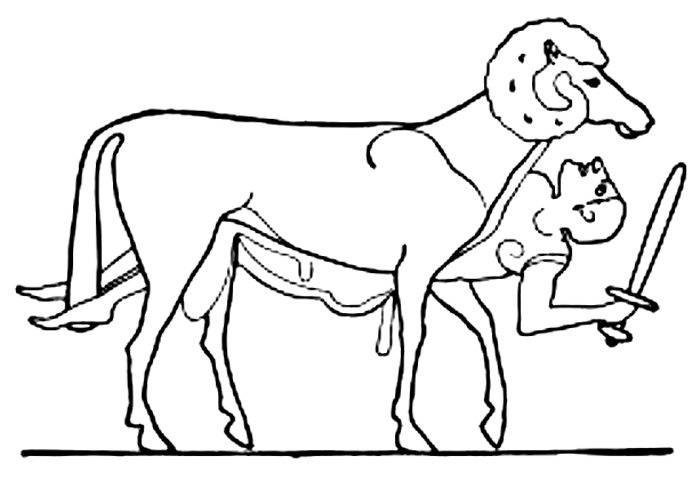
BOOK X.
Odysseus, his entertainment by Aeolus, of whom he received a fair wind for thepresent, and all the rest of the winds tied up in a bag; which his men untying,flew out, and carried him back to Aeolus, who refused to receive him. Hisadventure at Laestrygonia with Antiphates, where of twelve ships he losteleven, men and all. How he went thence to the Isle of Aea, where half of hismen were turned by Circe into swine, and how he went himself, and by the helpof Hermes recovered them and stayed with Circe a year.
“Then we came to the isle Aeolian, where dwelt Aeolus, son of Hippotas,dear too the deathless gods, in a floating island, and all about it is a wallof bronze unbroken, and the cliff runs up sheer from the sea. His twelvechildren to abide there in his halls, six daughters and six lusty sons; and,behold, he gave his daughters to his sons to wife. And they feast evermore bytheir dear father and their kind mother, and dainties innumerable lie ready totheir hands. And the house is full of the savour of feasting, and the noisethereof rings round, yea in the courtyard, by day, and in the night they sleepeach one by his chaste wife in coverlets and on jointed bedsteads. So then wecame to their city and their goodly dwelling, and the king entreated me kindlyfor a whole month, and sought out each thing, Ilios and the ships of theArgives, and the return of the Achaeans. So I told him all the tale in orderduly. But when I in turn took the word and asked of my journey, and bade himsend me on my way, he too denied me not, but furnished an escort. He gave me awallet, made of the hide of an ox of nine seasons old, which he let flay, andtherein he bound the ways of all the noisy winds; for him the son of Cronosmade keeper of the winds, either to lull or to rouse what blasts he will. Andhe made it fast in the hold of the ship with a shining silver thong, that notthe faintest breath might escape. Then he sent forth the blast of the West Windto blow for me, to bear our ships and ourselves upon our way; but this he wasnever to bring to pass, for we were undone through our own heedlessness.
“For nine whole days we sailed by night and day continually, and now onthe tenth day my native land came in sight, and already we were so near that webeheld the folk tending the beacon fires. Then over me there came sweet slumberin my weariness, for all the time I was holding the sheet, nor gave it to anyof my company, that so we might come quicker to our own country. Meanwhile mycompany held converse together, and said that I was bringing home for myselfgold and silver, gifts from Aeolus the high-hearted son of Hippotas. And thuswould they speak looking each man to his neighbour:
“‘Lo now, how beloved he is and highly esteemed among all men, tothe city and land of whomsoever he may come. Many are the goodly treasures hetaketh with him out of the spoil from Troy, while we who have fulfilled likejourneying with him return homeward bringing with us but empty hands. And nowAeolus hath given unto him these things freely in his love. Nay come, let usquickly see what they are, even what wealth of gold and silver is in thewallet.’
“So they spake, and the evil counsel of my company prevailed. They loosedthe wallet, and all the winds brake forth. And the violent blast seized my men,and bare them towards the high seas weeping, away from their own country; butas for me, I awoke and communed with my great heart, whether I should castmyself from the ship and perish in the deep, or endure in silence and abide yetamong the living. Howbeit I hardened my heart to endure, and muffling my head Ilay still in the ship. But the vessels were driven by the evil storm-wind backto the isle Aeolian, and my company made moan.
“There we stepped ashore and drew water, and my company presently tooktheir midday meal by the swift ships. Now when we had tasted bread and wine, Itook with me a herald and one of my company, and went to the famous dwelling ofAeolus: and I found him feasting with his wife and children. So we went in andsat by the pillars of the door on the threshold, and they all marvelled andasked us:
“‘How hast thou come hither, Odysseus? What evil god assailed thee?Surely we sent thee on thy way with all diligence, that thou mightest get theeto thine own country and thy home, and whithersoever thou wouldest.’
“Even so they said, but I spake among them heavy at heart: ‘My evilcompany hath been my bane, and sleep thereto remorseless. Come, my friends, doye heal the harm, for yours is the power.’
“So I spake, beseeching them in soft words, but they held their peace.And the father answered, saying: ‘Get thee forth from the islandstraightway, thou that art the most reprobate of living men. Far be it from meto help or to further that man whom the blessed gods abhor! Get thee forth, forlo, thy coming marks thee hated by the deathless gods.’
“Therewith he sent me forth from the house making heavy moan. Thence wesailed onwards stricken at heart. And the spirit of the men was spent beneaththe grievous rowing by reason of our vain endeavour, for there was no more anysign of a wafting wind. So for the space of six days we sailed by night and daycontinually, and on the seventh we came to the steep stronghold of Lamos,Telepylos of the Laestrygons, where herdsman hails herdsman as he drives in hisflock, and the other who drives forth answers the call. There might a sleeplessman have earned a double wage, the one as neat-herd, the other shepherdingwhite flocks: so near are the outgoings of the night and of the day. Thitherwhen he had come to the fair haven, whereabout on both sides goes one steepcliff unbroken and jutting headlands over against each other stretch forth atthe mouth of the harbour, and strait is the entrance; thereinto all the otherssteered their curved ships. Now the vessels were bound within the hollowharbour each hard by other, for no wave ever swelled within it, great or small,but there was a bright calm all around. But I alone moored my dark ship withoutthe harbour, at the uttermost point thereof, and made fast the hawser to arock. And I went up a craggy hill, a place of out-look, and stood thereon:thence there was no sign of the labour of men or oxen, only we saw the smokecurling upward from the land. Then I sent forth certain of my company to go andsearch out what manner of men they were who here live upon the earth by bread,choosing out two of my company and sending a third with them as herald. Nowwhen they had gone ashore, they went along a level road whereby wains were wontto draw down wood from the high hills to the town. And without the town theyfell in with a damsel drawing water, the noble daughter of LaestrygonianAntiphates. She had come down to the clear-flowing spring Artacia, for thenceit was custom to draw water to the town. So they stood by her and spake untoher, and asked who was king of that land, and who they were he ruled over. Thenat once she showed them the high-roofed hall of her father. Now when they hadentered the renowned house, they found his wife therein: she was huge of bulkas a mountain peak and was loathly in their sight. Straightway she called therenowned Antiphates, her lord, from the assembly-place, and he contrived apitiful destruction for my men. Forthwith he clutched up one of my company andmade ready his midday meal, but the other twain sprang up and came in flight tothe ships. Then he raised the war cry through the town, and the valiantLaestrygons at the sound thereof, flocked together from every side, a host pastnumber, not like men but like the Giants. They cast at us from the cliffs withgreat rocks, each of them a man’s burden, and anon there arose from thefleet an evil din of men dying and ships shattered withal. And like folkspearing fishes they bare home their hideous meal. While as yet they wereslaying my friends within the deep harbour, I drew my sharp sword from mythigh, and with it cut the hawsers of my dark-prowed ship. Quickly then Icalled to my company, and bade them dash in with the oars, that we might cleanescape this evil plight. And all with one accord they tossed the sea water withthe oar-blade, in dread of death, and to my delight my barque flew forth to thehigh seas away from the beetling rocks, but those other ships were lost there,one and all.
“Thence we sailed onward stricken at heart, yet glad as men saved fromdeath, albeit we had lost our dear companions. And we came to the isle Aeaean,where dwelt Circe of the braided tresses, an awful goddess of mortal speech,own sister to the wizard Aeetes. Both were begotten of Helios, who gives lightto all men, and their mother was Perse, daughter of Oceanus. There on the shorewe put in with our ship into the sheltering haven silently, and some god wasour guide. Then we stept ashore, and for two days and two nights lay there,consuming our own hearts for weariness and pain. But when now the fair-tressedDawn had brought the full light of the third day, then did I seize my spear andmy sharp sword, and quickly departing from the ship I went up unto a place ofwide prospect, if haply I might see any sign of the labour of men and hear thesound of their speech. So I went up a craggy hill, a place of out-look, and Isaw the smoke rising from the broad-wayed earth in the halls of Circe, throughthe thick coppice and the woodland. Then I mused in my mind and heart whether Ishould go and make discovery, for that I had seen the smoke and flame. And as Ithought thereon this seemed to me the better counsel, to go first to the swiftship and to the sea-banks, and give my company their midday meal, and then sendthem to make search. But as I came and drew nigh to the curved ship, some godeven then took pity on me in my loneliness, and sent a tall antlered stagacross my very path. He was coming down from his pasture in the woodland to theriver to drink, for verily the might of the sun was sore upon him. And as hecame up from out of the stream, I smote him on the spine in the middle of theback, and the brazen shaft went clean through him, and with a moan he fell inthe dust, and his life passed from him. Then I set my foot on him and drewforth the brazen shaft from the wound, and laid it hard by upon the ground andlet it lie. Next I broke withies and willow twigs, and wove me a rope a fathomin length, well twisted from end to end, and bound together the feet of thehuge beast, and went to the black ship bearing him across my neck, and leaningon a spear, for it was in no wise possible to carry him on my shoulder with theone hand, for he was a mighty quarry. And I threw him down before the ship androused my company with soft words, standing by each man in turn:
“‘Friends, for all our sorrows we shall not yet a while go down tothe house of Hades, ere the coming of the day of destiny; go to then, while asyet there is meat and drink in the swift ship, let us take thought thereof,that we be not famished for hunger.’
“Even so I spake, and they speedily hearkened to my words. They unmuffledtheir heads, and there on the shore of the unharvested sea gazed at the stag,for he was a mighty quarry. But after they had delighted their eyes with thesight of him, they washed their hands and got ready the glorious feast. So forthat time we sat the livelong day till the going down of the sun, feasting onabundant flesh and sweet wine. But when the sun sank and darkness had come on,then we laid us to rest upon the sea beach. So soon as early Dawn shone forth,the rosy-fingered, I called a gathering of my men and spake in the ears of themall:
“‘Hear my works, my fellows, despite your evil case. My friends,lo, now we know not where is the place of darkness or of dawning, nor where theSun, that gives light to men, goes beneath the earth, nor where he rises;therefore let us advise us speedily if any counsel yet may be: as for me, Ideem there is none. For I went up a craggy hill, a place of out-look, and sawthe island crowned about with the circle of the endless sea, the isle itselflying low; and in the midst thereof mine eyes beheld the smoke through thethick coppice and the woodland.’
“Even so I spake, but their spirit within them was broken, as theyremembered the deeds of Antiphates the Laestrygonian, and all the evil violenceof the haughty Cyclops, the man-eater. So they wept aloud shedding big tears.Howbeit no avail came of their weeping.
“Then I numbered my goodly-greaved company in two bands, and appointed aleader for each, and I myself took the command of the one part, and godlikeEurylochus of the other. And anon we shook the lots in a brazen-fitted helmet,and out leapt the lot of proud Eurylochus. So he went on his way, and with himtwo and twenty of my fellowship all weeping; and we were left behind makinglament. In the forest glades they found the halls of Circe builded, of polishedstone, in a place with wide prospect. And all around the palace mountain-bredwolves and lions were roaming, whom she herself had bewitched with evil drugsthat she gave them. Yet the beasts did not set on my men, but lo, they rampedabout them and fawned on them, wagging their long tails. And as when dogs fawnabout their lord when he comes from the feast, for he always brings them thefragments that soothe their mood, even so the strong-clawed wolves and thelions fawned around them; but they were affrighted when they saw the strangeand terrible creatures. So they stood at the outer gate of the fair-tressedgoddess, and within they heard Circe singing in a sweet voice, as she fared toand fro before the great web imperishable, such as is the handiwork ofgoddesses, fine of woof and full of grace and splendour. Then Polites, a leaderof men, the dearest to me and the trustiest of all my company, first spake tothem:
“‘Friends, forasmuch as there is one within that fares to and frobefore a mighty web singing a sweet song, so that all the floor of the hallmakes echo, a goddess she is or a woman; come quickly and cry aloud toher.’
“He spake the word and they cried aloud and called to her. Andstraightway she came forth and opened the shining doors and bade them in, andall went with her in their heedlessness. But Eurylochus tarried behind, for heguessed that there was some treason. So she led them in and set them uponchairs and high seats, and made them a mess of cheese and barley-meal andyellow honey with Pramnian wine, and mixed harmful drugs with the food to makethem utterly forget their own country. Now when she had given them the cup andthey had drunk it off, presently she smote them with a wand, and in the styesof the swine she penned them. So they had the head and voice, the bristles andthe shape of swine, but their mind abode even as of old. Thus were they pennedthere weeping, and Circe flung them acorns and mast and fruit of the corneltree to eat, whereon wallowing swine do always batten.
“Now Eurylochus came back to the swift black ship to bring tidings of hisfellows, and of their unseemly doom. Not a word could he utter, for all hisdesire, so deeply smitten was he to the heart with grief, and his eyes werefilled with tears and his soul was fain of lamentation. But when we all hadpressed him with our questions in amazement, even then he told the fate of theremnant of our company.
“‘We went, as thou didst command, through the coppice, nobleOdysseus: we found within the forest glades the fair halls, builded of polishedstone, in a place with wide prospect. And there was one that fared before amighty web and sang a clear song, a goddess she was or a woman, and they criedaloud and called to her. And straightway she came forth, and opened the shiningdoors and bade them in, and they all went with her in their heedlessness. But Itarried behind, for I guessed that there was some treason. Then they vanishedaway one and all, nor did any of them appear again, though I sat long timewatching.’
“So spake he, whereon I cast about my shoulder my silver-studded sword, agreat blade of bronze, and slung my bow about me and bade him lead me again bythe way that he came. But he caught me with both hands, and by my knees hebesought me, and bewailing him spake to me winged words:
“‘Lead me not thither against my will, oh fosterling of Zeus, butleave me here! For well I know thou shalt thyself return no more, nor bring anyone of all thy fellowship; nay, let us flee the swifter with those that behere, for even yet may we escape the evil day.’
“On this wise he spake, but I answered him, saying: ‘Eurylochus,abide for thy part here in this place, eating and drinking by the black hollowship: but I will go forth, for a strong constraint is laid on me.’
“With that I went up from the ship and the sea-shore. But lo, when in myfaring through the sacred glades I was now drawing near to the great hall ofthe enchantress Circe, then did Hermes, of the golden wand, meet me as Iapproached the house, in the likeness of a young man with the first down on hislip, the time when youth is most gracious. So he clasped my hand and spake andhailed me:
“‘Ah, hapless man, whither away again, all alone through the wolds,thou that knowest not this country? And thy company yonder in the hall of Circeare penned in the guise of swine, in their deep lairs abiding. Is it in hope tofree them that thou art come hither? Nay, methinks, thou thyself shalt neverreturn but remain there with the others. Come then, I will redeem thee from thydistress, and bring deliverance. Lo, take this herb of virtue, and go to thedwelling of Circe, that it may keep from thy head the evil day. And I will tellthee all the magic sleight of Circe. She will mix thee a potion and cast drugsinto the mess; but not even so shall she be able to enchant thee; so helpful isthis charmed herb that I shall give thee, and I will tell thee all. When itshall be that Circe smites thee with her long wand, even then draw thou thysharp sword from thy thigh, and spring on her, as one eager to slay her. Andshe will shrink away and be instant with thee to lie with her. Thenceforthdisdain not thou the bed of the goddess, that she may deliver thy company andkindly entertain thee. But command her to swear a mighty oath by the blessedgods, that she will plan nought else of mischief to thine own hurt, lest shemake thee a dastard and unmanned, when she hath thee naked.’
“Therewith the slayer of Argos gave me the plant that he had plucked fromthe ground, and he showed me the growth thereof. It was black at the root, butthe flower was like to milk. Moly the gods call it, but it is hard for mortalmen to dig; howbeit with the gods all things are possible.
“Then Hermes departed toward high Olympus, up through the woodland isle,but as for me I held on my way to the house of Circe, and my heart was darklytroubled as I went. So I halted in the portals of the fair-tressed goddess;there I stood and called aloud and the goddess heard my voice, who presentlycame forth and opened the shining doors and bade me in, and I went with herheavy at heart. So she led me in and set me on a chair with studs of silver, agoodly carven chair, and beneath was a footstool for the feet. And she made mea potion in a golden cup, that I might drink, and she also put a charm therein,in the evil counsel of her heart.
“Now when she had given it and I had drunk it off and was not bewitched,she smote me with her wand and spake and hailed me:
“‘Go thy way now to the stye, couch thee there with the rest of thycompany.’
“So spake she, but I drew my sharp sword from my thigh and sprang uponCirce, as one eager to slay her. But with a great cry she slipped under, andclasped my knees, and bewailing herself spake to me winged words:
“‘Who art thou of the sons of men, and whence? Where is thy city?Where are they that begat thee? I marvel to see how thou hast drunk of thischarm, and wast nowise subdued. Nay, for there lives no man else that is proofagainst this charm, whoso hath drunk thereof, and once it hath passed his lips.But thou hast, methinks, a mind within thee that may not be enchanted. Verilythou art Odysseus, ready at need, whom he of the golden wand, the slayer ofArgos, full often told me was to come hither, on his way from Troy with hisswift black ship. Nay come, put thy sword into the sheath, and thereafter letus go up into my bed, that meeting in love and sleep we may trust each theother.’
“So spake she, but I answered her, saying: ‘Nay, Circe, how canstthou bid me be gentle to thee, who hast turned my company into swine within thyhalls, and holding me here with a guileful heart requirest me to pass withinthy chamber and go up into thy bed, that so thou mayest make me a dastard andunmanned when thou hast me naked? Nay, never will I consent to go up into thybed, except thou wilt deign, goddess, to swear a mighty oath, that thou wiltplan nought else of mischief to mine own hurt.’
“So I spake, and she straightway swore the oath not to harm me, as I badeher. But when she had sworn and had done that oath, then at last I went up intothe beautiful bed of Circe.
“Now all this while her handmaids busied them in the halls, four maidensthat are her serving women in the house. They are born of the wells and of thewoods and of the holy rivers, that flow forward into the salt sea. Of these onecast upon the chairs goodly coverlets of purple above, and spread a linen cloththereunder. And lo, another drew up silver tables to the chairs, and thereonset for them golden baskets. And a third mixed sweet honey-hearted wine in asilver bowl, and set out cups of gold. And a fourth bare water, and kindled agreat fire beneath the mighty cauldron. So the water waxed warm; but when itboiled in the bright brazen vessel, she set me in a bath and bathed me withwater from out a great cauldron, pouring it over head and shoulders, when shehad mixed it to a pleasant warmth, till from my limbs she took away theconsuming weariness. Now after she had bathed me and anointed me well witholive oil, and cast about me a fair mantle and a doublet, she led me into thehalls and set me on a chair with studs of silver, a goodly carven chair, andbeneath was a footstool for the feet. And a handmaid bare water for the handsin a goodly golden ewer, and poured it forth over a silver basin to washwithal; and to my side she drew a polished table, and a grave dame bare wheatenbread and set it by me, and laid on the board many dainties, giving freely ofsuch things as she had by her. And she bade me eat, but my soul found nopleasure therein. I sat with other thoughts, and my heart had a boding of ill.
“Now when Circe saw that I sat thus, and that I put not forth my hands tothe meat, and that I was mightily afflicted, she drew near to me and spake tome winged words:
“‘Wherefore thus, Odysseus, dost thou sit there like a speechlessman, consuming thine own soul, and dost not touch meat nor drink? Dost thouindeed deem there is some further guile? Nay, thou hast no cause to fear, foralready I have sworn thee a strong oath not to harm thee.’
“So spake she, but I answered her, saying: ‘Oh, Circe, whatrighteous man would have the heart to taste meat and drink ere he had redeemedhis company, and beheld them face to face? But if in good faith thou biddest meeat and drink, then let them go free, that mine eyes may behold my dearcompanions.’
“So I spake, and Circe passed out through the hall with the wand in herhand, and opened the doors of the stye, and drave them forth in the shape ofswine of nine seasons old. There they stood before her, and she went throughtheir midst, and anointed each one of them with another charm. And lo, fromtheir limbs the bristles dropped away, wherewith the venom had erewhile clothedthem, that lady Circe gave them. And they became men again, younger than beforethey were, and goodlier far, and taller to behold. And they all knew me againand each one took my hands, and wistful was the lament that sank into theirsouls, and the roof around rang wondrously. And even the goddess herself wasmoved with compassion.
“Then standing nigh me the fair goddess spake unto me: ‘Son ofLaertes, of the seed of Zeus, Odysseus of many devices, depart now to thy swiftship and the sea-banks. And first of all, draw ye up the ship ashore, andbestow the goods in the caves and all the gear. And thyself return again, andbring with thee thy dear companions.’
“So spake she, and my lordly spirit consented thereto. So I went on myway to the swift ship and the sea-banks, and there I found my dear company onthe swift ship lamenting piteously, shedding big tears. And as when calves ofthe homestead gather round the droves of kine that have returned to the yard,when they have had their fill of pasture, and all with one accord frisk beforethem, and the folds may no more contain them, but with a ceaseless lowing theyskip about their dams, so flocked they all about me weeping, when their eyesbeheld me. Yea, and to their spirit it was as though they had got to their dearcountry, and the very city of rugged Ithaca, where they were born and reared.
“Then making lament they spake to me winged words: ‘O fosterling ofZeus, we were none otherwise glad at thy returning, than if we had come toIthaca, our own country. Nay come, of our other companions tell us the tale oftheir ruin.’
“So spake they, but I answered them with soft words: ‘Behold, letus first of all draw up the ship ashore, and bestow our goods in the caves andall our gear. And do ye bestir you, one and all, to go with me, that ye may seeyour fellows in the sacred dwelling of Circe, eating and drinking, for theyhave continual store.’
“So spake I, and at once they hearkened to my words, but Eurylochus alonewould have holden all my companions, and uttering his voice he spake to themwinged words:
“‘Wretched men that we are! whither are we going? Why are yourhearts so set on sorrow that ye should go down to the hall of Circe, who willsurely change us all to swine, or wolves, or lions, to guard her great houseperforce, according to the deeds that the Cyclops wrought, when certain of ourcompany went to his inmost fold, and with them went Odysseus, ever hardy, forthrough the blindness of his heart did they too perish?’
“So spake he, but I mused in my heart whether to draw my long hanger frommy stout thigh, and therewith smite off his head and bring it to the dust,albeit he was very near of kin to me; but the men of my company stayed me onevery side with soothing words:
“‘Prince of the seed of Zeus, as for this man, we will suffer him,if thou wilt have it so, to abide here by the ship and guard the ship; but asfor us, be our guide to the sacred house of Circe.’
“So they spake and went up from the ship and the sea. Nay, nor yet wasEurylochus left by the hollow ship, but he went with us, for he feared myterrible rebuke.
“Meanwhile Circe bathed the rest of my company in her halls with allcare, and anointed them well with olive oil; and cast thick mantles anddoublets about them. And we found them all feasting nobly in the halls. Andwhen they saw and knew each other face to face, they wept and mourned, and thehouse rang around. Then she stood near me, that fair goddess, and spake saying:
“‘Son of Laertes, of the seed of Zeus, Odysseus of many devices, nomore now wake this plenteous weeping: myself I know of all the pains ye enduredupon the teeming deep, and the great despite done you by unkindly men upon theland. Nay come, eat ye meat and drink wine, till your spirit shall return toyou again, as it was when first ye left your own country of rugged Ithaca; butnow are ye wasted and wanting heart, mindful evermore of your sore wandering,nor has your heart ever been merry, for very grievous hath been yourtrial.’
“So spake she, and our lordly spirit consented thereto. So there we satday by day for the full circle of a year, feasting on abundant flesh and sweetwine. But when now a year had gone, and the seasons returned as the monthswaned, and the long days came in their course, then did my dear company call meforth, and say:
“‘Good sir, now is it high time to mind thee of thy native land, ifit is ordained that thou shalt be saved, and come to thy lofty house and thineown country.’
“So spake they and my lordly spirit consented thereto. So for that timewe sat the livelong day till the going down of the sun, feasting on abundantflesh and sweet wine. But when the sun sank and darkness came on, they laidthem to rest throughout the shadowy halls.
“But when I had gone up into the fair bed of Circe, I besought her by herknees, and the goddess heard my speech, and uttering my voice I spake to herwinged words: ‘Circe, fulfil for me the promise which thou madest me tosend me on my homeward way. Now is my spirit eager to be gone, and the spiritof my company, that wear away my heart as they mourn around me, when haply thouart gone from us.’
“So spake I, and the fair goddess answered me anon: ‘Son ofLaertes, of the seed of Zeus, Odysseus of many devices, tarry ye now no longerin my house against your will; but first must ye perform another journey, andreach the dwelling of Hades and of dread Persephone to seek to the spirit ofTheban Teiresias, the blind soothsayer, whose wits abide steadfast. To himPersephone hath given judgment, even in death, that he alone should haveunderstanding; but the other souls sweep shadow-like around.’
“Thus spake she, but as for me, my heart was broken, and I wept as I satupon the bed, and my soul had no more care to live and to see the sunlight. Butwhen I had my fill of weeping and grovelling, then at the last I answered andspake unto her saying: ‘And who, Circe, will guide us on this way? for noman ever yet sailed to hell in a black ship.’
“So spake I, and the fair goddess answered me anon: ‘Son ofLaertes, of the seed of Zeus, Odysseus of many devices, nay, trouble notthyself for want of a guide, by thy ship abiding, but set up the mast andspread abroad the white sails and sit thee down; and the breeze of the NorthWind will bear thy vessel on her way. But when thou hast now sailed in thy shipacross the stream Oceanus, where is a waste shore and the groves of Persephone,even tall poplar trees and willows that shed their fruit before the season,there beach thy ship by deep eddying Oceanus, but go thyself to the dank houseof Hades. Thereby into Acheron flows Pyriphlegethon, and Cocytus, a branch ofthe water of the Styx, and there is a rock, and the meeting of the two roaringwaters. So, hero, draw nigh thereto, as I command thee, and dig a trench as itwere a cubit in length and breadth, and about it pour a drink-offering to allthe dead, first with mead and thereafter with sweet wine, and for the thirdtime with water, and sprinkle white meal thereon; and entreat with many prayersthe strengthless heads of the dead, and promise that on thy return to Ithacathou wilt offer in thy halls a barren heifer, the best thou hast, and will fillthe pyre with treasure, and wilt sacrifice apart, to Teiresias alone, a blackram without spot, the fairest of your flock. But when thou hast with prayersmade supplication to the lordly races of the dead, then offer up a ram and ablack ewe, bending their heads towards Erebus and thyself turn thy back, withthy face set for the shore of the river. Then will many spirits come to thee ofthe dead that be departed. Thereafter thou shalt call to thy company andcommand them to flay the sheep which even now lie slain by the pitiless sword,and to consume them with fire, and to make prayer to the gods, to mighty Hadesand to dread Persephone. And thyself draw the sharp sword from thy thigh andsit there, suffering not the strengthless heads of the dead to draw nigh to theblood, ere thou hast word of Teiresias. Then the seer will come to theequickly, leader of the people; he will surely declare to thee the way and themeasure of thy path, and as touching thy returning, how thou mayst go over theteeming deep.’
“So spake she, and anon came the golden throned Dawn. Then she put on mea mantle and a doublet for raiment, and the nymph clad herself in a greatshining robe, light of woof and gracious, and about her waist she cast a fairgolden girdle, and put a veil upon her head. But I passed through the halls androused my men with smooth words, standing by each one in turn:
“‘Sleep ye now no more nor breathe sweet slumber; but let us go onour way, for surely she hath shown me all, the lady Circe.’
“So spake I, and their lordly soul consented thereto. Yet even thence Iled not my company safe away. There was one, Elpenor, the youngest of us all,not very valiant in war neither steadfast in mind. He was lying apart from therest of my men on the housetop of Circe’s sacred dwelling, very fain ofthe cool air, as one heavy with wine. Now when he heard the noise of the voicesand of the feet of my fellows as they moved to and fro, he leaped up of asudden and minded him not to descend again by the way of the tall ladder, butfell right down from the roof, and his neck was broken from the bones of thespine, and his spirit went down to the house of Hades.
“Then I spake among my men as they went on their way, saying: ‘Yedeem now, I see, that ye are going to your own dear country; but Circe hathshowed us another way, even to the dwelling of Hades and of dread Persephone,to seek to the spirit of Theban Teiresias.’
“Even so I spake, but their heart within them was broken, and they satthem down even where they were, and made lament and tore their hair. Howbeit nohelp came of their weeping.
“But as we were now wending sorrowful to the swift ship and thesea-banks, shedding big tears, Circe meanwhile had gone her ways and made fasta ram and a black ewe by the dark ship, lightly passing us by: who may behold agod against his will, whether going to or fro?”
BOOK XI.
Odysseus, his descent into hell, and discourses with the ghosts of the deceasedheroes.
“Now when we had gone down to the ship and to the sea, first of all wedrew the ship unto the fair salt water and placed the mast and sails in theblack ship, and took those sheep and put them therein, and ourselves tooclimbed on board, sorrowing, and shedding big tears. And in the wake of ourdark-prowed ship she sent a favouring wind that filled the sails, a kindlyescort,—even Circe of the braided tresses, a dread goddess of humanspeech. And we set in order all the gear throughout the ship and sat us down;and the wind and the helmsman guided our barque. And all day long her sailswere stretched in her seafaring; and the sun sank and all the ways weredarkened.
“She came to the limits of the world, to the deep-flowing Oceanus. Thereis the land and the city of the Cimmerians, shrouded in mist and cloud, andnever does the shining sun look down on them with his rays, neither when heclimbs up the starry heavens, nor when again he turns earthward from thefirmament, but deadly night is outspread over miserable mortals. Thither wecame and ran the ship ashore and took out the sheep; but for our part we heldon our way along the stream of Oceanus, till we came to the place which Circehad declared to us.
“There Perimedes and Eurylochus held the victims, but I drew my sharpsword from my thigh, and dug a pit, as it were a cubit in length and breadth,and about it poured a drink-offering to all the dead, first with mead andthereafter with sweet wine, and for the third time with water. And I sprinkledwhite meal thereon, and entreated with many prayers the strengthless heads ofthe dead, and promised that on my return to Ithaca I would offer in my halls abarren heifer, the best I had, and fill the pyre with treasure, and apart untoTeiresias alone sacrifice a black ram without spot, the fairest of my flock.But when I had besought the tribes of the dead with vows and prayers, I tookthe sheep and cut their throats over the trench, and the dark blood flowedforth, and lo, the spirits of the dead that be departed gathered them from outof Erebus. Brides and youths unwed, and old men of many and evil days, andtender maidens with grief yet fresh at heart; and many there were, wounded withbronze-shod spears, men slain in fight with their bloody mail about them. Andthese many ghosts flocked together from every side about the trench with awondrous cry, and pale fear gat hold on me. Then did I speak to my company andcommand them to flay the sheep that lay slain by the pitiless sword, and toconsume them with fire, and to make prayer to the gods, to mighty Hades and todread Persephone, and myself I drew the sharp sword from my thigh and satthere, suffering not the strengthless heads of the dead to draw nigh to theblood, ere I had word of Teiresias.
“And first came the soul of Elpenor, my companion, that had not yet beenburied beneath the wide-wayed earth; for we left the corpse behind us in thehall of Circe, unwept and unburied, seeing that another task was instant on us.At the sight of him I wept and had compassion on him, and uttering my voicespake to him winged words: ‘Elpenor, how hast thou come beneath thedarkness and the shadow? Thou hast come fleeter on foot than I in my blackship.’
“So spake I, and with a moan he answered me, saying: ‘Son ofLaertes, of the seed of Zeus, Odysseus of many devices, an evil doom of somegod was my bane and wine out of measure. When I laid me down on the house-topof Circe I minded me not to descend again by the way of the tall ladder, butfell right down from the roof, and my neck was broken off from the bones of thespine, and my spirit went down to the house of Hades. And now I pray thee inthe name of those whom we left, who are no more with us, thy wife, and thy sirewho cherished thee when as yet thou wert a little one, and Telemachus, whomthou didst leave in thy halls alone; forasmuch as I know that on thy way hencefrom out the dwelling of Hades, thou wilt stay thy well-wrought ship at theisle Aeaean, even then, my lord, I charge thee to think on me. Leave me notunwept and unburied as thou goest hence, nor turn thy back upon me, lest haplyI bring on thee the anger of the gods. Nay, burn me there with mine armour, allthat is mine, and pile me a barrow on the shore of the grey sea, the grave of aluckless man, that even men unborn may hear my story. Fulfil me this and plantupon the barrow mine oar, wherewith I rowed in the days of my life, while yet Iwas among my fellows.’
“Even so he spake, and I answered him saying: ‘All this, lucklessman, will I perform for thee and do.’
“Even so we twain were sitting holding sad discourse, I on the one side,stretching forth my sword over the blood, while on the other side the ghost ofmy friend told all his tale.
“Anon came up the soul of my mother dead, Anticleia, the daughter ofAutolycus the great-hearted, whom I left alive when I departed for sacredIlios. At the sight of her I wept, and was moved with compassion, yet even so,for all my sore grief, I suffered her not to draw nigh to the blood, ere I hadword of Teiresias.
“Anon came the soul of Theban Teiresias, with a golden sceptre in hishand, and he knew me and spake unto me: ‘Son of Laertes, of the seed ofZeus, Odysseus of many devices, what seekest thou NOW, wretched man, whereforehast thou left the sunlight and come hither to behold the dead and a landdesolate of joy? Nay, hold off from the ditch and draw back thy sharp sword,that I may drink of the blood and tell thee sooth.’
“So spake he and I put up my silver-studded sword into the sheath, andwhen he had drunk the dark blood, even then did the noble seer speak unto me,saying: Thou art asking of thy sweet returning, great Odysseus, but that willthe god make hard for thee; for methinks thou shalt not pass unheeded by theShaker of the Earth, who hath laid up wrath in his heart against thee, for rageat the blinding of his dear son. Yet even so, through many troubles, ye maycome home, if thou wilt restrain thy spirit and the spirit of thy men so soonas thou shalt bring thy well-wrought ship nigh to the isle Thrinacia, fleeingthe sea of violet blue, when ye find the herds of Helios grazing and his braveflocks, of Helios who overseeth all and overheareth all things. If thou doestthese no hurt, being heedful of thy return, so may ye yet reach Ithaca, albeitin evil case. But if thou hurtest them, I foreshow ruin for thy ship and forthy men, and even though thou shalt thyself escape, late shalt thou return inevil plight, with the loss of all thy company, on board the ship of strangers,and thou shalt find sorrows in thy house, even proud men that devour thyliving, while they woo thy godlike wife and offer the gifts of wooing. Yet Itell thee, on thy coming thou shalt avenge their violence. But when thou hastslain the wooers in thy halls, whether by guile, or openly with the edge of thesword, thereafter go thy way, taking with thee a shapen oar, till thou shaltcome to such men as know not the sea, neither eat meat savoured with salt; yea,nor have they knowledge of ships of purple cheek, nor shapen oars which servefor wings to ships. And I will give thee a most manifest token, which cannotescape thee. In the day when another wayfarer shall meet thee and say that thouhast a winnowing fan on thy stout shoulder, even then make fast thy shapen oarin the earth and do goodly sacrifice to the lord Poseidon, even with a ram anda bull and a boar, the mate of swine, and depart for home and offer holyhecatombs to the deathless gods that keep the wide heaven, to each in orderdue. And from the sea shall thine own death come, the gentlest death that maybe, which shall end thee foredone with smooth old age, and the folk shall dwellhappily around thee. This that I say is sooth.’
“So spake he, and I answered him, saying: ‘Teiresias, all thesethreads, methinks, the gods themselves have spun. But come, declare me this andplainly tell me all. I see here the spirit of my mother dead; lo, she sits insilence near the blood, nor deigns to look her son in the face nor speak tohim! Tell me, prince, how may she know me again that I am he?’
“So spake I, and anon he answered me, and said: ‘I will tell theean easy saying, and will put it in thy heart. Whomsoever of the dead that bedeparted thou shalt suffer to draw nigh to the blood, he shall tell thee sooth;but if thou shalt grudge any, that one shall go to his own place again.’Therewith the spirit of the prince Teiresias went back within the house ofHades, when he had told all his oracles. But I abode there steadfastly, till mymother drew nigh and drank the dark blood; and at once she knew me, andbewailing herself spake to me winged words:
“‘Dear child, how didst thou come beneath the darkness and theshadow, thou that art a living man? Grievous is the sight of these things tothe living, for between us and you are great rivers and dreadful streams;first, Oceanus, which can no wise be crossed on foot, but only if one have awell wrought ship. Art thou but now come hither with thy ship and thy companyin thy long wanderings from Troy? and hast thou not yet reached Ithaca, norseen thy wife in thy halls?’
“Even so she spake, and I answered her, and said: ‘O my mother,necessity was on me to come down to the house of Hades to seek to the spirit ofTheban Teiresias. For not yet have I drawn near to the Achaean shore, nor yethave I set foot on mine own country, but have been wandering evermore inaffliction, from the day that first I went with goodly Agamemnon to Ilios ofthe fair steeds, to do battle with the Trojans. But come, declare me this andplainly tell it all. What doom overcame thee of death that lays men at theirlength? Was it a slow disease, or did Artemis the archer slay thee with thevisitation of her gentle shafts? And tell me of my father and my son, that Ileft behind me; doth my honour yet abide with them, or hath another alreadytaken it, while they say that I shall come home no more? And tell me of mywedded wife, of her counsel and her purpose, doth she abide with her son andkeep all secure, or hath she already wedded the best of the Achaeans?’
“Even so I spake, and anon my lady mother answered me: ‘Yea verily,she abideth with steadfast spirit in thy halls; and wearily for her the nightswane always and the days in shedding of tears. But the fair honour that isthine no man hath yet taken; but Telemachus sits at peace on his demesne, andfeasts at equal banquets, whereof it is meet that a judge partake, for all menbid him to their house. And thy father abides there in the field, and goes notdown to the town, nor lies he on bedding or rugs or shining blankets, but allthe winter he sleeps, where sleep the thralls in the house, in the ashes by thefire, and is clad in sorry raiment. But when the summer comes and the richharvest-tide, his beds of fallen leaves are strewn lowly all about the knoll ofhis vineyard plot. There he lies sorrowing and nurses his mighty grief, forlong desire of thy return, and old age withal comes heavy upon him. Yea andeven so did I too perish and meet my doom. It was not the archer goddess of thekeen sight, who slew me in my halls with the visitation of her gentle shafts,nor did any sickness come upon me, such as chiefly with a sad wasting draws thespirit from the limbs; nay, it was my sore longing for thee, and for thycounsels, great Odysseus, and for thy loving-kindness, that reft me of sweetlife.’
“So spake she, and I mused in my heart and would fain have embraced thespirit of my mother dead. Thrice I sprang towards her, and was minded toembrace her; thrice she flitted from my hands as a shadow or even as a dream,and sharp grief arose ever at my heart. And uttering my voice I spake to herwinged words:
“‘Mother mine, wherefore dost thou not abide me who am eager toclasp thee, that even in Hades we twain may cast our arms each about the other,and have our fill of chill lament? Is this but a phantom that the high goddessPersephone hath sent me, to the end that I may groan for more exceedingsorrow?’
“So spake I, and my lady mother answered me anon: ‘Ah me, my child,of all men most ill-fated, Persephone, the daughter of Zeus, doth in no wisedeceive thee, but even on this wise it is with mortals when they die. For thesinews no more bind together the flesh and the bones, but the great force ofburning fire abolishes these, so soon as the life hath left the white bones,and the spirit like a dream flies forth and hovers near. But haste with allthine heart toward the sunlight, and mark all this, that even hereafter thoumayest tell it to thy wife.’
“Thus we twain held discourse together; and lo, the women came up, forthe high goddess Persephone sent them forth, all they that had been the wivesand daughters of mighty men. And they gathered and flocked about the blackblood, and I took counsel how I might question them each one. And this was thecounsel that showed best in my sight. I drew my long hanger from my stalwartthigh, and suffered them not all at one time to drink of the dark blood. Sothey drew nigh one by one, and each declared her lineage, and I made questionof all.
“Then verily did I first see Tyro, sprung of a noble sire, who said thatshe was the child of noble Salmoneus, and declared herself the wife ofCretheus, son of Aeolus. She loved a river, the divine Enipeus, far the fairestof the floods that run upon the earth, and she would resort to the fair streamsof Enipeus. And it came to pass that the girdler of the world, theEarth-shaker, put on the shape of the god, and lay by the lady at the mouths ofthe whirling stream. Then the dark wave stood around them like a hill-sidebowed, and hid the god and the mortal woman. And he undid her maiden girdle,and shed a slumber over her. Now when the god had done the work of love, heclasped her hand and spake and hailed her:
“‘Woman, be glad in our love, and when the year comes round thoushalt give birth to glorious children,—for not weak are the embraces ofthe gods,—and do thou keep and cherish them. And now go home and hold thypeace, and tell it not: but behold, I am Poseidon, shaker of the earth.’
“Therewith he plunged beneath the heaving deep. And she conceived andbare Pelias and Neleus, who both grew to be mighty men, servants of Zeus.Pelias dwelt in wide Iolcos, and was rich in flocks; and that other abode insandy Pylos. And the queen of women bare yet other sons to Cretheus, even Aesonand Pheres and Amythaon, whose joy was in chariots.
“And after her I saw Antiope, daughter of Asopus, and her boast was thatshe had slept even in the arms of Zeus, and she bare two sons, Amphion andZethus, who founded first the place of seven-gated Thebes, and they made of ita fenced city, for they might not dwell in spacious Thebes unfenced, for alltheir valiancy.
“Next to her I saw Alcmene, wife of Amphitryon, who lay in the arms ofmighty Zeus, and bare Heracles of the lion-heart, steadfast in the fight. And Isaw Megara, daughter of Creon, haughty of heart, whom the strong and tirelessson of Amphitryon had to wife.
“And I saw the mother of Oedipodes, fair Epicaste, who wrought a dreaddeed unwittingly, being wedded to her own son, and he that had slain his ownfather wedded her, and straightway the gods made these things known to men. Yethe abode in pain in pleasant Thebes, ruling the Cadmaeans, by reason of thedeadly counsels of the gods. But she went down to the house of Hades, themighty warder; yea, she tied a noose from the high beam aloft, being fastholden in sorrow; while for him she left pains behind full many, even all thatthe Avengers of a mother bring to pass.
“And I saw lovely Chloris, whom Neleus wedded on a time for her beauty,and brought gifts of wooing past number. She was the youngest daughter ofAmphion, son of Iasus, who once ruled mightily in Minyan Orchomenus. And shewas queen of Pylos, and bare glorious children to her lord, Nestor andChromius, and princely Periclymenus, and stately Pero too, the wonder of allmen. All that dwelt around were her wooers; but Neleus would not give her, saveto him who should drive off from Phylace the kine of mighty Iphicles, withshambling gait and broad of brow, hard cattle to drive. And none but the nobleseer[19]took in hand to drive them; but a grievous fate from the gods fettered him,even hard bonds and the herdsmen of the wild. But when at length the months anddays were being fulfilled, as the year returned upon his course, and theseasons came round, then did mighty Iphicles set him free, when he had spokenout all the oracles; and herein was the counsel of Zeus being accomplished.
[19]Melampus
“And I saw Lede, the famous bed-fellow of Tyndareus, who bare toTyndareus two sons, hardy of heart, Castor tamer of steeds, and Polydeuces theboxer. These twain yet live, but the quickening earth is over them; and even inthe nether world they have honour at the hand of Zeus. And they possess theirlife in turn, living one day and dying the next, and they have gotten worshipeven as the gods.
“And after her I beheld Iphimedeia, bed-fellow of Aloeus, who said thatshe had lain with Poseidon, and she bare children twain, but short of life werethey, godlike Otus and far-famed Ephialtes. Now these were the tallest men thatearth, the graingiver, ever reared, and far the goodliest after the renownedOrion. At nine seasons old they were of breadth nine cubits, and nine fathomsin height. They it was who threatened to raise even against the immortals inOlympus the din of stormy war. They strove to pile Ossa on Olympus, and on OssaPelion with the trembling forest leaves, that there might be a pathway to thesky. Yea, and they would have accomplished it, had they reached the fullmeasure of manhood. But the son of Zeus, whom Leto of the fair locks bare,destroyed the twain, ere the down had bloomed beneath their temples, anddarkened their chins with the blossom of youth.
“And Phaedra and Procris I saw, and fair Ariadne, the daughter of wizardMinos, whom Theseus on a time was bearing from Crete to the hill of sacredAthens, yet had he no joy of her; for Artemis slew her ere that in sea-girtDia, by reason of the witness of Dionysus.
“And Maera and Clymene I saw, and hateful Eriphyle, who took fine goldfor the price of her dear lord’s life. But I cannot tell or name all thewives and daughters of the heroes that I saw; ere that, the immortal nightwould wane. Nay, it is even now time to sleep, whether I go to the swift shipto my company or abide here: and for my convoy you and the gods willcare.”
So spake he, and dead silence fell on all, and they were spell-bound throughoutthe shadowy halls. Then Arete of the white arms first spake among them:“Phaeacians, what think you of this man for comeliness and stature, andwithin for wisdom of heart? Moreover he is my guest, though every one of youhath his share in this honour. Wherefore haste not to send him hence, and stintnot these your gifts for one that stands in such sore need of them; for ye havemuch treasure stored in your halls by the grace of the gods.”
Then too spake among them the old man, lord Echeneus, that was an elder amongthe Phaeacians: “Friends, behold, the speech of our wise queen is notwide of the mark, nor far from our deeming, so hearken ye thereto. But onAlcinous here both word and work depend.”
Then Alcinous made answer, and spake unto him: “Yea, the word that shehath spoken shall hold, if indeed I am yet to live and bear rule among thePhaeacians, masters of the oar. Howbeit let the stranger, for all his cravingto return, nevertheless endure to abide until the morrow, till I make up thefull measure of the gift; and men shall care for his convoy, all men, but I inchief, for mine is the lordship in the land.”
And Odysseus of many counsels answered him, saying: My lord Alcinous, mostnotable of all the people, if ye bade me tarry here even for a year, and wouldspeed my convoy and give me splendid gifts, even that I would choose; andbetter would it be for me to come with a fuller hand to mine own dear country,so should I get more love and worship in the eyes of all men, whoso should seeme after I was returned to Ithaca.”
And Alcinous answered him, saying: “Odysseus, in no wise do we deem thee,we that look on thee, to be a knave or a cheat, even as the dark earth rearsmany such broadcast, fashioning lies whence none can even see his way therein.But beauty crowns thy words, and wisdom is within thee; and thy tale, as when aminstrel sings, thou hast told with skill, the weary woes of all the Argivesand of thine own self. But come, declare me this and plainly tell it all. Didstthou see any of thy godlike company who went up at the same time with thee toIlios and there met their doom? Behold, the night is of great length,unspeakable, and the time for sleep in the hall is not yet; tell me thereforeof those wondrous deeds. I could abide even till the bright dawn, so long asthou couldst endure to rehearse me these woes of thine in the hall.”
And Odysseus of many counsels answered him, saying: “My lord Alcinous,most notable of all the people, there is a time for many words and there is atime for sleep. But if thou art eager still to listen, I would not for my partgrudge to tell thee of other things more pitiful still, even the woes of mycomrades, those that perished afterward, for they had escaped with their livesfrom the dread war-cry of the Trojans, but perished in returning by the will ofan evil woman.
“Now when holy Persephone had scattered this way and that the spirits ofthe women folk, thereafter came the soul of Agamemnon, son of Atreus,sorrowing; and round him others were gathered, the ghosts of them who had diedwith him in the house of Aegisthus and met their doom. And he knew mestraightway when he had drunk the dark blood, yea, and he wept aloud, and shedbig tears as he stretched forth his hands in his longing to reach me. But itmight not be, for he had now no steadfast strength nor power at all in moving,such as was aforetime in his supple limbs.
“At the sight of him I wept and was moved with compassion, and utteringmy voice, spake to him winged words: ‘Most renowned son of Atreus,Agamemnon, king of men, say what doom overcame thee of death that lays men attheir length? Did Poseidon smite thee in thy ships, raising the dolorous blastof contrary winds, or did unfriendly men do thee hurt upon the land, whilstthou wert cutting off their oxen and fair flocks of sheep, or fighting to win acity and the women thereof?’
“So spake I, and straightway he answered, and said unto me: ‘Son ofLaertes, of the seed of Zeus, Odysseus of many devices, it was not Poseidonthat smote me in my ships, and raised the dolorous blast of contrary winds, nordid unfriendly men do me hurt upon the land, but Aegisthus it was that wroughtme death and doom and slew me, with the aid of my accursed wife, as one slaysan ox at the stall, after he had bidden me to his house, and entertained me ata feast. Even so I died by a death most pitiful, and round me my companylikewise were slain without ceasing, like swine with glittering tusks which areslaughtered in the house of a rich and mighty man, whether at a wedding banquetor a joint-feast or a rich clan-drinking. Ere now hast thou been at the slayingof many a man, killed in single fight or in strong battle, yet thou wouldsthave sorrowed the most at this sight, how we lay in the hall round themixing-bowl and the laden boards, and the floor all ran with blood. And mostpitiful of all that I heard was the voice of the daughter of Priam, ofCassandra, whom hard by me the crafty Clytemnestra slew. Then I strove to raisemy hands as I was dying upon the sword, but to earth they fell. And thatshameless one turned her back upon me, and had not the heart to draw down myeyelids with her fingers nor to close my mouth. So surely is there nought moreterrible and shameless than a woman who imagines such evil in her heart, evenas she too planned a foul deed, fashioning death for her wedded lord. Verily Ihad thought to come home most welcome to my children and my thralls; but she,out of the depth of her evil knowledge, hath shed shame on herself and on allwomankind, which shall be for ever, even on the upright.’
“Even so he spake, but I answered him, saying: ‘Lo now, in verysooth, hath Zeus of the far-borne voice wreaked wondrous hatred on the seed ofAtreus through the counsels of woman from of old. For Helen’s sake somany of us perished, and now Clytemnestra hath practised treason against thee,while yet thou wast afar off.’
“Even so I spake, and anon he answered me, saying: ‘Wherefore dothou too, never henceforth be soft even to thy wife, neither show her all thecounsel that thou knowest, but a part declare and let part be hid. Yet shaltnot thou, Odysseus, find death at the hand of thy wife, for she is verydiscreet and prudent in all her ways, the wise Penelope, daughter of Icarius.Verily we left her a bride new wed when we went to the war, and a child was ather breast, who now, methinks, sits in the ranks of men, happy in his lot, forhis dear father shall behold him on his coming, and he shall embrace his sireas is meet. But us for my wife, she suffered me not so much as to have my fillof gazing on my son; ere that she slew me, even her lord. And yet another thingwill I tell thee, and do thou ponder it in thy heart. Put thy ship to land insecret, and not openly, on the shore of thy dear country; for there is no morefaith in woman. But come, declare me this and plainly tell it all, if haply yehear of my son as yet living, either, it may be, in Orchomenus or in sandyPylos, or perchance with Menelaus in wide Sparta, for goodly Orestes hath notyet perished on the earth.’
“Even so he spake, but I answered him, saying: ‘Son of Atreus,wherefore dost thou ask me straitly of these things? Nay I know not at all,whether he be alive or dead; it is ill to speak words light as wind.’
“Thus we twain stood sorrowing, holding sad discourse, while the bigtears fell fast: and therewithal came the soul of Achilles, son of Peleus, andof Patroclus and of noble Antilochus and of Aias, who in face and form wasgoodliest of all the Danaans, after the noble son of Peleus. And the spirit ofthe son of Aeacus, fleet of foot, knew me again, and making lament spake to mewinged words:
“‘Son of Laertes, of the seed of Zeus, Odysseus of many devices,man overbold, what new deed and hardier than this wilt thou devise in thyheart? How durst thou come down to the house of Hades, where dwell thesenseless dead, the phantoms of men outworn?’
“So he spake, but I answered him: ‘Achilles, son of Peleus,mightiest far of the Achaeans, I am come hither to seek to Teiresias, if he maytell me any counsel, how I may come to rugged Ithaca. For not yet have I comenigh the Achaean land, nor set foot on mine own soil, but am still in evilcase; while as for thee, Achilles, none other than thou wast heretofore themost blessed of men, nor shall any be hereafter. For of old, in the days of thylife, we Argives gave thee one honour with the gods, and now thou art a greatprince here among the dead. Wherefore let not thy death be any grief to thee,Achilles.’
“Even so I spake, and he straightway answered me, and said: ‘Nay,speak not comfortably to me of death, oh great Odysseus. Rather would I live onground[20]as the hireling of another, with a landless man who had no great livelihood,than bear sway among all the dead that be departed. But come, tell me tidingsof that lordly son of mine—did he follow to the war to be a leader ornot? And tell me of noble Peleus, if thou hast heard aught,—is he yetheld in worship among the Myrmidons, or do they dishonour him from Hellas toPhthia, for that old age binds him hand and foot? For I am no longer hischampion under the sun, so mighty a man as once I was, when in wide Troy I slewthe best of the host, and succoured the Argives. Ah! could I but come for anhour to my father’s house as then I was, so would I make my might andhands invincible, to be hateful to many an one of those who do him despite andkeep him from his honour.’
[20]ἐπάρουρος seems to mean“upon the earth,” “above ground,” as opposed to thedead who are below, rather than “bound to the soil,” in which sensemost commentators take it.
“Even so he spake, but I answered him saying: ‘As for noble Peleus,verily I have heard nought of him; but concerning thy dear son Neoptolemus, Iwill tell thee all the truth, according to thy word. It was I that led him upout of Scyros in my good hollow ship, in the wake of the goodly-greavedAchaeans. Now oft as we took counsel around Troy town, he was ever the first tospeak, and no word missed the mark; the godlike Nestor and I alone surpassedhim. But whensoever we Achaeans did battle on the plain of Troy, he nevertarried behind in the throng or the press of men, but ran out far before usall, yielding to none in that might of his. And many men he slew in warfaredread; but I could not tell of all or name their names, even all the host heslew in succouring the Argives; but, ah, how he smote with the sword that sonof Telephus, the hero Eurypylus, and many Ceteians[21] of his company were slainaround him, by reason of a woman’s bribe. He truly was the comeliest manthat ever I saw, next to goodly Memnon. And again when we, the best of theArgives, were about to go down into the horse which Epeus wrought, and thecharge of all was laid on me, both to open the door of our good ambush and toshut the same, then did the other princes and counsellors of the Danaans wipeaway the tears, and the limbs of each one trembled beneath him, but never oncedid I see thy son’s fair face wax pale, nor did he wipe the tears fromhis cheeks: but he besought me often to let him go forth from the horse, andkept handling his sword-hilt, and his heavy bronze-shod spear, and he was seton mischief against the Trojans. But after we had sacked the steep city ofPriam, he embarked unscathed with his share of the spoil, and with a nobleprize; he was not smitten with the sharp spear, and got no wound in closefight: and many such chances there be in war, for Ares ragethconfusedly.’
[21]See Lenormant, Premières Civilisations, vol. i. p. 289.
“So I spake, and the spirit of the son of Aeacus, fleet of foot, passedwith great strides along the mead of asphodel, rejoicing in that I had told himof his son’s renown.
“But lo, other spirits of the dead that be departed stood sorrowing, andeach one asked of those that were dear to them. The soul of Aias, son ofTelamon, alone stood apart being still angry for the victory wherein Iprevailed against him, in the suit by the ships concerning the arms ofAchilles, that his lady mother had set for a prize; and the sons of the Trojansmade award and Pallas Athene. Would that I had never prevailed and won such aprize! So goodly a head hath the earth closed over, for the sake of those arms,even over Aias, who in beauty and in feats of war was of a mould above all theother Danaans, next to the noble son of Peleus. To him then I spake softly,saying:
“‘Aias, son of noble Telamon, so art thou not even in death toforget thy wrath against me, by reason of those arms accursed, which the godsset to be the bane of the Argives? What a tower of strength fell in thy fall,and we Achaeans cease not to sorrow for thee, even as for the life of Achilles,son of Peleus! Nay, there is none other to blame, but Zeus, who hath bornewondrous hate to the army of the Danaan spearsmen, and laid on thee thy doom.Nay, come hither, my lord, that thou mayest hear my word and my speech; masterthy wrath and thy proud spirit.’
“So I spake, but he answered me not a word and passed to Erebus after theother spirits of the dead that be departed. Even then, despite his anger, wouldhe have spoken to me or I to him, but my heart within me was minded to see thespirits of those others that were departed.
“There then I saw Minos, glorious son of Zeus, wielding a golden sceptre,giving sentence from his throne to the dead, while they sat and stood aroundthe prince, asking his dooms through the wide-gated house of Hades.
“And after him I marked the mighty Orion driving the wild beasts togetherover the mead of asphodel, the very beasts that himself had slain on the lonelyhills, with a strong mace all of bronze in his hands,[22] that is ever unbroken.
[22]ἔχων in strict grammar agrees withαὐτὸς in 574, but this is merely by attraction, forin sense it refers not to the living man, but to his phantom.
“And I saw Tityos, son of renowned Earth, lying on a levelled ground, andhe covered nine roods as he lay, and vultures twain beset him one on eitherside, and gnawed at his liver, piercing even to the caul, but he drave them notaway with his hands. For he had dealt violently with Leto, the famous bedfellowof Zeus, as she went up to Pytho through the fair lawns of Panopeus.
“Moreover I beheld Tantalus in grievous torment, standing in a mere andthe water came nigh unto his chin. And he stood straining as one athirst, buthe might not attain to the water to drink of it. For often as that old manstooped down in his eagerness to drink, so often the water was swallowed up andit vanished away, and the black earth still showed at his feet, for some godparched it evermore. And tall trees flowering shed their fruit overhead, pearsand pomegranates and apple trees with bright fruit, and sweet figs and olivesin their bloom, whereat when that old man reached out his hands to clutch them,the wind would toss them to the shadowy clouds.
“Yea and I beheld Sisyphus in strong torment, grasping a monstrous stonewith both his hands. He was pressing thereat with hands and feet, and trying toroll the stone upward toward the brow of the hill. But oft as he was about tohurl it over the top, the weight would drive him back, so once again to theplain rolled the stone, the shameless thing. And he once more kept heaving andstraining, and the sweat the while was pouring down his limbs, and the dustrose upwards from his head.
“And after him I descried the mighty Heracles, his phantom, I say; but asfor himself he hath joy at the banquet among the deathless gods, and hath towife Hebe of the fair ankles, child of great Zeus, and of Here of the goldensandals. And all about him there was a clamour of the dead, as it were fowlsflying every way in fear, and he like black Night, with bow uncased, and shaftupon the string, fiercely glancing around, like one in the act to shoot. Andabout his breast was an awful belt, a baldric of gold, whereon wondrous thingswere wrought, bears and wild boars and lions with flashing eyes, and strife andbattles and slaughters and murders of men. Nay, now that he hath fashionedthis, never another may he fashion, whoso stored in his craft the device ofthat belt! And anon he knew me when his eyes beheld me, and making lament hespake unto me winged words:
“‘Son of Laertes, of the seed of Zeus, Odysseus of many devices:ah! wretched one, dost thou too lead such a life of evil doom, as I enduredbeneath the rays of the sun? I was the son of Zeus Cronion, yet had I troublebeyond measure, for I was subdued unto a man far worse than I. And he enjoinedon me hard adventures, yea and on a time he sent me hither to bring back thehound of hell; for he devised no harder task for me than this. I lifted thehound and brought him forth from out of the house of Hades; and Hermes sped meon my way and the grey-eyed Athene.’
“Therewith he departed again into the house of Hades, but I abode therestill, if perchance some one of the hero folk besides might come, who died inold time. Yea and I should have seen the men of old, whom I was fain to lookon, Theseus and Peirithous, renowned children of the gods. But ere that mightbe the myriad tribes of the dead thronged up together with wondrous clamour:and pale fear gat hold of me, lest the high goddess Persephone should send methe head of the Gorgon, that dread monster, from out of Hades.
“Straightway then I went to the ship, and bade my men mount the vessel,and loose the hawsers. So speedily they went on board, and sat upon thebenches. And the wave of the flood bore the barque down the stream of Oceanus,we rowing first, and afterwards the fair wind was our convoy.
BOOK XII.
Odysseus, his passage by the Sirens, and by Scylla and Charybdis. The sacrilegecommitted by his men in the isle Thrinacia. The destruction of his ships andmen. How he swam on a plank nine days together, and came to Ogygia, where hestayed seven years with Calypso.
“Now after the ship had left the stream of the river Oceanus, and wascome to the wave of the wide sea, and the isle Aeaean, where is the dwellingplace of early Dawn and her dancing grounds, and the land of sunrising, uponour coming thither we beached the ship in the sand, and ourselves too steptashore on the sea beach. There we fell on sound sleep and awaited the brightDawn.
“So soon as early Dawn shone forth, the rosy-fingered, I sent forth myfellows to the house of Circe to fetch the body of the dead Elpenor. Andspeedily we cut billets of wood and sadly we buried him, where the furthestheadland runs out into the sea, shedding big tears. But when the dead man wasburned and the arms of the dead, we piled a barrow and dragged up thereon apillar, and on the topmost mound we set the shapen oar.
“Now all that task we finished, and our coming from out of Hades was notunknown to Circe, but she arrayed herself and speedily drew nigh, and herhandmaids with her bare flesh and bread in plenty and dark red wine. And thefair goddess stood in the midst and spake in our ears, saying:
“‘Men overbold, who have gone alive into the house of Hades, toknow death twice, while all men else die once for all. Nay come, eat ye meatand drink wine here all day long; and with the breaking of the day ye shall setsail, and myself I will show you the path and declare each thing, that ye maynot suffer pain or hurt through any grievous ill-contrivance by sea or on theland.’
“So spake she, and our lordly souls consented thereto. Thus for that timewe sat the livelong day, until the going down of the sun, feasting on abundantflesh and on sweet wine. Now when the sun sank and darkness came on, my companylaid them to rest by the hawsers of the ship. Then she took me by the hand andled me apart from my dear company, and made me to sit down and laid herself atmy feet, and asked all my tale. And I told her all in order duly. Then at thelast the Lady Circe spake unto me, saying:
“‘Even so, now all these things have an end; do thou then hearkeneven as I tell thee, and the god himself shall bring it back to thy mind. Tothe Sirens first shalt thou come, who bewitch all men, whosoever shall come tothem. Whoso draws nigh them unwittingly and hears the sound of theSirens’ voice, never doth he see wife or babes stand by him on hisreturn, nor have they joy at his coming; but the Sirens enchant him with theirclear song, sitting in the meadow, and all about is a great heap of bones ofmen, corrupt in death, and round the bones the skin is wasting. But do thoudrive thy ship past, and knead honey-sweet wax, and anoint therewith the earsof thy company, lest any of the rest hear the song; but if thou myself artminded to hear, let them bind thee in the swift ship hand and foot, upright inthe mast-stead, and from the mast let rope-ends be tied, that with delight thoumayest hear the voice of the Sirens. And if thou shalt beseech thy company andbid them to loose thee, then let them bind thee with yet more bonds. But whenthy friends have driven thy ship past these, I will not tell thee fully whichpath shall thenceforth be thine, but do thou thyself consider it, and I willspeak to thee of either way. On the one side there are beetling rocks, andagainst them the great wave roars of dark-eyed Amphitrite. These, ye must know,are they the blessed gods call the Rocks Wandering. By this way even wingedthings may never pass, nay, not even the cowering doves that bear ambrosia toFather Zeus, but the sheer rock evermore takes away one even of these, and theFather sends in another to make up the tale. Thereby no ship of men everescapes that comes thither, but the planks of ships and the bodies of menconfusedly are tossed by the waves of the sea and the storms of ruinous fire.One ship only of all that fare by sea hath passed that way, even Argo, that isin all men’s minds, on her voyage from Aeetes. And even her the wavewould lightly have cast there upon the mighty rocks, but Here sent her by forlove of Jason.
“‘On the other part are two rocks, whereof the one reaches withsharp peak to the wide heaven, and a dark cloud encompasses it; this neverstreams away, and there is no clear air about the peak neither in summer nor inharvest tide. No mortal man may scale it or set foot thereon, not though he hadtwenty hands and feet. For the rock is smooth, and sheer, as it were polished.And in the midst of the cliff is a dim cave turned to Erebus, towards the placeof darkness, whereby ye shall even steer your hollow ship, noble Odysseus. Notwith an arrow from a bow might a man in his strength reach from his hollow shipinto that deep cave. And therein dwelleth Scylla, yelping terribly. Her voiceindeed is no greater than the voice of a new-born whelp, but a dreadful monsteris she, nor would any look on her gladly, not if it were a god that met her.Verily she hath twelve feet all dangling down; and six necks exceeding long,and on each a hideous head, and therein three rows of teeth set thick andclose, full of black death. Up to her middle is she sunk far down in the hollowcave, but forth she holds her heads from the dreadful gulf, and there shefishes, swooping round the rock, for dolphins or sea-dogs, or whatso greaterbeast she may anywhere take, whereof the deep-voiced Amphitrite feeds countlessflocks. Thereby no sailors boast that they have fled scatheless ever with theirship, for with each head she carries off a man, whom she hath snatched from outthe dark-prowed ship.
“‘But that other cliff, Odysseus, thou shalt note, lying lower,hard by the first: thou couldest send an arrow across. And thereon is a greatfig-tree growing, in fullest leaf, and beneath it mighty Charybdis sucks downblack water, for thrice a day she spouts it forth, and thrice a day she sucksit down in terrible wise. Never mayest thou be there when she sucks the water,for none might save thee then from thy bane, not even the Earth-Shaker! Buttake heed and swiftly drawing nigh to Scylla’s rock drive the ship past,since of a truth it is far better to mourn six of thy company in the ship, thanall in the selfsame hour.’
“So spake she, but I answered, and said unto her: ‘Come I pray theeherein, goddess, tell me true, if there be any means whereby I might escapefrom the deadly Charybdis and avenge me on that other, when she would prey uponmy company.’
“So spake I, and that fair goddess answered me: ‘Man overbold, lo,now again the deeds of war are in thy mind and the travail thereof. Wilt thounot yield thee even to the deathless gods? As for her, she is no mortal, but animmortal plague, dread, grievous, and fierce, and not to be fought with; andagainst her there is no defence; flight is the bravest way. For if thou tarryto do on thine armour by the cliff, I fear lest once again she sally forth andcatch at thee with so many heads, and seize as many men as before. So drivepast with all thy force, and call on Cratais, mother of Scylla, which bore herfor a bane to mortals. And she will then let her from darting forth thereafter.
“‘Then thou shalt come unto the isle Thrinacia; there are the manykine of Helios and his brave flocks feeding, seven herds of kine and as manygoodly flocks of sheep, and fifty in each flock. They have no part in birth orin corruption, and there are goddesses to shepherd them, nymphs with fairtresses, Phaethusa and Lampetie whom bright Neaera bare to Helios Hyperion. Nowwhen the lady their mother had borne and nursed them, she carried them to theisle Thrinacia to dwell afar, that they should guard their father’sflocks and his kine with shambling gait. If thou doest these no hurt, beingheedful of thy return, truly ye may even yet reach Ithaca, albeit in evil case.But if thou hurtest them, I foreshow ruin for thy ship and for thy men, andeven though thou shouldest thyself escape, late shalt thou return in evilplight with the loss of all thy company.’
“So spake she, and anon came the golden-throned Dawn. Then the fairgoddess took her way up the island. But I departed to my ship and roused my menthemselves to mount the vessel and loose the hawsers. And speedily they wentaboard and sat upon the benches, and sitting orderly smote the grey sea waterwith their oars. And in the wake of our dark-prowed ship she sent a favouringwind that filled the sails, a kindly escort,—even Circe of the braidedtresses, a dread goddess of human speech. And straightway we set in order thegear throughout the ship and sat us down, and the wind and the helmsman guidedour barque.
“Then I spake among my company with a heavy heart: ‘Friends,forasmuch as it is not well that one or two alone should know of the oraclesthat Circe, the fair goddess, spake unto me, therefore will I declare them,that with foreknowledge we may die, or haply shunning death and destiny escape.First she bade us avoid the sound of the voice of the wondrous Sirens, andtheir field of flowers, and me only she bade listen to their voices. So bind yeme in a hard bond, that I may abide unmoved in my place, upright in themast-stead, and from the mast let rope-ends be tied, and if I beseech and bidyou to set me free, then do ye straiten me with yet more bonds.’
“Thus I rehearsed these things one and all, and declared them to mycompany. Meanwhile our good ship quickly came to the island of the Sirenstwain, for a gentle breeze sped her on her way. Then straightway the windceased, and lo, there was a windless calm, and some god lulled the waves. Thenmy company rose up and drew in the ship’s sails, and stowed them in thehold of the ship, while they sat at the oars and whitened the water with theirpolished pine blades. But I with my sharp sword cleft in pieces a great circleof wax, and with my strong hands kneaded it. And soon the wax grew warm, forthat my great might constrained it, and the beam of the lord Helios, son ofHyperion. And I anointed therewith the ears of all my men in their order, andin the ship they bound me hand and foot upright in the mast-stead, and from themast they fastened rope-ends and themselves sat down, and smote the grey seawater with their oars. But when the ship was within the sound of a man’sshout from the land, we fleeing swiftly on our way, the Sirens espied the swiftship speeding toward them, and they raised their clear-toned song:
“‘Hither, come hither, renowned Odysseus, great glory of theAchaeans, here stay thy barque, that thou mayest listen to the voice of ustwain. For none hath ever driven by this way in his black ship, till he hathheard from our lips the voice sweet as the honeycomb, and hath had joy thereofand gone on his way the wiser. For lo, we know all things, all the travail thatin wide Troy-land the Argives and Trojans bare by the gods’ designs, yea,and we know all that shall hereafter be upon the fruitful earth.’
“So spake they uttering a sweet voice, and my heart was fain to listen,and I bade my company unbind me, nodding at them with a frown, but they bent totheir oars and rowed on. Then straight uprose Perimedes and Eurylochus andbound me with more cords and straitened me yet the more. Now when we had drivenpast them, nor heard we any longer the sound of the Sirens or their song,forthwith my dear company took away the wax wherewith I had anointed their earsand loosed me from my bonds.
“But so soon as we left that isle, thereafter presently I saw smoke and agreat wave, and heard the sea roaring. Then for very fear the oars flew fromtheir hands, and down the stream they all splashed, and the ship was holdenthere, for my company no longer plied with their hands the tapering oars. But Ipaced the ship and cheered on my men, as I stood by each one and spake smoothwords:
“‘Friends, forasmuch as in sorrow we are not all unlearned, trulythis is no greater woe that is upon us,[23] than when the Cyclops pennedus by main might in his hollow cave; yet even thence we made escape by mymanfulness, even by my counsel and my wit, and some day I think that thisadventure too we shall remember. Come now, therefore, let us all give ear to doaccording to my word. Do ye smite the deep surf of the sea with your oars, asye sit on the benches, if peradventure Zeus may grant us to escape from andshun this death. And as for thee, helmsman, thus I charge thee, and ponder itin thine heart seeing that thou wieldest the helm of the hollow ship. Keep theship well away from this smoke and from the wave and hug the rocks, lest theship, ere thou art aware, start from her course to the other side, and so thouhurl us into ruin.’
[23]Reading ἐπὶ, not ἔπει with La Roche.
“So I spake, and quickly they hearkened to my words. But of Scylla I toldthem nothing more, a bane none might deal with, lest haply my company shouldcease from rowing for fear, and hide them in the hold. In that same hour Isuffered myself to forget the hard behest of Circe, in that she bade me innowise be armed; but I did on my glorious harness and caught up two long lancesin my hands, and went on the decking of the prow, for thence methought thatScylla of the rock would first be seen, who was to bring woe on my company. Yetcould I not spy her anywhere, and my eyes waxed weary for gazing all abouttoward the darkness of the rock.
“Next we began to sail up the narrow strait lamenting. For on the onehand lay Scylla, and on the other mighty Charybdis in terrible wise sucked downthe salt sea water. As often as she belched it forth, like a cauldron on agreat fire she would seethe up through all her troubled deeps, and overhead thespray fell on the tops of either cliff. But oft as she gulped down the salt seawater, within she was all plain to see through her troubled deeps, and the rockaround roared horribly and beneath the earth was manifest swart with sand, andpale fear gat hold on my men. Toward her, then, we looked fearing destruction;but Scylla meanwhile caught from out my hollow ship six of my company, thehardiest of their hands and the chief in might. And looking into the swift shipto find my men, even then I marked their feet and hands as they were lifted onhigh, and they cried aloud in their agony, and called me by my name for thatlast time of all. Even as when as fisher on some headland lets down with a longrod his baits for a snare to the little fishes below, casting into the deep thehorn of an ox of the homestead, and as he catches each flings it writhingashore, so writhing were they borne upward to the cliff. And there she devouredthem shrieking in her gates, they stretching forth their hands to me in thedread death-struggle. And the most pitiful thing was this that mine eyes haveseen of all my travail in searching out the paths of the sea.
“Now when we had escaped the Rocks and dread Charybdis and Scylla,thereafter we soon came to the fair island of the god; where were the goodlykine, broad of brow, and the many brave flocks of Helios Hyperion. Then whileas yet I was in my black ship upon the deep, I heard the lowing of the cattlebeing stalled and the bleating of the sheep, and on my mind there fell thesaying of the blind seer, Theban Teiresias, and of Circe of Aia, who charged mevery straitly to shun the isle of Helios, the gladdener of the world. Then Ispake out among my company in sorrow of heart:
“‘Hear my words, my men, albeit in evil plight, that I may declareunto you the oracles of Teiresias and of Circe of Aia, who very straitlycharged me to shun the isle of Helios, the gladdener of the world. For thereshe said the most dreadful mischief would befal us. Nay, drive ye then theblack ship beyond and past that isle.’
“So spake I, and their heart was broken within them. And Eurylochusstraightway answered me sadly, saying:
“‘Hardy art thou, Odysseus, of might beyond measure, and thy limbsare never weary; verily thou art fashioned all of iron, that sufferest not thyfellows, foredone with toil and drowsiness, to set foot on shore, where wemight presently prepare us a good supper in this sea-girt island. But even aswe are thou biddest us fare blindly through the sudden night, and from the islego wandering on the misty deep. And strong winds, the bane of ships, are bornof the night. How could a man escape from utter doom, if there chanced to comea sudden blast of the South Wind, or of the boisterous West, which mainly wreckships, beyond the will of the gods, the lords of all? Howbeit for this presentlet us yield to the black night, and we will make ready our supper abiding bythe swift ship, and in the morning we will climb on board, and put out into thebroad deep.’
“So spake Eurylochus, and the rest of my company consented thereto. Thenat the last I knew that some god was indeed imagining evil, and I uttered myvoice and spake unto him winged words:
“‘Eurylochus, verily ye put force upon me, being but one among youall. But come, swear me now a mighty oath, one and all, to the intent that ifwe light on a herd of kine or a great flock of sheep, none in the evil folly ofhis heart may slay any sheep or ox; but in quiet eat ye the meat which thedeathless Circe gave.’
“So I spake, and straightway they swore to refrain as I commanded them.Now after they had sworn and done that oath, we stayed our well-builded ship inthe hollow harbour near to a well of sweet water, and my company went forthfrom out the ship and deftly got ready supper. But when they had put from themthe desire of meat and drink, thereafter they fell a weeping as they thoughtupon their dear companions whom Scylla had snatched from out the hollow shipand so devoured. And deep sleep came upon them amid their weeping. And when itwas the third watch of the night, and the stars had crossed the zenith, Zeusthe cloud-gatherer roused against them an angry wind with wondrous tempest, andshrouded in clouds land and sea alike, and from heaven sped down the night. Nowwhen early Dawn shone forth, the rosy-fingered, we beached the ship, anddragged it up within a hollow cave, where were the fair dancing grounds of thenymphs and the places of their session. Thereupon I ordered a gathering of mymen and spake in their midst, saying:
“‘Friends, forasmuch as there is yet meat and drink in the swiftship, let us keep our hands off those kine, lest some evil thing befal us. Forthese are the kine and the brave flocks of a dread god, even of Helios, whooverseeth all and overheareth all things.’
“So I spake, and their lordly spirit hearkened thereto. Then for a wholemonth the South Wind blew without ceasing, and no other wind arose, save onlythe East and the South.
“Now so long as my company still had corn and red wine, they refrainedthem from the kine, for they were fain of life. But when the corn was now allspent from out the ship, and they went wandering with barbed hooks in quest ofgame, as needs they must, fishes and fowls, whatsoever might come to theirhand, for hunger gnawed at their belly, then at last I departed up the isle,that I might pray to the gods, if perchance some one of them might show me away of returning. And now when I had avoided my company on my way through theisland, I laved my hands where was a shelter from the wind, and prayed to allthe gods that hold Olympus. But they shed sweet sleep upon my eyelids. AndEurylochus the while set forth an evil counsel to my company:
“‘Hear my words, my friends, though ye be in evil case. Truly everyshape of death is hateful to wretched mortals, but to die of hunger and so meetdoom is most pitiful of all. Nay come, we will drive off the best of the kineof Helios and will do sacrifice to the deathless gods who keep wide heaven. Andif we may yet reach Ithaca, our own country, forthwith will we rear a richshrine to Helios Hyperion, and therein would we set many a choice offering. Butif he be somewhat wroth for his cattle with straight horns, and is fain towreck our ship, and the other gods follow his desire, rather with one gulp atthe wave would I cast my life away, than be slowly straitened to death in adesert isle.’
“So spake Eurylochus, and the rest of the company consented thereto.Forthwith they drave off the best of the kine of Helios that were nigh at hand,for the fair kine of shambling gait and broad of brow were feeding no great wayfrom the dark-prowed ship. Then they stood around the cattle and prayed to thegods, plucking the fresh leaves from an oak of lofty boughs, for they had nowhite barley on board the decked ship. Now after they had prayed and cut thethroats of the kine and flayed them, they cut out slices of the thighs andwrapped them in the fat, making a double fold, and thereon they laid raw flesh.Yet had they no pure wine to pour over the flaming sacrifices, but they madelibation with water and roasted the entrails over the fire. Now after thethighs were quite consumed and they had tasted the inner parts, they cut therest up small and spitted it on spits. In the same hour deep sleep sped from myeyelids and I sallied forth to the swift ship and the sea-banks. But on my wayas I drew near to the curved ship, the sweet savour of the fat came all aboutme; and I groaned and spake out before the deathless gods:
“‘Father Zeus, and all ye other blessed gods that live for ever,verily to my undoing ye have lulled me with a ruthless sleep, and my companyabiding behind have imagined a monstrous deed.’
“Then swiftly to Helios Hyperion came Lampetie of the long robes, withthe tidings that we had slain his kine. And straight he spake with angry heartamid the Immortals:
“‘Father Zeus, and all ye other blessed gods that live for ever,take vengeance I pray you on the company of Odysseus, son of Laertes, that haveinsolently slain my cattle, wherein I was wont to be glad as I went toward thestarry heaven, and when I again turned earthward from the firmament. And ifthey pay me not full atonement for the cattle, I will go down to Hades andshine among the dead.’
“And Zeus the cloud-gatherer answered him, saying: ‘Helios, dothou, I say, shine on amidst the deathless gods, and amid mortal men upon theearth, the grain-giver. But as for me, I will soon smite their swift ship withmy white bolt, and cleave it in pieces in the midst of the wine-darkdeep.’
“This I heard from Calypso of the fair hair; and she said that sheherself had heard it from Hermes the Messenger.
“But when I had come down to the ship and to the sea, I went up to mycompanions and rebuked them one by one; but we could find no remedy, the cattlewere dead and gone. And soon thereafter the gods showed forth signs and wondersto my company. The skins were creeping, and the flesh bellowing upon the spits,both the roast and raw, and there was a sound as the voice of kine.
“Then for six days my dear company feasted on the best of the kine ofHelios which they had driven off. But when Zeus, son of Cronos, had added theseventh day thereto, thereafter the wind ceased to blow with a rushing storm,and at once we climbed the ship and launched into the broad deep, when we hadset up the mast and hoisted the white sails.
“But now when we left that isle nor any other land appeared, but sky andsea only, even then the son of Cronos stayed a dark cloud above the hollowship, and beneath it the deep darkened. And the ship ran on her way for no longwhile, for of a sudden came the shrilling West, with the rushing of a greattempest, and the blast of wind snapped the two forestays of the mast, and themast fell backward and all the gear dropped into the bilge. And behold, on thehind part of the ship the mast struck the head of the pilot and brake all thebones of his skull together, and like a diver he dropt down from the deck, andhis brave spirit left his bones. In that same hour Zeus thundered and cast hisbolt upon the ship, and she reeled all over being stricken by the bolt of Zeus,and was filled with sulphur, and lo, my company fell from out the vessel. Likesea-gulls they were borne round the black ship upon the billows, and the godreft them of returning.
“But I kept pacing through my ship, till the surge loosened the sidesfrom the keel, and the wave swept her along stript of her tackling, and brakeher mast clean off at the keel. Now the backstay fashioned of an oxhide hadbeen flung thereon; therewith I lashed together both keel and mast, and sittingthereon I was borne by the ruinous winds.
“Then verily the West Wind ceased to blow with a rushing storm, andswiftly withal the South Wind came, bringing sorrow to my soul, that so I mightagain measure back that space of sea, the way to deadly Charybdis. All thenight was I borne, but with the rising of the sun I came to the rock of Scylla,and to dread Charybdis. Now she had sucked down her salt sea water, when I wasswung up on high to the tall fig-tree whereto I clung like a bat, and couldfind no sure rest for my feet nor place to stand, for the roots spread farbelow and the branches hung aloft out of reach, long and large, andovershadowed Charybdis. Steadfast I clung till she should spew forth mast andkeel again; and late they came to my desire. At the hour when a man rises upfrom the assembly and goes to supper, one who judges the many quarrels of theyoung men that seek to him for law, at that same hour those timbers came forthto view from out Charybdis. And I let myself drop down hands and feet, andplunged heavily in the midst of the waters beyond the long timbers, and sittingon these I rowed hard with my hands. But the father of gods and of men sufferedme no more to behold Scylla, else I should never have escaped from utter doom.
“Thence for nine days was I borne, and on the tenth night the godsbrought me nigh to the isle of Ogygia, where dwells Calypso of the braidedtresses, an awful goddess of mortal speech, who took me in and entreated mekindly. But why rehearse all this tale? For even yesterday I told it to theeand to thy noble wife in thy house; and it liketh me not twice to tell aplain-told tale.”
BOOK XIII.
Odysseus, sleeping, is set ashore at Ithaca by the Phaeacians, and waking knowsit not. Pallas, in the form of a shepherd, helps to hide his treasure. The shipthat conveyed him is turned into a rock, and Odysseus by Pallas is instructedwhat to do, and transformed into an old beggarman.
So spake he, and dead silence fell on all, and they were spell-bound throughoutthe shadowy halls. Thereupon Alcinous answered him, and spake, saying:
“Odysseus, now that thou hast come to my high house with floor of bronze,never, methinks, shalt thou be driven from thy way ere thou returnest, thoughthou hast been sore afflicted. And for each man among you, that in these hallsof mine drink evermore the dark wine of the elders, and hearken to theminstrel, this is my word and command. Garments for the stranger are alreadylaid up in a polished coffer, with gold curiously wrought, and all other suchgifts as the counsellors of the Phaeacians bare hither. Come now, let us eachof us give him a great tripod and a cauldron, and we in turn will gather goodsamong the people and get us recompense; for it were hard that one man shouldgive without repayment.”
So spake Alcinous, and the saying pleased them well. Then they went each one tohis house to lay him down to rest; but so soon as early Dawn shone forth, therosy-fingered, they hasted to the ship and bare the bronze, the joy of men. Andthe mighty king Alcinous himself went about the ship and diligently bestowedthe gifts beneath the benches, that they might not hinder any of the crew intheir rowing, when they laboured at their oars. Then they betook them to thehouse of Alcinous and fell to feasting. And the mighty king Alcinous sacrificedbefore them an ox to Zeus, the son of Cronos, that dwells in the dark clouds,who is lord of all. And when they had burnt the pieces of the thighs, theyshared the glorious feast and made merry, and among them harped the divineminstrel Demodocus, whom the people honoured. But Odysseus would ever turn hishead toward the splendour of the sun, as one fain to hasten his setting: forverily he was most eager to return. And as when a man longs for his supper, forwhom all day long two dark oxen drag through the fallow field the jointedplough, yea and welcome to such an one the sunlight sinketh, that so he may gethim to supper, for his knees wax faint by the way, even so welcome was thesinking of the sunlight to Odysseus. Then straight he spake among thePhaeacians, masters of the oar, and to Alcinous in chief he made known hisword, saying:
“My lord Alcinous, most notable of all the people, pour ye the drinkoffering, and send me safe upon my way, and as for you, fare ye well. For nowhave I all that my heart desired, an escort and loving gifts. May the gods ofheaven give me good fortune with them, and may I find my noble wife in my homewith my friends unharmed, while ye, for your part, abide here and make gladyour wedded wives and children; and may the gods vouchsafe all manner of good,and may no evil come nigh the people!”
So spake he, and they all consented thereto and bade send the stranger on hisway, in that he had spoken aright. Then the mighty Alcinous spake to thehenchman: “Pontonous, mix the bowl and serve out the wine to all in thehall, that we may pray to Father Zeus, and send the stranger on his way to hisown country.”
So spake he, and Pontonous mixed the honey-hearted wine, and served it to allin turn. And they poured forth before the blessed gods that keep wide heaven,even there as they sat. Then goodly Odysseus uprose, and placed inArete’s hand the two-handled cup, and uttering his voice spake to herwinged words:
“Fare thee well, O queen, all the days of thy life, till old age come anddeath, that visit all mankind. But I go homeward, and do thou in this thy houserejoice in thy children and thy people and Alcinous the king.”
Therewith goodly Odysseus stept over the threshold. And with him the mightyAlcinous sent forth a henchman to guide him to the swift ship and thesea-banks. And Arete sent in this train certain maidens of her household, onebearing a fresh robe and a doublet, and another she joined to them to carry thestrong coffer, and yet another bare bread and red wine. Now when they had comedown to the ship and to the sea, straightway the good men of the escort tookthese things and laid them by in the hollow ship, even all the meat and drink.Then they strewed for Odysseus a rug and a sheet of linen, on the decks of thehollow ship, in the hinder part thereof, that he might sleep sound. Then he tooclimbed aboard and laid him down in silence, while they sat upon the benches,every man in order, and unbound the hawser from the pierced stone. So soon asthey leant backwards and tossed the sea water with the oar blade, a deep sleepfell upon his eyelids, a sound sleep, very sweet, and next akin to death. Andeven as on a plain a yoke of four stallions comes springing all togetherbeneath the lash, leaping high and speedily accomplishing the way, so leapedthe stern of that ship, and the dark wave of the sounding sea rushed mightilyin the wake, and she ran ever surely on her way, nor could a circling hawk keeppace with her, of winged things the swiftest. Even thus she lightly sped andcleft the waves of the sea, bearing a man whose counsel was as the counsel ofthe gods, one that erewhile had suffered much sorrow of heart, in passingthrough the wars of men, and the grievous waves; but for that time he slept inpeace, forgetful of all that he had suffered.
So when the star came up, that is brightest of all, and goes ever heralding thelight of early Dawn, even then did the seafaring ship draw nigh the island.There is in the land of Ithaca a certain haven of Phorcys, the ancient one ofthe sea, and thereby are two headlands of sheer cliff, which slope to the seaon the haven’s side and break the mighty wave that ill winds rollwithout, but within, the decked ships ride unmoored when once they have reachedthe place of anchorage. Now at the harbour’s head is a long-leaved olivetree, and hard by is a pleasant cave and shadowy, sacred to the nymphs, thatare called the Naiads. And therein are mixing bowls and jars of stone, andthere moreover do bees hive. And there are great looms of stone, whereon thenymphs weave raiment of purple stain, a marvel to behold, and therein arewaters welling evermore. Two gates there are to the cave, the one set towardthe North Wind whereby men may go down, but the portals toward the Southpertain rather to the gods, whereby men may not enter: it is the way of theimmortals.
Thither they, as having knowledge of that place, let drive their ship; and nowthe vessel in full course ran ashore, half her keel’s length high; sowell was she sped by the hands of the oarsmen. Then they alighted from thebenched ship upon the land, and first they lifted Odysseus from out the hollowship, all as he was in the sheet of linen and the bright rug, and laid him yetheavy with slumber on the sand. And they took forth the goods which the lordlyPhaeacians had given him on his homeward way by grace of the great-heartedAthene. These they set in a heap by the trunk of the olive tree, a little asidefrom the road, lest some wayfaring man, before Odysseus awakened, should comeand spoil them. Then themselves departed homeward again. But the shaker of theearth forgat not the threats, wherewith at the first he had threatened god likeOdysseus, and he inquired into the counsel of Zeus, saying:
“Father Zeus, I for one shall no longer be of worship among the deathlessgods, when mortal men hold me in no regard, even Phaeacians, who moreover areof mine own lineage. Lo, now I said that after much affliction Odysseus shouldcome home, for I had no mind to rob him utterly of his return, when once thouhadst promised it and given assent; but behold, in his sleep they have bornehim in a swift ship over the sea, and set him down in Ithaca, and given himgifts out of measure, bronze and gold in plenty and woven raiment, much store,such as never would Odysseus have won for himself out of Troy; yea, though hehad returned unhurt with the share of the spoil that fell to him.”
And Zeus, the cloud gatherer, answered him saying: “Lo, now, shaker ofthe earth, of widest power, what a word hast thou spoken! The gods nowisedishonour thee; hard would it be to assail with dishonour our eldest and ourbest. But if any man, giving place to his own hardihood and strength, holdsthee not in worship, thou hast always thy revenge for the same, even in thetime to come. Do thou as thou wilt, and as seems thee good.”
Then Poseidon, shaker of the earth, answered him: “Straightway would I doeven as thou sayest, O god of the dark clouds; but thy wrath I always hold inawe and avoid. Howbeit, now I fain would smite a fair ship of the Phaeacians,as she comes home from a convoy on the misty deep, that thereby they may learnto hold their hands, and cease from giving escort to men; and I wouldovershadow their city with a great mountain.”
And Zeus the gatherer of the clouds, answered him, saying: “Friend, learnnow what seems best in my sight. At an hour when the folk are all looking forthfrom the city at the ship upon her way, smite her into a stone hard by theland; a stone in the likeness of a swift ship, that all mankind may marvel, anddo thou overshadow their city with a great mountain.”
Now when Poseidon, shaker of the earth, heard this saying, he went on his wayto Scheria, where the Phaeacians dwell. There he abode awhile; and lo, she drewnear, the seafaring ship, lightly sped upon her way. Then nigh her came theshaker of the earth, and he smote her into a stone, and rooted her far belowwith the down-stroke of his hand; and he departed thence again.
Then one to the other they spake winged words, the Phaeacians of the long oars,mariners renowned. And thus would they speak, looking each man to hisneighbour:
“Ah me! who is this that fettered our swift ship on the deep as she dravehomewards? Even now she stood full in sight.”
Even so they would speak; but they knew not how these things were ordained. AndAlcinous made harangue and spake among them:
“Lo now, in very truth the ancient oracles of my father have come home tome. He was wont to say that Poseidon was jealous of us, for that we give safeescort to all men. He said that the day would come when the god would smite afair ship of the Phaeacians, as she came home from a convoy on the misty deep,and overshadow our city with a great mountain. Thus that ancient one wouldspeak; and lo, all these things now have an end. But come, let us all give earand do according to my word. Cease ye from the convoy of mortals, whensoeverany shall come unto our town, and let us sacrifice to Poseidon twelve choicebulls, if perchance he may take pity, neither overshadow our city with a greatmountain.”
So spake he, and they were dismayed and got ready the bulls. Thus were theypraying to the lord Poseidon, the princes and counsellors of the land of thePhaeacians, as they stood about the altar.
Even then the goodly Odysseus awoke where he slept on his native land; nor knewhe the same again, having now been long afar, for around him the goddess hadshed a mist, even Pallas Athene, daughter of Zeus, to the end that she mightmake him undiscovered for that he was, and might expound to him all things,that so his wife should not know him neither his townsmen and kinsfolk, ere thewooers had paid for all their transgressions. Wherefore each thing showedstrange to the lord of the land, the long paths and the sheltering havens andthe steep rocks and the trees in their bloom. So he started up, and stood andlooked upon his native land, and then he made moan withal, and smote on bothhis thighs with the down-stroke of his hands, and making lament, he spake,saying:
“Oh, woe is me, unto what mortals’ land am I now come? Say, arethey froward, and wild, and unjust, or hospitable and of a god-fearing mind?Whither do I bear all this treasure? Yea, where am I wandering myself? Oh thatthe treasure had remained with the Phaeacians where it was, so had I come tosome other of the mighty princes, who would have entreated me kindly and sentme on my way. But now I know not where to bestow these things, nor yet will Ileave them here behind, lest haply other men make spoil of them. Ah then, theyare not wholly wise or just, the princes and counsellors of the Phaeacians, whocarried me to a strange land. Verily they promised to bring me to clear-seenIthaca, but they performed it not. May Zeus requite them, the god ofsuppliants, seeing that he watches over all men and punishes the transgressor!But come, I will reckon up these goods and look to them, lest the men be gone,and have taken aught away upon their hollow ship.”
Therewith he set to number the fair tripods and the cauldrons and the gold andthe goodly woven raiment; and of all these he lacked not aught, but he bewailedhim for his own country, as he walked downcast by the shore of the soundingsea, and made sore lament. Then Athene came nigh him in the guise of a youngman, the herdsman of a flock, a young man most delicate, such as are the sonsof kings. And she had a well-wrought mantle that fell in two folds about hershoulders, and beneath her smooth feet she had sandals bound, and a javelin inher hands. And Odysseus rejoiced as he saw her, and came over against her, anduttering his voice spake to her winged words:
“Friend, since thou art the first that I have chanced on in this land,hail to thee, and with no ill-will mayest thou meet me! Nay, save this mysubstance and save me too, for to thee as to a god I make prayer, and to thydear knees have I come. And herein tell me true, that I may surely know. Whatland, what people is this? what men dwell therein? Surely, methinks, it is someclear seen isle, or a shore of the rich mainland that lies and leans upon thedeep.”
Then the goddess, grey-eyed Athene, spake to him again: “Thou artwitless, stranger, or thou art come from afar, if indeed thou askest of thisland; nay, it is not so very nameless but that many men know it, both all thosewho dwell toward the dawning and the sun, and they that abide over against thelight toward the shadowy west. Verily it is rough and not fit for the drivingof horses, yet is it not a very sorry isle, though narrow withal. For herein iscorn past telling, and herein too wine is found, and the rain is on itevermore, and the fresh dew. And it is good for feeding goats and feeding kine;all manner of wood is here, and watering-places unfailing are herein.Wherefore, stranger, the name of Ithaca hath reached even unto Troy-land, whichmen say is far from this Achaean shore.”
So spake she, and the steadfast goodly Odysseus was glad, and had joy in hisown country, according to the word of Pallas Athene, daughter of Zeus, lord ofthe aegis. And he uttered his voice and spake unto her winged words; yet he didnot speak the truth, but took back the word that was on his lips, for quick andcrafty was his wit within his breast:
“Of Ithaca have I heard tell, even in broad Crete, far over the seas; andnow have I come hither myself with these my goods. And I left as much again tomy children, when I turned outlaw for the slaying of the dear son of Idomeneus,Orsilochus, swift of foot, who in wide Crete was the swiftest of all men thatlive by bread. Now he would have despoiled me of all that booty of Troy, forthe which I had endured pain of heart, in passing through the wars of men, andthe grievous waves of the sea, for this cause that I would not do a favour tohis father, and make me his squire in the land of the Trojans, but commandedother fellowship of mine own. So I smote him with a bronze-shod spear as hecame home from the field, lying in ambush for him by the wayside, with one ofmy companions. And dark midnight held the heavens, and no man marked us, butprivily I took his life away. Now after I had slain him with the sharp spear,straightway I went to a ship and besought the lordly Phoenicians, and gave themspoil to their hearts’ desire. I charged them to take me on board, andland me at Pylos or at goodly Elis where the Epeans bear rule. Howbeit of atruth, the might of the wind drave them out of their course, sore against theirwill, nor did they wilfully play me false. Thence we were driven wandering, andcame hither by night. And with much ado we rowed onward into harbour, nor tookwe any thought of supper, though we stood sore in need thereof, but even as wewere we stept ashore and all lay down. Then over me there came sweet slumber inmy weariness, but they took forth my goods from the hollow ship, and set themby me where I myself lay upon the sands. Then they went on board, and departedfor the fair-lying land of Sidon; while as for me I was left stricken atheart.”
So spake he and the goddess, grey-eyed Athene, smiled, and caressed him withher hand; and straightway she changed to the semblance of a woman, fair andtall, and skilled in splendid handiwork. And uttering her voice she spake untohim winged words:
“Crafty must he be, and knavish, who would outdo thee in all manner ofguile, even if it were a god encountered thee. Hardy man, subtle of wit, ofguile insatiate, so thou wast not even in thine own country to cease from thysleights and knavish words, which thou lovest from the bottom of thine heart!But come, no more let us tell of these things, being both of us practised indeceits, for that thou art of all men far the first in counsel and indiscourse, and I in the company of all the gods win renown for my wit and wile.Yet thou knewest not me, Pallas Athene, daughter of Zeus, who am always by theeand guard thee in all adventures. Yea, and I made thee to be beloved of all thePhaeacians. And now am I come hither to contrive a plot with thee and to hideaway the goods, that by my counsel and design the noble Phaeacians gave thee onthy homeward way. And I would tell thee how great a measure of trouble thou artordained to fulfil within thy well-builded house. But do thou harden thy heart,for so it must be, and tell none neither man nor woman of all the folk, thatthou hast indeed returned from wandering, but in silence endure much sorrow,submitting thee to the despite of men.”
And Odysseus of many counsels answered her saying: “Hard is it, goddess,for a mortal man that meets thee to discern thee, howsoever wise he be; forthou takest upon thee every shape. But this I know well, that of old thou wastkindly to me, so long as we sons of the Achaeans made war in Troy. But so soonas we had sacked the steep city of Priam and had gone on board our ships, andthe god had scattered the Achaeans, thereafter I have never beheld thee,daughter of Zeus, nor seen thee coming on board my ship, to ward off sorrowfrom me—but I wandered evermore with a stricken heart, till the godsdelivered me from my evil case—even till the day when, within the fatland of the men of Phaeacia, thou didst comfort me with thy words, and thyselfdidst lead me to their city. And now I beseech thee in thy father’s nameto tell me: for I deem not that I am come to clear-seen Ithaca, but I roam oversome other land, and methinks that thou speakest thus to mock me and beguile mymind. Tell me whether in very deed I am come to mine own dear country.”
Then the goddess, grey-eyed Athene, answered him: “Yea, such a thought asthis is ever in thy breast. Wherefore I may in no wise leave thee in thy grief,so courteous art thou, so ready of wit and so prudent. Right gladly would anyother man on his return from wandering have hasted to behold his children andhis wife in his halls; but thou hast no will to learn or to hear aught, tillthou hast furthermore made trial of thy wife, who sits as ever in her halls,and wearily for her the nights wane always and the days, in shedding of tears.But of this I never doubted, but ever knew it in my heart that thou wouldestcome home with the loss of all thy company. Yet, I tell thee, I had no mind tobe at strife with Poseidon, my own father’s brother, who laid up wrath inhis heart against thee, being angered at the blinding of his dear son. Butcome, and I will show thee the place of the dwelling of Ithaca, that thou maystbe assured. Lo, here is the haven of Phorcys, the ancient one of the sea, andhere at the haven’s head is the olive tree with spreading leaves, andhard by it is the pleasant cave and shadowy, sacred to the nymphs that arecalled the Naiads. Yonder, behold, is the roofed cavern, where thou offeredstmany an acceptable sacrifice of hecatombs to the nymphs; and lo, this hill isNeriton, all clothed in forest.”
Therewith the goddess scattered the mist, and the land appeared. Then thesteadfast goodly Odysseus was glad rejoicing in his own land, and he kissed theearth, the grain-giver. And anon he prayed to the nymphs, and lifted up hishands, saying:
“Ye Naiad nymphs, daughters of Zeus, never did I think to look on youagain, but now be ye greeted in my loving prayers: yea, and gifts as aforetimeI will give, if the daughter of Zeus, driver of the spoil, suffer me of hergrace myself to live, and bring my dear son to manhood.”
Then the goddess, grey-eyed Athene, spake to him again: “Be of goodcourage, and let not thy heart be careful about these things. But come, let usstraightway set thy goods in the secret place of the wondrous cave, that therethey may abide for thee safe. And let us for ourselves advise us how all may befor the very best.”
Therewith the goddess plunged into the shadowy cave, searching out the chambersof the cavern. Meanwhile Odysseus brought up his treasure, the gold and theunyielding bronze and fair woven raiment, which the Phaeacians gave him. Andthese things he laid by with care, and Pallas Athene, daughter of Zeus, lord ofthe aegis, set a stone against the door of the cave. Then they twain sat downby the trunk of the sacred olive tree, and devised death for the frowardwooers. And the goddess, grey-eyed Athene, spake first, saying:
“Son of Laertes, of the seed of Zeus, Odysseus of many devices, advisethee how thou mayest stretch forth thine hands upon the shameless wooers, whonow these three years lord it through thy halls, as they woo thy godlike wifeand proffer the gifts of wooing. And she, that is ever bewailing her for thyreturn, gives hope to all and makes promises to every man and sends themmessages, but her mind is set on other things.”
And Odysseus of many counsels answered her, saying:
“Lo now, in very truth I was like to have perished in my halls by theevil doom of Agamemnon, son of Atreus, hadst not thou, goddess, declared meeach thing aright. Come then, weave some counsel whereby I may requite them;and thyself stand by me, and put great boldness of spirit within me, even as inthe day when we loosed the shining coronal of Troy. If but thou wouldest standby me with such eagerness, thou grey-eyed goddess, I would war even with threehundred men, with thee my lady and goddess, if thou of thy grace didst succourme the while.”
Then the goddess, grey-eyed Athene, answered him: “Yea, verily I will benear thee nor will I forget thee, whensoever we come to this toil: and methinksthat certain of the wooers that devour thy livelihood shall bespatter theboundless earth with blood and brains. But come, I will make thee such-likethat no man shall know thee. Thy fair skin I will wither on thy supple limbs,and make waste thy yellow hair from off thy head, and wrap thee in a foulgarment, such that one would shudder to see a man therein.[24] And Iwill dim thy two eyes, erewhile so fair, in such wise that thou mayest beunseemly in the sight of all the wooers and of thy wife and son, whom thoudidst leave in thy halls. And do thou thyself first of all go unto theswineherd, who tends thy swine, loyal and at one with thee, and loves thy sonand constant Penelope. Him shalt thou find sitting by the swine, as they arefeeding near the rock of Corax and the spring Arethusa, and there they eatabundance of acorns and drink the black water, things whereby swine grow fatand well-liking. There do thou abide and sit by the swine, and find out all,till I have gone to Sparta, the land of fair women, to call Telemachus thy dearson, Odysseus, who hath betaken himself to spacious Lacedaemon, to the house ofMenelaus to seek tidings of thee, whether haply thou are yet alive.”
[24] Reading ἄνθρωπον, notἄνθρωπος.
And Odysseus of many counsels answered her saying: “Nay, wherefore thendidst thou not tell him, seeing thou hast knowledge of all? Was it, perchance,that he too may wander in sorrow over the unharvested seas, and that others mayconsume his livelihood?”
Then the goddess, grey-eyed Athene, answered him: “Nay, let him not beheavy on thy heart. I myself was his guide, that by going thither he might wina good report. Lo, he knows no toil, but he sits in peace in the palace of theson of Atreus, and has boundless store about him. Truly the young men withtheir black ship they lie in wait, and are eager to slay him ere he come to hisown country. But this, methinks, shall never be. Yea, sooner shall the earthclose over certain of the wooers that devour thy livelihood.”
Therewith Athene touched him with her wand. His fair flesh she withered on hissupple limbs, and made waste his yellow hair from off his head, and over allhis limbs she cast the skin of an old man, and dimmed his two eyes, erewhile sofair. And she changed his raiment to a vile wrap and a doublet, torn garmentsand filthy, stained with foul smoke. And over all she clad him with the greatbald hide of a swift stag, and she gave him a staff and a mean tattered scrip,and a cord therewith to hang it.
And after they twain had taken this counsel together, they parted; and she nowwent to goodly Lacedaemon to fetch the son of Odysseus.
BOOK XIV.
Odysseus, in the form of a beggar, goes to Eumaeus, the master of his swine,where he is well used and tells a feigned story, and informs himself of thebehaviour of the wooers.
But Odysseus fared forth from the haven by the rough track, up the woodedcountry and through the heights, where Athene had showed him that he shouldfind the goodly swineherd, who cared most for his substance of all the thrallsthat goodly Odysseus had gotten.
Now he found him sitting at the vestibule of the house, where his courtyard wasbuilded high, in a place with wide prospect; a great court it was and a fair,with free range round it. This the swineherd had builded by himself for theswine of his lord who was afar, and his mistress and the old man Laertes knewnot of it. With stones from the quarry had he builded it, and coped it with afence of white thorn, and he had split an oak to the dark core, and without hehad driven stakes the whole length thereof on either side, set thick and close;and within the courtyard he made twelve styes hard by one another to be bedsfor the swine, and in each stye fifty grovelling swine were penned, broodswine; but the boars slept without. Now these were far fewer in number, thegodlike wooers minishing them at their feasts, for the swineherd ever sent inthe best of all the fatted hogs. And their tale was three hundred andthree-score. And by them always slept four dogs, as fierce as wild beasts,which the swineherd had bred, a master of men. Now he was fitting sandals tohis feet, cutting a good brown oxhide, while the rest of his fellows, three inall, were abroad this way and that, with the droves of swine; while the fourthhe had sent to the city to take a boar to the proud wooers, as needs he must,that they might sacrifice it and satisfy their soul with flesh.
And of a sudden the baying dogs saw Odysseus, and they ran at him yelping, butOdysseus in his wariness sat him down, and let the staff fall from his hand.There by his own homestead would he have suffered foul hurt, but the swineherdwith quick feet hasted after them, and sped through the outer door, and let theskin fall from his hand. And the hounds he chid and drave them this way andthat, with a shower of stones, and he spake unto his lord, saying:
“Old man, truly the dogs went nigh to be the death of thee all of asudden, so shouldest thou have brought shame on me. Yea, and the gods havegiven me other pains and griefs enough. Here I sit, mourning and sorrowing formy godlike lord, and foster the fat swine for others to eat, while he craving,perchance, for food, wanders over some land and city of men of a strangespeech, if haply he yet lives and beholds the sunlight. But come with me, letus to the inner steading, old man, that when thy heart is satisfied with breadand wine, thou too mayest tell thy tale and declare whence thou art, and howmany woes thou hast endured.”
Therewith the goodly swineherd led him to the steading, and took him in and sethim down, and strewed beneath him thick brushwood, and spread thereon the hideof a shaggy wild goat, wide and soft, which served himself for a mattress. AndOdysseus rejoiced that he had given him such welcome, and spake and hailed him:
“May Zeus, O stranger, and all the other deathless gods grant thee thydearest wish, since thou hast received me heartily!”
Then, O swineherd Eumaeus, didst thou answer him, saying: “Guest of mine,it were an impious thing for me to slight a stranger, even if there came ameaner man than thou; for from Zeus are all strangers and beggars; and a littlegift from such as we, is dear; for this is the way with thralls, who are everin fear when young lords like ours bear rule over them. For surely the godshave stayed the returning of my master, who would have loved me diligently, andgiven me somewhat of my own, a house and a parcel of ground, and a comely[25] wife,such as a kind lord gives to his man, who hath laboured much for him and thework of whose hands God hath likewise increased, even as he increaseth thiswork of mine whereat I abide. Therefore would my lord have rewarded me greatly,had he grown old at home. But he hath perished, as I would that all the stockof Helen had perished utterly, forasmuch as she hath caused the loosening ofmany a man’s knees. For he too departed to Ilios of the goodly steeds, toget atonement for Agamemnon, that so he might war with the Trojans.”
[25]Reading ἐύμορφόν.
Therewith he quickly bound up his doublet with his girdle, and went his way tothe styes, where the tribes of the swine were penned. Thence he took andbrought forth two, and sacrificed them both, and singed them and cut themsmall, and spitted them. And when he had roasted all, he bare and set it byOdysseus, all hot as it was upon the spits, and he sprinkled thereupon whitebarley-meal. Then in a bowl of ivywood he mixed the honey-sweet wine, andhimself sat over against him and bade him fall to:
“Eat now, stranger, such fare as thralls have to hand, even flesh ofsucking pigs; but the fatted hogs the wooers devour, for they know not thewrath of the gods nor any pity. Verily the blessed gods love not froward deeds,but they reverence justice and the righteous acts of men. Yet even foes and menunfriendly, that land on a strange coast, and Zeus grants them a prey, and theyhave laden their ships and depart for home; yea, even on their hearts fallsstrong fear of the wrath of the gods. But lo you, these men knowsomewhat,—for they have heard an utterance of a god—, even thetidings of our lord’s evil end, seeing that they are not minded justly towoo, nor to go back to their own, but at ease they devour our wealth withinsolence, and now there is no sparing. For every day and every night thatcomes from Zeus, they make sacrifice not of one victim only, nor of two, andwine they draw and waste it riotously. For surely his livelihood was great pasttelling, no lord in the dark mainland had so much, nor any in Ithaca itself;nay, not twenty men together have wealth so great, and I will tell thee the sumthereof. Twelve herds of kine upon the mainland, as many flocks of sheep, asmany droves of swine, as many ranging herds of goats, that his own shepherdsand strangers pasture. And ranging herds of goats, eleven in all, graze here bythe extremity of the island with trusty men to watch them. And day by day eachman of these ever drives one of the flock to the wooers, whichsoever seems thebest of the fatted goats. But as for me I guard and keep these swine and Ichoose out for them, as well as I may, the best of the swine and send ithence.”
So spake he, but Odysseus ceased not to eat flesh and drink wine right eagerlyand in silence, and the while was sowing the seeds of evil for the wooers. Nowwhen he had well eaten and comforted his heart with food, then the herdsmanfilled him the bowl out of which he was wont himself to drink, and he gave ithim brimming with wine, and he took it and was glad at heart, and uttering hisvoice spake to him winged words:
“My friend, who was it then that bought thee with his wealth, a man soexceedingly rich and mighty as thou declarest? Thou saidest that he perished toget atonement for Agamemnon; tell me, if perchance I may know him, being suchan one as thou sayest. For Zeus, methinks, and the other deathless gods knowwhether I may bring tidings of having seen him; for I have wandered far.”
Then the swineherd, a master of men, answered him: “Old man, no wandererwho may come hither and bring tidings of him can win the ear of his wife andhis dear son; but lightly do vagrants lie when they need entertainment, andcare not to tell truth. Whosoever comes straying to the land of Ithaca, goes tomy mistress and speaks words of guile. And she receives him kindly and lovinglyand inquires of all things, and the tears fall from her eyelids for weeping, asis meet for a woman when her lord hath died afar. And quickly enough wouldstthou too, old man, forge a tale, if any would but give thee a mantle and adoublet for raiment. But as for him, dogs and swift fowls are like already tohave torn his skin from the bones, and his spirit hath left him. Or the fisheshave eaten him in the deep, and there lie his bones swathed in sand-drift onthe shore. Yonder then hath he perished, but for his friends nought is ordainedbut care, for all, but for me in chief. For never again shall I find a lord sogentle, how far soever I may go, not though again I attain unto the house of myfather and my mother, where at first I was born, and they nourished methemselves and with their own hands they reared me. Nor henceforth it is notfor these that I sorrow so much, though I long to behold them with mine eyes inmine own country, but desire comes over me for Odysseus who is afar. His name,stranger, even though he is not here, it shameth me to speak, for he loved meexceedingly, and cared for me at heart; nay, I call him‘worshipful,’ albeit he is far hence.”
Then the steadfast goodly Odysseus spake to him again: “My friend,forasmuch as thou gainsayest utterly, and sayest that henceforth he will notcome again, and thine heart is ever slow to believe, therefore will I tell theenot lightly but with an oath, that Odysseus shall return. And let me have thewages of good tidings as soon as ever he in his journeying shall come hither tohis home. Then clothe me in a mantle and a doublet, goodly raiment. But erethat, albeit I am sore in need I will not take aught, for hateful to me even asthe gates of hell, is that man, who under stress of poverty speaks words ofguile. Now be Zeus my witness before any god, and the hospitable board and thehearth of noble Odysseus whereunto I am come, that all these things shallsurely be accomplished even as I tell thee. In this same year Odysseus shallcome hither; as the old moon wanes and the new is born shall he return to hishome, and shall take vengeance on all who here dishonour his wife and nobleson.”
Then didst thou make answer, swineherd Eumaeus: “Old man, it is not Ithen, that shall ever pay thee these wages of good tidings, nor henceforthshall Odysseus ever come to his home. Nay drink in peace, and let us turn ourthoughts to other matters, and bring not these to my remembrance, for surely myheart within me is sorrowful whenever any man puts me in mind of my true lord.But as for thine oath, we will let it go by; yet, oh that Odysseus may comeaccording to my desire, and the desire of Penelope and of that old man Laertesand godlike Telemachus! But now I make a comfortless lament for the boybegotten of Odysseus, even for Telemachus. When the gods had reared him like ayoung sapling, and I thought that he would be no worse man among men than hisdear father, glorious in form and face, some god or some man marred his goodwits within him, and he went to fair Pylos after tidings of his sire. And nowthe lordly wooers lie in wait for him on his way home, that the race of godlikeArceisius may perish nameless out of Ithaca. Howbeit, no more of him now,whether he shall be taken or whether he shall escape, and Cronion stretch outhis hand to shield him. But come, old man, do thou tell me of thine owntroubles. And herein tell me true, that I may surely know. Who art thou of thesons of men, and whence? Where is thy city, where are they that begat thee? Sayon what manner of ship didst thou come, and how did sailors bring thee toIthaca, and who did they avow them to be? For in nowise do I deem that thoucamest hither by land.”
And Odysseus of many counsels answered him saying: “Yea now, I will tellthee all most plainly. Might we have food and sweet wine enough to last forlong, while we abide within thy hut to feast thereon in quiet, and othersbetake them to their work; then could I easily speak for a whole year, nor yetmake a full end of telling all the troubles of my spirit, all the travail Ihave wrought by the will of the gods.
“I avow that I come by lineage from wide Crete, and am the son of awealthy man. And many other sons he had born and bred in the halls, lawful bornof a wedded wife; but the mother that bare me was a concubine bought with aprice. Yet Castor son of Hylax, of whose blood I avow me to be, gave me no lesshonour than his lawful sons. Now he at the time got worship even as a god fromthe Cretans in the land, for wealth and riches and sons renowned. Howbeit thefates of death bare him away to the house of Hades, and his gallant sonsdivided among them his living and cast lots for it. But to me they gave a verysmall gift and assigned me a dwelling, and I took unto me a wife, the daughterof men that had wide lands, by reason of my valour, for that I was no weaklingnor a dastard; but now all my might has failed me, yet even so I deem that thoumightest guess from seeing the stubble what the grain has been, for of troubleI have plenty and to spare. But then verily did Ares and Athene give meboldness and courage to hurl through the press of men, whensoever I chose thebest warriors for an ambush, sowing the seeds of evil for my foes; no boding ofdeath was ever in my lordly heart, but I would leap out the foremost and slaywith the spear whoso of my foes was less fleet of foot than I. Such an one wasI in war, but the labour of the field I never loved, nor home-keeping thrift,that breeds brave children, but galleys with their oars were dear to me, andwars and polished shafts and darts—baneful things whereat others use toshudder. But that, methinks, was dear to me which the god put in my heart, fordivers men take delight in divers deeds. For ere ever the sons of the Achaeanshad set foot on the land of Troy, I had nine times been a leader of men and ofswift-faring ships against a strange people, and wealth fell ever to my hands.Of the booty I would choose out for me all that I craved, and much thereafter Iwon by lot. So my house got increase speedily, and thus I waxed dread andhonourable among the Cretans. But when Zeus, of the far-borne voice, devised atthe last that hateful path which loosened the knees of many a man in death,then the people called on me and on renowned Idomeneus to lead the ships toIlios, nor was there any way whereby to refuse, for the people’s voicebore hard upon us. There we sons of the Achaeans warred for nine whole years,and then in the tenth year we sacked the city of Priam, and departed homewardwith our ships, and a god scattered the Achaeans. But Zeus, the counsellor,devised mischief against me, wretched man that I was! For one month only Iabode and had joy in my children and my wedded wife, and all that I had; andthereafter my spirit bade me fit out ships in the best manner and sail to Egyptwith my godlike company. Nine ships I fitted out and the host was gatheredquickly; and then for six days my dear company feasted, and I gave them manyvictims that they might sacrifice to the gods and prepare a feast forthemselves. But on the seventh day we set sail from wide Crete, with a NorthWind fresh and fair, and lightly we ran as it were down stream, yea and no harmcame to any ship of mine, but we sat safe and hale, while the wind and thepilots guided the barques. And on the fifth day we came to the fair-flowingAegyptus, and in the river Aegyptus I stayed my curved ships. Then verily Ibade my dear companions to abide there by the ships and to guard them, and Isent forth scouts to range the points of outlook. But my men gave place towantonness, being the fools of their own force, and soon they fell to wastingthe fields of the Egyptians, exceeding fair, and led away their wives andinfant children and slew the men. And the cry came quickly to the city, and thepeople hearing the shout came forth at the breaking of the day, and all theplain was filled with footmen and chariots and with the glitter of bronze. AndZeus, whose joy is in the thunder, sent an evil panic upon my company, and nonedurst stand and face the foe, for danger encompassed us on every side. Therethey slew many of us with the edge of the sword, and others they led up withthem alive to work for them perforce. But as for me, Zeus himself put a thoughtinto my heart; would to God that I had rather died, and met my fate there inEgypt, for sorrow was still mine host! Straightway I put off my well-wroughthelmet from my head, and the shield from off my shoulders, and I cast away myspear from my hand, and I came over against the chariots of the king, andclasped and kissed his knees, and he saved me and delivered me, and setting meon his own chariot took me weeping to his home. Truly many an one made at mewith their ashen spears, eager to slay me, for verily they were sore angered.But the king kept them off and had respect unto the wrath of Zeus, the god ofstrangers, who chiefly hath displeasure at evil deeds. So for seven whole yearsI abode with their king, and gathered much substance among the Egyptians, forthey all gave me gifts. But when the eighth year came in due season, therearrived a Phoenician practised in deceit, a greedy knave, who had already donemuch mischief among men. He wrought on me with his cunning, and took me withhim until he came to Phoenicia, where was his house and where his treasureslay. There I abode with him for the space of a full year. But when now themonths and days were fulfilled, as the year came round and the seasonsreturned, he set me aboard a seafaring ship for Libya, under colour as though Iwas to convey a cargo thither with him, but his purpose was to sell me inLibya, and get a great price. So I went with him on board, perforce, yet bodingevil. And the ship ran before a North Wind fresh and fair, through the mid seaover above Crete, and Zeus contrived the destruction of the crew. But when weleft Crete, and no land showed in sight but sky and sea only, even then the sonof Cronos stayed a dark cloud over the hollow ship, and the deep grew darkbeneath it. And in the same moment Zeus thundered and smote his bolt into theship, and she reeled all over being stricken by the bolt of Zeus, and wasfilled with fire and brimstone, and all the crew fell overboard. And likesea-gulls they were borne hither and thither on the waves about the black ship,and the god cut off their return. But in this hour of my affliction Zeushimself put into my hands the huge mast of the dark-prowed ship, that even yetI might escape from harm. So I clung round the mast and was borne by theruinous winds. For nine days was I borne, and on the tenth black night thegreat rolling wave brought me nigh to the land of the Thesprotians. There theking of the Thesprotians, the lord Pheidon, took me in freely, for his dear sonlighted on me and raised me by the hand and led me to his house, foredone withtoil and the keen air, till he came to his father’s palace. And heclothed me in a mantle and a doublet for raiment.
“There I heard tidings of Odysseus, for the king told me that he hadentertained him, and kindly entreated him on his way to his own country; and heshowed me all the wealth that Odysseus had gathered, bronze and gold andwell-wrought iron; yea it would suffice for his children after him even to thetenth generation, so great were the treasures he had stored in the chambers ofthe king. He had gone, he said, to Dodona to hear the counsel of Zeus, from thehigh leafy oak tree of the god, how he should return to the fat land of Ithacaafter long absence, whether openly or by stealth. Moreover, he sware, in mineown presence, as he poured the drink offering in his house, that the ship wasdrawn down to the sea and his company were ready, who were to convey him to hisown dear country. But ere that, he sent me off, for it chanced that a ship ofthe Thesprotians was starting for Dulichium, a land rich in grain. Thither hebade them bring me with all diligence to the king Acastus. But an evil counselconcerning me found favour in their sight, that even yet I might reach theextremity of sorrow. When the seafaring ship had sailed a great way from theland, anon they sought how they might compass for me the day of slavery. Theystript me of my garments, my mantle and a doublet, and changed my raiment to avile wrap and doublet, tattered garments, even those thou seest now beforethee; and in the evening they reached the fields of clear-seen Ithaca. There inthe decked ship they bound me closely with a twisted rope, and themselves wentashore, and hasted to take supper by the sea-banks. Meanwhile the godsthemselves lightly unclasped my bands, and muffling my head with the wrap Islid down the smooth lading-plank, and set my breast to the sea and rowed hardwith both hands as I swam, and very soon I was out of the water and beyondtheir reach. Then I went up where there was a thicket, a wood in full leaf, andlay there crouching. And they went hither and thither making great moan; butwhen now it seemed to them little avail to go further on their quest, theydeparted back again aboard their hollow ship. And the gods themselves hid meeasily and brought me nigh to the homestead of a wise man; for still, methinks,I am ordained to live on.”
Then didst thou make answer to him, swineherd Eumaeus: “Ah! wretchedguest, verily thou hast stirred my heart with the tale of all these things, ofthy sufferings and thy wanderings. Yet herein, methinks, thou speakest notaright, and never shalt thou persuade me with the tale about Odysseus; whyshould one in thy plight lie vainly? Well I know of mine own self, as touchingmy lord’s return, that he was utterly hated by all the gods, in that theysmote him not among the Trojans nor in the arms of his friends, when he hadwound up the clew of war. So should the whole Achaean host have builded him abarrow; yea and for his son would he have won great glory in the after days;but now all ingloriously the spirits of the storm have snatched him away. Butas for me I dwell apart by the swine and go not to the city, unless perchancewise Penelope summons me thither, when tidings of my master are brought I knownot whence. Now all the people sit round and straitly question the news-bearer,both such as grieve for their lord that is long gone, and such as rejoice indevouring his living without atonement. But I have no care to ask or toinquire, since the day that an Aetolian cheated me with his story, one who hadslain his man and wandered over wide lands and came to my steading, and I dealtlovingly with him. He said that he had seen my master among the Cretans at thehouse of Idomeneus, mending his ships which the storms had broken. And he saidthat he would come home either by the summer or the harvest-tide, bringing muchwealth with the godlike men of his company. And thou too, old man of manysorrows, seeing that some god hath brought thee to me, seek not my grace withlies, nor give me any such comfort; not for this will I have respect to thee orhold thee dear, but only for the fear of Zeus, the god of strangers, and forpity of thyself.”
And Odysseus of many counsels answered him saying: “Verily thy heartwithin thee is slow to believe, seeing that even with an oath I have not wonthee, nor find credence with thee. But come now, let us make a covenant; and wewill each one have for witnesses the gods above, who hold Olympus. If thy lordshall return to this house, put on me a mantle and doublet for raiment, andsend me on my way to Dulichium, whither I had a desire to go. But if thy lordreturn not according to my word, set thy thralls upon me, and cast me down froma mighty rock, that another beggar in his turn may beware of deceiving.”
And the goodly swineherd answered him, saying: “Yea stranger, even soshould I get much honour and good luck among men both now and ever hereafter,if after bringing thee to my hut and giving thee a stranger’s cheer, Ishould turn again and slay thee and take away thy dear life. Eager indeedthereafter should I be to make a prayer to Zeus the son of Cronos! But now itis supper-time, and would that my fellows may speedily be at home, that we maymake ready a dainty supper within the hut.”
Thus they spake one to the other. And lo, the swine and the swineherds drewnigh. And the swine they shut up to sleep in their lairs, and a mighty dinarose as the swine were being stalled. Then the goodly swineherd called to hisfellows, saying:
“Bring the best of the swine, that I may sacrifice it for a guest of minefrom a far land: and we too will have good cheer therewith, for we have longsuffered and toiled by reason of the white-tusked swine, while others devourthe fruit of our labour without atonement.”
Therewithal he cleft logs with the pitiless axe, and the others brought in awell-fatted boar of five years old; and they set him by the hearth nor did theswineherd forget the deathless gods, for he was of an understanding heart. Butfor a beginning of sacrifice he cast bristles from the head of the white-tuskedboar upon the fire, and prayed to all the gods that wise Odysseus might returnto his own house. Then he stood erect, and smote the boar with a billet of oakwhich he had left in the cleaving, and the boar yielded up his life. Then theycut the throat and singed the carcass and quickly cut it up, and the swineherdtook a first portion from all the limbs, and laid the raw flesh on the richfat. And some pieces he cast into the fire after sprinkling them with bruisedbarley-meal, and they cut the rest up small, and pierced it, and spitted androasted it carefully, and drew it all off from the spits, and put the wholemess together on trenchers. Then the swineherd stood up to carve, for well heknew what was fair, and he cut up the whole and divided it into seven portions.One, when he had prayed, he set aside for the nymphs and for Hermes son ofMaia, and the rest he distributed to each. And he gave Odysseus the portion ofhonour, the long back of the white-tusked boar, and the soul of his lordrejoiced at this renown, and Odysseus of many counsels hailed him saying:
“Eumaeus, oh that thou mayest so surely be dear to father Zeus, as thouart to me, seeing that thou honourest me with a good portion, such an one as Iam!”
Then didst thou make answer, swineherd Eumaeus:
“Eat, luckless stranger, and make merry with such fare as is here. Andone thing the god will give and another withhold, even as he will, for with himall things are possible.”
So he spake, and made burnt offering of the hallowed parts to the everlastinggods, and poured the dark wine for a drink offering, and set the cup in thehands of Odysseus, the waster of cities, and sat down by his own mess. AndMesaulius bare them wheaten bread, a thrall that the swineherd had gotten allalone, while his lord was away, without the knowledge of his mistress and theold Laertes: yea he had bought him of the Taphians with his own substance. Sothey stretched forth their hands upon the good cheer spread before them. Nowafter they had put from them the desire of meat and drink, Mesaulius clearedaway the bread, and they, now that they had eaten enough of bread and flesh,were moved to go to rest.
Now it was so that night came on foul with a blind moon, and Zeus rained thewhole night through, and still the great West Wind, the rainy wind, wasblowing. Then Odysseus spake among them that he might make trial of theswineherd, and see whether he would take off his own mantle and give it to himor bid one of his company strip, since he cared for him so greatly:
“Listen now, Eumaeus, and all of you his companions, with a prayer will Iutter my word; so bids me witless wine, which drives even the wisest to singand to laugh softly, and rouses him to dance, yea and makes him to speak out aword which were better unspoken. Howbeit, now that I have broken into speech, Iwill not hide aught. Oh that I were young, and my might were steadfast, as inthe day when we arrayed our ambush and led it beneath Troy town! And Odysseus,and Menelaus son of Atreus, were leaders and with them I was a third incommand; for so they bade me. Now when we had come to the city and the steepwall, we lay about the citadel in the thick brushwood, crouching under our armsamong the reeds and the marsh land, and behold, the night came on foul, withfrost, as the North Wind went down, while the snow fell from above, and crustedlike rime, bitter cold, and the ice set thick about our shields. Now the othersall had mantles and doublets, and slept in peace with their shields buckledclose about their shoulders; but I as I went forth had left my mantle behindwith my men, in my folly, thinking that even so I should not be cold: so I camewith only my shield and bright leathern apron. But when it was now the thirdwatch of the night and the stars had passed the zenith, in that hour I spakeunto Odysseus who was nigh me, and thrust him with my elbow, and he listenedstraightway:
“‘Son of Laertes, of the seed of Zeus, Odysseus of many devices,verily I shall cease from among living men, for this wintry cold is slaying me,seeing that I have no mantle. Some god beguiled me to wear a doublet only, andhenceforth is no way of escape.’
“So I spake, and he apprehended a thought in his heart, such an one as hewas in counsel and in fight. So he whispered and spake to me, saying:
“‘Be silent now, lest some other Achaeans hear thee.’Therewith he raised his head upon his elbow, and spake, saying: ‘Listen,friends, a vision from a god came to me in my sleep. Lo, we have come very farfrom the ships; I would there were one to tell it to Agamemnon, son of Atreus,shepherd of the host, if perchance he may send us hither a greater company fromthe ships.’
“So spake he, and Thoas, son of Andraemon, rose up quickly and cast offhis purple mantle. And he started to run unto the ships, but I lay gladly inhis garment, and the golden-throned Dawn showed her light. Oh! that I wereyoung as then and my might steadfast! Then should some of the swineherds in thehomestead give me a mantle, alike for love’s sake and for pity of a goodwarrior. But now they scorn me for that sorry raiment is about my body.”
Then didst thou make answer, O swineherd Eumaeus: “Old man, the tale thatthou hast told in his praise is very good, and so far thou hast not misspokenaught, nor uttered a word unprofitably. Wherefore for this night thou shaltlack neither raiment nor aught else that is the due of a hapless suppliant,when he has met them that can befriend him. But in the morning thou shalt goshuffling in thine own rags, for there are not many mantles here or changes ofdoublet; for each man hath but one coat. But when the dear son of Odysseuscomes, he himself will give thee a mantle and doublet for raiment, and sendthee whithersoever thy heart and spirit bid.”
With that he sprang up and set a bed for Odysseus near the fire, and thereon hecast skins of sheep and goats. There Odysseus laid him down and Eumaeus cast agreat thick mantle over him, which he had ever by him for a change of covering,when any terrible storm should arise.
So there Odysseus slept, and the young men slept beside him. But the swineherdhad no mind to lie there in a bed away from the boars. So he made him ready togo forth and Odysseus was glad, because he had a great care for hismaster’s substance while he was afar. First he cast his sharp sword abouthis strong shoulders, then he clad him in a very thick mantle, to keep the windaway; and he caught up the fleece of a great and well-fed goat, and seized hissharp javelin, to defend him against dogs and men. Then he went to lay him downeven where the white-tusked boars were sleeping, beneath the hollow of therock, in a place of shelter from the North Wind.
BOOK XV.
Pallas sends home Telemachus from Lacedaemon with the presents given him byMenelaus. Telemachus landed, goes first to Eumaeus.
Now Pallas Athene went to the wide land of Lacedaemon, to put the noble son ofthe great-hearted Odysseus in mind of his return, and to make him hasten hiscoming. And she found Telemachus, and the glorious son of Nestor, couched atthe vestibule of the house of famous Menelaus. The son of Nestor truly wasovercome with soft sleep, but sweet sleep gat not hold of Telemachus, but,through the night divine, careful thoughts for his father kept him wakeful. Andgrey-eyed Athene stood nigh him and spake to him, saying:
“Telemachus, it is no longer meet that thou shouldest wander far from thyhome, leaving thy substance behind thee, and men in thy house so wanton, lestthey divide and utterly devour all thy wealth, and thou shalt have gone on avain journey. But come, rouse with all haste Menelaus, of the loud war-cry, tosend thee on thy way, that thou mayest even yet find thy noble mother in herhome. For even now her father and her brethren bid her wed Eurymachus, for heoutdoes all the wooers in his presents, and hath been greatly increasing hisgifts of wooing. So shall she take no treasure from thy house despite thy will.Thou knowest of what sort is the heart of a woman within her; all her desire isto increase the house of the man who takes her to wife, but of her formerchildren and of her own dear lord she has no more memory once he is dead, andshe asks concerning him no more. Go then, and thyself place all thy substancein the care of the handmaid who seems to thee the best, till the day when thegods shall show thee a glorious bride. Now another word will I tell thee, anddo thou lay it up in thine heart. The noblest of the wooers lie in wait forthee of purpose, in the strait between Ithaca and rugged Samos, eager to slaythee before thou come to thine own country. But this, methinks, will never be;yea, sooner shall the earth close over certain of the wooers that devour thylivelihood. Nay, keep thy well-wrought ship far from those isles, and sail bynight as well as day, and he of the immortals who hath thee in his keeping andprotection will send thee a fair breeze in thy wake. But when thou hast touchedthe nearest shore of Ithaca, send thy ship and all thy company forward to thecity, but for thy part seek first the swineherd who keeps thy swine, loyal andat one with thee. There do thou rest the night, and bid him go to the city tobear tidings of thy coming to the wise Penelope, how that she hath got theesafe, and thou art come up out of Pylos.”
Therewith she departed to high Olympus. But Telemachus woke the son of Nestorout of sweet sleep, touching him with his heel, and spake to him, saying:
“Awake, Peisistratus, son of Nestor, bring up thy horses of solid hoof,and yoke them beneath the car, that we may get forward on the road.”
Then Peisistratus, son of Nestor, answered him, saying: “Telemachus, wemay in no wise drive through the dark night, how eager soever to be gone; nay,soon it will be dawn. Tarry then, till the hero, the son of Atreus, spear-famedMenelaus, brings gifts, and sets them on the car, and bespeaks thee kindly, andsends thee on thy way. For of him a guest is mindful all the days of his life,even of the host that shows him loving-kindness.”
So spake he, and anon came the golden-throned Dawn. And Menelaus, of the loudwar cry, drew nigh to them, new risen from his bed, by fair-haired Helen. Nowwhen the dear son of Odysseus marked him, he made haste and girt his shiningdoublet about him, and the hero cast a great mantle over his mighty shoulders,and went forth at the door, and Telemachus, dear son of divine Odysseus, cameup and spake to Menelaus, saying:
“Menelaus, son of Atreus, fosterling of Zeus, leader of the people, evennow do thou speed me hence, to mine own dear country; for even now my heart isfain to come home again.”
Then Menelaus, of the loud war cry, answered him: “Telemachus, as for me,I will not hold thee a long time here, that art eager to return; nay, I thinkit shame even in another host, who loves overmuch or hates overmuch. Measure isbest in all things. He does equal wrong who speeds a guest that would fainabide, and stays one who is in haste to be gone. Men should lovingly entreatthe present guest and speed the parting. But abide till I bring fair gifts andset them on the car and thine own eyes behold them, and I bid the women toprepare the midday meal in the halls, out of the good store they have within.Honour and glory it is for us, and gain withal for thee, that ye should haveeaten well ere ye go on your way, over vast and limitless lands. What and ifthou art minded to pass through Hellas and mid Argos? So shall I too go withthee, and yoke thee horses and lead thee to the towns of men, and none shallsend us empty away, but will give us some one thing to take with us, either atripod of goodly bronze or a cauldron, or two mules or a golden chalice.”
Then wise Telemachus answered him saying: “Menelaus, son of Atreus,fosterling of Zeus, leader of the people, rather would I return even now tomine own land, for I left none behind to watch over my goods when I departed. Iwould not that I myself should perish on the quest of my godlike father, northat any good heir-loom should be lost from my halls.”
Now when Menelaus, of the loud war cry, heard this saying, straightway he badehis wife and maids to prepare the midday meal in the halls, out of the goodstore they had by them. Then Eteoneus, son of Boethous, came nigh him, justrisen from his bed, for he abode not far from him. Him Menelaus of the loud warcry bade kindle the fire and roast of the flesh; and he hearkened and obeyed.Then the prince went down into the fragrant treasure chamber, not alone, forHelen went with him, and Megapenthes. Now, when they came to the place wherethe treasures were stored, then Atrides took a two-handled cup, and bade hisson Megapenthes to bear a mixing bowl of silver. And Helen stood by thecoffers, wherein were her robes of curious needlework which she herself hadwrought. Then Helen, the fair lady, lifted one and brought it out, the widestand most beautifully embroidered of all, and it shone like a star, and lay farbeneath the rest.
Then they went forth through the house till they came to Telemachus; andMenelaus, of the fair hair, spake to him saying:
“Telemachus, may Zeus the thunderer, and the lord of Here, in very truthbring about thy return according to the desire of thy heart. And of the gifts,such as are treasures stored in my house, I will give thee the goodliest andgreatest of price. I will give thee a mixing bowl beautifully wrought; it isall of silver and the lips thereof are finished with gold, the work ofHephaestus; and the hero Phaedimus the king of the Sidonians, gave it to mewhen his house sheltered me, on my coming thither. This cup I would give tothee.”
Therewith the hero Atrides set the two-handled cup in his hands. And the strongMegapenthes bare the shining silver bowl and set it before him. And Helen cameup, beautiful Helen, with the robe in her hands, and spake and hailed him:
“Lo! I too give thee this gift, dear child, a memorial of the hands ofHelen, against the day of thy desire, even of thy bridal, for thy bride to wearit. But meanwhile let it lie by thy dear mother in her chamber. And may joy gowith thee to thy well-builded house, and thine own country.”
With that she put it into his hands, and he took it and was glad. And the heroPeisistratus took the gifts and laid them in the chest of the car, and gazed onall and wondered. Then Menelaus of the fair hair led them to the house. Thenthey twain sat them down on chairs and high seats, and a handmaid bare waterfor the hands in a goodly golden ewer, and poured it forth over a silver basinto wash withal, and drew to their side a polished table. And a grave dame barewheaten bread and set it by them, and laid on the board many dainties, givingfreely of such things as she had by her. And the son of Boethous carved by theboard and divided the messes, and the son of renowned Menelaus poured forth thewine. So they stretched forth their hands upon the good cheer set before them.Now when they had put from them the desire of meat and drink, then didTelemachus and the glorious son of Nestor yoke the horses and climb into theinlaid car. And they drave forth from the gateway and the echoing gallery.After these Menelaus, of the fair hair, the son of Atreus, went forth bearingin his right hand a golden cup of honey-hearted wine, that they might pour adrink-offering ere they departed. And he stood before the horses and spake hisgreeting:
“Farewell, knightly youths, and salute in my name Nestor, the shepherd ofthe people; for truly he was gentle to me as a father, while we sons of theAchaeans warred in the land of Troy.”
And wise Telemachus answered him, saying: “Yea verily, O fosterling ofZeus, we will tell him all on our coming even as thou sayest. Would God thatwhen I return to Ithaca I may find Odysseus in his home and tell him all, sosurely as now I go on my way having met with all loving-kindness at thy hands,and take with me treasures many and goodly!”
And even as he spake a bird flew forth at his right hand, an eagle that bare inhis claws a great white goose, a tame fowl from the yard, and men and womenfollowed shouting. But the bird drew near them and flew off to the right,across the horses, and they that saw it were glad, and their hearts were allcomforted within them. And Peisistratus, son of Nestor, first spake among them:
“Consider, Menelaus, fosterling of Zeus, leader of the people, whethergod hath showed forth this sign for us twain, or for thee thyself.”
So spake he, and the warrior Menelaus pondered thereupon, how he should takeheed to answer, and interpret it aright.
And long-robed Helen took the word and spake, saying: “Hear me, and Iwill prophesy as the immortals put it into my heart, and as I deem it will beaccomplished. Even as yonder eagle came down from the hill, the place of hisbirth and kin, and snatched away the goose that was fostered in the house, evenso shall Odysseus return home after much trial and long wanderings and takevengeance; yea, or even now is he at home and sowing the seeds of evil for allthe wooers.”
Then wise Telemachus answered her, saying: “Now may Zeus ordain it so,Zeus the thunderer and the lord of Here. Then would I do thee worship, as to agod, even in my home afar.”
He spake and smote the horses with the lash, and they sped quickly towards theplain, in eager course through the city. So all day long they swayed the yokethey bore upon their necks. And the sun sank, and all the ways were darkened.And they came to Pherae, to the house of Diocles, son of Orsilochus, the childbegotten of Alpheus. There they rested for the night, and by them he set theentertainment of strangers.
Now so soon as early Dawn shone forth, the rosy-fingered, they yoked the horsesand mounted the inlaid car. And forth they drave from the gateway and theechoing gallery. And he touched the horses with the whip to start them, and thepair flew onward nothing loth. And soon thereafter they reached the steep holdof Pylos. Then Telemachus spake unto the son of Nestor, saying:
“Son of Nestor, in what wise mightest thou make me a promise and fulfilmy bidding? For we claim to be friends by reason of our fathers’friendship from of old. Moreover we are equals in age, and this journey shallturn to our greater love. Take me not hence past my ship, O fosterling of Zeus,but leave me there, lest that old man keep me in his house in my despite, outof his eager kindness, for I must go right quickly home.”
So spake he, and the some of Nestor communed with his own heart how he mightmake promise, and duly fulfil the same. So as he thought thereon, in this wiseit seemed to him best. He turned back his horses toward the swift ship and thesea-banks, and took forth the fair gifts and set them in the hinder part of theship, the raiment and the gold which Menelaus gave him. And he called toTelemachus and spake to him winged words:
“Now climb the ship with all haste, and bid all thy company do likewise,ere I reach home and bring the old man word. For well I know in my mind andheart that, being so wilful of heart, he will not let thee go, but he himselfwill come hither to bid thee to his house, and methinks that he will not goback without thee; for very wroth will he be despite thine excuse.”
Thus he spake, and drave the horses with the flowing manes back to the town ofthe Pylians, and came quickly to the halls. And Telemachus called to hiscompanions and commanded them, saying:
“Set ye the gear in order, my friends, in the black ship, and let usclimb aboard that we may make way upon our course.”
So spake he, and they gave good heed and hearkened. Then straightway theyembarked and sat upon the benches.
Thus was he busy hereat and praying and making burnt-offering to Athene, by thestern of the ship, when there drew nigh him one from a far country, that hadslain his man and was fleeing from out of Argos. He was a soothsayer, and byhis lineage he came of Melampus, who of old time abode in Pylos, mother offlocks, a rich man and one that had an exceeding goodly house among thePylians, but afterward he had come to the land of strangers, fleeing from hiscountry and from Neleus, the great-hearted, the proudest of living men, whokept all his goods for a full year by force. All that time Melampus lay boundwith hard bonds in the halls of Phylacus, suffering strong pains for the sakeof the daughter of Neleus, and for the dread blindness of soul which thegoddess, the Erinnys of the dolorous stroke, had laid on him. Howsoever heescaped his fate, and drave away the lowing kine from Phylace to Pylos, andavenged the foul deed upon godlike Neleus, and brought the maiden home to hisown brother to wife. As for him, he went to a country of other men, to Argos,the pastureland of horses; for there truly it was ordained that he shoulddwell, bearing rule over many of the Argives. There he wedded a wife, andbuilded him a lofty house, and begat Antiphates and Mantius, two mighty sons.Now Antiphates begat Oicles the great-hearted, and Oicles Amphiaraus, therouser of the host, whom Zeus, lord of the aegis, and Apollo loved with allmanner of love. Yet he reached not the threshold of old age, but died in Thebesby reason of a woman’s gifts. And the sons born to him were Alcmaeon andAmphilochus. But Mantius begat Polypheides and Cleitus; but it came to passthat the golden-throned Dawn snatched away Cleitus for his very beauty’ssake, that he might dwell with the Immortals.
And Apollo made the high-souled Polypheides a seer, far the chief of humankind, Amphiaraus being now dead. He removed his dwelling to Hypheresia, beingangered with his father, and here he abode and prophesied to all men.
This man’s son it was, Theoclymenus by name, that now drew nigh and stoodby Telemachus. And he found him pouring a drink-offering and praying by theswift black ship, and uttering his voice he spake to him winged words:
“Friend, since I find thee making burnt-offering in this place, I praythee, by thine offerings and by the god, and thereafter by thine own head, andin the name of the men of thy company answer my question truly and hide it not.Who art thou of the sons of men and whence? Where is thy city, where are theythat begat thee?”
And wise Telemachus answered him, saying: “Yea now, stranger, I willplainly tell thee all. Of Ithaca am I by lineage, and my father is Odysseus, ifever such an one there was, but now hath he perished by an evil fate. WhereforeI have taken my company and a black ship, and have gone forth to hear word ofmy father that has been long afar.”
Then godlike Theoclymenus spake to him again: “Even so I too have fledfrom my country, for the manslaying of one of mine own kin. And many brethrenand kinsmen of the slain are in Argos, the pastureland of horses, and rulemightily over the Achaeans. Wherefore now am I an exile to shun death and blackfate at their hands, for it is my doom yet to wander among men. Now set me onboard ship, since I supplicate thee in my flight, lest they slay me utterly;for methinks they follow hard after me.”
And wise Telemachus answered him, saying: “Surely I will not drive theeaway from our good ship, if thou art fain to come. Follow thou with us then,and in Ithaca thou shalt be welcome to such things as we have.”
Therewith he took from him his spear of bronze, and laid it along the deck ofthe curved ship, and himself too climbed the seafaring ship. Then he sat himdown in the stern and made Theoclymenus to sit beside him; and his companyloosed the hawsers. Then Telemachus called unto his company, and bade them layhands on the tackling, and speedily they hearkened to his call. So they raisedthe mast of pine tree, and set it in the hole of the cross plank and made itfast with forestays, and hauled up the white sails with twisted ropes ofox-hide. And grey-eyed Athene sent them a favouring breeze, rushing violentlythrough the clear sky that the ship might speedily finish her course over thesalt water of the sea. So they passed by Crouni and Chalcis, a land of fairstreams.
And the sun set and all the ways were darkened. And the vessel drew nigh toPheae, being sped before the breeze of Zeus, and then passed goodly Elis wherethe Epeans bear rule. From thence he drave on again to the Pointed Isles,pondering whether he should escape death or be cut off.
Now Odysseus and the goodly swineherd were supping in the hut, and the othermen sat at meat with them. So when they had put from them the desire of meatand drink, Odysseus spake among them, to prove the swineherd, whether he wouldstill entertain him diligently, and bid him abide there in the steading or sendhim forward to the city:
“Listen now, Eumaeus, and all the others of the company. In the morning Iwould fain be gone to the town to go a begging, that I be not ruinous tothyself and thy fellows. Now advise me well, and lend me a good guide by theway to lead me thither; and through the city will I wander alone as needs Imust, if perchance one may give me a cup of water and a morsel of bread.Moreover I would go to the house of divine Odysseus and bear tidings to thewise Penelope, and consort with the wanton wooers, if haply they might grant mea meal out of the boundless store that they have by them. Lightly might I dogood service among them, even all that they would. For lo! I will tell thee anddo thou mark and listen. By the favour of Hermes, the messenger, who givesgrace and glory to all men’s work, no mortal may vie with me in thebusiness of a serving-man, in piling well a fire, in cleaving dry faggots, andin carving and roasting flesh and in pouring of wine, those offices whereinmeaner men serve their betters.”
Then didst thou speak to him in heaviness of heart, swineherd Eumaeus:“Ah! wherefore, stranger, hath such a thought arisen in thine heart?Surely thou art set on perishing utterly there, if thou wouldest indeed go intothe throng of the wooers, whose outrage and violence reacheth even to the ironheaven! Not such as thou are their servants; they that minister to them areyoung and gaily clad in mantles and in doublets, and their heads are anointedwith oil and they are fair of face, and the polished boards are laden withbread and flesh and wine. Nay, abide here, for none is vexed by thy presence,neither I nor any of my fellows that are with me. But when the dear son ofOdysseus comes, he himself will give thee a mantle and a doublet for raiment,and will send thee whithersoever thy heart and spirit bid thee go.”
Then the steadfast goodly Odysseus answered him: “Oh, that thou mayst sosurely be dear to father Zeus as thou art to me, in that thou didst make me tocease from wandering and dread woe! For there is no other thing moremischievous to men than roaming; yet for their cursed belly’s need menendure sore distress, to whom come wandering and tribulation and pain. Butbehold now, since thou stayest me here, and biddest me wait his coming, tell meof the mother of divine Odysseus, and of the father whom at his departure heleft behind him on the threshold of old age; are they, it may be, yet alivebeneath the sunlight, or already dead and within the house of Hades?”
Then spake to him the swineherd, a master of men: “Yea now, stranger, Iwill plainly tell thee all. Laertes yet lives, and prays evermore to Zeus thathis life may waste from out his limbs within his halls. For he has wondroussorrow for his son that is far away, and for the wedded lady his wise wife,whose death afflicted him in chief and brought him to old age before his day.Now she died of very grief for her son renowned, by an evil death, so may noman perish who dwells here and is a friend to me in word and deed! So long asshe was on earth, though in much sorrow, I was glad to ask and enquireconcerning her, for that she herself had reared me along with long-robedCtimene, her noble daughter, the youngest of her children. With her I wasreared, and she honoured me little less than her own. But when we both came tothe time of our desire, to the flower of age, thereupon they sent her to Same,and got a great bride-price; but my lady clad me in a mantle and a doublet,raiment very fair, and gave me sandals for my feet and sent me forth to thefield, and right dear at heart she held me. But of these things now at last amI lacking; yet the blessed gods prosper the work of mine own hands, whereat Iabide. Of this my substance I have eaten and drunken and given to reverendstrangers. But from my lady I may hear naught pleasant, neither word nor deed,for evil hath fallen on her house, a plague of froward men; yet thralls have agreat desire to speak before their mistress and find out all eat and drink, andmoreover to carry off somewhat with them to the field, such things as evercomfort the heart of a thrall.”
And Odysseus of many counsels answered him saying: “Ah, Eumaeus, how farthen didst thou wander from thine own country and thy parents while as yet thouwast but a child! But come, declare me this and plainly tell it all. Was awide-wayed town of men taken and sacked, wherein dwelt thy father and thy ladymother, or did unfriendly men find thee lonely, tending sheep or cattle, andshipped thee thence, and sold thee into the house of thy master here, who paidfor thee a goodly price?”
Then spake to him the swineherd, a master of men: Stranger, since thou askestand questionest me hereof, give heed now in silence and make merry, and abidehere drinking wine. Lo, the nights now are of length untold. Time is there tosleep, and time to listen and be glad; thou needest not turn to bed before thehour; even too much sleep is vexation of spirit. But for the rest, let himwhose heart and mind bid him, go forth and slumber, and at the dawning of theday let him break his fast, and follow our master’s swine. But let ustwain drink and feast within the steading, and each in his neighbour’ssorrows take delight, recalling them, for even the memory of griefs is a joy toa man who hath been sore tried and wandered far. Wherefore I will tell theethat whereof thou askest and dost question me.
“There is a certain isle called Syria, if haply thou hast heard tell ofit, over above Ortygia, and there are the turning-places of the sun. It is notvery great in compass, though a goodly isle, rich in herds, rich in flocks,with plenty of corn and wine. Dearth never enters the land, and no hatefulsickness falls on wretched mortals. But when the tribes of men grow old in thatcity, then comes Apollo of the silver bow, with Artemis, and slays them withthe visitation of his gentle shafts. In that isle are two cities, and the wholeland is divided between them, and my father was king over the twain, Ctesiusson of Ormenus, a man like to the Immortals.
“Thither came the Phoenicians, mariners renowned, greedy merchant men,with countless gauds in a black ship. Now in my father’s house was aPhoenician woman, tall and fair and skilled in bright handiwork; this woman thePhoenicians with their sleights beguiled. First as she was washing clothes, oneof them lay with her in love by the hollow ship, for love beguiles the minds ofwomankind, even of the upright. Then he asked her who she was and whence shecame, and straightway she showed him the lofty home of my father, saying:
“‘From out of Sidon I avow that I come, land rich in bronze, and Iam the daughter of Arybas, the deeply wealthy. But Taphians, who weresea-robbers, laid hands on me and snatched me away as I came in from thefields, and brought me hither and sold me into the house of my master, who paidfor me a goodly price.’
“Then the man who had lain with her privily, answered: ‘Say,wouldst thou now return home with us, that thou mayst look again on the loftyhouse of thy father and mother and on their faces? For truly they yet live, andhave a name for wealth.’
“Then the woman answered him and spake, saying: ‘Even this may wellbe, if ye sailors will pledge me an oath to bring me home in safety.’
“So spake she, and they all swore thereto as she bade them. Now when theyhad sworn and done that oath, again the woman spake among them and answered,saying:
“‘Hold your peace now, and let none of your fellows speak to me andgreet me, if they meet me in the street, or even at the well, lest one go andtell it to the old man at home, and he suspect somewhat and bind me in hardbonds and devise death for all of you. But keep ye the matter in mind, andspeed the purchase of your homeward freight. And when your ship is freightedwith stores, let a message come quickly to me at the house; for I will likewisebring gold, all that comes under my hand. Yea and there is another thing that Iwould gladly give for my fare. I am nurse to the child of my lord in the halls,a most cunning little boy, that runs out and abroad with me. Him would I bringon board ship, and he should fetch you a great price, wheresoever ye take himfor sale among men of strange speech.’
“Therewith she went her way to the fair halls. But they abode among us awhole year, and got together much wealth in their hollow ship. And when theirhollow ship was now laden to depart, they sent a messenger to tell the tidingsto the woman. There came a man versed in craft to my father’s house, witha golden chain strung here and there with amber beads. Now the maidens in thehall and my lady mother were handling the chain and gazing on it, and offeringhim their price; but he had signed silently to the woman, and therewithal gathim away to the hollow ship. Then she took me by the hand and led me forth fromthe house. And at the vestibule of the house she found the cups and the tablesof the guests that had been feasting, who were in waiting on my father. Theyhad gone forth to the session and the place of parley of the people. And shestraightway hid three goblets in her bosom, and bare them away, and I followedin my innocence. Then the sun sank and all the ways were darkened and we wentquickly and came to the good haven, where was the swift ship of thePhoenicians. So they climbed on board and took us up with them, and sailed overthe wet ways, and Zeus sent us a favouring wind. For six days we sailed by dayand night continually; but when Zeus, son of Cronos, added the seventh daythereto, then Artemis, the archer, smote the woman that she fell, as asea-swallow falls, with a plunge into the hold. And they cast her forth to bethe prey of seals and fishes, but I was left stricken at heart. And wind andwater bare them and brought them to Ithaca, where Laertes bought me with hispossessions. And thus it chanced that mine eyes beheld this land.”
Then Odysseus, of the seed of Zeus, answered him saying:
“Eumaeus, verily thou hast stirred my heart within me with the tale ofall these things, of all the sorrow of heart thou hast endured. Yet surely Zeushath given thee good as well as evil, since after all these adventures thouhast come to the house of a kindly man, who is careful to give thee meat anddrink and right well thou livest. But I have come hither still wanderingthrough the many towns of men.”
Thus they spake one with the other. Then they laid them down to sleep for nolong while, but for a little space, for soon came the throned Dawn. But on theshore the company of Telemachus were striking their sails, and took down themast quickly and rowed the ship on to anchorage. And they cast anchors and madefast the hawsers, and themselves too stept forth upon the strand of the sea,and made ready the midday meal, and mixed the dark wine. Now when they had putfrom them the desire of meat and drink, wise Telemachus first spake among them:
“Do ye now drive the black ship to the city, while I will go to thefields and to the herdsmen, and at even I will return to the city, when I haveseen my lands. And in the morning I will set by you the wages of the voyage, agood feast of flesh and of sweet wine.”
Then godlike Theoclymenus answered him: “And whither shall I go, dearchild? To what man’s house shall I betake me, of such as are lords inrocky Ithaca? Shall I get me straight to thy mother and to thy home?”
Then wise Telemachus answered him, saying: “In other case I would bidthee go even to our own house; for there is no lack of cheer for strangers, butnow would it be worse for thyself, forasmuch as I shall be away nor would mymother see thee. For she comes not often in sight of the wooers in the house,but abides apart from them in her upper chamber, and weaves at her web. Yetthere is one whom I will tell thee of, to whom thou mayst go, Eurymachus theglorious son of wise Polybus, whom now the men of Ithaca look upon, even as ifhe were a god. For he is far the best man of them all, and is most eager to wedmy mother and to have the sovereignty of Odysseus. Howbeit, Olympian Zeus, thatdwells in the clear sky, knows hereof, whether or no he will fulfill for themthe evil day before their marriage.”
Now even as he spake, a bird flew out on the right, a hawk, the swift messengerof Apollo. In his talons he held a dove and plucked her, and shed the feathersdown to the earth, midway between the ship and Telemachus himself. ThenTheoclymenus called him apart from his fellows, and clasped his hand and spakeand hailed him:
“Telemachus, surely not without the god’s will hath the bird flownout on the right, for I knew when I saw him that he was a bird of omen. Thereis no other house more kingly than yours in the land of Ithaca; nay, ye haveever the mastery.”
And wise Telemachus answered him, saying: “Ah, stranger, would that thisword may be accomplished! Soon shouldest thou be aware of kindness and many agift at my hands, so that whoso met with thee would call thee blessed.”
Then he spake to Piraeus, his trusty companion: “Piraeus, son of Clytius,thou that at other seasons hearkenest to me above all my company who went withme to Pylos, even now, I pray, lead this stranger home with thee, and give heedto treat him lovingly and with worship in thy house till I come.”
Then Piraeus, spearsman renowned, answered him saying: “Telemachus, why,even if thou shouldest tarry here long, yet will I entertain this man, and heshall have no lack of stranger’s cheer.”
Therewith he went on board, and bade his men themselves to mount and loose thehawsers. And quickly they embarked and sat upon the benches. And Telemachusbound his goodly sandals beneath his feet, and seized a mighty spear, shod withsharp bronze, from the deck of the ship and his men loosed the hawsers. So theythrust off and sailed to the city, as Telemachus bade them, the dear son ofdivine Odysseus. But swiftly his feet bore him on his forward way, till he cameto the court, where were his swine out of number; and among them the goodswineherd slept, a man loyal to his lords.
BOOK XVI.
Telemachus sends Eumaeus to the city to tell his mother of his return. And how,in the meantime, Odysseus discovers himself to his son.
Now these twain, Odysseus and the goodly swineherd, within the hut had kindleda fire, and were making ready breakfast at the dawn, and had sent forth theherdsmen with the droves of swine. And round Telemachus the hounds, that loveto bark, fawned and barked not, as he drew nigh. And goodly Odysseus took noteof the fawning of the dogs, and the noise of footsteps fell upon his ears. Thenstraight he spake to Eumaeus winged words:
“Eumaeus, verily some friend or some other of thy familiars will soon behere, for the dogs do not bark but fawn around, and I catch the sound offootsteps.”
While the word was yet on his lips, his own dear son stood at the entering inof the gate. Then the swineherd sprang up in amazement, and out of his handsfell the vessels wherewith he was busied in mingling the dark wine. And he cameover against his master and kissed his head and both his beautiful eyes andboth his hands, and he let a great tear fall. And even as a loving fatherwelcomes his son that has come in the tenth year from a far country, his onlyson and well-beloved, for whose sake he has had great sorrow and travail, evenso did the goodly swineherd fall upon the neck of godlike Telemachus, and kisshim all over as one escaped from death, and he wept aloud and spake to himwinged words:
“Thou art come, Telemachus, a sweet light in the dark; methought I shouldsee thee never again, after thou hadst gone in thy ship to Pylos. Nay nowenter, dear child, that my heart may be glad at the sight of thee in minehouse, who hast newly come from afar. For thou dost not often visit the fieldand the herdsmen, but abidest in the town; so it seems has thy good pleasurebeen, to look on the ruinous throng of the wooers.”
Then wise Telemachus answered him, saying: “So be it, father, as thousayest; and for thy sake am I come hither to see thee with mine eyes, and tohear from thy lips whether my mother yet abides in the halls or another hasalready wedded her, and the couch of Odysseus, perchance, lies in lack ofbedding and deep in foul spider-webs.”
Then the swineherd, a master of men, answered him: “Yea verily, sheabides with patient spirit in thy halls, and wearily for her the nights wanealways and the days, in shedding of tears.”
So he spake and took from him the spear of bronze. Then Telemachus passedwithin and crossed the threshold of stone. As he came near, his father Odysseusarose from his seat to give him place; but Telemachus, on his part, stayed himand spake saying:
“Be seated, stranger, and we will find a seat some other where in oursteading, and there is a man here to set it for us.”
So he spake, and Odysseus went back and sat him down again. And the swineherdstrewed for Telemachus green brushwood below, and a fleece thereupon, and therepresently the dear son of Odysseus sat him down. Next the swineherd set by themplatters of roast flesh, the fragments that were left from the meal ofyesterday. And wheaten bread he briskly heaped up in baskets, and mixed thehoney-sweet wine in a goblet of ivy wood, and himself sat down over againstdivine Odysseus. So they stretched forth their hands upon the good cheer setbefore them. Now when they had put from them the desire of meat and drink,Telemachus spake to the goodly swineherd, saying:
“Father, whence came this stranger to thee? How did sailors bring him toIthaca? and who did they avow them to be? For in no wise, I deem, did he comehither by land.”
Then didst thou make answer, swineherd Eumaeus: “Yea now, my son, I willtell thee all the truth. Of wide Crete he avows him to be by lineage, and hesays that round many cities of mortals he has wandered at adventure; even sohas some god spun for him the thread of fate. But now, as a runaway from a shipof the Thesprotians, has he come to my steading, and I will give him to theefor thy man; do with him as thou wilt; he avows him for thy suppliant.”
Then wise Telemachus answered him, saying: “Eumaeus, verily a bitter wordis this that thou speakest. How indeed shall I receive this guest in my house?Myself I am young, and trust not yet to my strength of hands to defend meagainst the man who does violence without a cause. And my mother has divisionsof heart, whether to abide here with me and keep the house, respecting the bedof her lord and the voice of the people, or straightway to go with whomsoeverof the Achaeans that woo her in the halls is the best man, and gives mostbridal gifts. But behold, as for this guest of thine, now that he has come tothy house, I will clothe him in a mantle and a doublet, goodly raiment, and Iwill give him a two-edged sword, and shoes for his feet, and send him on hisway, whithersoever his heart and his spirit bid him go. Or, if thou wilt, holdhim here in the steading and take care of him, and raiment I will send hither,and all manner of food to eat, that he be not ruinous to thee and to thyfellows. But thither into the company of the wooers would I not suffer him togo, for they are exceeding full of infatuate insolence, lest they mock at him,and that would be a sore grief to me. And hard it is for one man, how valiantsoever, to achieve aught among a multitude, for verily they are far thestronger.”
Then the steadfast goodly Odysseus answered him: “My friend, since it isindeed my right to answer thee withal, of a truth my heart is rent as I hearyour words, such infatuate deeds ye say the wooers devise in the halls, indespite of thee, a man so noble. Say, dost thou willingly submit thee tooppression, or do the people through the township hate thee, obedient to thevoice of a god? Or hast thou cause to blame thy brethren, in whose battle a manputs trust, even if a great feud arise? Ah, would that I had the youth, as nowI have the spirit, and were either the son of noble Odysseus or Odysseus’very self,[26] straightway then might a stranger sever my headfrom off my neck, if I went not to the halls of Odysseus, son of Laertes, andmade myself the bane of every man among them! But if they should overcome me bynumbers, being but one man against so many, far rather would I die slain inmine own halls, than witness for ever these unseemly deeds, strangersshamefully entreated, and men haling the handmaidens in foul wise through thefair house, and wine drawn wastefully and the wooers devouring food allrecklessly without avail, at a work that knows no ending.”
[26]We omit line 101, which spoils the sense of the passage, and was rejected byantiquity.
Then wise Telemachus answered him, saying: “Yea now, stranger I willplainly tell thee all. There is no grudge and hatred borne my by the wholepeople, neither have I cause to blame my brethren, in whose battle a man putstrust, even if a great feud arise. For thus, as thou seest, Cronion has made usa house of but one heir. Arceisius got him one only son Laertes, and one onlyson Odysseus was begotten of his father, and Odysseus left me the only child ofhis getting in these halls, and had no joy of me; wherefore now are foemeninnumerable in the house. For all the noblest that are princes in the islands,in Dulichium and Same and wooded Zacynthus, and as many as lord it in rockyIthaca, all these woo my mother and waste my house. But as for her she neitherrefuseth the hated bridal, nor hath the heart to make and end; so they devourand minish my house; and ere long will they make havoc likewise of myself.Howbeit these things surely lie on the knees of the gods. Nay, father, but dothou go with haste and tell the constant Penelope that she hath got me safe andthat I am come up out of Pylos. As for me, I will tarry here, and do thoureturn hither when thou hast told the tidings to her alone; but of the otherAchaeans let no man learn it, for there be many that devise mischief againstme.”
Then didst thou make answer, swineherd Eumaeus: “I mark, I heed, all thisthou speakest to one with understanding. But come, declare me this and tell itplainly; whether or no I shall go the same road with tidings to Laertes, thathapless man, who till lately, despite his great sorrow for Odysseus’sake, yet had oversight of the tillage, and did eat and drink with the thrallsin his house, as often as his heart within him bade him. But now, from the daythat thou wentest in thy ship to Pylos, never to this hour, they say, hath heso much as eaten and drunken, nor looked to the labours of the field, but withgroaning and lamentation he sits sorrowing, and the flesh wastes away about hisbones.”
Then wise Telemachus answered him, saying: “All the more grievous it is!yet will we let him be, though we sorrow thereat. For if men might in any wisehave all their will, we should before ought else choose the day of myfather’s returning. But do thou when thou hast told the tidings comestraight back, and go not wandering through the fields after Laertes. But speakto my mother that with all speed she send forth the house-dame her handmaid,secretly, for she might bear tidings to the old man.”
With that word he roused the swineherd, who took his sandals in his hands andbound them beneath his feet and departed for the city. Now Athene noted Eumaeusthe swineherd pass from the steading, and she drew nigh in the semblance of awoman fair and tall, and skilled in splendid handiwork. And she stood inpresence manifest to Odysseus over against the doorway of the hut; but it wasso that Telemachus saw her not before him and marked her not; for the gods inno wise appear visibly to all. But Odysseus was ware of her and the dogslikewise, which barked not, but with a low whine shrank cowering to the farside of the steading. Then she nodded at him with bent brows, and goodlyOdysseus perceived it, and came forth from the room, past the great wall of theyard, and stood before her, and Athene spake to him, saying:
“Son of Laertes, of the seed of Zeus, Odysseus of many devices, now isthe hour to reveal thy word to thy son, and hide it not, that ye twain havingframed death and doom for the wooers, may fare to the famous town. Nor will I,even I, be long away from you, being right eager for battle.”
Therewith Athene touched him with her golden wand. First she cast about hisbreast a fresh linen robe and a doublet, and she increased his bulk and bloom.Dark his colour grew again, and his cheeks filled out, and the black beardspread thick around his chin.
Now she, when she had so wrought, withdrew again, but Odysseus went into thehut, and his dear son marvelled at him and looked away for very fear lest itshould be a god, and he uttered his voice and spake to him winged words:
“Even now, stranger, thou art other in my sight than that thou wert amoment since, and other garments thou hast, and the colour of thy skin is nolonger the same. Surely thou art a god of those that keep the wide heaven. Naythen, be gracious, that we may offer to thee well-pleasing sacrifices andgolden gifts, beautifully wrought; and spare us I pray thee.”
Then the steadfast goodly Odysseus answered him, saying: “Behold, no godam I; why likenest thou me to the immortals? nay, thy father am I, for whosesake thou sufferest many pains and groanest sore, and submittest thee to thedespite of men,”
At the word he kissed his son, and from his cheeks let a tear fall to earth:before, he had stayed the tears continually. But Telemachus (for as yet hebelieved not that it was his father) answered in turn and spake, saying:
“Thou art not Odysseus my father, but some god beguiles me, that I maygroan for more exceeding sorrow. For it cannot be that a mortal man shouldcontrive this by the aid of his own wit, unless a god were himself to visithim, and lightly of his own will to make him young or old. For truly, but amoment gone, thou wert old and foully clad, but now thou art like the gods whokeep the wide heaven.”
Then Odysseus of many counsels answered him saying: “Telemachus, it fitsthee not to marvel overmuch that thy father is come home, or to be amazed. Nayfor thou shalt find no other Odysseus come hither any more; but lo, I, all as Iam, after sufferings and much wandering have come in the twentieth year to mineown country. Behold, this is the work of Athene, driver of the spoil, who makesme such manner of man as she will,—for with her it is possible,—now like a beggar, and now again like a young man, and one clad about in richraiment. Easy it is for the gods who keep the wide heaven to glorify or toabase a mortal man.”
With this word then he sat down again; but Telemachus, flinging himself uponhis noble father’s neck, mourned and shed tears, and in both their heartsarose the desire of lamentation. And they wailed aloud, more ceaselessly thanbirds, sea-eagles or vultures of crooked claws, whose younglings the countryfolk have taken from the nest, ere yet they are fledged. Even so pitifully fellthe tears beneath their brows. And now would the sunlight have gone down upontheir sorrowing, had not Telemachus spoken to his father suddenly:
“And in what manner of ship, father dear, did sailors at length bringthee hither to Ithaca? and who did they avow them to be? For in no wise, Ideem, didst thou come hither by land.”
And the steadfast goodly Odysseus answered him: “Yea now, my child, Iwill tell thee all the truth. The Phaeacians brought me hither, marinersrenowned, who speed other men too upon their way, whosoever comes to them.Asleep in the swift ship they bore me over the seas and set me down in Ithaca,and gave me splendid gifts, bronze and gold in plenty and woven raiment. Andthese treasures are lying by the gods’ grace in the caves. But now I amcome hither by the promptings of Athene, that we may take counsel for theslaughter of the foemen. But come, tell me all the tale of the wooers and theirnumber, that I may know how many and what men they be, and that so I maycommune with my good heart and advise me, whether we twain shall be able aloneto make head against them without aid, or whether we should even seek succourof others.”
Then wise Telemachus answered him, saying: “Verily, father, I have everheard of thy great fame, for a warrior hardy of thy hands, and sage in counsel.But this is a hard saying of thine: awe comes over me; for it may not be thattwo men should do battle with many men and stalwart. For of the wooers thereare not barely ten nor twice ten only, but many a decad more: and straightshalt thou learn the tale of them ere we part. From Dulichium there be two andfifty chosen lords, and six serving men go with them; and out of Same four andtwenty men; and from Zacynthus there are twenty lords of the Achaeans; and fromIthaca itself full twelve men of the best, and with them Medon the henchman,and the divine minstrel, and two squires skilled in carving viands. If we shallencounter all these within the halls, see thou to it, lest bitter and banefulfor us be the vengeance thou takest on their violence at thy coming. But dothou, if thou canst think of some champion, advise thee of any that may help uswith all his heart.”
Then the steadfast goodly Odysseus answered him, saying: “Yea now, I willtell thee, and do thou mark and listen to me, and consider whether Athene withFather Zeus will suffice for us twain, or whether I shall cast about for someother champion.”
Then wise Telemachus answered him, saying: “Valiant helpers, in sooth,are these two thou namest, whose seat is aloft in the clouds, and they ruleamong all men and among the deathless gods!”
Then the steadfast goodly Odysseus answered him: “Yet will the twain notlong keep aloof from the strong tumult of war, when between the wooers and usin my halls is held the trial of the might of Ares. But as now, do thou gohomeward at the breaking of the day, and consort with the proud wooers. As forme, the swineherd will lead me to the town later in the day, in the likeness ofa beggar, a wretched man and an old. And if they shall evil entreat me in thehouse, let thy heart harden itself to endure while I am shamefully handled, yeaeven if they drag me by the feet through the house to the doors, or cast at meand smite me: still do thou bear the sight. Howbeit thou shalt surely bid themcease from their folly, exhorting them with smooth words; yet no whit will theyhearken, nay for the day of their doom is at hand. Yet another thing will Itell thee, and do thou ponder it in thy heart. When Athene, of deep counsel,shall put it into my heart, I will nod to thee with my head and do thou noteit, and carry away all thy weapons of war that lie in the halls, and lay themdown every one in the secret place of the lofty chamber. And when the wooersmiss them and ask thee concerning them, thou shalt beguile them with softwords, saying:
“‘Out of the smoke I laid them by, since they were no longer likethose that Odysseus left behind him of old when he went to Troy, but they arewholly marred: so mightily hath passed upon them the vapour of fire. MoreoverCronion hath put into my heart this other and greater care, that perchance,when ye are heated with wine, ye set a quarrel between you and wound one theother and thereby shame the feast and the wooing; for iron of itself draws aman thereto.’ But for us twain alone leave two swords and two spears andtwo shields of oxhide to grasp, that we may rush upon the arms and seize them;and then shall Pallas Athene and Zeus the counsellor enchant the wooers totheir ruin. Yet another thing will I tell thee, and do thou ponder it in thyheart. If in very truth thou art my son and of our blood, then let no man hearthat Odysseus is come home; neither let Laertes know it, nor the swineherd norany of the household nor Penelope herself, but let me and thee alone discoverthe intent of the women. Yea, and we would moreover make trial of certain ofthe men among the thralls, and learn who[27] of them chances to honour usand to fear us heartily, and who regards us not at all and holds even thee inno esteem, so noble a man as thou art.”
[27]Reading ὅ πού τις.
Then his renowned son answered him, and said: “O my father, of a truththou shalt learn, methinks, even hereafter what spirit I am of, for no whitdoth folly possess me. But I deem not that this device of thine will be gainfulto us twain, so I bid thee to give heed. For thou shalt be long time on thyroad to little purpose, making trial of each man, while thou visitest the farmlands; but at ease in thy halls the wooers devour thy goods with insolence, andnow there is no sparing. Howbeit I would have thee take knowledge of the women,who they be that dishonour thee, and who are guiltless. But of the men I wouldnot that we should make trial in the steadings, but that we should see to thistask afterwards, if indeed thou knowest some sign from Zeus, lord of theaegis.”
Thus they spake one to the other. And now the well-builded ship was beingbrought to land at Ithaca, the ship that bare Telemachus from Pylos with allhis company. When they were now come within the deep harbour, the men drew upthe black ship on the shore, while squires, haughty of heart, bare away theirweapons, and straightway carried the glorious gifts to the house of Clytius.Anon they sent forward a herald to the house of Odysseus to bear the tidings toprudent Penelope, namely, how Telemachus was in the field, and had bidden theship sail to the city, lest the noble queen should be afraid, and let the roundtears fall. So these two met, the herald and the goodly swineherd, come on thesame errand to tell all to the lady. Now when they were got to the house of thedivine king, the herald spake out among all the handmaids saying:
“Verily, O queen, thy son hath come out of Pylos.”
But the swineherd went up to Penelope, and told her all that her dear son hadbidden him say. So, when he had declared all that had been enjoined him, hewent on his way to the swine and left the enclosure and the hall.
Now the wooers were troubled and downcast in spirit, and forth they went fromthe hall past the great wall of the court, and there in front of the gates theyheld their session. And Eurymachus son of Polybus first spake among themsaying:
“Verily, friends, a proud deed hath Telemachus accomplished with a highhand, even this journey, and we said that he should never bring it to pass. Butcome, launch we a black ship, the best there is, and let us get togetheroarsmen of the sea, who shall straightway bear word to our friends to returnhome with speed.”
The word was yet on his lips, when Amphinomus turned in his place and saw theship within the deep harbour, and the men lowering the sails and with the oarsin their hands. Then sweetly he laughed out and spake among his fellows:
“Nay, let us now send no message any more, for lo, they are come home.Either some god has told them all or they themselves have seen the ship ofTelemachus go by, and have not been able to catch her.”
Thus he spake, and they arose and went to the sea-banks. Swiftly the men drewup the black ship on the shore, and squires, haughty of heart, bare away theirweapons. And the wooers all together went to the assembly-place, and sufferednone other to sit with them, either of the young men or of the elders. ThenAntinous spake among them, the son of Eupeithes:
“Lo now, how the gods have delivered this man from his evil case! All daylong did scouts sit along the windy headlands, ever in quick succession, and atthe going down of the sun we never rested for a night upon the shore, butsailing with our swift ship on the high seas we awaited the bright Dawn, as welay in wait for Telemachus, that we might take and slay the man himself; butmeanwhile some god has brought him home. But even here let us devise an evilend for him, even for Telemachus, and let him not escape out of our hands, formethinks that while he lives we shall never achieve this task of ours. For hehimself has understanding in counsel and wisdom, and the people no longer showus favour in all things. Nay come, before he assembles all the Achaeans to thegathering; for methinks that he will in nowise be slack, but will be exceedingwroth, and will stand up and speak out among them all, and tell how we plottedagainst him sheer destruction but did not overtake him. Then will they notapprove us, when they hear these evil deeds. Beware then lest they do us aharm, and drive us forth from our country, and we come to the land ofstrangers. Nay, but let us be beforehand and take him in the field far from thecity, or by the way; and let us ourselves keep his livelihood and hispossessions, making fair division among us, but the house we would give to hismother to keep and to whomsoever marries her. But if this saying likes you not,but ye chose rather that he should live and keep the heritage of his father, nolonger then let us gather here and eat all his store of pleasant substance, butlet each one from his own hall woo her with his bridal gifts and seek to winher; so should she wed the man that gives the most and comes as the chosen offate.”
So he spake, and they all held their peace. Then Amphinomus made harangue andspake out among them; he was the famous son of Nisus the prince, the son ofAretias, and he led the wooers that came from out Dulichium, a land rich inwheat and in grass, and more than all the rest his words were pleasing toPenelope, for he was of an understanding mind. And now of his good will he madeharangue, and spake among them:
“Friends, I for one would not choose to kill Telemachus; it is a fearfulthing to slay one of the stock of kings! Nay, first let us seek to the counselof the gods, and if the oracles of great Zeus approve, myself I will slay himand bid all the rest to aid. But if the gods are disposed to avert it, I bidyou to refrain.”
So spake Amphinomus, and his saying pleased them well. Then straightway theyarose and went to the house of Odysseus, and entering in sat down on thepolished seats.
Then the wise Penelope had a new thought, namely, to show herself to thewooers, so despiteful in their insolence; for she had heard of the death of herson that was to be in the halls, seeing that Medon the henchman had told her ofit; who heard their counsels. So she went on her way to the hall, with thewomen her handmaids. Now when that fair lady had come unto the wooers, shestood by the pillar of the well-builded roof, holding up her glistening tirebefore her face, and rebuked Antinous and spake and hailed him:
“Antinous, full of all insolence, deviser of mischief! and yet they saythat in the land of Ithaca thou art chiefest among thy peers in counsel and inspeech. Nay, no such man dost thou show thyself. Fool! why indeed dost thoucontrive death and doom for Telemachus, and hast no regard unto suppliants whohave Zeus to witness? Nay but it is an impious thing to contrive evil oneagainst another. What! knowest thou not of the day when thy father fled to thishouse in fear of the people, for verily they were exceeding wroth against him,because he had followed with Taphian sea robbers and harried the Thesprotians,who were at peace with us. So they wished to destroy thy father and wrest fromhim his dear life, and utterly to devour all his great and abundant livelihood;but Odysseus stayed and withheld them, for all their desire. His house thou nowconsumest without atonement, and his wife thou wooest, and wouldst slay hisson, and dost greatly grieve me. But I bid thee cease, and command the othersto do likewise.”
Then Eurymachus, son of Polybus, answered her saying: “Daughter ofIcarius, wise Penelope, take courage, and let not thy heart be careful forthese things. The man is not, nor shall be, nor ever shall be born, that shallstretch forth his hands against Telemachus, thy son, while I live and am onearth and see the light. For thus will I declare to thee, and it shall surelycome to pass. Right quickly shall the black blood of such an one flow about ourspear; for Odysseus, waster of cities, of a truth did many a time set me tooupon his knees, and gave me roasted flesh into my hand, and held the red wineto my lips. Wherefore Telemachus is far the dearest of all men to me, and I bidhim have no fear of death, not from the wooers’ hands; but from the godsnone may avoid it.”
Thus he spake comforting her, but was himself the while framing death for herson.
Now she ascended to her shining upper chamber, and then was bewailing Odysseus,her dear lord, till grey-eyed Athene cast sweet sleep upon her eyelids.
And in the evening the goodly swineherd came back to Odysseus and his son, andthey made ready and served the supper, when they had sacrificed a swine of ayear old. Then Athene drew near Odysseus, son of Laertes, and smote him withher wand, and made him into an old man again. In sorry raiment she clad himabout his body, lest the swineherd should look on him and know him, and departto tell the constant Penelope, and not keep the matter in his heart.
Then Telemachus spake first to the swineherd, saying: “Thou hast come,goodly Eumaeus. What news is there in the town? Are the lordly wooers now comein from their ambush, or do they still watch for me as before on my homewardway?”
Then didst thou make answer, swineherd Eumaeus: “I had no mind to go downthe city asking and inquiring hereof; my heart bade me get me home again, asquick as might be, when once I had told the tidings. And the swift messengerfrom thy company joined himself unto me, the henchman, who was the first totell the news to thy mother. Yet this, too, I know, if thou wouldest hear; forI beheld it with mine eyes. Already had I come in my faring above the city,where is the hill Hermaean, when I marked a swift ship entering our haven, andmany men there were in her, and she was laden with shields and two-headedspears, and methought they were the wooers, but I know not at all.”
So spake he, and the mighty prince Telemachus smiled, and glanced at hisfather, while he shunned the eye of the swineherd.
Now when they had ceased from the work and got supper ready, they fell tofeasting, and their hearts lacked not ought of the equal banquet. But when theyhad put from them the desire of meat and drink, they bethought them of rest,and took the boon of sleep.
BOOK XVII.
Telemachus relates to his mother what he had heard at Pylos and Sparta.
So soon as early Dawn shone forth, the rosy-fingered, then Telemachus, the dearson of divine Odysseus, bound beneath his feet his goodly sandals, and took uphis mighty spear that fitted his grasp, to make for the city; and he spake tohis swineherd, saying:
“Verily, father, I am bound for the city, that my mother may see me, formethinks that she will not cease from grievous wailing and tearful lament,until she beholds my very face. But this command I give thee: Lead thisstranger, the hapless one, to the city, that there he may beg his meat, andwhoso chooses will give him a morsel of bread and a cup of water. As formyself, I can in no wise suffer every guest who comes to me, so afflicted am Iin spirit. But if the stranger be sore angered hereat, the more grievous willit be for himself; howbeit I for one love to speak the truth.”
And Odysseus of many counsels answered him saying: “I too, my friend,have no great liking to be left behind here. It is better that a beggar shouldbeg his meat in the town than in the fields, and whoso chooses will give it me.For I am not now of an age to abide at the steading, and to obey in all thingsthe word of the master. Nay go, and this man that thou biddest will lead me, sosoon as I shall be warmed with the fire, and the sun waxes hot. For woefullypoor are these garments of mine, and I fear lest the hoar frost of the dawnovercome me; moreover ye say the city is far away.”
So he spake, and Telemachus passed out through the steading, stepping forth ata quick pace, and was sowing the seeds of evil for the wooers. Now when he wascome to the fair-lying house, he set his spear against the tall pillar andleaned it there, and himself went in and crossed the threshold of stone.
And the nurse Eurycleia saw him far before the rest, as she was strewing skincoverlets upon the carven chairs, and straightway she drew near him, weeping,and all the other maidens of Odysseus, of the hardy heart, were gathered abouthim, and kissed him lovingly on the head and shoulders. Now wise Penelope cameforth from her chamber, like Artemis or golden Aphrodite, and cast her armsabout her dear son, and fell a weeping, and kissed his face and both hisbeautiful eyes, and wept aloud, and spake to him winged words:
“Thou art come, Telemachus, a sweet light in the dark; methought I shouldsee thee never again, after thou hadst gone in thy ship to Pylos, secretly andwithout my will, to seek tidings of thy dear father. Come now, tell me, whatsight thou didst get of him?”
And wise Telemachus answered her, saying: “Mother mine, wake not wailingin my soul, nor stir the heart within the breast of me, that have but now fledfrom utter death. Nay, but wash thee in water, and take to thee fresh raiment,and go aloft to thine upper chamber with the women thy handmaids, and vow toall the gods an acceptable sacrifice of hecatombs, if haply Zeus may grant thatdeeds of requital be made. But I will go to the assembly-place to bid astranger to our house, one that accompanied me as I came hither from Pylos. Isent him forward with my godlike company, and commanded Piraeus to lead himhome, and to take heed to treat him lovingly and with worship till I shouldcome.”
Thus he spake, and wingless her speech remained. And she washed her in water,and took to her fresh raiment, and vowed to all the gods an acceptablesacrifice of hecatombs, if haply Zeus might grant that deeds of requital shouldbe made.
Now Telemachus went out through the hall with the spear in his hand: and twoswift hounds bare him company. And Athene shed on him a wondrous grace, and allthe people marvelled at him as he came. And the lordly wooers gathered abouthim with fair words on their lips, but brooding evil in the deep of theirheart. Then he avoided the great press of the wooers, but where Mentor sat, andAntiphus, and Halitherses, who were friends of his house from of old, there hewent and sat down; and they asked him of all his adventures. Then Piraeus, thefamed spearsman, drew nigh, leading the stranger to the assembly-place by theway of the town; and Telemachus kept not aloof from him long, but went up tohim.
Then Piraeus first spake to him, saying: “Bestir the women straightway togo to my house, that I may send thee the gifts that Menelaus gave thee.”
Then wise Telemachus answered him, saying: “Piraeus, we know not howthese matters will fall out. If the lordly wooers shall slay me by guile in thehalls, and divide among them the heritage of my father, then I should wish theeto keep and enjoy the gifts thyself, rather than any of these. But if I shallsow the seeds of death and fate for the wooers, then gladly bring me to thehouse the gifts that I will gladly take.”
Therewith he led the travel-worn stranger to the house. Now when they came tothe fair-lying palace, they laid aside their mantles on the chairs and highseats, and went to the polished baths, and bathed them. So when the maidens hadbathed them and anointed them with olive oil, and cast about them thick mantlesand doublets, they came forth from the baths, and sat upon the seats. Then thehandmaid bare water for the hands in a goodly golden ewer, and poured it forthover a silver basin to wash withal, and drew to their side a polished table.And the grave dame bare wheaten bread, and set it by them, and laid on theboard many dainties, giving freely of such things as she had by her. And themother of Telemachus sat over against him by the pillar of the hall, leaningagainst a chair, and spinning the slender threads from the yarn. And theystretched forth their hands upon the good cheer set before them. Now when theyhad put from them the desire of meat and drink, the wise Penelope first spakeamong them:
“Telemachus, verily I will go up to my upper chamber, and lay me in mybed, the place of my groanings, that is ever watered by my tears, since the daythat Odysseus departed with the sons of Atreus for Ilios. Yet thou hadst nocare to tell me clearly, before the lordly wooers came to this house,concerning the returning of thy father, if haply thou hast heardthereof.”
And wise Telemachus answered her, saying: “Yea now, mother, I will tellthee all the truth. We went to Pylos and to Nestor, the shepherd of the people,and he received me in his lofty house, and was diligent to entreat me lovingly,as a father might his son that had but newly come from strange lands after manyyears; even so diligently he cared for me with his renowned sons. Yet he saidthat he had heard no word from any man on earth concerning Odysseus, of thehardy heart, whether alive or dead. But he sent me forward on my way withhorses and a chariot, well compact, to Menelaus, son of Atreus, spearmanrenowned. There I saw Argive Helen, for whose sake the Argives and Trojans boremuch travail by the gods’ designs. Then straightway Menelaus, of the loudwar-cry, asked me on what quest I had come to goodly Lacedaemon. And I told himall the truth. Then he made answer, and spake, saying:
“‘Out upon them, for truly in the bed of a brave-hearted man werethey minded to lie, very cravens as they are! Even as when a hind hath couchedher newborn fawns unweaned in a strong lion’s lair, and searcheth out themountain-knees and grassy hollows, seeking pasture; and afterward the lioncometh back to his bed, and sendeth forth unsightly death upon that pair, evenso shall Odysseus send forth unsightly death upon the wooers. Would to ourfather Zeus, and Athene, and Apollo, would that in such might as when of old instablished Lesbos he rose up in strife and wrestled with Philomeleides, andthrew him mightily, and all the Achaeans rejoiced; would that in such strengthOdysseus might consort with the wooers; then should they all have swift fateand bitter wedlock! But for that whereof thou askest and entreatest me, be sureI will not swerve from the truth in aught that I say, nor deceive thee; but ofall that the ancient one of the sea, whose speech is sooth, declared to me, nota word will I hide or keep from thee. He said that he saw Odysseus in anisland, suffering strong pains in the halls of the nymph Calypso, who holds himthere perforce; so that he may not come to his own country, for he has by himno ships with oars, and no companions to send him on his way over the broadback of the sea.’ So spake Menelaus, son of Atreus, spearsman renowned.Then having fulfilled all, I set out for home, and the deathless gods gave me afair wind, and brought me swiftly to mine own dear country.”
So he spake, and stirred her heart within her breast. And next the godlikeTheoclymenus spake among them:
“O wife revered of Odysseus, son of Laertes, verily he hath no clearknowledge; but my word do thou mark, for I will prophesy to thee most truly andhide nought. Now Zeus be witness before any god, and this hospitable board andthis hearth of noble Odysseus, whereunto I am come, that Odysseus is even nowof a surety in his own country, resting or faring, learning of these evildeeds, and sowing the seeds of evil for all the wooers. So clear was the omenof the bird that I saw as I sat on the decked ship, and I proclaimed it toTelemachus.”
Then wise Penelope answered him, saying: “Ah, stranger, would that thisthy word may be accomplished! Soon shouldest thou be aware of kindness and ofmany a gift at my hands, so that whoso met with thee would call theeblessed.”
Thus they spake one to the other. But the wooers meantime were before thepalace of Odysseus, taking their pleasure in casting of weights and of spearson a levelled place, as heretofore, in their insolence. But when it was now thehour for supper, and the flocks came home from the fields all around, and themen led them whose custom it was, then Medon, who of all the henchmen was mostto their mind, and was ever with them at the feast, spake to them, saying:
“Noble youths, now that ye have had sport to your hearts’ content,get you into the house, that we may make ready a feast; for truly it is no badthing to take meat in season.”
Even so he spake, and they rose up and departed, and were obedient to his word.Now when they were come into the fair-lying house, they laid aside theirmantles on the chairs and high seats, and they sacrificed great sheep and stoutgoats, yea, and the fatlings of the boars and an heifer of the herd, and gotready the feast.
Now all this while Odysseus and the goodly swineherd were bestirring them to gofrom the field to the city; and the swineherd, a master of men, spake firstsaying:
“Well, my friend, forasmuch as I see thou art eager to be going to thecity to-day, even as my master gave command;—though myself I would wellthat thou shouldest be left here to keep the steading, but I hold him inreverence and fear, lest he chide me afterwards, and grievous are the rebukesof masters—come then, let us go on our way, for lo, the day is far spent,and soon wilt thou find it colder toward evening.”
Then Odysseus of many counsels answered him saying: “I mark, I heed: allthis thou speakest to one with understanding. But let us be going, and be thoumy guide withal to the end. And if thou hast anywhere a staff ready cut, giveit me to lean upon, for truly ye said that slippery was the way.”
Therewith he cast about his shoulders a mean scrip, all tattered, and a cordwithal to hang it, and Eumaeus gave him a staff to his mind. So these twainwent on their way, and the dogs and the herdsmen stayed behind to guard thesteading. And the swineherd led his lord to the city in the guise of a beggar,a wretched man and an old, leaning on a staff; and sorry was the raimentwherewith he was clothed upon. But as they fared along the rugged path theydrew near to the town, and came to the fair flowing spring, with a basinfashioned, whence the people of the city drew water. This well Ithacus andNeritus and Polyctor had builded. And around it was a thicket of alders thatgrow by the waters, all circlewise, and down the cold stream fell from a rockon high, and above was reared an altar to the Nymphs, whereat all wayfarersmade offering. In that place Melanthius, son of Dolius, met them, leading hisgoats to feast the wooers, the best goats that were in all the herds; and twoherdsmen bare him company. Now when he saw them he reviled them, and spake andhailed them, in terrible and evil fashion, and stirred the heart of Odysseus,saying:
“Now in very truth the vile is leading the vile, for god brings ever liketo like! Say, whither art thou leading this glutton,—thou wretchedswineherd,—this plaguy beggar, a kill-joy of the feast? He is one tostand about and rub his shoulders against many doorposts, begging for scraps ofmeat, not for swords or cauldrons. If thou wouldst give me the fellow to watchmy steading and sweep out the stalls, and carry fresh fodder to the kids, thenhe might drink whey and get him a stout thigh. Howbeit, since he is practisedonly in evil, he will not care to betake him to the labour of the farm, butrather chooses to go louting through the land asking alms to fill his insatiatebelly. But now I will speak out and my word shall surely be accomplished. Ifever he fares to the house of divine Odysseus, many a stool that men’shands hurl shall fly about his head, and break upon his ribs,[28] as theypelt him through the house.”
[28]Reading πλευραί.
Therewith, as he went past, he kicked Odysseus on the hip, in his witlessness,yet he drave him not from the path, but he abode steadfast. And Odysseuspondered whether he should rush upon him and take away his life with the staff,or lift him in his grasp[29] and smite his head to the earth. Yet he hardenedhis heart to endure and refrained himself. And the swineherd looked at theother and rebuked him, and lifting up his hands prayed aloud:
[29]ἀμφουδὶς is perhaps best taken as anadverb in -δις formed from ἀμφὶ, thoughsome letters of the word are still left obscure. Most modern commentators,however, derive it from ἀμφὶ andοὖδας “near the ground; hence, in this context,“lift him by the feet.”
“Nymphs of the well-water, daughters of Zeus, if ever Odysseus burned onyour altars pieces of the thighs of rams or kids, in their covering of richfat, fulfil for me this wish:—oh that he, even he, may come home, andthat some god may bring him! Then would he scatter all thy bravery, which nowthou flauntest insolently, wandering ever about the city, while evil shepherdsdestroy the flock.”
Then Melanthius, the goatherd, answered: “Lo now, what a word has thisevil-witted dog been saying! Some day I will take him in a black decked shipfar from Ithaca, that he may bring me in much livelihood. Would God thatApollo, of the silver bow, might smite Telemachus to-day in the halls, or thathe might fall before the wooers, so surely as for Odysseus the day of returninghas in a far land gone by!”
So he spake and left them there as they walked slowly on. But Melanthiusstepped forth, and came very speedily to the house of the prince, andstraightway he went in and sat down among the wooers, over against Eurymachus,who chiefly showed him kindness. And they that ministered set by him a portionof flesh, and the grave dame brought wheaten bread and set it by him to eat.Now Odysseus and the goodly swineherd drew near and stood by, and the sound ofthe hollow lyre rang around them, for Phemius was lifting up his voice amid thecompany in song, and Odysseus caught the swineherd by the hand, and spake,saying:
“Eumaeus, verily this is the fair house of Odysseus, and right easilymight it be known and marked even among many. There is building beyondbuilding, and the court of the house is cunningly wrought with a wall andbattlements, and well-fenced are the folding doors; no man may hold it indisdain. And I see that many men keep revel within, for the savour of the fatrises upward,[30] and the voice of the lyre is heard there, whichthe gods have made to be the mate of the feast.”
[30]Reading ἀνήνοφεν.
Then didst thou make answer, swineherd Eumaeus: “Easily thou knowest it,for indeed thou never lackest understanding. But come, let us advise us, howthings shall fall out here. Either do thou go first within the fair-lyinghalls, and join the company of the wooers, so will I remain here, or if thouwilt, abide here, and I will go before thy face, and tarry not long, lest onesee thee without, and hurl at thee or strike thee. Look well to this, I bidthee.”
Then the steadfast goodly Odysseus answered him, saying: “I mark, I heed,all this thou speakest to one with understanding. Do thou then go before me,and I will remain here, for well I know what it is to be smitten and hurled at.My heart is full of hardiness, for much evil have I suffered in perils of wavesand war; let this be added to the tale of those. But a ravening belly may noneconceal, a thing accursed, that works much ill for men. For this cause too thebenched ships are furnished, that bear mischief to foemen over the unharvestedseas.”
Thus they spake one to the other. And lo, a hound raised up his head andpricked his ears, even where he lay, Argos, the hound of Odysseus, of the hardyheart, which of old himself had bred, but had got no joy of him, for ere that,he went to sacred Ilios. Now in time past the young men used to lead the houndagainst wild goats and deer and hares; but as then, despised he lay (his masterbeing afar) in the deep dung of mules and kine, whereof an ample bed was spreadbefore the doors, till the thralls of Odysseus should carry it away to dungtherewith his wide demesne. There lay the dog Argos, full of vermin. Yet evennow when he was ware of Odysseus standing by, he wagged his tail and droppedboth his ears, but nearer to his master he had not now the strength to draw.But Odysseus looked aside and wiped away a tear that he easily hid fromEumaeus, and straightway he asked him, saying:
“Eumaeus, verily this is a great marvel, this hound lying here in thedung. Truly he is goodly of growth, but I know not certainly if he have speedwith this beauty, or if he be comely only, like as are men’s trencherdogs that their lords keep for the pleasure of the eye.”
Then didst thou make answer, swineherd Eumaeus: “In very truth this isthe dog of a man that has died in a far land. If he were what once he was inlimb and in the feats of the chase, when Odysseus left him to go to Troy, soonwouldst thou marvel at the sight of his swiftness and his strength. There wasno beast that could flee from him in the deep places of the wood, when he wasin pursuit; for even on a track he was the keenest hound. But now he is holdenin an evil case, and his lord hath perished far from his own country, and thecareless women take no charge of him. Nay, thralls are no more inclined tohonest service when their masters have lost the dominion, for Zeus, of thefar-borne voice, takes away the half of a man’s virtue, when the day ofslavery comes upon him.”
Therewith he passed within the fair-lying house, and went straight to the hall,to the company of the proud wooers. But upon Argos came the fate of black deatheven in the hour that he beheld Odysseus again, in the twentieth year.
Now godlike Telemachus was far the first to behold the swineherd as he cameinto the hall, and straightway then he beckoned and called him to his side. SoEumaeus looked about and took a settle that lay by him, where the carver waswont to sit dividing much flesh among the wooers that were feasting in thehouse. This seat he carried and set by the table of Telemachus over againsthim, and there sat down himself. And the henchman took a mess and served ithim, and wheaten bread out of the basket.
And close behind him Odysseus entered the house in the guise of a beggar, awretched man and an old, leaning on his staff, and clothed on with sorryraiment. And he sat down on the ashen threshold within the doorway, leaningagainst a pillar of cypress wood, which the carpenter on a time had deftlyplaned, and thereon made straight the line. And Telemachus called the swineherdto him, and took a whole loaf out of the fair basket, and of flesh so much ashis hands could hold in their grasp, saying:
“Take and give this to the stranger, and bid him go about and beg himselfof all the wooers in their turn, for shame is an ill mate of a needyman.”
So he spake, and the swineherd went when he heard that saying, and stood by andspake to him winged words:
“Stranger, Telemachus gives thee these and bids thee go about and beg ofall the wooers in their turn, for, he says, ‘shame ill becomes a beggarman.’”
Then Odysseus of many counsels answered him and said: “King Zeus, grantme that Telemachus may be happy among men, and may he have all hisheart’s desire!”
Therewith he took the gift in both hands, and set it there before his feet onhis unsightly scrip. Then he ate meat so long as the minstrel was singing inthe halls. When he had done supper, and the divine minstrel was ending hissong, then the wooers raised a clamour through the halls; but Athene stood byOdysseus, son of Laertes, and moved him to go gathering morsels of bread amongthe wooers, and learn which were righteous and which unjust. Yet not even sowas she fated to redeem one man of them from an evil doom. So he set out,beginning on the right, to ask of each man, stretching out his hand on everyside, as though he were a beggar from of old. And they in pity gave himsomewhat, and were amazed at the man, asking one another who he was and whencehe came?
Then Melanthius, the goatherd, spake among them:
“Listen, ye wooers of the renowned queen, concerning this stranger, forverily I have seen him before. The swineherd truly was his guide hither, but ofhim I have no certain knowledge, whence he avows him to be born.”
So spake he, but Antinous rebuked the swineherd, saying: “Oh notoriousswineherd, wherefore, I pray thee, didst thou bring this man to the city? Havewe not vagrants enough besides, plaguy beggars, kill-joys of the feast? Dostthou count it a light thing that they assemble here and devour the living ofthy master, but thou must needs[31] call in this man too?”
[31]πόθι can hardly have a localmeaning here. Ifretained, it must be nearly equivalent to πού, “itseems,” with a touch of irony. Cf. i. 348. The v. 1.προτὶ = πρὸς is a simplerreading, but by no means certain.
Then didst thou make answer, swineherd Eumaeus: “Antinous, no fair wordsare these of thine, noble though thou art. For who ever himself seeks out andbids to the feast a stranger from afar, save only one of those that arecraftsmen of the people, a prophet or a healer of ills, or a shipwright or evena godlike minstrel, who can delight all with his song? Nay, these are the menthat are welcome over all the wide earth. But none would call a beggar to thebanquet, to waste his substance. But thou art ever hard above all the otherwooers to the servants of Odysseus, and, beyond all, to me; but behold, I carenot, so long as my mistress, the constant Penelope, lives in the halls andgodlike Telemachus.”
Then wise Telemachus answered him, saying: “Be silent, answer him not, Ipray thee, with many words, for Antinous is wont ever to chide us shamefullywith bitter speech, yea, and urges the others thereto.”
Therewithal he spake winged words to Antinous: “Antinous, verily thouhast a good care for me, as it were a father for his son, thou that biddest medrive our guest from the hall with a harsh command. God forbid that such athing should be! Take somewhat and give it him: lo, I grudge it not; nay, Icharge thee to do it. And herein regard not my mother, nor any of the thrallsthat are in the house of divine Odysseus. Nay, but thou hast no such thought inthy heart, for thou art far more fain to eat thyself than to give toanother.”
Then Antinous answered him and spake, saying: “Telemachus, proud ofspeech, and unrestrained in fury, what word hast thou spoken? If all the wooersshould vouchsafe him as much as I, this house would keep him far enough aloofeven for three months’ space.”
So he spake, and seized the footstool whereon he rested his sleek feet as hesat at the feast, and showed it from beneath the table where it lay. But allthe others gave somewhat and filled the wallet with bread and flesh; yea, andeven now, Odysseus as he returned to the threshold, was like to escape scotfree, making trial of the Achaeans, but he halted by Antinous, and spake tohim, saying:
“Friend, give me somewhat; for methinks thou art not the basest of theAchaeans, but the best man of them all, for thou art like a king. Whereforethou shouldest give me a portion of bread, and that a better than the others;so would I make thee renowned over all the wide earth. For I too, once had ahouse of mine own among men, a rich man with a wealthy house, and many a timewould I give to a wanderer, what manner of man soever he might be, and inwhatsoever need he came. And I had thralls out of number, and all else inplenty, wherewith folk live well and have a name for riches. But Zeus, the sonof Cronos, made me desolate of all,—for surely it was his will,—whosent me with wandering sea-robbers to go to Egypt, a far road, to my ruin. Andin the river Aegyptus I stayed my curved ships. Then verily I bade my lovedcompanions to abide there by the ships, and to guard the ship, and I sent forthscouts to range the points of outlook. Now they gave place to wantonness, beingthe fools of their own force, and soon they fell to wasting the fields of theEgyptians, exceeding fair, and carried away their wives and infant children,and slew the men. And the cry came quickly to the city, and the people heardthe shout and came forth at the breaking of the day; and all the plain wasfilled with footmen and horsemen and with the glitter of bronze. And Zeus,whose joy is in the thunder, sent an evil panic upon my company, and none durststand and face the foe: for danger encompassed us on every side. There theyslew many of us with the edge of the sword, and others they led up with themalive to work for them perforce. But they gave me to a friend who met them, totake to Cyprus, even to Dmetor son of Iasus, who ruled mightily over Cyprus;and thence, behold, am I now come hither in sore distress.”
Then Antinous answered, and spake, saying: “What god hath brought thisplague hither to trouble the feast? Stand forth thus in the midst, away from mytable, lest thou come soon to a bitter Egypt and a sad Cyprus; for a boldbeggar art thou and a shameless. Thou standest by all in turn and recklesslythey give to thee, for they hold not their hand nor feel any ruth in givingfreely of others’ goods, for that each man has plenty by him.”
Then Odysseus of many counsels drew back and answered him: “Lo now, I seethou hast not wisdom with thy beauty! From out of thine own house thou wouldestnot give even so much as a grain of salt to thy suppliant, thou who now even atanother’s board dost sit, and canst not find it in thy heart to take ofthe bread and give it me, where there is plenty to thy hand.”
He spake, and Antinous was mightily angered at heart, and looked fiercely onhim and spake winged words:
“Henceforth, methinks, thou shalt not get thee out with honour from thehall, seeing thou dost even rail upon me.”
Therewith he caught up the foot-stool and smote Odysseus at the base of theright shoulder by the back. But he stood firm as a rock, nor reeled he beneaththe blow of Antinous, but shook his head in silence, brooding evil in the deepof his heart. Then he went back to the threshold, and sat him there, and laiddown his well-filled scrip, and spake among the wooers:
“Hear me, ye wooers of the renowned queen, and I will say what my spiritwithin me bids me. Verily there is neither pain nor grief of heart, when a manis smitten in battle fighting for his own possessions, whether cattle or whitesheep. But now Antinous hath stricken me for my wretched belly’s sake, athing accursed, that works much ill for men. Ah, if indeed there be gods andAvengers of beggars, may the issues of death come upon Antinous before hiswedding!”
Then Antinous, son of Eupeithes, answered him: “Sit and eat thy meat inquiet, stranger, or get thee elsewhere, lest the young men drag thee by hand orfoot through the house for thy evil words, and strip all thy flesh from offthee.”
Even so he spake, and they were all exceeding wroth at his word. And on thiswise would one of the lordly young men speak:
“Antinous, thou didst ill to strike the hapless wanderer, doomed man thatthou art,—if indeed there be a god in heaven. Yea and the gods, in thelikeness of strangers from far countries, put on all manner of shapes, andwander through the cities, beholding the violence and the righteousness ofmen.”
So the wooers spake, but he heeded not their words. Now Telemachus nursed inhis heart a mighty grief at the smiting of Odysseus, yet he let no tear fallfrom his eyelids to the ground, but shook his head in silence, brooding evil inthe deep of his heart.
Now when wise Penelope heard of the stranger being smitten in the halls, shespake among her maidens, saying:
“Oh that Apollo, the famed archer, may so smite thee thyself,Antinous!”
And the house-dame, Eurynome, answered her, saying: “Oh that we might winfulfilment of our prayers! So should not one of these men come to thefair-throned Dawn.”
And wise Penelope answered her: “Nurse, they are all enemies, for theyall devise evil continually, but of them all Antinous is the most like to blackfate. Some hapless stranger is roaming about the house, begging alms of themen, as his need bids him; and all the others filled his wallet and gave himsomewhat, but Antinous smote him at the base of the right shoulder with astool.”
So she spake among her maidens, sitting in her chamber, while goodly Odysseuswas at meat. Then she called to her the goodly swineherd and spake, saying:
“Go thy way, goodly Eumaeus, and bid the stranger come hither, that I mayspeak him a word of greeting, and ask him if haply he has heard tidings ofOdysseus of the hardy heart, or seen him with his eyes; for he seems like onethat has wandered far.”
Then didst thou make answer, swineherd Eumaeus: “Queen, oh that theAchaeans would hold their peace! so would he charm thy very heart, such thingsdoth he say. For I kept him three nights and three days I held him in thesteading, for to me he came first when he fled from the ship, yet he had notmade an end of the tale of his affliction. Even as when a man gazes on asinger, whom the gods have taught to sing words of yearning joy to mortals, andthey have a ceaseless desire to hear him, so long as he will sing; even so hecharmed me, sitting by me in the halls. He says that he is a friend of Odysseusand of his house, one that dwells in Crete, where is the race of Minos. Thencehe has come hither even now, with sorrow by the way, onward and yet onwardwandering; and he stands to it that he has heard tidings of Odysseus nigh athand and yet alive in the fat land of the men of Thesprotia; and he is bringingmany treasures to his home.”
Then wise Penelope answered him, saying: “Go, call him hither, that hemay speak to me face to face. But let these men sit in the doorway and taketheir pleasure, or even here in the house, since their heart is glad. For theirown wealth lies unspoiled at home, bread and sweet wine, and thereon do theirservants feed. But they resorting to our house day by day sacrifice oxen andsheep and fat goats, and keep revel and drink the dark wine recklessly; and,lo, our great wealth is wasted, for there is no man now alive, such as Odysseuswas, to keep ruin from the house. Oh, if Odysseus might come again to his owncountry; soon would he and his son avenge the violence of these men!”
Even so she spake, and Telemachus sneezed loudly, and around the roof rangwondrously. And Penelope laughed, and straightway spake to Eumaeus wingedwords:
“Go, call me the stranger, even so, into my presence. Dost thou not markhow my son has sneezed a blessing on all my words? Wherefore no half-wroughtdoom shall befal the wooers every one, nor shall any avoid death and the fates.Yet another thing will I say, and do thou ponder it in thy heart. If I shallfind that he himself speaks nought but truth, I will clothe him with a mantleand a doublet, goodly raiment.”
So she spake, and the swineherd departed when he heard that saying, and stoodby the stranger and spake winged words:
“Father and stranger, wise Penelope, the mother of Telemachus, is callingfor thee, and her mind bids her inquire as touching her lord, albeit she hassorrowed much already. And if she shall find that thou dost speak nought buttruth, she will clothe thee in a mantle and a doublet, whereof thou standestmost in need. Moreover thou shalt beg thy bread through the land and shalt fillthy belly, and whosoever will, shall give to thee.”
Then the steadfast goodly Odysseus answered him, saying: “Eumaeus, soonwould I tell all the truth to the daughter of Icarius, wise Penelope, for wellI know his story, and we have borne our travail together. But I tremble beforethe throng of the froward wooers, whose outrage and violence reach even to theiron heaven. For even now, as I was going through the house, when this manstruck and pained me sore, and that for no ill deed, neither Telemachus nor anyother kept off the blow. Wherefore now, bid Penelope tarry in the chambers, forall her eagerness, till the going down of the sun, and then let her ask meconcerning her lord, as touching the day of his returning, and let her give mea seat yet nearer to the fire, for behold, I have sorry raiment, and thouknowest it thyself, since I made my supplication first to thee.”
Even so he spake, and the swineherd departed when he heard that saying. And ashe crossed the threshold Penelope spake to him:
“Thou bringest him not, Eumaeus: what means the wanderer hereby? Can itbe that he fears some one out of measure, or is he even ashamed of tarrying inthe house? A shamefaced man makes a bad beggar.”
Then didst thou make answer, swineherd Eumaeus: “He speaks aright, andbut as another would deem, in that he shuns the outrage of overweening men.Rather would he have thee wait till the going down of the sun. Yea, and it isfar meeter for thyself, O queen, to utter thy word to the stranger alone, andto listen to his speech.”
Then the wise Penelope answered: “Not witless is the stranger; even as hedeems, so it well may be.[32] For there are no mortal men, methinks, so wantonas these, and none that devise such infatuate deeds.”
[32]Placing at colon at ξεῖνος, and readingὥς περ ἂν εἴη (cf. xix.312).
So she spake, and the goodly swineherd departed into the throng of the wooers,when he had showed her all his message. And straightway he spake to Telemachuswinged words, holding his head close to him, that the others might not hear:
“Friend, I am going hence to look after thy swine and the things of thefarm, thy livelihood and mine; but do thou take charge of all that is here. Yetfirst look to thyself and take heed that no evil comes nigh thee, for many ofthe Achaeans have ill will against us, whom may Zeus confound before theirmischief falls on us!”
And wise Telemachus answered him, and said: “Even so shall it be, father;and do thou get thee on thy way, when thou hast supped. And in the morning comeagain, and bring fair victims for sacrifice. And all these matters will be acare to me and to the deathless gods.”
Thus he spake, and the other sat down again on the polished settle; and when hehad satisfied his heart with meat and drink, he went on his way to the swine,leaving the courts and the hall full of feasters; and they were making merrywith dance and song, for already it was close on eventide.
BOOK XVIII.
The fighting at fists of Odysseus with Irus. His admonitions to Amphinomus.Penelope appears before the wooers, and draws presents from them.
Then up came a common beggar, who was wont to beg through the town of Ithaca,one that was known among all men for ravening greed, for his endless eating anddrinking, yet he had no force or might, though he was bulky enough to look on.Arnaeus was his name, for so had his good mother given it him at his birth, butall the young men called him Irus, because he ran on errands, whensoever anymight bid him. So now he came, and would have driven Odysseus from his ownhouse, and began reviling him, and spake winged words:
“Get thee hence, old man, from the doorway, lest thou be even haled outsoon by the foot. Seest thou not that all are now giving me the wink, andbidding me drag thee forth? Nevertheless, I feel shame of the task. Nay getthee up, lest our quarrel soon pass even to blows.”
Then Odysseus of many counsels looked fiercely on him, and spake saying:“Sir, neither in deed nor word do I harm thee, nor do I grudge that anyshould give to thee, yea though it were a good handful. But this threshold willhold us both, and thou hast no need to be jealous for the sake of othermen’s goods. Thou seemest to me to be a wanderer, even as I am, and thegods it is that are like to give us gain. Only provoke me not overmuch tobuffeting, lest thou anger me, and old though I be I defile thy breast and lipswith blood. Thereby should I have the greater quiet to-morrow, for methinksthat thou shalt never again come to the hall of Odysseus, son ofLaertes”.
Then the beggar Irus spake unto him in anger: “Lo now, how trippingly andlike an old cinder-wife this glutton speaks, on whom I will work my evil will,and smite him right and left, and drive all the teeth from his jaws to theground, like the tusks of a swine that spoils the corn. Gird thyself now, thateven these men all may know our mettle in fight. Nay, how shouldst thou dobattle with a younger man than thou?”
Thus did they whet each the other’s rage right manfully before the loftydoors upon the polished threshold. And the mighty prince Antinous heard thetwain, and sweetly he laughed out, and spake among the wooers:
“Friends, never before has there been such a thing; such goodly game hasa god brought to this house. The stranger yonder and Irus are bidding eachother to buffets. Quick, let us match them one against the other.”
Then all at the word leaped up laughing, and gathered round the ragged beggars,and Antinous, son of Eupeithes, spake among them saying: “Hear me, yelordly wooers, and I will say somewhat. Here are goats’ bellies lying atthe fire, that we laid by at supper-time and filled with fat and blood. Nowwhichsoever of the twain wins, and shows himself the better man, let him standup and take his choice of these puddings. And further, he shall always eat atour feasts, nor will we suffer any other beggar to come among us and ask foralms.”
So spake Antinous, and the saying pleased them well. Then Odysseus of manycounsels spake among them craftily:
“Friends, an old man and foredone with travail may in no wise fight witha younger. But my belly’s call is urgent on me, that evil-worker, to theend that I may be subdued with stripes. But come now, swear me all of you astrong oath, so that none, for the sake of shewing a favour to Irus, may strikeme a foul blow with heavy hand and subdue me by violence to my foe.”
So he spake, and they all swore not to strike him, as he bade them. Now whenthey had sworn and done that oath, the mighty prince Telemachus once more spakeamong them:
“Stranger, if thy heart and lordly spirit urge thee to rid thee of thisfellow, then fear not any other of the Achaeans, for whoso strikes thee shallhave to fight with many. Thy host am I, and the princes consent with me,Antinous and Eurymachus, men of wisdom both.”
So spake he and they all consented thereto. Then Odysseus girt his rags abouthis loins, and let his thighs be seen, goodly and great, and his broadshoulders and breast and mighty arms were manifest. And Athene came nigh andmade greater the limbs of the shepherd of the people. Then the wooers wereexceedingly amazed, and thus would one speak looking to his neighbour:
“Right soon will Irus, un-Irused, have a bane of his own bringing, such athigh as that old man shows from out his rags!”
So they spake, and the mind of Irus was pitifully stirred; but even so theservants girded him and led him out perforce in great fear, his flesh tremblingon his limbs. Then Antinous chid him, and spake and hailed him:
“Thou lubber, better for thee that thou wert not now, nor ever hadst beenborn, if indeed thou tremblest before this man, and art so terribly afraid; anold man too he is, and foredone with the travail that is come upon him. But Iwill tell thee plainly, and it shall surely be accomplished. If this manprevail against thee and prove thy master, I will cast thee into a black ship,and send thee to the mainland to Echetus the king, the maimer of all mankind,who will cut off thy nose and ears with the pitiless steel, and draw out thyvitals and give them raw to dogs to rend.”
So he spake, and yet greater trembling gat hold of the limbs of Irus, and theyled him into the ring, and the twain put up their hands. Then the steadfastgoodly Odysseus mused in himself whether he should smite him in such wise thathis life should leave his body, even there where he fell, or whether he shouldstrike him lightly, and stretch him on the earth. And as he thought thereon,this seemed to him the better way, to strike lightly, that the Achaeans mightnot take note of him, who he was. Then the twain put up their hands, and Irusstruck at the right shoulder, but the other smote him on his neck beneath theear, and crushed in the bones, and straightway the red blood gushed up throughhis mouth, and with a moan he fell in the dust, and drave together his teeth ashe kicked the ground. But the proud wooers threw up their hands, and diedoutright for laughter. Then Odysseus seized him by the foot, and dragged himforth through the doorway, till he came to the courtyard and the gates of thegallery, and he set him down and rested him against the courtyard wall, and puthis staff in his hands, and uttering his voice spake to him winged words:
“Sit thou there now, and scare off swine and dogs, and let not such anone as thou be lord over strangers and beggars, pitiful as thou art, lest haplysome worse thing befal thee.”
Thus he spake, and cast about his shoulders his mean scrip all tattered, andthe cord therewith to hang it, and he gat him back to the threshold, and sathim down there again. Now the wooers went within laughing sweetly, and greetedhim, saying:
“May Zeus, stranger, and all the other deathless gods give thee thydearest wish, even all thy heart’s desire, seeing that thou hast madethat insatiate one to cease from his begging in the land! Soon will we take himover to the mainland, to Echetus the king, the maimer of all mankind.”
So they spake, and goodly Odysseus rejoiced in the omen of the words. AndAntinous set by him the great pudding, stuffed with fat and blood, andAmphinomus took up two loaves from the basket, and set them by him and pledgedhim in a golden cup, and spake saying:
“Father and stranger, hail! may happiness be thine in the time to come;but as now, thou art fast holden in many sorrows.”
And Odysseus of many counsels answered him saying: “Amphinomus, verilythou seemest to me a prudent man enough; for such too was the father of whomthou art sprung, for I have heard the fair fame of him, how that Nisus ofDulichium was a good man and a rich, and his son they say thou art, and thouseemest a man of understanding. Wherefore I will tell thee, and do thou markand listen to me. Nought feebler doth the earth nurture than man, of all thecreatures that breathe and move upon the face of the earth. Lo, he thinks thathe shall never suffer evil in time to come, while the gods give him happiness,and his limbs move lightly. But when again the blessed gods have wrought forhim sorrow, even so he bears it, as he must, with a steadfast heart. For thespirit of men upon the earth is even as their day, that comes upon them fromthe father of gods and men. Yea, and I too once was like to have beenprosperous among men, but many an infatuate deed I did, giving place to mineown hardihood and strength, and trusting to my father and my brethren.Wherefore let no man for ever be lawless any more, but keep quietly the giftsof the gods, whatsoever they may give. Such infatuate deeds do I see the wooersdevising, as they waste the wealth, and hold in no regard the wife of a man,who, methinks, will not much longer be far from his friends and his own land;nay he is very near. But for thee, may some god withdraw thee hence to thyhome, and mayst thou not meet him in the day when he returns to his own dearcountry! For not without blood, as I deem, will they be sundered, the wooersand Odysseus, when once he shall have come beneath his own roof.”
Thus he spake, and poured an offering and then drank of the honey-sweet wine,and again set the cup in the hands of the arrayer of the people. But the otherwent back through the hall, sad at heart and bowing his head; for verily hissoul boded evil. Yet even so he avoided not his fate, for Athene had bound himlikewise to be slain outright at the hands and by the spear of Telemachus. Sohe sat down again on the high seat whence he had arisen.
Now the goddess, grey-eyed Athene, put it into the heart of the daughter ofIcarius, wise Penelope, to show herself to the wooers, that she might maketheir heart all flutter with hope, and that she might win yet more worship fromher lord and her son than heretofore. To she laughed an idle laugh, and spaketo the nurse, and hailed her, saying:
“Eurynome, my heart yearns, though before I had no such desire, to showmyself to the wooers, hateful as they are. I would also say a word to my son,that will be for his weal, namely, that he should not for ever consort with theproud wooers, who speak friendly with their lips, but imagine evil in thelatter end.”
Then the housewife, Eurynome, spake to her saying: “Yea my child, allthis thou hast spoken as is meet. Go then, and declare thy word to thy son andhide it not, but first wash thee and anoint thy face, and go not as thou artwith thy cheeks all stained with tears. Go, for it is little good to sorrowalways, and never cease. And lo, thy son is now of an age to hear thee, he whomthou hast above all things prayed the gods that thou mightest see with a beardupon his chin.”
Then wise Penelope answered her, saying: “Eurynome, speak not thuscomfortably to me, for all thy love, bidding me to wash and be anointed withointment. For the gods that keep Olympus destroyed my bloom, since the day thathe departed in the hollow ships. But bid Autonoe and Hippodameia come to me, tostand by my side in the halls. Alone I will not go among men, for I amashamed.”
So she spake, and the old woman passed through the chamber to tell the maidens,and hasten their coming.
Thereon the goddess, grey-eyed Athene, had another thought. She shed a sweetslumber over the daughter of Icarius, who sank back in sleep, and all herjoints were loosened as she lay in the chair, and the fair goddess the whilewas giving her gifts immortal, that all the Achaeans might marvel at her. Herfair face first she steeped with beauty imperishable, such as that wherewiththe crowned Cytherea is anointed, when she goes to the lovely dances of theGraces. And she made her taller and greater to behold, and made her whiter thannew-sawn ivory. Now when she had wrought thus, that fair goddess departed, andthe white-armed handmaidens came forth from the chamber and drew nigh with asound of voices. Then sweet sleep left hold of Penelope, and she rubbed hercheeks with her hands, and said:
“Surely soft slumber wrapped me round, most wretched though I be. Oh!that pure Artemis would give me so soft a death even now, that I might no morewaste my life in sorrow of heart, and longing for the manifold excellence of mydear lord, for that he was foremost of the Achaeans.”
With this word she went down from the shining upper chamber, not alone, for twohandmaidens likewise bare her company. But when the fair lady had now come tothe wooers, she stood by the pillar of the well-builded roof, holding herglistening tire before her face, and on either side of her stood a faithfulhandmaid. And straightway the knees of the wooers were loosened, and theirhearts were enchanted with love, and each one uttered a prayer that he might beher bed-fellow. But she spake to Telemachus, her dear son:
“Telemachus, thy mind and thy thoughts are no longer stable as they were.While thou wast still a child, thou hadst a yet quicker and more crafty wit,but now that thou art great of growth, and art come to the measure of manhood,and a stranger looking to thy stature and thy beauty might say that thou mustbe some rich man’s son, thy mind and thy thoughts are no longer right asof old. For lo, what manner of deed has been done in these halls, in that thouhast suffered thy guest to be thus shamefully dealt with. How would it be now,if the stranger sitting thus in our house, were to come to some harm allthrough this evil handling? Shame and disgrace would be thine henceforth amongmen.”
Then wise Telemachus answered her: “Mother mine, as to this matter Icount it no blame that thou art angered. Yet have I knowledge and understandingof each thing, of the good and of the evil; but heretofore I was a child.Howbeit I cannot devise all things according to wisdom, for these men in theirevil counsel drive me from my wits, on this side and on that, and there is noneto aid me. Howsoever this battle between Irus and the stranger did not fall outas the wooers would have had it, but the stranger proved the better man. Wouldto Father Zeus and Athene and Apollo, that the wooers in our halls were evennow thus vanquished, and wagging their heads, some in the court, and somewithin the house, and that the limbs of each man were loosened in such fashionas Irus yonder sits now, by the courtyard gates wagging his head, like adrunken man, and cannot stand upright on his feet, nor yet get him home to hisown place, seeing that his limbs are loosened!”
Thus they spake one to another. But Eurymachus spake to Penelope, saying:
“Daughter of Icarius, wise Penelope, if all the Achaeans in Iasian Argoscould behold thee, even a greater press of wooers would feast in your hallsfrom to-morrow’s dawn, since thou dost surpass all women in beauty andstature, and within in wisdom of mind.”
Then wise Penelope answered him: “Eurymachus, surely my excellence, bothof face and form, the gods destroyed in the day when the Argives embarked forIlios, and with them went my lord Odysseus. If but he might come and watch overthis my life, greater thus would be my fame and fairer! But now am I in sorrow;such a host of ills some god has sent against me. Ah, well do I remember, whenhe set forth and left his own country, how he took me by the right hand at thewrist and spake, saying:
“‘Lady, methinks that all the goodly-greaved Achaeans will not wina safe return from Troy; for the Trojans too, they say, are good men at arms,as spearsmen, and bowmen, and drivers of fleet horses, such as ever mostswiftly determine the great strife of equal battle. Wherefore I know not if thegods will suffer me to return, or whether I shall be cut off there in Troy; sodo thou have a care for all these things. Be mindful of my father and my motherin the halls, even as now thou art, or yet more than now, while I am far away.But when thou seest thy son a bearded man, marry whom thou wilt and leave thineown house.’
“Even so did he speak, and now all these things have an end. The nightshall come when a hateful marriage shall find me out, me most luckless, whosegood hap Zeus has taken away. But furthermore this sore trouble has come on myheart and soul; for this was not the manner of wooers in time past. Whoso wishto woo a good lady and the daughter of a rich man, and vie one with another,themselves bring with them oxen of their own and goodly flocks, a banquet forthe friends of the bride, and they give the lady splendid gifts, but do notdevour another’s livelihood without atonement.”
Thus she spake, and the steadfast goodly Odysseus rejoiced because she drewfrom them gifts, and beguiled their souls with soothing words, while her heartwas set on other things.
Then Antinous, son of Eupeithes, answered her again: “Daughter ofIcarius, wise Penelope, the gifts which any of the Achaeans may choose to bringhither, do thou take; for it were ill to withhold a gift. But we for our partwill neither go to our lands nor otherwhere, before thou art wedded to the bestman of the Achaeans.”
So spake Antinous, and the saying pleased them well, and each man sent ahenchman to bring his gifts. For Antinous his henchman bare a broidered robe,great and very fair, wherein were golden brooches, twelve in all, fitted withwell bent clasps. And the henchman straightway bare Eurymachus a golden chainof curious work, strung with amber beads, shining like the sun. And his squiresbare for Eurydamas a pair of ear-rings, with three drops well wrought, and muchgrace shone from them. And out of the house of Peisander the prince, the son ofPolyctor, the squire brought a necklet, a very lovely jewel. And likewise theAchaeans brought each one some other beautiful gift.
Then the fair lady went aloft to her upper chamber, and her attendant maidensbare for her the lovely gifts, while the wooers turned to dancing and thedelight of song, and therein took their pleasure, and awaited the coming ofeventide. And dark evening came on them at their pastime. Anon they set upthree braziers in the halls, to give them light, and on these they laidfirewood all around, faggots seasoned long since and sere, and new split withthe axe. And midway by the braziers they placed torches, and the maids ofOdysseus, of the hardy heart, held up the lights in turn. Then the princeOdysseus of many counsels himself spake among them saying:
“Ye maidens of Odysseus, the lord so long afar, get ye into the chamberswhere the honoured queen abides, and twist the yarn at her side, and gladdenher heart as ye sit in the chamber, or card the wools with your hands; but Iwill minister light to all these that are here. For even if they are minded towait the throned Dawn, they shall not outstay me, so long enduring am I.”
So he spake, but they laughed and looked one at the other. And the fairMelantho chid him shamefully, Melantho that Dolius begat, but Penelope reared,and entreated her tenderly as she had been her own child, and gave herplaythings to her heart’s desire. Yet, for all that, sorrow for Penelopetouched not her heart, but she loved Eurymachus and was his paramour. Now shechid Odysseus with railing words:
“Wretched guest, surely thou art some brain-struck man, seeing that thoudost not choose to go and sleep at a smithy, or at some place of common resort,but here thou pratest much and boldly among many lords and hast no fear atheart. Verily wine has got about thy wits, or perchance thou art always of thismind, and so thou dost babble idly. Art thou beside thyself for joy, becausethou hast beaten the beggar Irus? Take heed lest a better man than Irus rise uppresently against thee, to lay his mighty hands about thy head and bedabblethee with blood, and send thee hence from the house.”
Then Odysseus of many counsels looked fiercely on her, and said: “Yea,straight will I go yonder and tell Telemachus hereof, thou shameless thing, forthis thy speech, that forthwith he may cut thee limb from limb.”
So he spake, and with his saying scared away the women, who fled through thehall, and the knees of each were loosened for fear, for they deemed that hiswords were true. But Odysseus took his stand by the burning braziers, tendingthe lights, and gazed on all the men: but far other matters he pondered in hisheart, things not to be unfulfilled.
Now Athene would in no wise suffer the lordly wooers to abstain from bitingscorn, that the pain might sink yet the deeper into the heart of Odysseus, sonof Laertes. So Eurymachus, son of Polybus, began to speak among them, girdingat Odysseus, and so made mirth for his friends:
“Hear me ye wooers of the queen renowned, that I may say that which myspirit within me bids me. Not without the gods’ will has this man come tothe house of Odysseus; methinks at least that the torchlight flares forthfrom[33]that head of his, for there are no hairs on it, nay never so thin.”
[33]Accepting the conjecture κὰκ = κατὰ forthe MSS. καὶ.
He spake and withal addressed Odysseus, waster of cities: “Stranger,wouldest thou indeed be my hireling, if I would take thee for my man, at anupland farm, and thy wages shall be assured thee, and there shalt thou gatherstones for walls and plant tall trees? There would I provide thee breadcontinual, and clothe thee with raiment, and give thee shoes for thy feet.Howbeit, since thou art practised only in evil, thou wilt not care to go to thelabours of the field, but wilt choose rather to go louting through the land,that thou mayst have wherewithal to feed thine insatiate belly.”
Then Odysseus of many counsels answered him and said: “Eurymachus, wouldthat there might be a trial of labour between us twain, in the season ofspring, when the long days begin! In the deep grass might it be, and I shouldhave a crooked scythe, and thou another like it, that we might try each theother in the matter of labour, fasting till late eventide, and grass thereshould be in plenty. Or would again, that there were oxen to drive, the bestthere may be, large and tawny, both well filled with fodder, of equal age andforce to bear the yoke and of strength untiring! And it should be a field offour ploughgates, and the clod should yield before the ploughshare. Thenshouldest thou see me, whether or no I would cut a clean furrow unbroken beforeme. Or would that this very day Cronion might waken war whence he would, andthat I had a shield and two spears, and a helmet all of bronze, close fittingon my temples! Then shouldest thou see me mingling in the forefront of thebattle, nor speak and taunt me with this my belly. Nay, thou art exceedingwanton and thy heart is hard, and thou thinkest thyself some great one andmighty, because thou consortest with few men and feeble. Ah, if Odysseus mightbut return and come to his own country, right soon would yonder doors full wideas they are, prove all too strait for thee in thy flight through thedoorway!”
Thus he spake, and Eurymachus waxed yet the more wroth at heart, and lookingfiercely on him spake to him winged words:
“Ah, wretch that thou art, right soon will I work thee mischief, soboldly thou pratest among many lords, and hast no fear at heart. Verily winehas got about thy wits, or perchance thou art always of this mind, and so thoudost babble idly. Art thou beside thyself for joy, because thou hast beaten thebeggar Irus?”
Therewith he caught up a footstool, but Odysseus sat him down at the knees ofAmphinomus of Dulichium, in dread of Eurymachus. And Eurymachus cast and smotethe cup-bearer on the right hand, and the ladle cup dropped to the ground witha clang, while the young man groaned and fell backwards in the dust. Then thewooers clamoured through the shadowy halls, and thus one would say looking tohis neighbour:
“Would that our wandering guest had perished otherwhere, or ever he camehither; so should he never have made all this tumult in our midst! But now weare all at strife about beggars, and there will be no more joy of the goodfeast, for worse things have their way.”
Then the mighty prince Telemachus spake among them:
“Sirs, ye are mad; now doth your mood betray that ye have eaten anddrunken; some one of the gods is surely moving you. Nay, now that ye havefeasted well, go home and lay you to rest, since your spirit so bids; for asfor me, I drive no man hence.”
Thus he spake, and they all bit their lips and marvelled at Telemachus, in thathe spake boldly. Then Amphinomus made harangue, and spake among them,Amphinomus, the famous son of Nisus the prince, the son of Aretias:
“Friends, when a righteous word has been spoken, none surely would rebukeanother with hard speech and be angry. Misuse ye not this stranger, neither anyof the thralls that are in the house of godlike Odysseus. But come, let thewine-bearer pour for libation into each cup in turn, that after thedrink-offering we may get us home to bed. But the stranger let us leave in thehalls of Odysseus for a charge to Telemachus: for to his home has hecome.”
Thus he spake, and his word was well-pleasing to them all. Then the lord Muliusmixed for them the bowl, the henchman out of Dulichium, who was squire ofAmphinomus. And he stood by all and served it to them in their turn; and theypoured forth before the blessed gods, and drank the honey-sweet wine. Now whenthey had poured forth and had drunken to their hearts’ content, theydeparted to lie down, each one to his own house.
BOOK XIX.
Telemachus removes the arms out of the hall. Odysseus disburseth with Penelope.And is known by his nurse, but concealed. And the hunting of the boar upon thatoccasion related.
Now the goodly Odysseus was left behind in the hall, devising withAthene’s aid the slaying of the wooers, and straightway he spake wingedwords to Telemachus:
“Telemachus, we must needs lay by the weapons of war within, every one;and when the wooers miss them and ask thee concerning them, thou shalt beguilethem with soft words, saying:
“Out of the smoke I laid them by, since they were no longer like thosethat Odysseus left behind him of old, when he went to Troy, but they are whollymarred, so mightily hath passed upon them the vapour of fire. Moreover some godhath put into my heart this other and greater care, that perchance when ye areheated with wine, ye set a quarrel between you and wound one the other, andthereby shame the feast and the wooing; for iron of itself draws a manthereto.”
Thus he spake, and Telemachus hearkened to his dear father, and called forth tohim the nurse Eurycleia and spake to her, saying:
“Nurse, come now I pray thee, shut up the women in their chambers till Ishall have laid by in the armoury the goodly weapons of my father, which alluncared for the smoke dims in the hall, since my father went hence, and I wasstill but a child. Now I wish to lay them by where the vapour of the fire willnot reach them.”
Then the good nurse Eurycleia answered him, saying: “Ah, my child, ifever thou wouldest but take careful thought in such wise as to mind the house,and guard all this wealth! But come, who shall fetch the light and bear it, ifthou hast thy way, since thou wouldest not that the maidens, who might havegiven light, should go before thee?”
Then wise Telemachus made answer to her: “This stranger here, for I willkeep no man in idleness who eats of my bread, even if he have come fromafar.”
Thus he spake, and wingless her speech remained, and she closed the doors ofthe fair-lying chambers. Then they twain sprang up, Odysseus and his renownedson, and set to carry within the helmets and the bossy shields, and thesharp-pointed spears; and before them Pallas Athene bare a golden cresset andcast a most lovely light. Thereon Telemachus spake to his father suddenly:
“Father, surely a great marvel is this that I behold with mine eyes;meseems, at least, that the walls of the hall and the fair main-beams of theroof and the cross-beams of pine, and the pillars that run aloft, are bright asit were with flaming fire. Verily some god is within, of those that hold thewide heaven.”
And Odysseus of many counsels answered him and said: “Hold thy peace andkeep thy thoughts in check and ask not hereof. Lo, this is the wont of the godsthat hold Olympus. But do thou go and lay thee down, and I will abide here,that I may yet further provoke the maids and thy mother to answer; and she inher sorrow will ask me concerning each thing, one by one.”
So he spake, and Telemachus passed out through the hall to his chamber to liedown, by the light of the flaming torches, even to the chamber where of old hetook his rest, when sweet sleep came over him. There now too he lay down andawaited the bright Dawn. But goodly Odysseus was left behind in the hall,devising with Athene’s aid the slaying of the wooers.
Now forth from her chamber came the wise Penelope, like Artemis or goldenAphrodite, and they set a chair for her hard by before the fire, where she waswont to sit, a chair well-wrought and inlaid with ivory and silver, which on atime the craftsman Icmalius had fashioned, and had joined thereto a footstool,that was part of the chair, whereon a great fleece was used to be laid. Herethen, the wise Penelope sat her down, and next came white-armed handmaids fromthe women’s chamber, and began to take away the many fragments of food,and the tables and the cups whence the proud lords had been drinking, and theyraked out the fire from the braziers on to the floor, and piled many fresh logsupon them, to give light and warmth.
Then Melantho began to revile Odysseus yet a second time, saying:“Stranger, wilt thou still be a plague to us here, circling round thehouse in the night, and spying the women? Nay, get thee forth, thou wretchedthing, and be thankful for thy supper, or straightway shalt thou even besmitten with a torch and so fare out of the doors.”
Then Odysseus of many counsels looked fiercely on her, and said: “Goodwoman, what possesses thee to assail me thus out of an angry heart? Is itbecause I go filthy and am clothed about in sorry raiment, and beg through theland, for necessity is laid on me? This is the manner of beggars and ofwandering men. For I too once had a house of mine own among men, a rich manwith a wealthy house, and many a time would I give to a wanderer, what mannerof man soever he might be, and in whatsoever need he came. And I had countlessthralls, and all else in plenty, whereby folk live well and have a name forriches. But Zeus, the son of Cronos, made me desolate of all, for surely it washis will. Wherefore, woman, see lest some day thou too lose all thy fine showwherein thou now excellest among the handmaids, as well may chance, if thymistress be provoked to anger with thee, or if Odysseus come home, for there isyet a place for hope. And even if he hath perished as ye deem, and is nevermore to return, yet by Apollo’s grace he hath a son like him, Telemachus,and none of the women works wantonness in his halls without his knowledge, forhe is no longer of an age not to mark it,
Thus he spake, and the wise Penelope heard him, and rebuked the handmaid, andspake and hailed her:
“Thou reckless thing and unabashed, be sure thy great sin is not hiddenfrom me, and thy blood shall be on thine own head for the same! Four thouknewest right well, in that thou hadst heard it from my lips, how that I wasminded to ask the stranger in my halls for tidings of my lord; for I amgrievously afflicted.”
Therewith she spake likewise to the housedame, Eurynome, saying:
“Eurynome, bring hither a settle with a fleece thereon, that the strangermay sit and speak with me and hear my words, for I would ask him all hisstory.”
So she spake, and the nurse made haste and brought a polished settle, and casta fleece thereon; and then the steadfast goodly Odysseus sat him down there,and the wise Penelope spake first, saying:
“Stranger, I will make bold first to ask thee this: who art thou of thesons of men, and whence? Where is thy city, and where are they that begatthee?”
And Odysseus of many counsels answered her and said: “Lady, no one ofmortal men in the wide world could find fault with thee, for lo, thy fame goesup to the wide heaven, as doth the fame of a blameless king, one that fears thegods and reigns among many men and mighty, maintaining right, and the blackearth bears wheat and barley, and the trees are laden with fruit, and the sheepbring forth and fail not, and the sea gives store of fish, and all out of hisgood guidance, and the people prosper under him. Wherefore do thou ask me nowin thy house all else that thou wilt, but inquire not concerning my race andmine own country, lest as I think thereupon thou fill my heart the more withpains, for I am a man of many sorrows. Moreover it beseems me not to sitweeping and wailing in another’s house, for it is little good to mournalways without ceasing, lest perchance one of the maidens, or even thyself, beangry with me and say that I swim in tears, as one that is heavy withwine.”
Then wise Penelope answered him, and said: “Stranger, surely myexcellence, both of face and form, the gods destroyed, in the day when theArgives embarked for Ilios, and with them went my lord Odysseus. If but hemight come and watch over this my life, greater and fairer thus would be myfame! But now am I in sorrow, such a host of ills some god has sent against me.For all the noblest that are princes in the isles, in Dulichium and Same andwooded Zacynthus, and they that dwell around even in clear-seen Ithaca, theseare wooing me against my will, and devouring the house. Wherefore I take noheed of strangers, nor suppliants, nor at all of heralds, the craftsmen of thepeople. But I waste my heart away in longing for Odysseus; so they speed on mymarriage and I weave a web of wiles. First some god put it into my heart to setup a great web in the halls, and thereat to weave a robe fine of woof and verywide; and anon I spake among them, saying: ‘Ye princely youths, mywooers, now that goodly Odysseus is dead, do ye abide patiently, how eagersoever to speed on this marriage of mine, till I finish the robe. I would notthat the threads perish to no avail, even this shroud for the hero Laertes,against the day when the ruinous doom shall bring him low, of death that laysmen at their length. So shall none of the Achaean women in the land count itblame in me, as well might be, were he to lie without a winding sheet, a manthat had gotten great possessions.’
“So spake I, and their high hearts consented thereto. So then in thedaytime I would weave the mighty web, and in the night unravel the same, when Ihad let place the torches by me. Thus for the space of three years I hid thething by craft and beguiled the minds of the Achaeans. But when the fourth yeararrived, and the seasons came round as the months waned, and many days wereaccomplished, then it was that by help of the handmaids, shameless things andreckless, the wooers came and trapped me, and chid me loudly. Thus did I finishthe web by no will of mine, for so I must. And now I can neither escape themarriage nor devise any further counsel, and my parents are instant with me tomarry, and my son chafes that these men devour his livelihood, as he takes noteof all; for by this time he has come to man’s estate; and is full able tocare for a household, for one to which Zeus vouchsafes honour. But even so tellme of thine own stock, whence thou art, for thou art not sprung of oak or rock,whereof old tales tell.”
And Odysseus of many counsels answered her and said:
“O wife revered of Odysseus, son of Laertes, wilt thou never have doneasking me about mine own race? Nay, but I will tell thee: yet surely thou wiltgive me over to sorrows yet more than those wherein I am holden, for so it everis when a man has been afar from his own country, so long as now I am,wandering in sore pain to many cities of mortals. Yet even so I will tell theewhat thou askest and inquirest. There is a land called Crete in the midst ofthe wine-dark sea, a fair land and a rich, begirt with water, and therein aremany men innumerable, and ninety cities. And all have not the same speech, butthere is confusion of tongues; there dwell Achaeans and there too Cretans ofCrete, high of heart, and Cydonians there and Dorians of waving plumes andgoodly Pelasgians. And among these cities is the mighty city Cnosus, whereinMinos when he was nine years old began to rule, he who held converse with greatZeus, and was the father of my father, even of Deucalion, high of heart. NowDeucalion begat me and Idomeneus the prince. Howbeit, he had gone in his beakedships up into Ilios, with the sons of Atreus; but my famed name is Aethon,being the younger of the twain and he was the first born and the better man.There I saw Odysseus, and gave him guest-gifts, for the might of the wind barehim too to Crete, as he was making for Troy land, and had driven him wanderingpast Malea. So he stayed his ships in Amnisus, whereby is the cave ofEilithyia, in havens hard to win, and scarce he escaped the tempest. Anon hecame up to the city and asked for Idomeneus, saying that he was his friend andheld by him in love and honour. But it was now the tenth or the eleventh dawnsince Idomeneus had gone in his beaked ships up into Ilios. Then I led him tothe house, and gave him good entertainment with all loving-kindness out of theplenty in my house, and for him and for the rest of his company, that went withhim, I gathered and gave barley meal and dark wine out of the public store, andoxen to sacrifice to his heart’s desire. There the goodly Achaeans abodetwelve days, for the strong North Wind penned them there, and suffered them notto stay upon the coast, for some angry god had roused it. On the thirteenth daythe wind fell, and then they lifted anchor.”
So he told many a false tale in the likeness of truth, and her tears flowed asshe listened, and her flesh melted. And even as the snow melts in the highplaces of the hills, the snow that the South-East wind has thawed, when theWest has scattered it abroad, and as it wastes the river streams run full, evenso her fair cheeks melted beneath her tears, as she wept her own lord, who eventhen was sitting by her. Now Odysseus had compassion of heart upon his wife inher lamenting, but his eyes kept steadfast between his eyelids as it were hornor iron, and craftily he hid his tears. But she, when she had taken her fill oftearful lamentation, answered him in turn and spake, saying:
“Friend as thou art, even now I think to make trial of thee, and learnwhether in very truth thou didst entertain my lord there in thy halls with hisgodlike company, as thou sayest. Tell me what manner of raiment he was clothedin about his body, and what manner of man he was himself, and tell me of hisfellows that went with him.”
Then Odysseus of many counsels answered her saying: “Lady, it is hard forone so long parted from him to tell thee all this, for it is now the twentiethyear since he went thither and left my country. Yet even so I will tell thee asI see him in spirit. Goodly Odysseus wore a thick purple mantle, twofold, whichhad a brooch fashioned in gold, with two sheathes for the pins, and on the faceof it was a curious device: a hound in his forepaws held a dappled fawn andgazed on it as it writhed. And all men marvelled at the workmanship, how,wrought as they were in gold, the hound was gazing on the fawn and stranglingit, and the fawn was writhing with his feet and striving to flee. Moreover, Imarked the shining doublet about his body, like the gleam over the skin of adried onion, so smooth it was, and glistering as the sun; truly many womenlooked thereon and wondered. Yet another thing will I tell thee, and do thouponder it in thy heart. I know not if Odysseus was thus clothed upon at home,or if one of his fellows gave him the raiment as he went on board the swiftship, or even it may be some stranger, seeing that to many men was Odysseusdear, for few of the Achaeans were his peers. I, too, gave him a sword ofbronze, and a fair purple mantle with double fold, and a tasseled doublet, andI sent him away with all honour on his decked ship. Moreover, a henchman barehim company, somewhat older than he, and I will tell thee of him too, whatmanner of man he was. He was round-shouldered, black-skinned, and curly-headed,his name Eurybates; and Odysseus honoured him above all his company, because inall things he was like-minded with himself.”
So he spake, and in her heart he stirred yet more the desire of weeping, as sheknew the certain tokens that Odysseus showed her. So when she had taken herfill of tearful lament, then she answered him, and spake saying:
“Now verily, stranger, thou that even before wert held in pity, shalt bedear and honourable in my halls, for it was I who gave him these garments, asjudging from thy words, and folded them myself, and brought them from thechamber, and added besides the shining brooch to be his jewel. But him I shallnever welcome back, returned home to his own dear country. Wherefore with anevil fate it was that Odysseus went hence in the hollow ship to see that evilIlios, never to be named.”
And Odysseus of many counsels answered her saying: “Wife revered ofOdysseus, son of Laertes, destroy not now thy fair flesh any more, nor wastethy heart with weeping for thy lord;—not that I count it any blame inthee, for many a woman weeps that has lost her wedded lord, to whom she hasborne children in her love,—albeit a far other man than Odysseus, who,they say, is like the gods. Nay, cease from thy lamenting, and lay up my wordin thy heart; for I will tell thee without fail, and will hide nought, how butlately I heard tell of the return of Odysseus, that he is nigh at hand, and yetalive in the fat land of the men of Thesprotia, and is bringing with him manychoice treasures, as he begs through the land. But he has lost his dearcompanions and his hollow ship on the wine-dark sea, on his way from the isleThrinacia: for Zeus and Helios had a grudge against him, because his companyhad slain the kine of Helios. They for their part all perished in the wash ofthe sea, but the wave cast him on the keel of the ship out upon the coast, onthe land of the Phaeacians that are near of kin to the gods, and they did himall honour heartily as unto a god, and gave him many gifts, and themselveswould fain have sent him scathless home. Yea and Odysseus would have been herelong since, but he thought it more profitable to gather wealth, as he journeyedover wide lands; so truly is Odysseus skilled in gainful arts above all menupon earth, nor may any mortal men contend with him. So Pheidon king of theThesprotians told me. Moreover he sware, in mine own presence, as he poured thedrink-offering in his house, that the ship was drawn down to the sea and hiscompany were ready, who were to convey him to his own dear country. But me hefirst sent off, for it chanced that a ship of the Thesprotians was on her wayto Dulichium, a land rich in grain. And he showed me all the wealth thatOdysseus had gathered, yea it would suffice for his children after him, even tothe tenth generation, so great were the treasures he had stored in the chambersof the king. As for him he had gone, he said, to Dodona to hear the counsel ofZeus, from the high leafy oak tree of the god, how he should return to his owndear country, having now been long afar, whether openly or by stealth.
“In this wise, as I tell thee, he is safe and will come shortly, and verynear he is and will not much longer be far from his friends and his owncountry; yet withal I will give thee my oath on it. Zeus be my witness first,of gods the highest and best, and the hearth of noble Odysseus whereunto I amcome, that all these things shall surely be accomplished even as I tell thee.In this same year Odysseus shall come hither, as the old moon wanes and the newis born.”
Then wise Penelope answered him: “Ah! stranger, would that this word maybe accomplished. Soon shouldst thou be aware of kindness and many a gift at myhands, so that whoso met with thee would call thee blessed. But on this wise myheart has a boding, and so it shall be. Neither shall Odysseus come home anymore, nor shalt thou gain an escort hence, since there are not now such mastersin the house as Odysseus was among men,—if ever such an one therewas,—to welcome guests revered and speed them on their way. But do ye, myhandmaids, wash this man’s feet and strew a couch for him, bedding andmantles and shining blankets, that well and warmly he may come to the time ofgolden-throned Dawn. And very early in the morning bathe him and anoint him,that within the house beside Telemachus he may eat meat, sitting quietly in thehall. And it shall be the worse for any hurtful man of the wooers, that vexesthe stranger, yea he shall not henceforth profit himself here, for all his soreanger. For how shalt thou learn concerning me, stranger, whether indeed I excelall women in wit and thrifty device, if all unkempt and evil clad thou sittestat supper in my halls? Man’s life is brief enough! And if any be a hardman and hard at heart, all men cry evil on him for the time to come, while yethe lives, and all men mock him when he is dead. But if any be a blameless manand blameless of heart, his guests spread abroad his fame over the whole earthand many people call him noble.”
Then Odysseus of many counsels answered her and said: “O wife revered ofOdysseus, son of Laertes, mantles verily and shining blankets are hateful tome, since first I left behind me the snowy hills of Crete, voyaging in thelong-oared galley; nay, I will lie as in time past I was used to rest throughthe sleepless nights. For full many a night I have lain on an unsightly bed,and awaited the bright throned Dawn. And baths for the feet are no longer mydelight, nor shall any women of those who are serving maidens in thy housetouch my foot, unless there chance to be some old wife, true of heart, one thathas borne as much trouble as myself; I would not grudge such an one to touch myfeet.”
Then wise Penelope answered him: “Dear stranger, for never yet has therecome to my house, of strangers from afar, a dearer man or so discreet as thou,uttering so heedfully the words of wisdom. I have an ancient woman of anunderstanding heart, that diligently nursed and tended that hapless man mylord, she took him in her arms in the hour when his mother bare him. She willwash thy feet, albeit her strength is frail. Up now, wise Eurycleia, and washthis man, whose years are the same as thy master’s. Yea and perchancesuch even now are the feet of Odysseus, and such too his hands, for quickly menage in misery.”
So she spake, and the old woman covered her face with her hands and shed hottears, and spake a word of lamentation, saying:
“Ah, woe is me, child, for thy sake, all helpless that I am! Surely Zeushated thee above all men, though thou hadst a god-fearing spirit! For never yetdid any mortal burn so many fat pieces of the thigh and so many choicehecatombs to Zeus, whose joy is in the thunder, as thou didst give to him,praying that so thou mightest grow to a smooth old age and rear thy renownedson. But now from thee alone hath Zeus wholly cut off the day of thy returning.Haply at him too did the women mock in a strange land afar, whensoever he cameto the famous palace of any lord, even as here these shameless ones all mock atthee. To shun their insults and many taunts it is that thou sufferest them notto wash thy feet, but the daughter of Icarius, wise Penelope, hath bidden methat am right willing to this task. Wherefore I will wash thy feet, both forPenelope’s sake and for thine own, for that my heart within me is movedand troubled. But come, mark the word that I shall speak. Many strangerstravel-worn have ere now come hither, but I say that I have never seen any solike another, as thou art like Odysseus, in fashion in voice and infeet.”
Then Odysseus of many counsels answered her saying: “Old wife, even soall men declare, that have beheld us twain, that we favour each otherexceedingly, even as thou dost mark and say.”
Thereupon the crone took the shining cauldron, wherefrom[34] she set to wash his feet,and poured in much cold water and next mingled therewith the warm. Now Odysseussat aloof from the hearth, and of a sudden he turned his face to the darkness,for anon he had a misgiving of heart lest when she handled him she might knowthe scar again, and all should be revealed. Now she drew near her lord to washhim, and straightway she knew the scar of the wound, that the boar had dealthim with his white tusk long ago, when Odysseus went to Parnassus to seeAutolycus, and the sons of Autolycus, his mother’s noble father, whooutdid all men in thievery and skill in swearing. This skill was the gift ofthe god himself, even Hermes, for that he burned to him the well-pleasingsacrifice of the thighs of lambs and kids; wherefore Hermes abetted him gladly.Now Autolycus once had gone to the rich land of Ithaca, and found hisdaughter’s son a child new-born, and when he was making an end of supper,behold, Eurycleia set the babe on his knees, and spake and hailed him:“Autolycus find now a name thyself to give thy child’s own son; forlo, he is a child of many prayers.”
[34]Reading τοῦ.
Then Autolycus made answer and spake: “My daughter and mydaughter’s lord, give ye him whatsoever name I tell you. Forasmuch as Iam come hither in wrath against many a one, both man and woman, over thefruitful earth, wherefore let the child’s name be ‘a man ofwrath,’ Odysseus. But when the child reaches his full growth, and comesto the great house of his mother’s kin at Parnassus, whereby are mypossessions, I will give him a gift out of these and send him on his wayrejoicing.”
Therefore it was that Odysseus went to receive the splendid gifts. AndAutolycus and the sons of Autolycus grasped his hands and greeted him withgentle words, and Amphithea, his mother’s mother, clasped him in her armsand kissed his face and both his fair eyes. Then Autolycus called to hisrenowned sons to get ready the meal, and they hearkened to the call. Sopresently they led in a five-year-old bull, which they flayed and busilyprepared, and cut up all the limbs and deftly chopped them small, and piercedthem with spits and roasted them cunningly, dividing the messes. So for thatlivelong day they feasted till the going down of the sun, and their soul lackednot ought of the equal banquet. But when the sun sank and darkness came on,they laid them to rest and took the boon of sleep.
Now so soon as early Dawn shone forth, the rosy-fingered, they all went forthto the chase, the hounds and the sons of Autolycus, and with them went thegoodly Odysseus. So they fared up the steep hill of wood-clad Parnassus, andquickly they came to the windy hollows. Now the sun was but just striking onthe fields, and was come forth from the soft flowing stream of deep Oceanus.Then the beaters reached a glade of the woodland, and before them went thehounds tracking a scent, but behind came the sons of Autolycus, and among themgoodly Odysseus followed close on the hounds, swaying a long spear. Thereby ina thick lair was a great boar lying, and through the coppice the force of thewet winds blew never, neither did the bright sun light on it with his rays, norcould the rain pierce through, so thick it was, and of fallen leaves there wasgreat plenty therein. Then the tramp of the men’s feet and of the dogscame upon the boar, as they pressed on in the chase, and forth from his lair hesprang towards them with crest well bristled and fire shining in his eyes, andstood at bay before them all. Then Odysseus was the first to rush in, holdinghis spear aloft in his strong hand, most eager to stab him; but the boar wastoo quick and drave a gash above the knee, ripping deep into the flesh with histusk as he charged sideways, but he reached not to the bone of the man. ThenOdysseus aimed well and smote him on his right shoulder, so that the point ofthe bright spear went clean through, and the boar fell in the dust with a cry,and his life passed from him. Then the dear sons of Autolycus began to busythem with the carcase, and as for the wound of the noble godlike Odysseus, theybound it up skilfully, and stayed the black blood with a song of healing, andstraight-way returned to the house of their dear father. Then Autolycus and thesons of Autolycus got him well healed of his hurt, and gave him splendid gifts,and quickly sent him with all love to Ithaca, gladly speeding a glad guest.There his father and lady mother were glad of his returning, and asked him ofall his adventures, and of his wound how he came by it, and duly he told themall, namely how the boar gashed him with his white tusk in the chase, when hehad gone to Parnassus with the sons of Autolycus.
Now the old woman took the scarred limb and passed her hands down it, and knewit by the touch and let the foot drop suddenly, so that the knee fell into thebath, and the brazen vessel rang, being turned over on the other side, andbehold, the water was spilled on the ground. Then joy and anguish came on herin one moment, and both her eyes filled up with tears, and the voice of herutterance was stayed, and touching the chin of Odysseus she spake to him,saying:
“Yea verily, thou art Odysseus, my dear child, and I knew thee notbefore, till I had handled all the body of my lord.”
Therewithal she looked towards Penelope, as minded to make a sign that herhusband was now home. But Penelope could not meet her eyes nor take note ofher, for Athene had bent her thoughts to other things. But Odysseus feeling forthe old woman’s throat gript it with his right hand and with the otherdrew her closer to him and spake, saying:
“Woman, why wouldest thou indeed destroy me? It was thou that didst nurseme there at thine own breast, and now after travail and much pain I am come inthe twentieth year to mine own country. But since thou art ware of me, and thegod has put this in thy heart, be silent, lest another learn the matter in thehalls. For on this wise I will declare it, and it shall surely beaccomplished:—if the gods subdue the lordly wooers unto me, I will nothold my hand from thee, my nurse though thou art, when I slay the otherhandmaids in my halls.”
Then wise Eurycleia answered, saying: “My child, what word hath escapedthe door of thy lips? Thou knowest how firm is my spirit and unyielding, and Iwill keep me fast as stubborn stone or iron. Yet another thing will I tellthee, and do thou ponder it in thine heart. If the gods subdue the lordlywooers to thy hand, then will I tell thee all the tale of the women in thehalls, which of them dishonour thee and which be guiltless.”
Then Odysseus of many counsels answered her saying: “Nurse, wherefore Ipray thee wilt thou speak of these? Thou needest not, for even I myself willmark them well and take knowledge of each. Nay, do thou keep thy saying tothyself, and leave the rest to the gods.”
Even so he spake, and the old woman passed forth from the hall to bring waterfor his feet, for that first water was all spilled. So when she had washed himand anointed him well with olive-oil, Odysseus again drew up his settle nearerto the fire to warm himself, and covered up the scar with his rags. Then thewise Penelope spake first, saying:
“Stranger, there is yet a little thing I will make bold to ask thee, forsoon will it be the hour for pleasant rest, for him on whomsoever sweet sleepfalls, though he be heavy with care. But to me has the god given sorrow, yeasorrow measureless, for all the day I have my fill of wailing and lamenting, asI look to mine own housewiferies and to the tasks of the maidens in the house.But when night comes and sleep takes hold of all, I lie on my couch, and shrewdcares, thick thronging about my inmost heart, disquiet me in my sorrowing. Evenas when the daughter of Pandareus, the nightingale of the greenwood, singssweet in the first season of the spring, from her place in the thick leafage ofthe trees, and with many a turn and trill she pours forth her full-voiced musicbewailing her child, dear Itylus, whom on a time she slew with the swordunwitting, Itylus the son of Zethus the prince; even as her song, my troubledsoul sways to and fro. Shall I abide with my son, and keep all secure, all thethings of my getting, my thralls and great high-roofed home, having respectunto the bed of my lord and the voice of the people, or even now follow withthe best of the Achaeans that woos me in the halls, and gives a bride-pricebeyond reckoning? Now my son, so long as he was a child and light of heart,suffered me not to marry and leave the house of my husband; but now that he isgreat of growth, and is come to the full measure of manhood, lo now he prays meto go back home from these walls, being vexed for his possessions that theAchaeans devour before his eyes. But come now, hear a dream of mine and tell methe interpretation thereof. Twenty geese I have in the house, that eat wheat,coming forth from the water, and I am gladdened at the sight. Now a great eagleof crooked beak swooped from the mountain, and brake all their necks and slewthem; and they lay strewn in a heap in the halls, while he was borne aloft tothe bright air. Thereon I wept and wailed, in a dream though it was, and aroundme were gathered the fair-tressed Achaean women as I made piteous lament, forthat the eagle had slain my geese. But he came back and sat him down on ajutting point of the roof-beam, and with the voice of a man he spake, andstayed my weeping:
“‘Take heart, O daughter of renowned Icarius; this is no dream buta true vision, that shall be accomplished for thee. The geese are the wooers,and I that before was the eagle am now thy husband come again, who will letslip unsightly death upon all the wooers.’ With that word sweet slumberlet me go, and I looked about, and beheld the geese in the court pecking theirwheat at the trough, where they were wont before.”
Then Odysseus of many counsels answered her and said: “Lady, none mayturn aside the dream to interpret it otherwise, seeing that Odysseus himselfhath showed thee how he will fulfil it. For the wooers destruction is clearlyboded, for all and every one; not a man shall avoid death and the fates.”
Then wise Penelope answered him: “Stranger, verily dreams are hard, andhard to be discerned; nor are all things therein fulfilled for men. Twain arethe gates of shadowy dreams, the one is fashioned of horn and one of ivory.Such dreams as pass through the portals of sawn ivory are deceitful, and beartidings that are unfulfilled. But the dreams that come forth through the gatesof polished horn bring a true issue, whosoever of mortals beholds them. Yetmethinks my strange dream came not thence; of a truth that would be mostwelcome to me and to my son. But another thing will I tell thee, and do thouponder it in thy heart. Lo, even now draws nigh the morn of evil name, that isto sever me from the house of Odysseus, for now I am about to ordain for atrial those axes that he would set up in a row in his halls, like stays of oakin ship-building, twelve in all, and he would stand far apart and shoot hisarrow through them all. And now I will offer this contest to the wooers; whososhall most easily string the bow in his hands, and shoot through all twelveaxes, with him will I go and forsake this house, this house of my wedlock, sofair and filled with all livelihood, which methinks I shall yet remember, aye,in a dream.”
Then Odysseus of many counsels answered her and said: “Wife revered ofOdysseus son of Laertes, no longer delay this contest in thy halls; for, lo,Odysseus of many counsels will be here, before these men, for all theirhandling of this polished bow, shall have strung it, and shot the arrow throughthe iron.”
Then the wise Penelope answered him: “Stranger, if only thou wert willingstill to sit beside me in the halls and to delight me, not upon my eyelidswould sleep be shed. But men may in no wise abide sleepless ever, for theimmortals have made a time for all things for mortals on the grain-givingearth. Howbeit I will go aloft to my upper chamber, and lay me on my bed, theplace of my groanings, that is ever watered by my tears, since the day thatOdysseus went to see that evil Ilios, never to be named. There will I lay medown, but do thou lie in this house; either strew thee somewhat on the floor,or let them lay bedding for thee.”
Therewith she ascended to her shining upper chamber, not alone, for with herlikewise went her handmaids. So she went aloft to her upper chamber with thewomen her handmaids, and there was bewailing Odysseus, her dear lord, tillgrey-eyed Athene cast sweet sleep upon her eyelids.
BOOK XX.
Pallas and Odysseus consult of the killing of the wooers.
But the goodly Odysseus laid him down to sleep in the vestibule of the house.He spread an undressed bull’s hide on the ground and above it manyfleeces of sheep, that the Achaeans were wont to slay in sacrifice, andEurynome threw a mantle over him where he lay. There Odysseus lay wakeful, withevil thoughts against the wooers in his heart. And the women came forth fromtheir chamber, that aforetime were wont to lie with the wooers, making laughterand mirth among themselves. Then the heart of Odysseus was stirred within hisbreast, and much he communed with his mind and soul, whether he should leapforth upon them and deal death to each, or suffer them to lie with the proudwooers, now for the last and latest time. And his heart growled sullenly withinhim. And even as a bitch stands over her tender whelps growling, when she spiesa man she knows not, and she is eager to assail him, so growled his heartwithin him in his wrath at their evil deeds. Then he smote upon his breast andrebuked his own heart, saying:
“Endure, my heart; yea, a baser thing thou once didst bear, on that daywhen the Cyclops, unrestrained in fury, devoured the mighty men of my company;but still thou didst endure till thy craft found a way for thee forth from outthe cave, where thou thoughtest to die.”
So spake he, chiding his own spirit within him, and his heart verily abodesteadfast in obedience to his word. But Odysseus himself lay tossing this wayand that. And as when a man by a great fire burning takes a paunch full of fatand blood, and turns it this way and that and longs to have it roasted mostspeedily, so Odysseus tossed from side to side, musing how he might stretchforth his hands upon the shameless wooers, being but one man against so many.Then down from heaven came Athene and drew nigh him, fashioned in the likenessof a woman. And she stood over his head and spake to him, saying:
“Lo now again, wherefore art thou watching, most luckless of all menliving? Is not this thy house and is not thy wife there within and thy child,such a son as men wish to have for their own?”
Then Odysseus of many counsels answered her saying: “Yea, goddess, allthis thou hast spoken as is meet. But my heart within me muses in some measureupon this, how I may stretch forth my hands upon the shameless wooers, beingbut one man, while they abide ever in their companies within. Moreover thisother and harder matter I ponder in my heart: even if I were to slay them bythy will and the will of Zeus, whither should I flee from the avengers? Lookwell to this, I pray thee.”
Then answered the goddess, grey-eyed Athene: “O hard of belief! yea, manythere be that trust even in a weaker friend than I am, in one that is a mortaland knows not such craft as mine; but I am a god, that preserve thee to theend, in all manner of toils. And now I will tell thee plainly; even shouldfifty companies of mortal men compass us about eager to slay us in battle, eventheir kine shouldst thou drive off and their brave flocks. But let sleep inturn come over thee; to wake and to watch all night, this too is vexation ofspirit; and soon shalt thou rise from out of thy troubles.”
So she spake and poured slumber upon his eyelids, but for her part the fairgoddess went back to Olympus.
While sleep laid hold of him loosening the cares of his soul, sleep thatloosens the limbs of men, his good wife awoke and wept as she sat on her softbed. But when she had taken her fill of weeping, to Artemis first the fair ladymade her prayer:
“Artemis, lady and goddess, daughter of Zeus, would that even now thouwouldst plant thy shaft within my breast and take my life away, even in thishour! Or else, would that the stormwind might snatch me up, and bear me hencedown the dusky ways, and cast me forth where the back-flowing Oceanus mingleswith the sea. It should be even as when the stormwinds bare away the daughtersof Pandareus. Their father and their mother the gods had slain, and the maidenswere left orphans in the halls, and fair Aphrodite cherished them with curdsand sweet honey and delicious wine. And Here gave them beauty and wisdom beyondthe lot of women, and holy Artemis dowered them with stature, and Athene taughtthem skill in all famous handiwork. Now while fair Aphrodite was wending tohigh Olympus, to pray that a glad marriage might be accomplished for themaidens,—and to Zeus she went whose joy is in the thunder, for he knowsall things well, what the fates give and deny to mortal men—in themeanwhile the spirits of the storm snatched away these maidens, and gave themto be handmaids to the hateful Erinyes. Would that in such wise they that holdthe mansions of Olympus would take me from the sight of men, or thatfair-stressed Artemis would strike me, that so with a vision of Odysseus beforemine eyes I might even pass beneath the dreadful earth, nor ever make a baserman’s delight! But herein is an evil that may well be borne, namely, whena man weeps all the day long in great sorrow of heart, but sleep takes him inthe night, for sleep makes him forgetful of all things, of good and evil, whenonce it has overshadowed his eyelids. But as for me, even the dreams that thegods send upon me are evil. For furthermore, this very night one seemed to lieby my side, in the likeness of my lord, as he was when he went with the host,and then was my heart glad, since methought it was no vain dream but a clearvision at the last.”
So she spake, and anon came the golden throned Dawn. Now goodly Odysseus caughtthe voice of her weeping, and then he fell a musing, and it seemed to him thateven now she knew him and was standing by his head. So he took up the mantleand the fleeces whereon he was lying, and set them on a high seat in the hall,and bare out the bull’s hide out of doors and laid it there, and liftingup his hands he prayed to Zeus:
“Father Zeus, if ye gods of your good will have led me over wet and dry,to mine own country, after ye had plagued me sore, let some one I pray of thefolk that are waking show me a word of good omen within, and without let somesign also be revealed to me from Zeus.”
So he spake in prayer, and Zeus, the counsellor, heard him. Straightway hethundered from shining Olympus, from on high from the place of clouds; andgoodly Odysseus was glad. Moreover a woman, a grinder at the mill, uttered avoice of omen from within the house hard by, where stood the mills of theshepherd of the people. At these handmills twelve women in all plied theirtask, making meal of barley and of wheat, the marrow of men. Now all the otherswere asleep, for they had ground out their task of grain, but one alone restednot yet, being the weakest of all. She now stayed her quern and spake a word, asign to her lord:
“Father Zeus, who rulest over gods and men, loudly hast thou thunderedfrom the starry sky, yet nowhere is there a cloud to be seen: this surely is aportent thou art showing to some mortal. Fulfil now, I pray thee, even tomiserable me, the word that I shall speak. May the wooers, on this day, for thelast and latest time make their sweet feasting in the halls of Odysseus! Theythat have loosened my knees with cruel toil to grind their barley meal, maythey now sup their last!”
Thus she spake, and goodly Odysseus was glad in the omen of the voice and inthe thunder of Zeus; for he thought that he had gotten his vengeance on theguilty.
Now the other maidens in the fair halls of Odysseus had gathered, and werekindling on the hearth the never-resting fire. And Telemachus rose from hisbed, a godlike man, and put on his raiment, and slung a sharp sword about hisshoulders, and beneath his shining feet he bound his goodly sandals. And hecaught up his mighty spear shod with sharp bronze, and went and stood by thethreshold, and spake to Eurycleia:
“Dear nurse, have ye honoured our guest in the house with food and couch,or does he lie uncared for, as he may? For this is my mother’s way, wiseas she is: blindly she honours one of mortal men, even the worse, but thebetter she sends without honour away.”
Then the prudent Eurycleia answered: “Nay, my child, thou shouldst notnow blame her where no blame is. For the stranger sat and drank wine, so longas he would, and of food he said he was no longer fain, for thy mother askedhim. Moreover, against the hour when he should bethink him of rest and sleep,she bade the maidens strew for him a bed. But he, as one utterly wretched andill-fated, refused to lie on a couch and under blankets, but on an undressedhide and on the fleeces of sheep he slept in the vestibule, and we cast amantle over him.”
So she spake, and Telemachus passed out through the hall with his lance in hishand, and two fleet dogs bare him company. He went on his way to theassembly-place to join the goodly-greaved Achaeans. But the good ladyEurycleia, daughter of Ops son of Peisenor, called aloud to her maidens:
“Come hither, let some of you go busily and sweep the hall, and sprinkleit, and on the fair-fashioned seats throw purple coverlets, and others withsponges wipe all the tables clean, and cleanse the mixing bowls andwell-wrought double beakers, and others again go for water to the well, andreturn with it right speedily. For the wooers will not long be out of the hallbut will return very early, for it is a feast day, yea for all thepeople.”
So she spake, and they all gave ready ear and hearkened. Twenty of them went tothe well of dark water, and the others there in the halls were busy withskilful hands.
Then in came the serving-men of the Achaeans. Thereon they cleft the faggotswell and cunningly, while, behold, the women came back from the well. Then theswineherd joined them leading three fatted boars, the best in all the flock.These he left to feed at large in the fair courts, but as for him he spake toOdysseus gently, saying:
“Tell me, stranger, do the Achaeans at all look on thee with more regard,or do they dishonour thee in the halls, as heretofore?”
Then Odysseus of many counsels answered him saying:
“Oh, that the gods, Eumaeus, may avenge the scorn wherewith these mendeal insolently, and devise infatuate deeds in another’s house, and haveno place for shame!”
On such wise they spake one to another. And Melanthius drew near them, thegoatherd, leading the goats that were most excellent in all the herds to be adinner for the wooers, and two shepherds bare him company. So he tethered thegoats beneath the echoing gallery, and himself spake to Odysseus and tauntedhim, saying:
“Stranger, wilt thou still be a plague to us here in the hall, with thybegging of men, and wilt not get thee gone? In no wise do I think we twain willbe sundered, till we taste each the other’s fists, for thy begging is outof all order. Also there are elsewhere other feasts of the Achaeans.”
So he spake, but Odysseus of many counsels answered him not a word, but insilence he shook his head, brooding evil in the deep of his heart.
Moreover a third man came up, Philoetius, a master of men, leading a barrenheifer for the wooers and fatted goats. Now ferrymen had brought them over fromthe mainland, boatmen who send even other folks on their way, whosoever comesto them. The cattle he tethered carefully beneath the echoing gallery, andhimself drew close to the swineherd, and began to question him:
“Swineherd, who is this stranger but newly come to our house? From whatmen does he claim his birth? Where are his kin and his native fields? Haplessis he, yet in fashion he is like a royal lord; but the gods mar the goodlinessof wandering men, when even for kings they have woven the web oftrouble.”
So he spake, and came close to him offering his right hand in welcome, anduttering his voice spake to him winged words:
“Father and stranger, hail! may happiness be thine in the time to come;but as now, thou art fast holden in many sorrows! Father Zeus, none other godis more baneful than thou; thou hast no compassion on men, that are of thineown begetting, but makest them to have fellowship with evil and with bitterpains. The sweat brake out on me when I beheld him, and mine eyes stand full oftears for memory of Odysseus, for he too, methinks, is clad in such vileraiment as this, and is wandering among men, if haply he yet lives and sees thesunlight. But if he be dead already and in the house of Hades, then woe is mefor the noble Odysseus, who set me over his cattle while I was but a lad in theland of the Cephallenians. And now these wax numberless; in no better wisecould the breed of broad-browed cattle of any mortal increase, even as the earsof corn. But strangers command me to be ever driving these for themselves todevour, and they care nothing for the heir in the house, nor tremble at thevengeance of the gods, for they are eager even now to divide among themselvesthe possessions of our lord who is long afar. Now my heart within my breastoften revolves this thing. Truly it were an evil deed, while a son of themaster is yet alive, to get me away to the land of strangers, and go off, withcattle and all, to alien men. But this is more grievous still, to abide here inaffliction watching over the herds of other men. Yea, long ago I would havefled and gone forth to some other of the proud kings, for things are now pastsufferance; but still my thought is of that hapless one, if he might come Iknow not whence, and make a scattering of the wooers in the halls.”
Then Odysseus of many counsels answered him saying:
“Neatherd, seeing thou art not like to an evil man or a foolish, and ofmyself I mark how that thou hast gotten understanding of heart, therefore Iwill tell thee somewhat, and swear a great oath to confirm it. Be Zeus now mywitness before any god, and the hospitable board and the hearth of nobleOdysseus, whereunto I am come, that while thou art still in this place Odysseusshall come home, and thou shalt see with thine eyes, if thou wilt, the slayingof the wooers who lord it here.”
Then the neatherd made answer, saying:
“Ah, would, stranger, that Cronion may accomplish this word! So shouldstthou know what my might is, and how my hands follow to obey.”
In like manner Eumaeus prayed to all the gods, that wise Odysseus might returnto his own home.
On such wise they spake one to the other, but the wooers at that time wereframing death and doom for Telemachus. Even so there came by them a bird ontheir left, an eagle of lofty flight, with a cowering dove in his clutch. ThenAmphinomus made harangue and spake among them:
“Friends, this counsel of ours will not go well, namely, the slaying ofTelemachus; rather let us bethink us of the feast.”
So spake Amphinomus, and his saying pleased them well. They passed into thehalls of godlike Odysseus and laid by their mantles on the chairs and highseats, and sacrificed great sheep and stout goats and the fatlings of the boarsand the heifer of the herd; then they roasted the entrails and served themround and mixed wine in the bowl, and the swineherd set a cup by each man. AndPhiloetius, a master of men, handed them wheaten bread in beautiful baskets,and Melanthius poured out the wine. So they put forth their hands on the goodcheer set before them.
Now Telemachus, in his crafty purpose, made Odysseus to sit down within thestablished hall by the threshold of stone, and placed for him a mean settle anda little table. He set by him his mess of the entrails, and poured wine into agolden cup and spake to him, saying:
“There, sit thee down, drinking thy wine among the lords, and the tauntsand buffets of all the wooers I myself will ward off from thee, for this is nohouse of public resort, but the very house of Odysseus, and for me he won it.But, ye wooers, refrain your minds from rebukes and your hands from buffets,that no strife and feud may arise.”
So he said, and they all bit their lips and marvelled at Telemachus, in that hespake boldly. Then Antinous, son of Eupeithes, spake among them, saying:
“Hard though the word be, let us accept it, Achaeans, even the word ofTelemachus, though mightily he threatens us in his speech. For Zeus Cronionhath hindered us of our purpose, else would we have silenced him in our halls,shrill orator as he is.”
So spake Antinous, but Telemachus took no heed of his words. Now the henchmenwere leading through the town the holy hecatomb of the gods, and lo, thelong-haired Achaeans were gathered beneath the shady grove of Apollo, theprince of archery.
Now when they had roasted the outer flesh and drawn it off the spits, theydivided the messes and shared the glorious feast. And beside Odysseus they thatwaited set an equal share, the same as that which fell to themselves, for soTelemachus commanded, the dear son of divine Odysseus.
Now Athene would in nowise suffer the lordly wooers to abstain from bitingscorn, that the pain might sink yet the deeper into the heart of Odysseus, sonof Laertes. There was among the wooers a man of a lawless heart, Ctesippus washis name, and in Same was his home, who trusting, forsooth, to his vastpossessions, was wooing the wife of Odysseus the lord long afar. And now hespake among the proud wooers:
“Hear me, ye lordly wooers, and I will say somewhat. The stranger verilyhas long had his due portion, as is meet, an equal share; for it is not fairnor just to rob the guests of Telemachus of their right, whosoever they may bethat come to this house. Go to then, I also will bestow on him astranger’s gift, that he in turn may give a present either to thebath-woman, or to any other of the thralls within the house of godlikeOdysseus.”
Therewith he caught up an ox’s foot from the dish, where it lay, andhurled it with strong hand. But Odysseus lightly avoided it with a turn of hishead, and smiled right grimly in his heart, and the ox’s foot smote thewell-builded wall. Then Telemachus rebuked Ctesippus, saying:
“Verily, Ctesippus, it has turned out happier for thy heart’spleasure as it is! Thou didst not smite the stranger, for he himself avoidedthat which was cast at him, else surely would I have struck thee through themidst with the sharp spear, and in place of wedding banquet thy father wouldhave had to busy him about a funeral feast in this place. Wherefore let no manmake show of unseemly deeds in this my house, for now I have understanding todiscern both good and evil, but in time past I was yet a child. But as needs wemust, we still endure to see these deeds, while sheep are slaughtered and winedrunken and bread devoured, for hard it is for one man to restrain many. Butcome, no longer work me harm out of an evil heart; but if ye be set on slayingme, even me, with the sword, even that would I rather endure, and far betterwould it be to die than to witness for ever these unseemlydeeds—strangers shamefully entreated, and men haling the handmaidens infoul wise through the fair house.”
So he spake, and they were all hushed in silence. And late and at last spakeamong them Agelaus, son of Damastor:
“Friends, when a righteous word has been spoken, none surely would rebukeanother with hard speech and be angry. Misuse ye not this stranger, nor any ofthe thralls that are in the house of godlike Odysseus. But to Telemachushimself I would speak a soft word and to his mother, if perchance it may findfavour with the mind of those twain. So long as your hearts within you had hopeof the wise Odysseus returning to his own house, so long none could be wroththat ye waited and held back the wooers in the halls, for so had it beenbetter, if Odysseus had returned and come back to his own home. But now theevent is plain, that he will return no more. Go then, sit by thy mother andtell her all, namely, that she must wed the best man that wooes her, and whosegives most gifts; so shalt thou with gladness live on the heritage of thyfather, eating and drinking, while she cares for another’s house.”
Then wise Telemachus answered, and said: “Nay by Zeus, Agelaus, and bythe griefs of my father, who far away methinks from Ithaca has perished or goeswandering, in nowise do I delay my mother’s marriage; nay, I bid her bemarried to what man she will, and withal I offer gifts without number. But I doindeed feel shame to drive her forth from the hall, despite her will, by a wordof compulsion; God forbid that ever this should be.”
So spake Telemachus, but among the wooers Pallas Athene roused laughterunquenchable, and drave their wits wandering. And now they were laughing withalien lips, and blood-bedabbled was the flesh they ate, and their eyes werefilled with tears and their soul was fain of lamentation. Then the godlikeTheoclymenus spake among them:
“Ah, wretched men, what woe is this ye suffer? Shrouded in night are yourheads and your faces and your knees, and kindled is the voice of wailing, andall cheeks are wet with tears, and the walls and the fair main-beams of theroof are sprinkled with blood. And the porch is full, and full is the court, ofghosts that hasten hellwards beneath the gloom, and the sun has perished out ofheaven, and an evil mist has overspread the world.”
So spake he, and they all laughed sweetly at him. Then Eurymachus, son ofPolybus, began to speak to them, saying:
“The guest that is newly come from a strange land is beside himself.Quick, ye young men, and convey him forth out of doors, that he may go to theplace of the gathering, since here he finds it dark as night.”
Then godlike Theoclymenus answered him: “Eurymachus, in nowise do I seekguides of thee to send me on my way. Eyes have I, and ears, and both my feet,and a stable mind in my breast of no mean fashioning. With these I will goforth, for I see evil coming on you, which not one man of the wooers may avoidor shun, of all you who in the house of divine Odysseus deal insolently withmen and devise infatuate deeds.”
Therewith he went forth from out the fair-lying halls, and came to Peiraeus whoreceived him gladly. Then all the wooers, looking one at the other, provokedTelemachus to anger, laughing at his guests. And thus some one of the haughtyyouths would speak:
“Telemachus, no man is more luckless than thou in his guests, seeing thoukeepest such a filthy wanderer, whosoever he be, always longing for bread andwine, and skilled in no peaceful work nor any deed of war, but a mere burden ofthe earth. And this other fellow again must stand up to play the seer! Nay, butif thou wouldest listen to me, much better it were. Let us cast these strangerson board a benched ship, and send them to the Sicilians, whence they wouldfetch thee their price.”[35]
[35]Reading ἄλφοιν, which is a correction. Orkeeping the MSS. ἄλφοι, “and this should bringthee in a goodly price,” the subject to ἄλφοιbeing, probably, the sale, which is suggested by the context.
So spake the wooers, but he heeded not their words, in silence he lookedtowards his father, expecting evermore the hour when he should stretch forthhis hands upon the shameless wooers.
Now the daughter of Icarius, wise Penelope, had set her fair chair over againstthem, and heard the words of each one of the men in the halls. For in the midstof laughter they had got ready the midday meal, a sweet meal and abundant, forthey had sacrificed many cattle. But never could there be a banquet lessgracious than that supper, such an one as the goddess and the brave man weresoon to spread for them; for that they had begun the devices of shame.
BOOK XXI.
Penelope bringeth forth her husband’s bow, which the suitors could notbend, but was bent by Odysseus.
Now the goddess, grey-eyed Athene, put it into the heart of the daughter ofIcarius, wise Penelope, to set the bow and the axes of grey iron, for thewooers in the halls of Odysseus, to be the weapons of the contest, and thebeginning of death. So she descended the tall staircase of her chamber, andtook the well-bent key in her strong hand, a goodly key of bronze, whereon wasa handle of ivory. And she betook her, with her handmaidens, to thetreasure-chamber in the uttermost part of the house, where lay the treasures ofher lord, bronze and gold and well-wrought iron. And there lay the back-bentbow and the quiver for the arrows, and many shafts were therein, winged fordeath, gifts of a friend of Odysseus, that met with him in Lacedaemon, Iphitusson of Eurytus, a man like to the gods. These twain fell in with one another inMessene, in the house of wise Ortilochus. Now Odysseus had gone thither torecover somewhat that was owing to him from all the people, for the men ofMessene had lifted three hundred sheep in benched ships from out of Ithaca,with the shepherds of the flock. In quest of these it was that Odysseus went ona far embassy, being yet a lad; for his father and the other elders sent himforth. Moreover, Iphitus came thither in his search for twelve brood mares,which he had lost, with sturdy mules at the teat. These same it was thatbrought him death and destiny in the latter end, when he came to the child ofZeus, hardy of heart, the man Heracles, that had knowledge of great adventures,who smote Iphitus though his guest in his house, in his frowardness, and had noregard for the vengeance of the gods, nor for the table which he spread beforehim; for after the meal he slew him, his guest though he was, and kept forhimself in the halls the horses strong of hoof. After these was Iphitus asking,when he met with Odysseus, and he gave him the bow, which of old great Eurytusbare and had left at his death to his son in his lofty house. And Odysseus gaveIphitus a sharp sword and a mighty spear, for the beginning of a lovingfriendship; but never had they acquaintance one of another at the board; erethat might be, the son of Zeus slew Iphitus son of Eurytus, a man like to theimmortals, the same that gave Odysseus the bow. But goodly Odysseus would nevertake it with him on the black ships, as he went to the wars, but the bow waslaid by at home in the halls as a memorial of a dear guest, and he carried iton his own land.
Now when the fair lady had come even to the treasure-chamber, and had steptupon the threshold of oak, which the carpenter had on a time planed cunningly,and over it had made straight the line,—doorposts also had he fittedthereby, whereon he set shining doors,—anon she quickly loosed the strapfrom the handle of the door, and thrust in the key, and with a straight aimshot back the bolts. And even as a bull roars that is grazing in a meadow, somightily roared the fair doors smitten by the key; and speedily they flew openbefore her. Then she stept on to the high floor, where the coffers stood,wherein the fragrant raiment was stored. Thence she stretched forth her hand,and took the bow from off the pin, all in the bright case which sheathed itaround. And there she sat down, and set the case upon her knees, and criedaloud and wept, and took out the bow of her lord. Now when she had her fill oftearful lament, she set forth to go to the hall to the company of the proudwooers, with the back-bent bow in her hands, and the quiver for the arrows, andmany shafts were therein winged for death. And her maidens along with her barea chest, wherein lay much store of iron and bronze, the gear of combat of theirlord. Now when the fair lady had come unto the wooers, she stood by the pillarof the well-builded roof, holding up her glistening tire before her face; and afaithful maiden stood on either side of her, and straightway she spake outamong the wooers and declared her word, saying:
“Hear me, ye lordly wooers, who have vexed this house, that ye might eatand drink here evermore, forasmuch as the master is long gone, nor could yefind any other mark[36] for your speech, but all your desire was to wed meand take me to wife. Nay come now, ye wooers, seeing that this is the prizethat is put before you. I will set forth for you the great bow of divineOdysseus, and whoso shall most easily string the bow in his hands, and shootthrough all twelve axes, with him will I go and forsake this house, this houseof my wedlock, so fair and filled with all livelihood, which methinks I shallyet remember, aye, in a dream.”
[36]The accepted interpretation ofἐπισχεσίη (a word which occursonly here) is “pretext”; but this does not agree with any of themeanings of the verb from which the noun is derived. The usage ofἐπέχω in Od. xix. 71, xxii. 75, ofἐπίσχειν in Il. xvii. 465, and ofἐπισχόμενος in Od.xxii. 15, suggests rather forἐπισχεσίη the idea of“aiming at a mark.”
So spake she, and commanded Eumaeus, the goodly swineherd, to set the bow forthe wooers and the axes of grey iron. And Eumaeus took them with tears, andlaid them down; and otherwhere the neatherd wept, when he beheld the bow of hislord. Then Antinous rebuked them, and spake and hailed them:
“Foolish boors, whose thoughts look not beyond the day, ah, wretchedpair, wherefore now do ye shed tears, and stir the soul of the lady within her,when her heart already lies low in pain, for that she has lost her dear lord?Nay sit, and feast in silence, or else get ye forth and weep, and leave the bowhere behind, to be a terrible contest for the wooers, for methinks that thispolished bow does not lightly yield itself to be strung. For there is no manamong all these present such as Odysseus was, and I myself saw him, yea Iremember it well, though I was still but a child.”
So spake he, but his heart within him hoped that he would string the bow, andshoot through the iron. Yet verily, he was to be the first that should tastethe arrow at the hands of the noble Odysseus, whom but late he was dishonouringas he sat in the halls, and was inciting all his fellows to do likewise.
Then the mighty prince Telemachus spake among them, saying: “Lo now, invery truth, Cronion has robbed me of my wits! My dear mother, wise as she is,declares that she will go with a stranger and forsake this house; yet I laughand in my silly heart I am glad. Nay come now, ye wooers, seeing that this isthe prize which is set before you, a lady, the like of whom there is not now inthe Achaean land, neither in sacred Pylos, nor in Argos, nor in Mycenae, noryet in Ithaca, nor in the dark mainland. Nay but ye know all thisyourselves,—why need I praise my mother? Come therefore, delay not theissue with excuses, nor hold much longer aloof from the drawing of the bow,that we may see the thing that is to be. Yea and I myself would make trial ofthis bow. If I shall string it, and shoot through the iron, then should I notsorrow if my lady mother were to quit these halls and go with a stranger,seeing that I should be left behind, well able now to lift my father’sgoodly gear of combat.”
Therewith he cast from off his neck his cloak of scarlet, and sprang to hisfull height, and put away the sword from his shoulders. First he dug a goodtrench and set up the axes, one long trench for them all, and over it he madestraight the line and round about stamped in the earth. And amazement fell onall that beheld how orderly he set the axes, though never before had he seen itso. Then he went and stood by the threshold and began to prove the bow. Thricehe made it to tremble in his great desire to draw it, and thrice he rested fromhis effort, though still he hoped in his heart to string the bow, and shootthrough the iron. And now at last he might have strung it, mightily strainingthereat for the fourth time, but Odysseus nodded frowning and stayed him, forall his eagerness. Then the strong prince Telemachus spake among them again:
“Lo you now, even to the end of my days I shall be a coward and aweakling, or it may be I am too young, and have as yet no trust in my hands todefend me from such an one as does violence without a cause. But come now, yewho are mightier men than I, essay the bow and let us make an end of thecontest.”
Therewith he put the bow from him on the ground, leaning it against the smoothand well-compacted doors, and the swift shaft he propped hard by against thefair bow-tip, and then he sat down once more on the high seat, whence he hadrisen.
Then Antinous, son of Eupeithes, spake among them, saying: “Rise up inorder, all my friends, beginning from the left, even from the place whence thewine is poured.”
So spake Antinous, and the saying pleased them well. Then first stood upLeiodes, son of Oenops, who was their soothsayer and ever sat by the fairmixing bowl at the extremity of the hall; he alone hated their infatuate deedsand was indignant with all the wooers. He now first took the bow and the swiftshaft, and he went and stood by the threshold, and began to prove the bow; buthe could not bend it; or ever that might be, his hands grew weary with thestraining, his unworn, delicate hands; so he spake among the wooers, saying:
“Friends, of a truth I cannot bend it, let some other take it. Ah, manyof our bravest shall this bow rob of spirit and of life, since truly it is farbetter for us to die, than to live on and to fail of that for which we assembleevermore in this place, day by day expecting the prize. Many there be even nowthat hope in their hearts and desire to wed Penelope, the bedfellow ofOdysseus: but when such an one shall make trial of the bow and see the issue,thereafter let him woo some other fair-robed Achaean woman with his bridalgifts and seek to win her. So may our lady wed the man that gives most gifts,and comes as the chosen of fate.”
So he spake, and put from him the bow leaning it against the smooth andwell-compacted doors, and the swift shaft he propped hard by against the fairbow-tip, and then he sat down once more on the high seat, whence he had risen.
But Antinous rebuked him, and spake and hailed him: “Leiodes, what wordhath escaped the door of thy lips; a hard word, and a grievous? Nay, it angersme to hear it, and to think that a bow such as this shall rob our bravest ofspirit and of life, and all because thou canst not draw it. For I tell theethat thy lady mother bare thee not of such might as to draw a bow and shootarrows: but there be others of the proud wooers that shall draw it soon.”
So he spake, and commanded Melanthius, the goatherd, saying: “Up now,light a fire in the halls, Melanthius; and place a great settle by the fire anda fleece thereon, and bring forth a great ball of lard that is within, that weyoung men may warm and anoint the bow therewith and prove it, and make an endof the contest.”
So he spake, and Melanthius soon kindled the never-resting fire, and drew up asettle and placed it near, and put a fleece thereon, and he brought forth agreat ball of lard that was within. Therewith the young men warmed the bow, andmade essay, but could not string it, for they were greatly lacking of suchmight. And Antinous still held to the task and godlike Eurymachus, chief menamong the wooers, who were far the most excellent of all.
But those other twain went forth both together from the house, the neatherd andthe swineherd of godlike Odysseus; and Odysseus passed out after them. But whenthey were now gotten without the gates and the courtyard, he uttered his voiceand spake to them in gentle words:
“Neatherd and thou swineherd, shall I say somewhat or keep it to myself?Nay, my spirit bids me declare it. What manner of men would ye be to helpOdysseus, if he should come thus suddenly, I know not whence, and some god wereto bring him? Would ye stand on the side of the wooers or of Odysseus? Tell meeven as your heart and spirit bid you.”
Then the neatherd answered him, saying: “Father Zeus, if but thou wouldstfulfil this wish:[37]—oh, that that man might come, and some godlead him hither! So shouldest thou know what my might is, and how my handsfollow to obey.”
[37]Placing a colon at ἐέλδωρ.
In like manner Eumaeus prayed to all the gods that wise Odysseus might returnto his own home.
Now when he knew for a surety what spirit they were of, once more he answeredand spake to them, saying:
“Behold, home am I come, even I; after much travail and sore am I come inthe twentieth year to mine own country. And I know how that my coming isdesired by you alone of all my thralls, for from none besides have I heard aprayer that I might return once more to my home. And now I will tell you allthe truth, even as it shall come to pass. If the god shall subdue the proudwooers to my hands, I will bring you each one a wife, and will give you aheritage of your own and a house builded near to me, and ye twain shall bethereafter in mine eyes as the brethren and companions of Telemachus. Butbehold, I will likewise show you a most manifest token, that ye may know mewell and be certified in heart, even the wound that the boar dealt me with hiswhite tusk long ago, when I went to Parnassus with the sons ofAutolycus.”
Therewith he drew aside the rags from the great scar. And when the twain hadbeheld it and marked it well, they cast their arms about the wise Odysseus, andfell a weeping; and kissed him lovingly on head and shoulders. And in likemanner Odysseus too kissed their heads and hands. And now would the sunlighthave gone down upon their sorrowing, had not Odysseus himself stayed themsaying:
“Cease ye from weeping and lamentation, lest some one come forth from thehall and see us, and tell it likewise in the house. Nay, go ye within one byone and not both together, I first and you following, and let this be the tokenbetween us. All the rest, as many as are proud wooers, will not suffer that Ishould be given the bow and quiver; do thou then, goodly Eumaeus, as thoubearest the bow through the hall, set it in my hands and speak to the womenthat they bar the well-fitting doors of their chamber. And if any of them hearthe sound of groaning or the din of men within our walls, let them not runforth but abide where they are in silence at their work. But on thee, goodlyPhiloetius, I lay this charge, to bolt and bar the outer gate of the court andswiftly to tie the knot.”
Therewith he passed within the fair-lying halls, and went and sat upon thesettle whence he had risen. And likewise the two thralls of divine Odysseuswent within.
And now Eurymachus was handling the bow, warming it on this side and on that atthe light of the fire; yet even so he could not string it, and in his greatheart he groaned mightily; and in heaviness of spirit he spake and calledaloud, saying:
“Lo you now, truly am I grieved for myself and for you all! Not for themarriage do I mourn so greatly, afflicted though I be; there are many Achaeanwomen besides, some in sea-begirt Ithaca itself and some in other cities. Nay,but I grieve, if indeed we are so far worse than godlike Odysseus in might,seeing that we cannot bend the bow. It will be a shame even for men unborn tohear thereof.”
Then Antinous, son of Eupeithes, answered him: “Eurymachus, this shallnot be so, and thou thyself too knowest it. For to-day the feast of the archergod is held in the land, a holy feast. Who at such a time would be bendingbows? Nay, set it quietly by; what and if we should let the axes all stand asthey are? None methinks will come to the hall of Odysseus, son of Laertes, andcarry them away. Go to now, let the wine-bearer pour for libation into each cupin turn, that after the drink-offering we may set down the curved bow. And inthe morning bid Melanthius, the goatherd, to lead hither the very best goats inall his herds, that we may lay pieces of the thighs on the altar of Apollo thearcher, and assay the bow and make an end of the contest.”
So spake Antinous, and the saying pleased them well. Then the henchmen pouredwater on their hands, and pages crowned the mixing-bowls with drink, and servedout the wine to all, when they had poured for libation into each cup in turn.But when they had poured forth and had drunken to their hearts’ desire,Odysseus of many counsels spake among them out of a crafty heart, saying:
“Hear me, ye wooers of the renowned queen, that I may say that which myheart within me bids. And mainly to Eurymachus I make my prayer and to thegodlike Antinous, forasmuch as he has spoken even this word aright, namely,that for this present ye cease from your archery and leave the issue to thegods; and in the morning the god will give the victory to whomsoever he will.Come therefore, give me the polished bow, that in your presence I may prove myhands and strength, whether I have yet any force such as once was in my supplelimbs, or whether my wanderings and needy fare have even now destroyedit.”
So spake he and they all were exceeding wroth, for fear lest he should stringthe polished bow. And Antinous rebuked him, and spake and hailed him:
“Wretched stranger, thou hast no wit, nay never so little. Art thou notcontent to feast at ease in our high company, and to lack not thy share of thebanquet, but to listen to our speech and our discourse, while no guest andbeggar beside thee hears our speech? Wine it is that wounds thee, honey sweetwine, that is the bane of others too, even of all who take great draughts anddrink out of measure. Wine it was that darkened the mind even of the Centaur,renowned Eurytion, in the hall of high-hearted Peirithous, when he went to theLapithae; and after that his heart was darkened with wine, he wrought fouldeeds in his frenzy, in the house of Peirithous. Then wrath fell on all theheroes, and they leaped up and dragged him forth through the porch, when theyhad shorn off his ears and nostrils with the pitiless sword, and then withdarkened mind he bare about with him the burden of his sin in foolishness ofheart. Thence was the feud begun between the Centaurs and mankind; but firstfor himself gat he hurt, being heavy with wine. And even so I declare greatmischief unto thee if thou shalt string the bow, for thou shalt find nocourtesy at the hand of anyone in our land, and anon we will send thee in ablack ship to Echetus, the maimer of all men, and thence thou shalt not besaved alive. Nay then, drink at thine ease, and strive not still with men thatare younger than thou.”
Then wise Penelope answered him: “Antinous, truly it is not fair nor justto rob the guests of Telemachus of their due, whosoever he may be that comes tothis house. Dost thou think if yonder stranger strings the great bow ofOdysseus, in the pride of his might and of his strength of arm, that he willlead me to his home and make me his wife? Nay he himself, methinks, has no suchhope in his breast; so, as for that, let not any of you fret himself whilefeasting in this place; that were indeed unmeet.”
Then Eurymachus, son of Polybus, answered her, saying: “Daughter ofIcarius, wise Penelope, it is not that we deem that he will lead thee to hishome,—far be such a thought from us,—but we dread the speech of menand women, lest some day one of the baser sort among the Achaeans say:‘Truly men far too mean are wooing the wife of one that is noble, nor canthey string the polished bow. But a stranger and a beggar came in hiswanderings, and lightly strung the bow, and shot through the iron.’ Thuswill they speak, and this will turn to our reproach.”
Then wise Penelope answered him: “Eurymachus, never can there be fairfame in the land for those that devour and dishonour the house of a prince, butwhy make ye this thing into a reproach? But, behold, our guest is great ofgrowth and well-knit, and avows him to be born the son of a good father. Comethen, give ye him the polished bow, that we may see that which is to be. Forthus will I declare my saying, and it shall surely come to pass. If he shallstring the bow and Apollo grant him renown, I will clothe him in a mantle and adoublet, goodly raiment, and I will give him a sharp javelin to defend himagainst dogs and men, and a two-edged sword and sandals to bind beneath hisfeet, and I will send him whithersoever his heart and spirit bid him go.”
Then wise Telemachus answered her, saying: “My mother, as for the bow, noAchaean is mightier than I to give or to deny it to whomso I will, neither asmany as are lords in rocky Ithaca nor in the isles on the side of Elis, thepastureland of horses. Not one of these shall force me in mine own despite, ifI choose to give this bow, yea once and for all, to the stranger to bear awaywith him. But do thou go to thine own chamber and mind thine own housewiferies,the loom and distaff, and bid thine handmaids ply their tasks. But the bowshall be for men, for all, but for me in chief, for mine is the lordship in thehouse.”
Then in amaze she went back to her chamber, for she laid up the wise saying ofher son in her heart. She ascended to her upper chamber with the women herhandmaids, and then was bewailing Odysseus, her dear lord, till grey-eyedAthene cast sweet sleep upon her eyelids.
Now the goodly swineherd had taken the curved bow, and was bearing it, when thewooers all cried out upon him in the halls. And thus some one of the haughtyyouths would speak: “Whither now art thou bearing the curved bow, thouwretched swineherd, crazed in thy wits? Lo, soon shall the swift hounds ofthine own breeding eat thee hard by thy swine, alone and away from men, ifApollo will be gracious to us and the other deathless gods.”
Even so they spake, and he took and set down the bow in that very place, beingaffrighted because many cried out on him in the halls. Then Telemachus from theother side spake threateningly, and called aloud:
“Father, bring hither the bow, soon shalt thou rue it that thou servestmany masters. Take heed, lest I that am younger than thou pursue thee to thefield, and pelt thee with stones, for in might I am the better. If only I wereso much mightier in strength of arm than all the wooers that are in the halls,soon would I send many an one forth on a woeful way from out our house, forthey imagine mischief against us.”
So he spake, and all the wooers laughed sweetly at him, and ceased now fromtheir cruel anger toward Telemachus. Then the swineherd bare the bow throughthe hall, and went up to wise Odysseus, and set it in his hands. And he calledforth the nurse Eurycleia from the chamber and spake to her:
“Wise Eurycleia, Telemachus bids thee bar the well-fitting doors of thychamber, and if any of the women hear the sound of groaning or the din of menwithin our walls, let them not go forth, but abide where they are in silence attheir work.”
So he spake, and wingless her speech remained, and she barred the doors of thefair-lying chambers.
Then Philoetius hasted forth silently from the house, and barred the outergates of the fenced court. Now there lay beneath the gallery the cable of acurved ship, fashioned of the byblus plant, wherewith he made fast the gates,and then himself passed within. Then he went and sat on the settle whence hehad risen, and gazed upon Odysseus. He already was handling the bow, turning itevery way about, and proving it on this side and on that, lest the worms mighthave eaten the horns when the lord of the bow was away. And thus men spakelooking each one to his neighbour:
“Verily he has a good eye, and a shrewd turn for a bow! Either, methinks,he himself has such a bow lying by at home or else he is set on making one, insuch wise does he turn it hither and thither in his hands, this evil-wittedbeggar.”
And another again of the haughty youths would say: “Would that the fellowmay have profit thereof, just so surely as he shall ever prevail to bend thisbow!”
So spake the wooers, but Odysseus of many counsels had lifted the great bow andviewed it on every side, and even as when a man that is skilled in the lyre andin minstrelsy, easily stretches a cord about a new peg, after tying at eitherend the twisted sheep-gut, even so Odysseus straightway bent the great bow, allwithout effort, and took it in his right hand and proved the bow-string, whichrang sweetly at the touch, in tone like a swallow. Then great grief came uponthe wooers, and the colour of their countenance was changed, and Zeus thunderedloud showing forth his tokens. And the steadfast goodly Odysseus was gladthereat, in that the son of deep-counselling Cronos had sent him a sign. Thenhe caught up a swift arrow which lay by his table, bare, but the other shaftswere stored within the hollow quiver, those whereof the Achaeans were soon totaste. He took and laid it on the bridge of the bow, and held the notch anddrew the string, even from the settle whereon he sat, and with straight aimshot the shaft and missed not one of the axes, beginning from the firstaxe-handle, and the bronze-weighted shaft passed clean through and out at thelast. Then he spake to Telemachus, saying:
“Telemachus, thy guest that sits in the halls does thee no shame. Innowise did I miss my mark, nor was I wearied with long bending of the bow.Still is my might steadfast—not as the wooers say scornfully to slightme. But now is it time that supper too be got ready for the Achaeans, while itis yet light, and thereafter must we make other sport with the dance and thelyre, for these are the crown of the feast.”
Therewith he nodded with bent brows, and Telemachus, the dear son of divineOdysseus, girt his sharp sword about him and took the spear in his grasp, andstood by his high seat at his father’s side, armed with the gleamingbronze.
BOOK XXII.
The killing of the wooers.
Then Odysseus of many counsels stripped him of his rags and leaped on to thegreat threshold with his bow and quiver full of arrows, and poured forth allthe swift shafts there before his feet, and spake among the wooers:
“Lo, now is this terrible trial ended at last; and now will I know ofanother mark, which never yet man has smitten, if perchance I may hit it andApollo grant me renown.”
With that he pointed the bitter arrow at Antinous. Now he was about raising tohis lips a fair twy-eared chalice of gold, and behold, he was handling it todrink of the wine, and death was far from his thoughts. For who among men atfeast would deem that one man amongst so many, how hardy soever he were, wouldbring on him foul death and black fate? But Odysseus aimed and smote him withthe arrow in the throat, and the point passed clean out through his delicateneck, and he fell sidelong and the cup dropped from his hand as he was smitten,and at once through his nostrils there came up a thick jet of slain man’sblood, and quickly he spurned the table from him with his foot, and spilt thefood on the ground, and the bread and the roast flesh were defiled. Then thewooers raised a clamour through the halls when they saw the man fallen, andthey leaped from their high seats, as men stirred by fear, all through thehall, peering everywhere along the well-builded walls, and nowhere was there ashield or mighty spear to lay hold on. Then they reviled Odysseus with angrywords:
“Stranger, thou shootest at men to thy hurt. Never again shalt thou enterother lists, now is utter doom assured thee. Yea, for now hast thou slain theman that was far the best of all the noble youths in Ithaca; wherefore vulturesshall devour thee here.”
So each one spake, for indeed they thought that Odysseus had not slain himwilfully; but they knew not in their folly that on their own heads, each andall of them, the bands of death had been made fast. Then Odysseus of manycounsels looked fiercely on them, and spake:
“Ye dogs, ye said in your hearts that I should never more come home fromthe land of the Trojans, in that ye wasted my house, and lay with themaidservants by force, and traitorously wooed my wife while I was yet alive,and ye had no fear of the gods, that hold the wide heaven, nor of theindignation of men hereafter. But now the bands of death have been made fastupon you one and all.”
Even so he spake, and pale fear gat hold on the limbs of all, and each manlooked about, where he might shun utter doom. And Eurymachus alone answeredhim, and spake: “If thou art indeed Odysseus of Ithaca, come home again,with right thou speakest thus, of all that the Achaeans have wrought, manyinfatuate deeds in thy halls and many in the field. Howbeit, he now lies deadthat is to blame for all, Antinous; for he brought all these things upon us,not as longing very greatly for the marriage nor needing it sore, but withanother purpose, that Cronion has not fulfilled for him, namely, that he mighthimself be king over all the land of stablished Ithaca, and he was to have lainin wait for thy son and killed him. But now he is slain after his deserving,and do thou spare thy people, even thine own; and we will hereafter go aboutthe township and yield thee amends for all that has been eaten and drunken inthy halls, each for himself bringing atonement of twenty oxen worth, andrequiting thee in gold and bronze till thy heart is softened, but till thennone may blame thee that thou art angry.”
Then Odysseus of many counsels looked fiercely on him, and said:“Eurymachus, not even if ye gave me all your heritage, all that ye nowhave, and whatsoever else ye might in any wise add thereto, not even so would Ihenceforth hold my hands from slaying, ere the wooers had paid for all theirtransgressions. And now the choice lies before you, whether to fight in fairbattle or to fly, if any may avoid death and the fates. But there be some,methinks, that shall not escape from utter doom.”
He spake, and their knees were straightway loosened and their hearts meltedwithin them. And Eurymachus spake among them yet again:
“Friends, it is plain that this man will not hold his unconquerablehands, but now that he has caught up the polished bow and quiver, he will shootfrom the smooth threshold, till he has slain us all; wherefore let us takethought for the delight of battle. Draw your blades, and hold up the tables toward off the arrows of swift death, and let us all have at him with one accord,and drive him, if it may be, from the threshold and the doorway and then gothrough the city, and quickly would the cry be raised. Thereby should this mansoon have shot his latest bolt.”
Therewith he drew his sharp two-edged sword of bronze, and leapt on Odysseuswith a terrible cry, but in the same moment goodly Odysseus shot the arrowforth and struck him on the breast by the pap, and drave the swift shaft intohis liver. So he let the sword fall from his hand, and grovelling over thetable he bowed and fell, and spilt the food and the two-handled cup on thefloor. And in his agony he smote the ground with his brow, and spurning withboth his feet he overthrew the high seat, and the mist of death was shed uponhis eyes.
Then Amphinomus made at renowned Odysseus, setting straight at him, and drewhis sharp sword, if perchance he might make him give ground from the door. ButTelemachus was beforehand with him, and cast and smote him from behind with abronze-shod spear between the shoulders, and drave it out through the breast,and he fell with a crash and struck the ground full with his forehead. ThenTelemachus sprang away, leaving the long spear fixed in Amphinomus, for hegreatly dreaded lest one of the Achaeans might run upon him with his blade, andstab him as he drew forth the spear, or smite him with a down stroke[38] of thesword. So he started and ran and came quickly to his father, and stood by him,and spake winged words:
[38]Or, reading προπρηνέα, smite himas he stooped over the corpse.
“Father, lo, now I will bring thee a shield and two spears and a helmetall of bronze, close fitting on the temples, and when I return I will armmyself, and likewise give arms to the swineherd and to the neatherd yonder: forit is better to be clad in full armour.”
And Odysseus of many counsels answered him saying: “Run and bring themwhile I have arrows to defend me, lest they thrust me from the doorway, one managainst them all.”
So he spake, and Telemachus obeyed his dear father, and went forth to thechamber, where his famous weapons were lying. Thence he took out four shieldsand eight spears, and four helmets of bronze, with thick plumes of horse hair,and he started to bring them and came quickly to his father. Now he girded thegear of bronze about his own body first, and in like manner the two thralls didon the goodly armour, and stood beside the wise and crafty Odysseus. Now he, solong as he had arrows to defend him, kept aiming and smote the wooers one byone in his house, and they fell thick one upon another. But when the arrowsfailed the prince in his archery, he leaned his bow against the doorpost of thestablished hall, against the shining faces of the entrance. As for him he girthis fourfold shield about his shoulders and bound on his mighty head a wellwrought helmet, with horse hair crest, and terribly the plume waved aloft. Andhe grasped two mighty spears tipped with bronze.
Now there was in the well-builded wall a certain postern raised above thefloor, and there by the topmost level of the threshold of the stablished hall,was a way into an open passage, closed by well-fitted folding doors. SoOdysseus bade the goodly swineherd stand near thereto and watch the way, forthither there was but one approach. Then Agelaus spake among them, and declaredhis word to all:
“Friends, will not some man climb up to the postern, and give word to thepeople, and a cry would be raised straightway; so should this man soon haveshot his latest bolt?”
Then Melanthius, the goatherd, answered him, saying: “It may in no wisebe, prince Agelaus; for the fair gate of the courtyard is terribly nigh, andperilous is the entrance to the passage, and one man, if he were valiant, mightkeep back a host. But come, let me bring you armour from the inner chamber,that ye may be clad in hauberks, for, methinks, within that room and notelsewhere did Odysseus and his renowned son lay by the arms.”
Therewith Melanthius, the goatherd, climbed up by the clerestory of the hall tothe inner chambers of Odysseus, whence he took twelve shields and as manyspears, and as many helmets of bronze with thick plumes of horse hair, and hecame forth and brought them speedily, and gave them to the wooers. Then theknees of Odysseus were loosened and his heart melted within him, when he sawthem girding on the armour and brandishing the long spears in their hands, andgreat, he saw, was the adventure. Quickly he spake to Telemachus winged words:
“Telemachus, sure I am that one of the women in the halls is stirring upan evil battle against us, or perchance it is Melanthius.”
Then wise Telemachus answered him: “My father, it is I that have erredherein and none other is to blame, for I left the well-fitted door of thechamber open, and there has been one of them but too quick to spy it. Go now,goodly Eumaeus, and close the door of the chamber, and mark if it be indeed oneof the women that does this mischief, or Melanthius, son of Dolius, as methinksit is.”
Even so they spake one to the other. And Melanthius, the goatherd, went yetagain to the chamber to bring the fair armour. But the goodly swineherd wasware thereof, and quickly he spake to Odysseus who stood nigh him:
“Son of Laertes, of the seed of Zeus, Odysseus, of many devices, lo,there again is that baleful man, whom we ourselves suspect, going to thechamber; do thou tell me truly, shall I slay him if I prove the better man, orbring him hither to thee, that he may pay for the many transgressions that hehas devised in thy house?”
Then Odysseus of many counsels answered saying: “Verily, I and Telemachuswill keep the proud wooers within the halls, for all their fury, but do yetwain tie his feet and arms behind his back and cast him into the chamber, andclose the doors after you,[39] and make fast to his body a twisted rope, and draghim up the lofty pillar till he be near the roof beams, that he may hang thereand live for long, and suffer grievous torment.”
[39]Or, as Mr. Merry suggests in his note, “tie boards behind him” as amethod of torture. He compares Aristoph. Thesm. 931, 940.
So he spake, and they gave good heed and hearkened. So they went forth to thechamber, but the goatherd who was within knew not of their coming. Now he wasseeking for the armour in the secret place of the chamber, but they twain stoodin waiting on either side the doorposts. And when Melanthius, the goatherd, wascrossing the threshold with a goodly helm in one hand, and in the other a wideshield and an old, stained with rust, the shield of the hero Laertes that hebare when he was young—but at that time it was laid by, and the seams ofthe straps were loosened,—then the twain rushed on him and caught him,and dragged him in by the hair, and cast him on the floor in sorrowful plight,and bound him hand and foot in a bitter bond, tightly winding each limb behindhis back, even as the son of Laertes bade them, the steadfast goodly Odysseus.And they made fast to his body a twisted rope, and dragged him up the loftypillar till he came near the roof beams. Then didst thou speak to him and girdat him, swineherd Eumaeus:
“Now in good truth, Melanthius, shalt thou watch all night, lying in asoft bed as beseems thee, nor shall the early-born Dawn escape thy ken, whenshe comes forth from the streams of Oceanus, on her golden throne, in the hourwhen thou art wont to drive the goats to make a meal for the wooers in thehalls.”
So he was left there, stretched tight in the deadly bond. But they twain gotinto their harness, and closed the shining door, and went to Odysseus, wise andcrafty chief. There they stood breathing fury, four men by the threshold, whilethose others within the halls were many and good warriors. Then Athene,daughter of Zeus, drew nigh them, like Mentor in fashion and in voice, andOdysseus was glad when he saw her and spake, saying:
“Mentor, ward from us hurt, and remember me thy dear companion, thatbefriended thee often, and thou art of like age with me.”
So he spake, deeming the while that it was Athene, summoner of the host. Butthe wooers on the other side shouted in the halls, and first Agelaus son ofDamastor rebuked Athene, saying:
“Mentor, let not the speech of Odysseus beguile thee to fight against thewooers, and to succour him. For methinks that on this wise we shall work ourwill. When we shall have slain these men, father and son, thereafter shalt thouperish with them, such deeds thou art set on doing in these halls; nay, withthine own head shalt thou pay the price. But when with the sword we shall haveovercome your violence, we will mingle all thy possessions, all that thou hastat home or in the field, with the wealth of Odysseus, and we will not sufferthy sons nor thy daughters to dwell in the halls, nor thy good wife to gadabout in the town of Ithaca.”
So spake he, and Athene was mightily angered at heart, and chid Odysseus inwrathful words: “Odysseus, thou hast no more steadfast might nor anyprowess, as when for nine whole years continually thou didst battle with theTrojans for high born Helen, of the white arms, and many men thou slewest interrible warfare, and by thy device the wide-wayed city of Priam was taken. Howthen, now that thou art come to thy house and thine own possessions, dost thoubewail thee and art of feeble courage to stand before the wooers? Nay, comehither, friend, and stand by me, and I will show thee a thing, that thou mayestknow what manner of man is Mentor, son of Alcimus, to repay good deeds in theranks of foemen.”
She spake, and gave him not yet clear victory in full, but still for a whilemade trial of the might and prowess of Odysseus and his renowned son. As forher she flew up to the roof timber of the murky hall, in such fashion as aswallow flies, and there sat down.
Now Agelaus, son of Damastor, urged on the wooers, and likewise Eurynomus andAmphimedon and Demoptolemus and Peisandrus son of Polyctor, and wise Polybus,for these were in valiancy far the best men of the wooers, that still lived andfought for their lives; for the rest had fallen already beneath the bow and thethick rain of arrows. Then Agelaus spake among them, and made known his word toall:
“Friends, now at last will this man hold his unconquerable hands. Lo, nowhas Mentor left him and spoken but vain boasts, and these remain alone at theentrance of the doors. Wherefore now, throw not your long spears all together,but come, do ye six cast first, if perchance Zeus may grant us to smiteOdysseus and win renown. Of the rest will we take no heed, so soon as that manshall have fallen.”
So he spake and they all cast their javelins, as he bade them, eagerly; butbehold, Athene so wrought that they were all in vain. One man smote thedoorpost of the stablished hall, and another the well-fastened door, and theashen spear of yet another wooer, heavy with bronze, stuck fast in the wall. Sowhen they had avoided all the spears of the wooers, the steadfast goodlyOdysseus began first to speak among them:
“Friends, now my word is that we too cast and hurl into the press of thewooers, that are mad to slay and strip us beyond the measure of their formeriniquities.”
So he spake, and they all took good aim and threw their sharp spears, andOdysseus smote Demoptolemus, and Telemachus Euryades, and the swineherd slewElatus, and the neatherd Peisandrus. Thus they all bit the wide floor withtheir teeth, and the wooers fell back into the inmost part of the hall. But theothers dashed upon them and drew forth the shafts from the bodies of the dead.
Then once more the wooers threw their sharp spears eagerly; but behold, Atheneso wrought that many of them were in vain. One man smote the door-post of thestablished hall, and another the well-fastened door, and the ashen spear ofanother wooer, heavy with bronze, struck in the wall. Yet Amphimedon hitTelemachus on the hand by the wrist lightly, and the shaft of bronze woundedthe surface of the skin. And Ctesippus grazed the shoulder of Eumaeus with along spear high above the shield, and the spear flew over and fell to theground. Then again Odysseus, the wise and crafty, he and his men cast theirswift spears into the press of the wooers, and now once more Odysseus, wasterof cities, smote Eurydamas, and Telemachus Amphimedon, and the swineherd slewPolybus, and last, the neatherd struck Ctesippus in the breast and boasted overhim, saying:
“O son of Polytherses, thou lover of jeering, never give place at all tofolly to speak so big, but leave thy case to the gods, since in truth they arefar mightier than thou. This gift is thy recompense for the ox-foot that thougavest of late to the divine Odysseus, when he went begging through thehouse.”
So spake the keeper of the shambling kine. Next Odysseus wounded the son ofDamastor in close fight with his long spear, and Telemachus wounded Leocritusson of Euenor, right in the flank with his lance, and drave the bronze pointclean through, that he fell prone and struck the ground full with his forehead.Then Athene held up her destroying aegis on high from the roof, and their mindswere scared, and they fled through the hall, like a drove of kine that theflitting gadfly falls upon and scatters hither and thither in spring time, whenthe long days begin. But the others set on like vultures of crooked claws andcurved beak, that come forth from the mountains and dash upon smaller birds,and these scour low in the plain, stooping in terror from the clouds, while thevultures pounce on them and slay them, and there is no help nor way of flight,and men are glad at the sport; even so did the company of Odysseus set upon thewooers and smite them right and left through the hall; and there rose a hideousmoaning as their heads were smitten, and the floor all ran with blood.
Now Leiodes took hold of the knees of Odysseus eagerly, and besought him andspake winged words: “I entreat thee by thy knees, Odysseus, and do thoushow mercy on me and have pity. For never yet, I say, have I wronged a maidenin thy halls by froward word or deed, nay I bade the other wooers refrain,whoso of them wrought thus. But they hearkened not unto me to keep their handsfrom evil. Wherefore they have met a shameful death through their own infatuatedeeds. Yet I, the soothsayer among them, that have wrought no evil, shall falleven as they, for no grace abides for good deeds done.”
Then Odysseus of many counsels looked askance at him, and said: “Ifindeed thou dost avow thee to be the soothsayer of these men, thou art like tohave often prayed in the halls that the issue of a glad return might be farfrom me, and that my dear wife should follow thee and bear thee children;wherefore thou shalt not escape the bitterness of death.”
Therewith he caught up a sword in his strong hand, that lay where Agelaus hadlet it fall to the ground when he was slain, and drave it clean through hisneck, and as he yet spake his head fell even to the dust.
But the son of Terpes, the minstrel, still sought how he might shun black fate,Phemius, who sang among the wooers of necessity. He stood with the loud lyre inhis hand hard by the postern gate, and his heart was divided within him,whether he should slip forth from the hall and sit down by the well-wroughtaltar of great Zeus of the household court, whereon Laertes and Odysseus hadburnt many pieces of the thighs of oxen, or should spring forward and beseechOdysseus by his knees. And as he thought thereupon this seemed to him thebetter way, to embrace the knees of Odysseus, son of Laertes. So he laid thehollow lyre on the ground between the mixing-bowl and the high seat inlaid withsilver, and himself sprang forward and seized Odysseus by the knees, andbesought him and spake winged words:
“I entreat thee by thy knees, Odysseus, and do thou show mercy on me andhave pity. It will be a sorrow to thyself in the aftertime if thou slayest mewho am a minstrel, and sing before gods and men. Yea none has taught me butmyself, and the god has put into my heart all manner of lays, and methinks Ising to thee as to a god, wherefore be not eager to cut off my head. AndTelemachus will testify of this, thine own dear son, that not by mine own willor desire did I resort to thy house to sing to the wooers at their feasts; butbeing so many and stronger than I they led me by constraint.”
So he spake, and the mighty prince Telemachus heard him and quickly spake tohis father at his side: “Hold thy hand, and wound not this blameless manwith the sword; and let us save also the henchman Medon, that ever had chargeof me in our house when I was a child, unless perchance Philoetius or theswineherd have already slain him, or he hath met thee in thy raging through thehouse.”
So he spake, and Medon, wise of heart, heard him. For he lay crouching beneatha high seat, clad about in the new-flayed hide of an ox and shunned black fate.So he rose up quickly from under the seat, and cast off the ox-hide, and sprangforth and caught Telemachus by the knees, and besought him and spake wingedwords:
“Friend, here am I; prithee stay thy hand and speak to thy father, lesthe harm me with the sharp sword in the greatness of his strength, out of hisanger for the wooers that wasted his possessions in the halls, and in theirfolly held thee in no honour.”
And Odysseus of many counsels smiled on him and said: “Take courage, forlo, he has saved thee and delivered thee, that thou mayst know in thy heart,and tell it even to another, how far more excellent are good deeds than evil.But go forth from the halls and sit down in the court apart from the slaughter,thou and the full-voiced minstrel, till I have accomplished all that I mustneeds do in the house.”
Therewith the two went forth and gat them from the hall. So they sat down bythe altar of great Zeus, peering about on every side, still expecting death.And Odysseus peered all through the house, to see if any man was yet alive andhiding away to shun black fate. But he found all the sort of them fallen intheir blood in the dust, like fishes that the fishermen have drawn forth in themeshes of the net into a hollow of the beach from out the grey sea, and all thefish, sore longing for the salt sea waves, are heaped upon the sand, and thesun shines forth and takes their life away; so now the wooers lay heaped uponeach other. Then Odysseus of many counsels spake to Telemachus:
“Telemachus, go, call me the nurse Eurycleia, that I may tell her a wordthat is on my mind.”
So he spake, and Telemachus obeyed his dear father, and smote at the door, andspake to the nurse Eurycleia: “Up now, aged wife, that overlookest allthe women servants in our halls, come hither, my father calls thee and hassomewhat to say to thee.”
Even so he spake, and wingless her speech remained, and she opened the doors ofthe fair-lying halls, and came forth, and Telemachus led the way before her. Soshe found Odysseus among the bodies of the dead, stained with blood and soil ofbattle, like a lion that has eaten of an ox of the homestead and goes on hisway, and all his breast and his cheeks on either side are flecked with blood,and he is terrible to behold; even so was Odysseus stained, both hands andfeet. Now the nurse, when she saw the bodies of the dead and the great gore ofblood, made ready to cry aloud for joy, beholding so great an adventure. ButOdysseus checked and held her in her eagerness, and uttering his voice spake toher winged words:
“Within thine own heart rejoice, old nurse, and be still, and cry notaloud; for it is an unholy thing to boast over slain men. Now these hath thedestiny of the gods overcome, and their own cruel deeds, for they honoured noneof earthly men, neither the bad nor yet the good, that came among them.Wherefore they have met a shameful death through their own infatuate deeds. Butcome, tell me the tale of the women in my halls, which of them dishonour me,and which be guiltless.”
Then the good nurse Eurycleia answered him: “Yea now, my child, I willtell thee all the truth. Thou hast fifty women-servants in thy halls, that wehave taught the ways of housewifery, how to card wool and to bear bondage. Ofthese twelve in all have gone the way of shame, and honour not me, nor theirlady Penelope. And Telemachus hath but newly come to his strength, and hismother suffered him not to take command over the women in this house. But now,let me go aloft to the shining upper chamber, and tell all to thy wife, on whomsome god hath sent a sleep.”
And Odysseus of many counsels answered her saying: “Wake her not yet, butbid the women come hither, who in time past behaved themselves unseemly.”
So he spake, and the old wife passed through the hall, to tell the women and tohasten their coming. Then Odysseus called to him Telemachus, and the neatherd,and the swineherd, and spake to them winged words:
“Begin ye now to carry out the dead, and bid the women help you, andthereafter cleanse the fair high seats and the tables with water and poroussponges. And when ye have set all the house in order, lead the maidens withoutthe stablished hall, between the vaulted room and the goodly fence of thecourt, and there slay them with your long blades, till they shall have allgiven up the ghost and forgotten the love that of old they had at the biddingof the wooers, in secret dalliance.”
Even so he spake, and the women came all in a crowd together, making a terriblelament and shedding big tears. So first they carried forth the bodies of theslain, and set them beneath the gallery of the fenced court, and propped themone on another; and Odysseus himself hasted the women and directed them, andthey carried forth the dead perforce. Thereafter they cleansed the fair highseats and the tables with water and porous sponges. And Telemachus, and theneatherd, and the swineherd, scraped with spades the floor of the well-buildedhouse, and, behold, the maidens carried all forth and laid it without thedoors.
Now when they had made an end of setting the hall in order, they led themaidens forth from the stablished hall, and drove them up in a narrow spacebetween the vaulted room and the goodly fence of the court, whence none mightavoid; and wise Telemachus began to speak to his fellows, saying: “Godforbid that I should take these women’s lives by a clean death, thesethat have poured dishonour on my head and on my mother, and have lain with thewooers.”
With that word he tied the cable of a dark-prowed ship to a great pillar andflung it round the vaulted room, and fastened it aloft, that none might touchthe ground with her feet. And even as when thrushes, long of wing, or dovesfall into a net that is set in a thicket, as they seek to their roosting-place,and a loathly bed harbours them, even so the women held their heads all in arow, and about all their necks nooses were cast, that they might die by themost pitiful death. And they writhed with their feet for a little space, butfor no long while.
Then they led out Melanthius through the doorway and the court, and cut off hisnostrils and his ears with the pitiless sword, and drew forth his vitals forthe dogs to devour raw, and cut off his hands and feet in their cruel anger.
Thereafter they washed their hands and feet, and went into the house toOdysseus, and all the adventure was over. So Odysseus called to the good nurseEurycleia: “Bring sulphur, old nurse, that cleanses all pollution andbring me fire, that I may purify the house with sulphur, and do thou bidPenelope come here with her handmaidens, and tell all the women to hasten intothe hall.”
Then the good nurse Eurycleia made answer: “Yea, my child, herein thouhast spoken aright. But go to, let me bring thee a mantle and a doublet forraiment, and stand not thus in the halls with thy broad shoulders wrapped inrags; it were blame in thee so to do.”
And Odysseus of many counsels answered her saying: “First let a fire nowbe made me in the hall.”
So he spake, and the good nurse Eurycleia was not slow to obey, but broughtfire and brimstone; and Odysseus thoroughly purged the women’s chamberand the great hall and the court.
Then the old wife went through the fair halls of Odysseus to tell the women,and to hasten their coming. So they came forth from their chamber with torchesin their hands, and fell about Odysseus, and embraced him and kissed andclasped his head and shoulders and his hands lovingly, and a sweet longing cameon him to weep and moan, for he remembered them every one.
BOOK XXIII.
Odysseus maketh himself known to Penelope, tells his adventures briefly, and inthe morning goes to Laertes and makes himself known to him.
Then the ancient woman went up into the upper chamber laughing aloud, to tellher mistress how her dear lord was within, and her knees moved fast for joy,and her feet stumbled one over the other; and she stood above the lady’shead and spake to her, saying:
“Awake, Penelope, dear child, that thou mayest see with thine own eyesthat which thou desirest day by day. Odysseus hath come, and hath got him tohis own house, though late hath he come, and hath slain the proud wooers thattroubled his house, and devoured his substance, and oppressed his child.”
Then wise Penelope answered her: “Dear nurse, the gods have made theedistraught, the gods that can make foolish even the wisdom of the wise, andthat stablish the simple in understanding. They it is that have marred thyreason, though heretofore thou hadst a prudent heart. Why dost thou mock me,who have a spirit full of sorrow, to speak these wild words, and rousest me outof sweet slumber, that had bound me and overshadowed mine eyelids? Never yethave I slept so sound since the day that Odysseus went forth to see that evilIlios, never to be named. Go to now, get thee down and back to thewomen’s chamber, for if any other of the maids of my house had come andbrought me such tidings, and wakened me from sleep, straightway would I havesent her back woefully to return within the women’s chamber; but thistime thine old age shall stand thee in good stead.”
Then the good nurse Eurycleia answered her: “I mock thee not, dear child,but in very deed Odysseus is here, and hath come home, even as I tell thee. Heis that guest on whom all men wrought such dishonour in the halls. But long agoTelemachus was ware of him, that he was within the house, yet in his prudencehe hid the counsels of his father, that he might take vengeance on the violenceof the haughty wooers.”
Thus she spake, and then was Penelope glad, and leaping from her bed she fellon the old woman’s neck, and let fall the tears from her eyelids, anduttering her voice spake to her winged words: “Come, dear nurse, I praythee, tell me all truly—if indeed he hath come home as thousayest—how he hath laid his hands on the shameless wooers, he being butone man, while they abode ever in their companies within the house.”
Then the good nurse Eurycleia answered her: “I saw not, I wist not, onlyI heard the groaning of men slain. And we in an inmost place of thewell-builded chambers sat all amazed, and the close-fitted doors shut in theroom, till thy son called me from the chamber, for his father sent him out tothat end. Then I found Odysseus standing among the slain, who around him,stretched on the hard floor, lay one upon the other; it would have comfortedthy heart to see him, all stained like a lion with blood and soil of battle.And now are all the wooers gathered in an heap by the gates of the court, whilehe is purifying his fair house with brimstone, and hath kindled a great fire,and hath sent me forth to call thee. So come with me, that ye may both enterinto your heart’s delight,[40] for ye have suffered much affliction. And even nowhath this thy long desire been fulfilled; thy lord hath come alive to his ownhearth, and hath found both thee and his son in the halls; and the wooers thatwrought him evil he hath slain, every man of them in his house.”
[40]Reading σφῶι . . . .ἀμφοτέρω.
Then wise Penelope answered her: “Dear nurse, boast not yet over themwith laughter. Thou knowest how welcome the sight of him would be in the hallsto all, and to me in chief, and to his son that we got between us. But this isno true tale, as thou declarest it, nay but it is one of the deathless godsthat hath slain the proud wooers, in wrath at their bitter insolence and evildeeds. For they honoured none of earthly men, neither the good nor yet the bad,that came among them. Wherefore they have suffered an evil doom through theirown infatuate deeds. But Odysseus, far away hath lost his homeward path to theAchaean land, and himself is lost.”
Then the good nurse Eurycleia made answer to her: “My child, what wordhath escaped the door of thy lips, in that thou saidest that thy lord, who iseven now within, and by his own hearthstone, would return no more? Nay, thyheart is ever hard of belief. Go to now, and I will tell thee besides a mostmanifest token, even the scar of the wound that the boar on a time dealt himwith his white tusk. This I spied while washing his feet, and fain I would havetold it even to thee, but he laid his hand on my mouth, and in the fulness ofhis wisdom suffered me not to speak. But come with me and I will stake my lifeon it; and if I play thee false, do thou slay me by a death mostpitiful.”
Then wise Penelope made answer to her: “Dear nurse, it is hard for thee,how wise soever, to observe the purposes of the everlasting gods. None the lesslet us go to my child, that I may see the wooers dead, and him that slewthem.”
With that word she went down from the upper chamber, and much her heartdebated, whether she should stand apart, and question her dear lord or drawnigh, and clasp and kiss his head and hands. But when she had come within andhad crossed the threshold of stone, she sat down over against Odysseus, in thelight of the fire, by the further wall. Now he was sitting by the tall pillar,looking down and waiting to know if perchance his noble wife would speak tohim, when her eyes beheld him. But she sat long in silence, and amazement cameupon her soul, and now she would look upon him steadfastly with her eyes, andnow again she knew him not, for that he was clad in vile raiment. AndTelemachus rebuked her, and spake and hailed her:
“Mother mine, ill mother, of an ungentle heart, why turnest thou thusaway from my father, and dost not sit by him and question him and ask him all?No other woman in the world would harden her heart to stand thus aloof from herlord, who after much travail and sore had come to her in the twentieth year tohis own country. But thy heart is ever harder than stone.”
Then wise Penelope answered him, saying: “Child, my mind is amazed withinme, and I have no strength to speak, nor to ask him aught, nay nor to look onhim face to face. But if in truth this be Odysseus, and he hath indeed comehome, verily we shall be ware of each other the more surely, for we have tokensthat we twain know, even we, secret from all others.”
So she spake, and the steadfast goodly Odysseus smiled, and quickly he spake toTelemachus winged words: “Telemachus, leave now thy mother to make trialof me within the chambers; so shall she soon come to a better knowledge thanheretofore. But now I go filthy, and am clad in vile raiment, wherefore she hasme in dishonour, and as yet will not allow that I am he. Let us then advise ushow all may be for the very best. For whoso has slain but one man in a land,even that one leaves not many behind him to take up the feud for him, turnsoutlaw and leaves his kindred and his own country; but we have slain the verystay of the city, the men who were far the best of all the noble youths inIthaca. So this I bid thee consider.”
Then wise Telemachus answered him, saying: “Father, see thou to this, forthey say that thy counsel is far the best among men, nor might any other ofmortal men contend with thee. But right eagerly will we go with thee now, and Ithink we shall not lack prowess, so far as might is ours.”
And Odysseus of many counsels answered him saying: “Yea now, I will tellon what wise methinks it is best. First, go ye to the bath and array you inyour doublets, and bid the maidens in the chambers to take to them theirgarments. Then let the divine minstrel, with his loud lyre in hand, lead offfor us the measure of the mirthful dance. So shall any man that hears the soundfrom without, whether a wayfarer or one of those that dwell around, say that itis a wedding feast. And thus the slaughter of the wooers shall not be noisedabroad through the town before we go forth to our well-wooded farm-land.Thereafter shall we consider what gainful counsel the Olympian may vouchsafeus.”
So he spake, and they gave good ear and hearkened to him. So first they went tothe bath, and arrayed them in doublets, and the women were apparelled, and thedivine minstrel took the hollow harp, and aroused in them the desire of sweetsong and of the happy dance. Then the great hall rang round them with the soundof the feet of dancing men and of fair-girdled women. And whoso heard it fromwithout would say:
“Surely some one has wedded the queen of many wooers. Hard of heart wasshe, nor had she courage to keep the great house of her wedded lord continuallytill his coming.”
Even so men spake, and knew not how these things were ordained. Meanwhile, thehouse-dame Eurynome had bathed the great-hearted Odysseus within his house, andanointed him with olive-oil, and cast about him a goodly mantle and a doublet.Moreover Athene shed great beauty from his head downwards, and made him greaterand more mighty to behold, and from his head caused deep curling locks to flow,like the hyacinth flower. And as when some skilful man overlays gold uponsilver, one that Hephaestus and Pallas Athene have taught all manner of craft,and full of grace is his handiwork, even so did Athene shed grace about hishead and shoulders, and forth from the bath he came, in form like to theimmortals. Then he sat down again on the high seat, whence he had arisen, overagainst his wife, and spake to her, saying:
“Strange lady, surely to thee above all womankind the Olympians havegiven a heart that cannot be softened. No other woman in the world would hardenher heart to stand thus aloof from her husband, who after much travail and sorehad come to her, in the twentieth year, to his own country. Nay come, nurse,strew a bed for me to lie all alone, for assuredly her spirit within her is asiron.”
Then wise Penelope answered him again: “Strange man, I have no proudthoughts nor do I think scorn of thee, nor am I too greatly astonied, but Iknow right well what manner of man thou wert, when thou wentest forth out ofIthaca, on the long-oared galley. But come, Eurycleia, spread for him the goodbedstead outside the stablished bridal chamber that he built himself. Thitherbring ye forth the good bedstead and cast bedding thereon, even fleeces andrugs and shining blankets.”
So she spake and made trial of her lord, but Odysseus in sore displeasure spaketo his true wife, saying: “Verily a bitter word is this, lady, that thouhast spoken. Who has set my bed otherwhere? Hard it would be for one, howskilled so ever, unless a god were to come that might easily set it in anotherplace, if so he would. But of men there is none living, howsoever strong in hisyouth, that could lightly upheave it, for a great token is wrought in thefashioning of the bed, and it was I that made it and none other. There wasgrowing a bush of olive, long of leaf, and most goodly of growth, within theinner court, and the stem as large as a pillar. Round about this I built thechamber, till I had finished it, with stones close set, and I roofed it overwell and added thereto compacted doors fitting well. Next I sheared off all thelight wood of the long-leaved olive, and rough-hewed the trunk upwards from theroot, and smoothed it around with the adze, well and skilfully, and madestraight the line thereto and so fashioned it into the bedpost, and I bored itall with the auger. Beginning from this bedpost, I wrought at the bedstead tillI had finished it, and made it fair with inlaid work of gold and of silver andof ivory. Then I made fast therein a bright purple band of oxhide. Even so Ideclare to thee this token, and I know not, lady, if the bedstead be yet fastin his place, or if some man has cut away the stem of the olive tree, and setthe bedstead otherwhere.”
So he spake, and at once her knees were loosened, and her heart melted withinher, as she knew the sure tokens that Odysseus showed her. Then she fell aweeping, and ran straight toward him and cast her hands about his neck, andkissed his head and spake, saying:
“Be not angry with me, Odysseus, for thou wert ever at other times thewisest of men. It is the gods that gave us sorrow, the gods who begrudged usthat we should abide together and have joy of our youth, and come to thethreshold of old age. So now be not wroth with me hereat nor full ofindignation, because at the first, when I saw thee, I did not welcome theestraightway. For always my heart within my breast shuddered, for fear lest someman should come and deceive me with his words, for many they be that devisegainful schemes and evil. Nay even Argive Helen, daughter of Zeus, would nothave lain with a stranger, and taken him for a lover, had she known that thewarlike sons of the Achaeans would bring her home again to her own dearcountry. Howsoever, it was the god that set her upon this shameful deed; norever, ere that, did she lay up in her heart the thought of this folly, a bitterfolly, whence on us too first came sorrow. But now that thou hast told all thesure tokens of our bed, which never was seen by mortal man, save by thee and meand one maiden only, the daughter of Actor, that my father gave me ere yet Ihad come hither, she who kept the doors of our strong bridal chamber, even nowdost thou bend my soul, all ungentle as it is.”
Thus she spake, and in his heart she stirred yet a greater longing to lament,and he wept as he embraced his beloved wife and true. And even as when thesight of land is welcome to swimmers, whose well-wrought ship Poseidon hathsmitten on the deep, all driven with the wind and swelling waves, and but aremnant hath escaped the grey sea-water and swum to the shore, and their bodiesare all crusted with the brine, and gladly have they set foot on land andescaped an evil end; so welcome to her was the sight of her lord, and her whitearms she would never quite let go from his neck. And now would therosy-fingered Dawn have risen upon their weeping, but the goddess, grey-eyedAthene, had other thoughts. The night she held long in the utmost West, and onthe other side she stayed the golden-throned Dawn by the stream Oceanus, andsuffered her not to harness the swift-footed steeds that bear light to men,Lampus and Phaethon, the steeds ever young, that bring the morning.
Then at the last, Odysseus of many counsels spake to his wife, saying:“Lady, we have not yet come to the issue of all our labours; but stillthere will be toil unmeasured, long and difficult, that I must needs bring to afull end. Even so the spirit of Teiresias foretold to me, on that day when Iwent down into the house of Hades, to inquire after a returning for myself andmy company. Wherefore come, lady, let us to bed, that forthwith we may take ourjoy of rest beneath the spell of sweet sleep.”
Then wise Penelope answered him: “Thy bed verily shall be readywhensoever thy soul desires it, forasmuch as the gods have indeed caused theeto come back to thy stablished home and thine own country. But now that thouhast noted it and the god has put it into thy heart, come, tell me of thisordeal, for methinks the day will come when I must learn it, and timelyknowledge is no hurt.”
And Odysseus of many counsels answered her saying: “Ah, why now art thouso instant with me to declare it? Yet I will tell thee all and hide nought.Howbeit thy heart shall have no joy of it, as even I myself have no pleasuretherein. For Teiresias bade me fare to many cities of men, carrying a shapenoar in my hands, till I should come to such men as know not the sea, neithereat meat savoured with salt, nor have they knowledge of ships of purple cheeknor of shapen oars, which serve for wings to ships. And he told me this withmanifest token, which I will not hide from thee. In the day when anotherwayfarer should meet me and say that I had a winnowing fan on my stoutshoulder, even then he bade me make fast my shapen oar in the earth, and dogoodly sacrifice to the lord Poseidon, even with a ram and a bull and a boar,the mate of swine, and depart for home, and offer holy hecatombs to thedeathless gods, that keep the wide heaven, to each in order due. And from thesea shall mine own death come, the gentlest death that may be, which shall endme, foredone, with smooth old age, and the folk shall dwell happily around. Allthis, he said, was to be fulfilled.”
Then wise Penelope answered him saying: “If indeed the gods will bringabout for thee a happier old age at the last, then is there hope that thoumayest yet have an escape from evil.”
Thus they spake one to the other. Meanwhile, Eurynome and the nurse spread thebed with soft coverlets, by the light of the torches burning. But when they hadbusied them and spread the good bed, the ancient nurse went back to her chamberto lie down, and Eurynome, the bower-maiden, guided them on their way to thecouch, with torches in her hands, and when she had led them to thebridal-chamber she departed. And so they came gladly to the rites of their bed,as of old. But Telemachus, and the neatherd, and the swineherd stayed theirfeet from dancing, and made the women to cease, and themselves gat them to restthrough the shadowy halls.
Now when the twain had taken their fill of sweet love, they had delight in thetales, which they told one to the other. The fair lady spoke of all that shehad endured in the halls at the sight of the ruinous throng of wooers, who forher sake slew many cattle, kine and goodly sheep; and many a cask of wine wasbroached. And in turn, Odysseus, of the seed of Zeus, recounted all the griefshe had wrought on men, and all his own travail and sorrow, and she wasdelighted with the story, and sweet sleep fell not upon her eyelids till thetale was ended.
He began by setting forth how he overcame the Cicones, and next arrived at therich land of the Lotus-eaters, and all that the Cyclops wrought, and what aprice he got from him for the good companions that he devoured, and showed nopity. Then how he came to Aeolus, who received him gladly and sent him on hisway; but it was not yet ordained that he should reach his own country, for thestorm-wind seized him again, and bare him over the teeming seas, makinggrievous moan. Next how he came to Telepylus of the Laestrygonians, who brakehis ships and slew all his goodly-greaved companions, and Odysseus only escapedwith his black ship. Then he told all the wiles and many contrivances of Circe,and how in a benched ship he fared to the dank house of Hades, to seek to thesoul of Theban Teiresias. There he beheld all those that had been hiscompanions, and his mother who bore him and nurtured him, while yet he was alittle one. Then how he heard the song of the full-voiced Sirens, and came tothe Rocks Wandering, and to terrible Charybdis, and to Scylla, that never yethave men avoided scatheless. Next he told how his company slew the kine ofHelios, and how Zeus, that thunders on high, smote the swift ship with theflaming bolt, and the good crew perished all together, and he alone escapedfrom evil fates. And how he came to the isle Ogygia, and to the nymph Calypso,who kept him there in her hollow caves, longing to have him for her lord, andnurtured him and said that she would make him never to know death or age allhis days: yet she never won his heart within his breast. Next how with greattoil he came to the Phaeacians, who gave him all worship heartily, as to a god,and sent him with a ship to his own dear country, with gifts of bronze, and ofgold, and raiment in plenty. This was the last word of the tale, when sweetsleep came speedily upon him, sleep that loosens the limbs of men, unknittingthe cares of his soul.
Then the goddess, grey-eyed Athene, turned to new thoughts. When she deemedthat Odysseus had taken his fill of love and sleep, straightway she arousedfrom out Oceanus the golden-throned Dawn, to bear light to men. Then Odysseusgat him from his soft bed, and laid this charge on his wife, saying:
“Lady, already have we had enough of labours, thou and I; thou, inweeping here, and longing for my troublous return, I, while Zeus and the othergods bound me fast in pain, despite my yearning after home, away from mine owncountry. But now that we both have come to the bed of our desire, take thouthought for the care of my wealth within the halls. But as for the sheep thatthe proud wooers have slain, I myself will lift many more as spoil, and othersthe Achaeans will give, till they fill all my folds. But now, behold, I go tothe well-wooded farm-land, to see my good father, who for love of me has beenin sorrow continually. And this charge I lay on thee, lady, too wise thoughthou art to need it. Quickly will the bruit go forth with the rising sun, thebruit concerning the wooers, whom I slew in the halls. Wherefore ascend withthe women thy handmaids into the upper chamber, and sit there and look on noman, nor ask any question.”
Therewith he girded on his shoulder his goodly armour, and roused Telemachusand the neatherd and the swineherd, and bade them all take weapons of war intheir hands. So they were not disobedient to his word, but clad themselves inmail, and opened the doors and went forth, and Odysseus led the way. And nowthere was light over all the earth; but them Athene hid in night, and quicklyconducted out of the town.
BOOK XXIV.
The Ithacans bury the wooers, and sitting in council resolve on revenge. Andcoming near the house of Laertes, are met by Odysseus, and Laertes withTelemachus and servants, the whole number twelve, and are overcome, and submit.
Now Cyllenian Hermes called forth from the halls the souls of the wooers, andhe held in his hand his wand that is fair and golden, wherewith he lulls theeyes of men, of whomso he will, while others again he even wakens out of sleep.Herewith he roused and led the souls who followed gibbering. And even as batsflit gibbering in the secret place of a wondrous cave, when one has fallen downfrom the cluster on the rock, where they cling each to each up aloft, even sothe souls gibbered as they fared together, and Hermes, the helper, led themdown the dank ways. Past the streams of Oceanus and the White Rock, past thegates of the Sun they sped and the land of dreams, and soon they came to themead of asphodel, where dwell the souls, the phantoms of men outworn. Therethey found the soul of Achilles son of Peleus, and the souls of Patroclus, andof noble Antilochus, and of Aias, who in face and form was goodliest of all theDanaans after the noble son of Peleus.
So these were flocking round Achilles, and the spirit of Agamemnon, son ofAtreus, drew nigh sorrowful; and about him were gathered all the other shades,as many as perished with him in the house of Aegisthus, and met their doom. Nowthe soul of the son of Peleus spake to him first, saying:
“Son of Atreus, verily we deemed that thou above all other heroes wastevermore dear to Zeus, whose joy is in the thunder, seeing that thou wast lordover warriors, many and mighty men, in the land of the Trojans where weAchaeans suffered affliction. But lo, thee too was deadly doom to visitearly,[41]the doom that none avoids of all men born. Ah, would that in the fulness of thyprincely honour, thou hadst met death and fate in the land of the Trojans! Sowould all the Achaean host have builded thee a barrow, yea and for thy son thouwouldst have won great glory in the aftertime. But now it has been decreed forthee to perish by a most pitiful death.”
[41]Reading πρῶι.
Then the soul of the son of Atreus answered, and spake: “Happy art thouson of Peleus, godlike Achilles, that didst die in Troy-land far from Argos,and about thee fell others, the best of the sons of Trojans and Achaeans,fighting for thy body; but thou in the whirl of dust layest mighty and mightilyfallen, forgetful of thy chivalry. And we strove the livelong day, nor would weever have ceased from the fight, if Zeus had not stayed us with a tempest. Anonwhen we had borne thee to the ships from out of the battle, we laid thee on abier and washed thy fair flesh clean with warm water and unguents, and aroundthee the Danaans shed many a hot tear and shore their hair. And forth from thesea came thy mother with the deathless maidens of the waters, when they heardthe tidings; and a wonderful wailing rose over the deep, and trembling fell onthe limbs of all the Achaeans. Yea, and they would have sprung up and departedto the hollow ships, had not one held them back that knew much lore from ofold, Nestor, whose counsel proved heretofore the best. Out of his good will hemade harangue, and spake among them:
“‘Hold, ye Argives, flee not, young lords of the Achaeans. Lo, hismother from the sea is she that comes, with the deathless maidens of thewaters, to behold the face of her dead son.’
“So he spake, and the high-hearted Achaeans ceased from their flight.Then round thee stood the daughters of the ancient one of the sea, holding apitiful lament, and they clad thee about in raiment incorruptible. And all thenine Muses one to the other replying with sweet voices began the dirge; therethou wouldest not have seen an Argive but wept, so mightily rose up the clearchant. Thus for seventeen days and nights continually did we all bewail thee,immortal gods and mortal men. On the eighteenth day we gave thy body to theflames, and many well-fatted sheep we slew around thee, and kine of shamblinggait. So thou wert burned in the garments of the gods, and in much unguents andin sweet honey, and many heroes of the Achaeans moved mail-clad around the pyrewhen thou wast burning, both footmen and horse, and great was the noise thatarose. But when the flame of Hephaestus had utterly abolished thee, lo, in themorning we gathered together thy white bones, Achilles, and bestowed them inunmixed wine and in unguents. Thy mother gave a twy-handled golden urn, andsaid that it was the gift of Dionysus, and the workmanship of renownedHephaestus. Therein lie thy white bones, great Achilles, and mingled therewiththe bones of Patroclus son of Menoetias, that is dead, but apart is the dust ofAntilochus, whom thou didst honour above all thy other companions, afterPatroclus that was dead. Then over them did we pile a great and goodly tomb, wethe holy host of Argive warriors, high on a jutting headland over wideHellespont, that it might be far seen from off the sea by men that now are, andby those that shall be hereafter. Then thy mother asked the gods for gloriousprizes in the games, and set them in the midst of the lists for the championsof the Achaeans. In days past thou hast been at the funeral games of many ahero, whenso, after some king’s death, the young men gird themselves andmake them ready for the meed of victory; but couldst thou have seen these giftsthou wouldst most have marvelled in spirit, such glorious prizes did thegoddess set there to honour thee, even Thetis, the silver-footed; for very dearwert thou to the gods. Thus not even in death hast thou lost thy name, but tothee shall be a fair renown for ever among all men, Achilles. But what joy haveI now herein, that I have wound up the clew of war, for on my return Zeusdevised for me an evil end at the hands of Aegisthus and my wifeaccursed?”
So they spake one to the other. And nigh them came the Messenger, the slayer ofArgos, leading down the ghosts of the wooers by Odysseus slain, and the twoheroes were amazed at the sight and went straight toward them. And the soul ofAgamemnon, son of Atreus, knew the dear son of Melaneus, renowned Amphimedon,who had been his host, having his dwelling in Ithaca. The soul of the son ofAtreus spake to him first, saying:
“Amphimedon, what hath befallen you, that ye have come beneath thedarkness of earth, all of you picked men and of like age? it is even as thoughone should choose out and gather together the best warriors in a city. DidPoseidon smite you in your ships and rouse up contrary winds and the longwaves? Or did unfriendly men, perchance, do you hurt upon the land as ye werecutting off their oxen and fair flocks of sheep, or while they fought to defendtheir city and the women thereof? Answer and tell me, for I avow me a friend ofthy house. Rememberest thou not the day when I came to your house in Ithacawith godlike Menelaus, to urge Odysseus to follow with me to Ilios on thedecked ships? And it was a full month ere we had sailed all across the widesea, for scarce could we win to our cause Odysseus, waster of cities.”
Then the ghost of Amphimedon answered him, and spake: “Most famous son ofAtreus, king of men, Agamemnon, I remember all these things, O fosterling ofZeus, as thou declarest them, and I in turn will tell thee all the tale welland truly, even our death and evil end, on what wise it befell. We wooed thewife of Odysseus that was long afar, and she neither refused the hated bridalnor was minded to make an end, devising for us death and black fate. Also thisother wile she contrived in her heart. She set up in her halls a mighty web,fine of woof and very wide, whereat she would weave, and anon she spake amongus:
“‘Ye princely youths, my wooers, now that goodly Odysseus is dead,do ye abide patiently, how eager soever to speed on this marriage of mine, tillI finish the robe. I would not that the threads perish to no avail, even thisshroud for the hero Laertes, against the day when the ruinous doom shall bringhim low, of death that lays men at their length. So shall none of the Achaeanwomen in the land count it blame in me, as well might be, were he to liewithout a winding-sheet, a man that had gotten great possessions.’
“So spake she, and our high hearts consented thereto. So then in thedaytime she would weave the mighty web, and in the night unravel the same, whenshe had let place the torches by her. Thus for the space of three years she hidthe thing by guile and won the minds of the Achaeans; but when the fourth yeararrived and the seasons came round, as the months waned and many days wereaccomplished, then it was that one of her women who knew all declared it, andwe found her unravelling the splendid web. Thus she finished it perforce andsore against her will. Now when she brought the robe to light, after she hadwoven the great web and washed it, and it shone even as sun or moon, at thatvery hour some evil god led Odysseus, I know not whence, to the upland farm,where the swineherd abode in his dwelling. Thither too came the dear son ofdivine Odysseus out of sandy Pylos, voyaging with his black ship. These twainframed an evil death for the wooers, and came to the renowned town. Odysseusverily came the later, and Telemachus went before and led the way. Now theswineherd brought Odysseus clad in vile raiment, in the likeness of a beggar, awretched man and an old, leaning on a staff, and behold, he was clad about insorry raiment. And none of us, not even the elders, could know him for that hewas, on this his sudden appearing, but with evil words we assailed him andhurled things at him. Yet for a while he hardened his heart to endure both thehurlings and the evil words in his own halls; but at the last, when the spiritof Zeus, lord of the aegis, aroused him, by the help of Telemachus he took upall the goodly weapons, and laid them by in the inner chamber and drew thebolts. Next in his great craft he bade his wife to offer his bow and store ofgrey iron to the wooers to be the weapons of our contest, luckless that wewere, and the beginning of death. Now not one of us could stretch the string ofthe strong bow; far short we fell of that might. But when the great bow came tothe hands of Odysseus, then we all clamoured and forbade to give him the bow,how much soever he might speak, but Telemachus alone was instant with him andcommanded him to take it. Then he took the bow into his hands, the steadfastgoodly Odysseus, and lightly he strung it, and sent the arrow through the iron.Then straight he went to the threshold and there took his stand, and pouredforth the swift arrows, glancing terribly around, and smote the king Antinous.Thereafter on the others he let fly his bolts, winged for death, with straightaim, and the wooers fell thick one upon another. Then was it known how thatsome god was their helper, for pressing on as their passion drave them, theyslew the men right and left through the halls, and thence there arose a hideousmoaning, as heads were smitten and the floor all ran with blood. So weperished, Agamemnon, and even now our bodies lie uncared for in the halls ofOdysseus, for the friends of each one at home as yet know nought, even they whomight wash the black-clotted blood out of our wounds, and lay out the bodiesand wail the dirge, for that is the due of the dead.”
Then the ghost of the son of Atreus answered him: “Ah, happy son ofLaertes, Odysseus of many devices, yea, for a wife most excellent hast thougotten, so good was the wisdom of constant Penelope, daughter of Icarius, thatwas duly mindful of Odysseus, her wedded lord. Wherefore the fame of her virtueshall never perish, but the immortals will make a gracious song in the ears ofmen on earth to the fame of constant Penelope. In far other wise did thedaughter of Tyndareus devise ill deeds, and slay her wedded lord, and hatefulshall the song of her be among men, and an evil repute hath she brought uponall womankind, even on the upright.”
Even so these twain spake one to the other, standing in the house of Hades,beneath the secret places of the earth.
Now when those others had gone down from the city, quickly they came to therich and well-ordered farm land of Laertes, that he had won for himself of old,as the prize of great toil in war. There was his house, and all about it ranthe huts wherein the thralls were wont to eat and dwell and sleep, bondsmenthat worked his will. And in the house there was an old Sicilian woman, whodiligently cared for the old man, in the upland far from the city. ThereOdysseus spake to his thralls and to his son, saying:
“Do ye now get you within the well-builded house, and quickly sacrificethe best of the swine for the midday meal, but I will make trial of my father,whether he will know me again and be aware of me when he sees me, or know menot, so long have I been away,”
Therewith he gave the thralls his weapons of war. Then they went speedily tothe house, while Odysseus drew near to the fruitful vineyard to make trial ofhis father. Now he found not Dolius there, as he went down into the greatgarden, nor any of the thralls nor of their sons. It chanced that they had allgone to gather stones for a garden fence, and the old man at their head. So hefound his father alone in the terraced vineyard, digging about a plant. He wasclothed in a filthy doublet, patched and unseemly, with clouted leggings ofoxhide bound about his legs, against the scratches of the thorns, and longsleeves over his hands by reason of the brambles, and on his head he wore agoatskin cap, and so he nursed his sorrow. Now when the steadfast goodlyOdysseus saw his father thus wasted with age and in great grief of heart, hestood still beneath a tall pear tree and let fall a tear. Then he communed withhis heart and soul, whether he should fall on his father’s neck and kisshim, and tell him all, how he had returned and come to his own country, orwhether he should first question him and prove him in every word. And as hethought within himself, this seemed to him the better way, namely, first toprove his father and speak to him sharply. So with this intent the goodlyOdysseus went up to him. Now he was holding his head down and kept diggingabout the plant, while his renowned son stood by him and spake, saying:
“Old man, thou hast no lack of skill in tending a garden; lo, thou carestwell for all,[42] nor is there aught whatsoever, either plant orfig-tree, or vine, yea, or olive, or pear, or garden-bed in all the close, thatis not well seen to. Yet another thing will I tell thee and lay not up wraththereat in thy heart. Thyself art scarce so well cared for, but a pitiful oldage is on thee, and withal thou art withered and unkempt, and clad unseemly. Itcannot be to punish thy sloth that thy master cares not for thee; there showsnothing of the slave about thy face and stature, for thou art like a kinglyman, even like one who should lie soft, when he has washed and eaten well, asis the manner of the aged. But come declare me this and plainly tell it all.Whose thrall art thou, and whose garden dost thou tend? Tell me moreover truly,that I may surely know, if it be indeed to Ithaca that I am now come, as oneyonder told me who met with me but now on the way hither. He was but of littleunderstanding, for he deigned not to tell me all nor to heed my saying, when Iquestioned him concerning my friend, whether indeed he is yet alive or is evennow dead and within the house of Hades. For I will declare it and do thou markand listen: once did I kindly entreat a man in mine own dear country, who cameto our home, and never yet has any mortal been dearer of all the strangers thathave drawn to my house from afar. He declared him to be by lineage from out ofIthaca, and said that his own father was Laertes son of Arceisius. So I led himto our halls and gave him good entertainment, with all loving-kindness, out ofthe plenty that was within. Such gifts too I gave him as are the due of guests;of well wrought gold I gave him seven talents, and a mixing bowl of floweredwork, all of silver, and twelve cloaks of single fold, and as many coverlets,and as many goodly mantles and doublets to boot, and besides all these, fourwomen skilled in all fair works and most comely, the women of hischoice.”
[42]Supplying ὄρχατον from the preceding clauseas object to ἔχει. Other constructions are possible.
Then his father answered him, weeping: “Stranger, thou art verily come tothat country whereof thou askest, but outrageous men and froward hold it. Andthese thy gifts, thy countless gifts, thou didst bestow in vain. For if thouhadst found that man yet living in the land of Ithaca he would have sent theeon thy way with good return of thy presents, and with all hospitality, as isdue to the man that begins the kindness. But come, declare me this and plainlytell me all; how many years are passed since thou didst entertain him, thyguest ill-fated and my child,—if ever such an one therewas,—hapless man, whom far from his friends and his country’s soil,the fishes, it may be, have devoured in the deep sea, or on the shore he hasfallen the prey of birds and beasts. His mother wept not over him nor clad himfor burial, nor his father, we that begat him. Nor did his bride, whom mensought with rich gifts, the constant Penelope, bewail her lord upon the bier,as was meet, nor closed his eyes, as is the due of the departed. Moreover, tellme this truly, that I may surely know, who art thou and whence of the sons ofmen? Where is thy city and where are they that begat thee? Where now is thyswift ship moored, that brought thee thither with thy godlike company? Hastthou come as a passenger on another’s ship, while they set thee ashoreand went away?
Then Odysseus of many counsels answered him, saying: “Yea now, I willtell thee all most plainly. From out of Alybas I come, where I dwell in a houserenowned, and am the son of Apheidas the son of Polypemon, the prince, and myown name is Eperitus. But some god drave me wandering hither from Sicaniaagainst my will, and yonder my ship is moored toward the upland away from thecity. But for Odysseus, this is now the fifth year since he went thence anddeparted out of my country. Ill-fated was he, and yet he had birds of good omenwhen he fared away, birds on the right; wherefore I sped him gladly on hisroad, and gladly he departed, and the heart of us twain hoped yet to meet infriendship on a day and to give splendid gifts.”
So he spake, and on the old man fell a black cloud of sorrow. With both hishands he clutched the dust and ashes and showered them on his gray head, withceaseless groaning. Then the heart of Odysseus was moved, and up through hisnostrils throbbed anon the keen sting of sorrow at the sight of his dearfather. And he sprang towards him and fell on his neck and kissed him, saying:
“Behold, I here, even I, my father, am the man of whom thou askest; inthe twentieth year am I come to mine own country. But stay thy weeping andtearful lamentation, for I will tell thee all clearly, though great need thereis of haste. I have slain the wooers in our halls and avenged their bitterscorn and evil deeds.”
Then Laertes answered him and spake, saying: “If thou art indeedOdysseus, mine own child, that art come hither, show me now a manifest token,that I may be assured.”
Then Odysseus of many counsels answered him saying: “Look first on thisscar and consider it, that the boar dealt me with his white tusk on Parnassus,whither I had gone, and thou didst send me forth, thou and my lady mother, toAutolycus my mother’s father, to get the gifts which when he came hitherhe promised and covenanted to give me. But come, and I will even tell thee thetrees through all the terraced garden, which thou gavest me once for mine own,and I was begging of thee this and that, being but a little child, andfollowing thee through the garden. Through these very trees we were going, andthou didst tell me the names of each of them. Pear-trees thirteen thou gavestme and ten apple-trees and figs two-score, and, as we went, thou didst name thefifty rows of vines thou wouldest give me, whereof each one ripened at diverstimes, with all manner of clusters on their boughs, when the seasons of Zeuswrought mightily on them from on high.”
So he spake, and straightway his knees were loosened, and his heart meltedwithin him, as he knew the sure tokens that Odysseus showed him. About his dearson he cast his arms, and the steadfast goodly Odysseus caught him fainting tohis breast. Now when he had got breath and his spirit came to him again, oncemore he answered and spake, saying:
“Father Zeus, verily ye gods yet bear sway on high Olympus, if indeed thewooers have paid for their infatuate pride! But now my heart is terriblyafraid, lest straightway all the men of Ithaca come up against us here, andhaste to send messengers everywhere to the cities of the Cephallenians.”
Then Odysseus of many counsels answered him saying: “Take courage, andlet not thy heart be careful about these matters. But come, let us go to thehouse that lies near the garden, for thither I sent forward Telemachus and theneatherd and the swineherd to get ready the meal as speedily as may be.”
After these words the twain set out to the goodly halls. Now when they had cometo the fair-lying house, they found Telemachus and the neatherd and theswineherd carving much flesh, and mixing the dark wine. Meanwhile the Sicilianhandmaid bathed high-hearted Laertes in his house, and anointed him witholive-oil, and cast a fair mantle about him. Then Athene drew nigh, and madegreater the limbs of the shepherd of the people, taller she made him thanbefore and mightier to behold. Then he went forth from the bath, and his dearson marvelled at him, beholding him like to the deathless gods in presence. Anduttering his voice he spake to him winged words:
“Father, surely one of the gods that are from everlasting hath made theegoodlier and greater to behold.”
Then wise Laertes answered him, saying: “Ah, would to father Zeus andAthene and Apollo, that such as I was when I took Nericus, the stablishedcastle on the foreland of the continent, being then the prince of theCephallenians, would that in such might, and with mail about my shoulders, Ihad stood to aid thee yesterday in our house, and to beat back the wooers; soshould I have loosened the knees of many an one of them in the halls, and thoushouldest have been gladdened in thine inmost heart!”
So they spake each with the other. But when the others had ceased from theirtask and made ready the feast, they sat down all orderly on chairs and on highseats. Then they began to put forth their hands on the meat, and the old manDolius drew nigh, and the old man’s sons withal came tired from theirlabour in the fields, for their mother, the aged Sicilian woman, had gone forthand called them, she that saw to their living and diligently cared for the oldman, now that old age had laid hold on him. So soon as they looked on Odysseusand took knowledge of him, they stood still in the halls in great amazement.But Odysseus addressed them in gentle words, saying:
“Old man, sit down to meat and do ye forget your marvelling, for longhave we been eager to put forth our hands on the food, as we abode in the hallalway expecting your coming.”
So he spake, and Dolius ran straight toward him stretching forth both hishands, and he grasped the hand of Odysseus and kissed it on the wrist, anduttering his voice spake to him winged words:
“Beloved, forasmuch as thou hast come back to us who sore desired thee,and no longer thought to see thee, and the gods have led thee homeagain;—hail to thee and welcome manifold, and may the gods give thee allgood fortune! Moreover tell me this truly, that I may be assured, whether wisePenelope yet knows well that thou hast come back hither, or whether we shalldispatch a messenger.”
Then Odysseus of many counsels answered saying: “Old man, already sheknows all; what need to busy thyself herewith?”
Thereon the other sat him down again on his polished settle. And in like wisethe sons of Dolius gathered about the renowned Odysseus, and greeted him welland clasped his hands, and then sat down all orderly by Dolius their father.
So they were busy with the meal in the halls. Now Rumour the messenger wentswiftly all about the city, telling the tale of the dire death and fate of thewooers. And the people heard it, and all at once gathered together from everyside with sighing and groaning before the house of Odysseus. And each broughtforth his dead from the halls, and buried them; but those that came out ofother cities they placed on swift ships and sent with fisherfolk, each to becarried to his own home. As for them they all fared together to theassembly-place, in sorrow of heart. When they were all gathered and cometogether, Eupeithes arose and spake among them, for a comfortless grief layheavy on his heart for his son Antinous, the first man that goodly Odysseus hadslain. Weeping for him he made harangue and spake among them:
“Friends, a great deed truly hath this man devised against the Achaeans.Some with his ships he led away, many men, and noble, and his hollow ships hathhe lost, and utterly lost of his company, and others again, and those far thebest of the Cephallenians he hath slain on his coming home. Up now, before everhe gets him swiftly either to Pylos or to fair Elis, where the Epeians bearsway, let us go forth; else even hereafter shall we have shame of face forever. For a scorn this is even for the ears of men unborn to hear, if we avengenot ourselves on the slayers of our sons and of our brethren. Life would nomore be sweet to me, but rather would I die straightway and be with thedeparted. Up, let us be going, lest these fellows be beforehand with us and getthem over the sea.”
Thus he spake weeping, and pity fell on all the Achaeans. Then came near tothem Medon and the divine minstrel, forth from the halls of Odysseus, for thatsleep had let them go. They stood in the midst of the gathering, and amazementseized every man. Then Medon, wise of heart, spake among them, saying:
“Hearken to me now, ye men of Ithaca, for surely Odysseus planned notthese deeds without the will of the gods. Nay I myself beheld a god immortal,who stood hard by Odysseus, in the perfect semblance of Mentor; now as adeathless god was he manifest in front of Odysseus, cheering him, and yet againscaring the wooers he stormed through the hall, and they fell thick one onanother.”
Thus he spake, and pale fear gat hold of the limbs of all. Then the old man,the lord Halitherses, spake among them, the son of Mastor, for he alone sawbefore and after. Out of his good will be made harangue and spake among them,saying:
“Hearken to me now, ye men of Ithaca, to the word that I will say.Through your own cowardice, my friends, have these deeds come to pass. For yeobeyed not me, nor Mentor, the shepherd of the people, to make your sons ceasefrom their foolish ways. A great villainy they wrought in their evilinfatuation, wasting the wealth and holding in no regard the wife of a prince,while they deemed that he would never more come home. And now let things be onthis wise, and obey my counsel. Let us not go forth against him, lest haplysome may find a bane of their own bringing.”
So he spake, but they leapt up with a great cry, the more part of them, whilethe rest abode there together; for his counsel was not to the mind of the morepart, but they gave ear to Eupeithes, and swiftly thereafter they rushed fortheir armour. So when they had arrayed them in shining mail, they assembledtogether in front of the spacious town. And Eupeithes led them in hiswitlessness, for he thought to avenge the slaying of his son, yet himself wasnever to return, but then and there to meet his doom.
Now Athene spake to Zeus, the son of Cronos, saying: “O Father, ourfather Cronides, throned in the highest, answer and tell me what is now thehidden counsel of thy heart? Wilt thou yet further rouse up evil war and theterrible din of battle, or art thou minded to set them at one again infriendship?”
Then Zeus, the gatherer of the clouds, answered her saying: “My child,why dost thou thus straitly question me, and ask me this? Nay didst not thouthyself devise this very thought, namely, that Odysseus should indeed takevengeance on these men at his coming? Do as thou wilt, but I will tell thee ofthe better way. Now that goodly Odysseus hath wreaked vengeance on the wooers,let them make a firm covenant together with sacrifice, and let him be king allhis days, and let us bring about oblivion of the slaying of their children andtheir brethren; so may both sides love one another as of old, and let peace andwealth abundant be their portion.”
Therewith he roused Athene to yet greater eagerness, and from the peaks ofOlympus she came glancing down.
Now when they had put from them the desire of honey-sweet food, the steadfastgoodly Odysseus began to speak among them, saying:
“Let one go forth and see, lest the people be already drawing nearagainst us.”
So he spake, and the son of Dolius went forth at his bidding, and stood on theouter threshold and saw them all close at hand. Then straightway he spake toOdysseus winged words:
“Here they be, close upon us! Quick, let us to arms!”
Thereon they rose up and arrayed them in their harness, Odysseus and his menbeing four, and the six sons of Dolius, and likewise Laertes and Dolius did ontheir armour, grey-headed as they were, warriors through stress of need. Nowwhen they had clad them in shining mail, they opened the gates and went forthand Odysseus led them.
Then Athene, daughter of Zeus, drew near them in the likeness of Mentor, infashion and in voice. And the steadfast goodly Odysseus beheld her and wasglad, and straightway he spake to Telemachus his dear son:
“Telemachus, soon shalt thou learn this, when thou thyself art got to theplace of the battle where the best men try the issue,—namely, not tobring shame on thy father’s house, on us who in time past have beeneminent for might and hardihood over all the world.”
Then wise Telemachus answered him, saying: “Thou shalt see me, if thouwilt, dear father, in this my mood no whit disgracing thy line, according tothy word.”
So spake he, and Laertes was glad and spake, saying: “What a day hasdawned for me, kind gods; yea, a glad man am I! My son and my son’s sonare vying with one another in valour.”
Then grey-eyed Athene stood beside Laertes, and spake to him: “O son ofArceisius that art far the dearest of all my friends, pray first to thegrey-eyed maid and to father Zeus, then swing thy long spear aloft and hurl itsstraightway.”
Therewith Pallas Athene breathed into him great strength. Then he prayed to thedaughter of mighty Zeus, and straightway swung his long spear aloft and hurledit, and smote Eupeithes through his casque with the cheek-piece of bronze. Thearmour kept not out the spear that went clean through, and he fell with acrash, and his arms rattled about his body. Then Odysseus and his renowned sonfell on the fore-fighters, and smote them with swords and two-headed spears.And now would they have slain them all and cut off their return, had not Athenecalled aloud, the daughter of Zeus lord of the aegis, and stayed all the hostof the enemy, saying:
“Hold your hands from fierce fighting, ye men of Ithaca, that so ye maybe parted quickly, without bloodshed.”
So spake Athene, and pale fear gat hold of them all. The arms flew from theirhands in their terror and fell all upon the ground, as the goddess uttered hervoice. To the city they turned their steps, as men fain of life, and thesteadfast goodly Odysseus with a terrible cry gathered himself together andhurled in on them, like an eagle of lofty flight. Then in that hour the son ofCronos cast forth a flaming bolt, and it fell at the feet of the grey-eyedgoddess, the daughter of the mighty Sire. Then grey-eyed Athene spake toOdysseus, saying:
“Son of Laertes, of the seed of Zeus, Odysseus of many devices, refrainthee now and stay the strife of even-handed war, lest perchance the son ofCronos be angry with thee, even Zeus of the far-borne voice.”
So spake Athene, and he obeyed and was glad at heart. And thereafter PallasAthene set a covenant between them with sacrifice, she, the daughter of Zeuslord of the aegis, in the likeness of Mentor, both in fashion and in voice.
Homer, thy song men liken to the sea,
With every note of music in his tone,
With tides that wash the dim dominion
Of Hades, and light waves that laugh in glee
Around the isles enchanted: nay, to me
Thy verse seems as the River of source unknown
That glasses Egypt’s temples overthrown,
In his sky-nurtur’d stream, eternally.
No wiser we than men of heretofore
To find thy mystic fountains guarded fast;
Enough—thy flood makes green our human shore
As Nilus, Egypt, rolling down his vast,
His fertile waters, murmuring evermore
Of gods dethroned, and empires of the Past.
A. L.
(Editor: Stickers Rewards)





- ·An Episode Under the Terror, by Honore de Balzac
- ·The Project Gutenberg eBook of Aladdin and the Magic Lamp
- ·The Project Gutenberg eBook of The 1990 United States Census, by United States. Bureau of the Census
- ·The Project Gutenberg eBook of The Monster Men, by Edgar Rice Burroughs
- ·The Cruise of the Dolphin, by Thomas Bailey Aldrich
- ·The Poison Belt
- ·The Project Gutenberg eBook of A Pair of Blue Eyes, by Thomas Hardy
- ·The Project Gutenberg eBook of Zen and the Art of the Internet, by Brendan P. Kehoe
- ·Ballads of a Bohemian, by Robert W. Service
- ·Summer, by Edith Wharton


- ·Miss Civilization, by Richard Harding Davis
- ·Trees and Other Poems, by Joyce Kilmer
- ·Mansfield Park
- ·The Turn of the Screw
- ·The Project Gutenberg eBook of As You Like It, by William Shakespeare
- ·Twenty Thousand Leagues under the Sea
- ·The Aspern Papers
- ·The Project Gutenberg eBook of E
- ·King Henry VI, Part 1
- ·The Project Gutenberg eBook of Flower Fables, by Louisa May Alcott